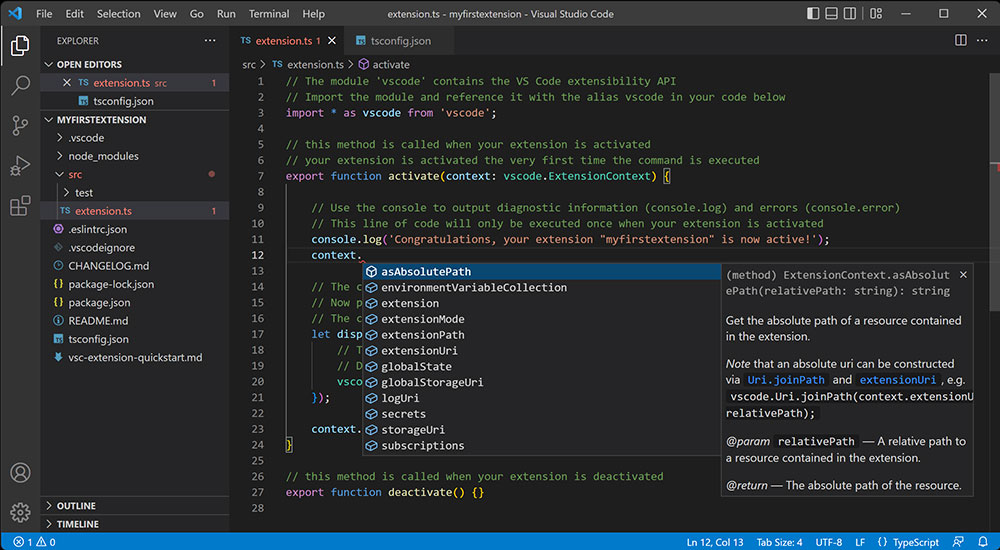
Sublime Text vs VS Code comes up in pretty much every “best code editor” thread on Reddit or Hacker News, and it never actually gets settled.
Ask your own team and you’ll hear people defending both. Sometimes the same person, depending on the day and what they’re editing.
VS Code is the one most developers land on by default. Microsoft’s free, Electron based editor now runs on 75.9% of professional developer machines, according to the 2025 Stack Overflow Developer Survey.
Sublime never chased that kind of scale. It stayed a paid, native tool from a small team, and the people who use it tend to be pretty stubborn about it.
Neither fact settles much on its own. What actually decides it comes down to specifics, mostly startup speed and how much RAM it eats with six projects open. Then there’s AI tooling. For a lot of teams, whether it plugs into whatever assistant they’re already using this month ends up mattering just as much as either of those.
I’ve used both on real projects. Neither one is objectively better. It comes down to what you’re already running and what you’re editing today, not some universal ranking.
What Is Sublime Text

Jon Skinner built Sublime Text back in 2008, and the pitch hasn’t really changed since. Open the file fast, stay out of the way, let plugins handle whatever the core editor doesn’t.
It’s proprietary and cross platform, written in C++ with a Python API for plugins, which is a big part of why it stays so light next to editors built on a browser engine.
Current stable build is 4200, released in May 2025 according to Sublime HQ’s own release notes.
- Runs natively on Windows, macOS, and Linux without a browser runtime
- Custom UI toolkit built for speed rather than visual flash
- Multi-cursor editing and a fast Goto Anything file switcher
Third party technographic data from 2026 puts active usage at roughly 1,577 companies, with close to 46% of them based in the United States.
The architecture and plugin system get a lot more room in our full explainer on Sublime Text, if that level of detail is what you’re after.
What Is VS Code

Microsoft built VS Code on Electron, wrote most of it in TypeScript, and gave it away free from day one. That free-and-open approach probably explains a lot of the numbers below.
The 2025 Stack Overflow Developer Survey put usage at 75.9% of developers, more than double whatever sits in second place.
A handful of things make up the core of it.
- Free for personal and commercial use, core released under the MIT license
- Monthly stable builds plus weekly Insiders releases
- Built-in IntelliSense, integrated terminal, and Language Server Protocol support for many languages out of the box
VS Code and Visual Studio have held the top usage spot for four straight years now, per Stack Overflow’s own writeup, even with AI-native forks starting to pull developers around at the edges.
Our dedicated guide to what VS Code actually does goes deeper into the full feature list, if you want it.
What Are the Core Differences Between Sublime Text and VS Code

Both editors show up early in daily software development work, and both are solving the same problem. They just take opposite paths to get there.
Sublime keeps things small. No browser engine, no bundled runtime, just a native app that opens a file and gets out of your way. VS Code went the other direction, building an extension system deep enough to replace most of what used to be separate tools, at the cost of some of that leanness.
| Category | Sublime Text | VS Code |
|---|---|---|
| Architecture | Native C++, custom UI toolkit | Electron, Chromium-based renderer |
| License cost | $99 one-time personal license | Free, MIT-licensed core |
| Extensions | Several thousand via Package Control | 100,000+ on the VS Code Marketplace |
| Release cadence | Infrequent major builds | Monthly, plus weekly Insiders |
| Native AI tooling | None built in | Copilot, Claude Code, Cody via extensions |
Where this actually shows up day to day is in web development IDE work. VS Code’s built-in terminal and debugger skip a setup step that Sublime hands off to plugins instead.
Sublime’s answer to that is speed and a stripped-down interface. For a lot of developers, that trade is worth more than any amount of extra feature depth.
How Do Sublime Text and VS Code Compare in Speed and Resource Use
Sublime opens fast. Really fast, under a second in pretty much every benchmark run across 2025 and 2026.
VS Code takes longer, usually a full one to two seconds once the extension host and language services spin up. That’s the tradeoff of running on Electron. A bundled browser runtime just doesn’t start instantly.
Idle memory tracks the same story. Sublime usually sits under 100 MB. VS Code idles somewhere between 300 and 500 MB, more once you’ve got a few extensions loaded.
- Sublime handles very large files and long lines without stuttering
- VS Code can slow down or stall on files well above 10 to 20 MB
- Neither issue is noticeable on a modern machine with a small project
That RAM gap is usually the first thing people notice, more than any single feature, especially if you’re working across a sprawling codebase or opening log files that are stupidly large.
What Is the Price Difference Between Sublime Text and VS Code
A single personal license for Sublime runs $99, bought directly from Sublime HQ. It’s a one-time purchase, not a subscription, and it covers three years of updates before you’d need to pay again.
VS Code just doesn’t charge you anything. Microsoft gives it away free for personal and commercial work alike, and makes its money elsewhere, mostly through paid extensions rather than the editor itself.
| Cost factor | Sublime Text | VS Code |
|---|---|---|
| Base license | $99 one-time (personal) | Free |
| Evaluation period | Unlimited, with save-prompt reminders | Not applicable, always free |
| Business licensing | Per-seat annual subscription, no perpetual site license | Free at any team size |
TrustRadius reviewers tend to shrug off the Sublime license fee, describing it as a small cost next to the productivity it buys back, and a few specifically call the $70 to $99 range an easy sell internally.
Honestly, the license fee was never going to be the real cost anyway. That shows up later, in paid AI extensions like Copilot. Both editors can technically run them, but VS Code folds that integration in far deeper.
How Do Extensions and Plugins Compare
Package Control handles packages for Sublime. Install it once through the command palette, and it becomes how you pull in everything else the editor doesn’t ship with.
- Several thousand community-built packages, most written in Python
- No official Microsoft-style marketplace or install analytics
- Popular picks include GitGutter, SublimeLinter, and Emmet
Compare that to VS Code, where the marketplace lists more than 100,000 extensions and lives inside the editor itself instead of being bolted on as an afterthought.
Prettier and ESLint have each crossed 40 million installs on their own. GitLens isn’t far behind, mostly for its blame annotations and commit history views.
Our roundup of the best VS Code extensions skips past the noise, if you want a shortlist of what most teams actually reach for.
That’s really where the marketplace earns its keep, catching linting and formatting issues before they ever hit a pull request.
How Does AI Coding Assistant Support Compare
AI tooling is where the two editors stop being close at all, and the gap has only grown since 2025.
VS Code plugs into GitHub Copilot natively, and you can add Anthropic’s Claude Code or Sourcegraph’s Cody as extensions on top of that.
Sublime has nothing first-party here. Whatever AI support exists comes from third-party packages that don’t get the same access to the editor’s internals, and it shows.
| AI tool | In VS Code | In Sublime Text |
|---|---|---|
| GitHub Copilot | Native extension | Unofficial, limited |
| Claude Code | Official extension | Terminal-only workaround |
| Sourcegraph Cody | Native extension | Not supported |
The numbers back this up. The 2025 Stack Overflow Developer Survey put Cursor, the AI-native VS Code fork, at 17.9% adoption, with Claude Code hitting 9.7% in its very first year on the survey.
Both of those numbers describe developers moving around inside the VS Code ecosystem, not away from it. Sublime just isn’t part of that conversation yet.
How Do Git and Version Control Features Compare
Git comes built into VS Code’s core, no extra install needed. The Source Control panel covers staging, commits, and diffs right out of the box.
GitLens builds on top of that. Inline blame shows up right in the file, and there’s a commit graph you can actually click through. File history pulls up without ever leaving the editor too.
| Feature | VS Code | Sublime Text |
|---|---|---|
| Built-in Git panel | Yes, in core | No |
| Inline blame markers | Via GitLens | Via GitGutter |
| Merge conflict view | Built-in diff editor | Plugin-dependent |
Sublime hands version control off to plugins instead, usually SublimeGit or GitGutter, both run from the command palette rather than any dedicated panel.
Neither setup replaces a real standalone Git client. But VS Code gets a team to source control basics faster on day one, which matters more than it sounds like it should.
How Do Debugging and Language Support Compare
Microsoft shipped the Language Server Protocol back in 2016, and a couple years later did the same thing with the Debug Adapter Protocol. Both specs spread well past VS Code eventually. Plenty of other editors use them now too.
- VS Code ships a built-in debugger UI that talks to any language through a DAP adapter
- Breakpoints, watch expressions, and call stacks work the same way once an adapter exists for a language
- Debugging JavaScript and TypeScript works out of the box, no extension required
Sublime doesn’t ship a debugger at all. You wire one up yourself through SublimeREPL or some language-specific package, and none of it looks or feels as polished as VS Code’s native UI.
For specific languages, depth usually beats breadth anyway. JetBrains’ own State of Java report puts IntelliJ IDEA at 72% usage among Java developers in 2025, ahead of every general-purpose editor for that one language.
Sublime isn’t really in that race either. Its language support comes down to syntax highlighting and whatever LSP packages exist, not a dedicated debugging story of its own.
When Does Sublime Text Work Better Than VS Code.
Speed is where Sublime actually wins, not feature scope.
- Distraction Free Mode strips the interface down to text and nothing else
- No telemetry or background extension host competing for CPU
- A smaller, more curated package catalog means less digging through near-duplicate extensions
- Editing over a slow or high-latency SSH session stays snappy with no browser runtime to shuttle back and forth
Package Control’s catalog is nowhere near the size of the VS Code Marketplace. Usage still runs deep, deeper than the smaller number would suggest.
Emmet alone shows 6.13 million installs on Package Control, which says something about how much real use that smaller ecosystem actually gets.
Our guide on how to use Sublime Text goes further into Distraction Free Mode and how it handles huge files.
When Does VS Code Work Better Than Sublime Text

VS Code pulls decisively ahead once you’re talking about remote or cloud-based development. This isn’t close.
Stripe’s engineers do their day-to-day work on remote devboxes in the cloud, with only the VS Code UI actually sitting on the laptop.
LinkedIn built its own internal remote dev environments on the same Dev Container spec VS Code already uses natively, so nobody had to invent anything new.
| Capability | VS Code | Sublime Text |
|---|---|---|
| SSH remote editing | Native via Remote-SSH | Manual, plugin-based |
| Container-based dev | Native Dev Containers | Not supported |
| Cloud IDE option | GitHub Codespaces | None |
GitHub itself runs parts of its own engineering org on Codespaces as the default setup, which is a pretty strong signal if you’re a team weighing the same move.
Teams working across a lot of different languages tend to land on VS Code too. It covers more languages well enough, even in spots where a dedicated IDE would go deeper.
Which Editor Fits Your Workflow
Sublime Text sat at 10.9% usage in the 2024 Stack Overflow Developer Survey. Small next to VS Code’s footprint, but steady, and it hasn’t moved around much since.
That gap is about scope more than quality. Sublime does one job and does it well. VS Code just tries to cover more ground, all at once, in the same window.
| Scenario | Better fit |
|---|---|
| Editing huge log files on old hardware | Sublime Text |
| AI-assisted coding with Copilot or Claude Code | VS Code |
| Remote or containerized development | VS Code |
| Fast, distraction-free single-file edits | Sublime Text |
A lot of developers just run both. Sublime for quick edits and digging through logs, VS Code for the actual project work, debugging, Git, and whatever AI tooling they’re using this month.
Pick based on what your actual Tuesday looks like. Not which one has the longer feature list on paper.
FAQ on Sublime Text Vs VS Code
Is Sublime Text free to use?
You can technically use it forever without paying anything. A save prompt nags you every so often, pointing out that a full license costs $99, but nothing actually gets locked. Every feature works during that evaluation period, which isn’t how most freemium tools handle it.
Is VS Code open source?
The core ships under the MIT license, built from the open source Code – OSS project on GitHub. What Microsoft actually distributes as “VS Code” adds some proprietary telemetry and branding on top, so the packaged build you download isn’t fully open source, even though the core underneath it is.
Does Sublime Text have a built-in terminal?
No, it doesn’t ship with one. People usually add a terminal through a plugin like Terminus. VS Code, meanwhile, has had one built directly into the editor since its earliest public releases.
Can you use Vim keybindings in VS Code?
Yes. The VSCodeVim extension remaps the whole editor to Vim-style modal editing, normal mode and insert mode included, plus visual mode for good measure. It’s one of the most installed keymap extensions on the marketplace for anyone who lives on the keyboard.
Can GitHub Copilot run inside Sublime Text?
Not officially, no. Copilot is built for VS Code first, as a native extension. Sublime users are stuck with unofficial community packages that go nowhere near as deep and get zero support from GitHub.
Which editor suits absolute beginners better?
VS Code, usually. The built-in terminal, debugger, and Git panel skip a bunch of setup steps a newcomer would otherwise have to configure by hand in Sublime before writing a single line of actual code.
Is Sublime Text still actively updated in 2026?
Yes, just not often. Build 4200 is still the current stable release, and Sublime HQ clearly cares more about stability than shipping constantly. That’s the opposite approach from VS Code’s monthly cadence.
Can you import VS Code settings into Sublime Text?
Not directly, no. The two use configuration formats that don’t talk to each other: VS Code’s JSON settings on one side, Sublime’s own preferences syntax on the other. Most people just end up rebuilding keybindings and themes by hand.
Does VS Code work without an internet connection?
Yes, core editing is entirely offline. Anything that needs a connection (Copilot suggestions, installing extensions, Codespaces) just pauses until you’re back online. Your actual local file editing never notices the difference.
Do Sublime Text and VS Code use the same keyboard shortcuts?
Mostly not, out of the box. Sublime has its own shortcut scheme, though a popular package remaps things to VS Code-style bindings if you want that. Muscle memory basically never transfers cleanly between the two without adjusting the keymap yourself.
Conclusion
There’s no single winner between Sublime Text and VS Code. What matters more is knowing when to reach for which one.
Default to VS Code. The marketplace, the built-in debugger, and Git integration cover most day-to-day work without any extra setup on your part.
Keep Sublime installed too, not as a replacement, just for the cases where it’s genuinely better: massive log files, an old low-spec machine, a quick edit over a laggy SSH connection.
The one-time license fee is worth budgeting for as well. Over five years it usually costs less than the subscription-based tools you’d end up bolting onto VS Code anyway.
Pick one as your default. Keep the other around. That combination beats betting everything on a single lightweight editor and living with whatever it’s bad at.

- MongoDB Cheat Sheet - October 20, 2026
- Adding AI Video Generation to a Software Product: Architecture, Cost Guardrails and QA - October 20, 2026
- Show Hidden Characters, Spaces, and Line Endings in Notepad++ - October 19, 2026