

Log in to an app and the page you land on gets assembled by code you never see. That code, the server-side logic, databases, and APIs that handle each client request and return data to the front end, is what back-end development builds and maintains.
Any application that stores accounts or orders depends on a back end. MDN Web Docs describes the core task of server-side programming as choosing which content the server returns to the browser for each request.
Developers also hold more control on the server. Server-side code has full access to the server operating system, and the team picks the language and its exact version, while browser code must cope with whatever browsers users run.
What Is Back-End Development?
Everything that happens after a visitor clicks belongs to the back end. A login gets checked, an order is read from storage, a total is worked out, and the result goes back to the browser.
Business rules run on the server for every request, and the data they work with sits in a relational or document database. Browsers, mobile apps, and other services get the results through APIs.
None of it runs on the visitor’s device. It lives on a server or a cloud platform.
How Back-End Development Differs From Front-End Development

A visitor sees the front end. The back end decides what that screen shows.
Layout and interaction in the browser belong to front-end work, so the two sides meet at the API.
Front-end code runs in the user’s browser or on their device and deals with layout, input, and rendering, mostly in HTML, CSS, and JavaScript. The back end sits on a server or cloud platform and handles rules, storage, and access control. Python, Java, PHP, and Node.js are common there, though the list is longer.
Back-End Developer vs Full-Stack Developer
Full-stack developers build the browser interface on top of the server work, and that is the main difference from a back-end developer, who stays on the server side.
Small teams lean on full-stack hires because one person covers both sides. Larger teams usually split the work, and the back-end specialist ends up owning data models and API contracts, plus performance under load.
When a Project Needs No Custom Back End
Skip the custom build when the site is static, meaning pages, images, and styles that never change per visitor. Skip it too when a hosted service already handles sign-in and gives you a database.
Backend-as-a-service platforms/) put a database behind ready-made APIs and handle sign-in and storage for you, so a small team ships an app without writing server code.
Build one when the company’s business rules are specific to it, or when data has to stay under the team’s own control. Traffic and integrations outgrowing what a hosted service allows is the other usual trigger.
Hosted services buy speed and cost you control, and custom code works the other way around.
How Does a Request Move Through a Back-End System?
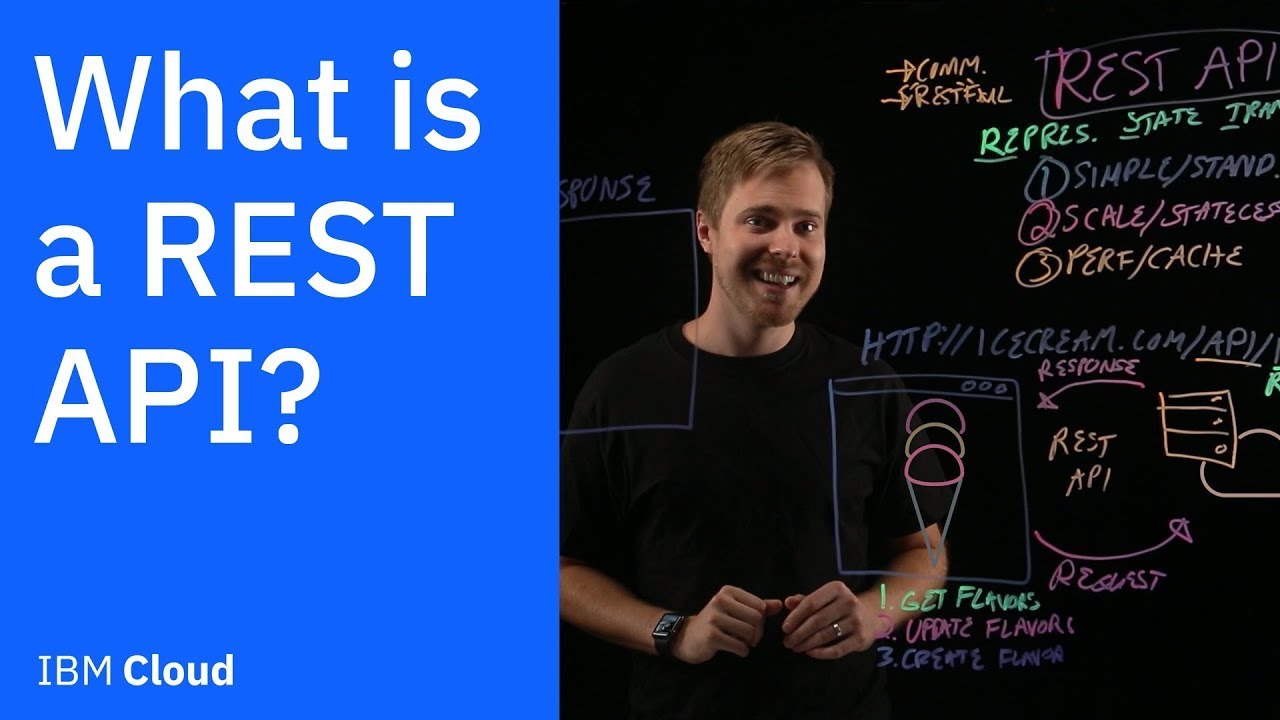
A request travels from the client to a web server, through middleware and application code, into the database, and back as a response. Each hop adds latency, and the slowest hop sets the response time the user feels.
This is the client-server model. MDN Web Docs describes the cycle simply. The browser sends an HTTP request and the server replies, with a status code (200 OK on success) reporting the outcome.
RFC 9110 defines the semantics of those messages, covering methods and status codes along with header fields. The HTTP/1.1 text syntax is specified separately in RFC 9112.
- The client sends a method such as GET or POST, a URL, and headers. A malformed or oversized message gets a 4xx status back.
- Nginx or Apache HTTP Server accepts the connection, serves static files itself, and forwards everything else. If the application server is down or too slow, the user sees a 502 or 504 error.
- Middleware runs on every request. Authentication, session lookup, and logging usually live here, and an expired session or a missing token stops the request with a 401.
- The framework matches the URL to a handler, and the handler applies the business logic. An unhandled exception at this point returns a 500.
- The handler reads or writes the database, or checks a cache first. A slow query or a lock wait stalls every step above it.
- The server builds a status code and a body (HTML or JSON) and sends it back. If the handler never returns, the client times out.
Web servers and application servers get mixed up a lot. The web server handles HTTP and static files. Application code, meaning the language runtime and the framework, runs on the application server.
Nginx can sit in front of the application and forward requests as a reverse proxy. The NGINX documentation lists load distribution across several servers and handing requests to application servers as the typical reasons to do it.
In most CRUD apps, the database query is the first place to look when responses slow down.
Which Programming Languages and Frameworks Do Back-End Developers Use?

Server code gets written in Node.js, Python, Java, PHP, Ruby, Go, or C#, and most teams pair the language with a framework that takes care of routing, database access, and security.
| Language | Common framework | Typical use |
|---|---|---|
| Node.js (JavaScript) | Express.js | APIs, real-time apps |
| Python | Django, Flask | Fast builds, data-heavy sites |
| Java | Spring Boot | Enterprise systems |
| PHP | Laravel | Content-driven web apps |
| C# | ASP.NET Core | Microsoft-stack services |
Ruby on Rails is the classic pick for getting a prototype live quickly. Go is a compiled language built for services that hold many connections open at once.
Django is the batteries-included option. An ORM, authentication, and an admin panel arrive with the project, and sites that run on Django in production show how far those defaults stretch.
How to Choose a Language and Framework

For a prototype or MVP, Django, Rails, or Laravel will save you the first few weeks, since the built-in admin and ORM, plus auth, are already there. A small API with five endpoints is better off on Flask or Express.js, because a lightweight framework beats a full one at that size.
Enterprise systems point toward Spring Boot or ASP.NET Core, especially when the company already runs on Java or Microsoft infrastructure. High-concurrency services lean toward Go or Node.js.
Language choice is one piece of the wider tech stack for a web project, so the database, hosting, and front end weigh in too.
Team skill settles most of these decisions. Benchmark charts rarely do.
Where Each Option Breaks Down

Every option has a point where it stops being the right tool.
Node.js stalls on CPU-heavy work, because a long computation blocks the event loop that serves every other request. Flask ships without an admin panel or a user system, so the team adds libraries and owns the glue. Whatever the stack, a framework nobody on the team knows costs more than any speed it saves.
SQL or NoSQL: How to Choose a Database for the Back End

If the data has a fixed structure and transactions matter, go relational. Document databases fit better once records start varying in shape and the schema changes often.
For a new project with unknown needs, PostgreSQL is the safer default.
Relational Databases
The PostgreSQL 18 manual (the current release as of October 2026) states that reading never blocks writing and writing never blocks reading, even at the strictest isolation level. PostgreSQL and MySQL are the common open-source relational options.
Transactions and constraints keep records consistent, joins combine data across tables, and the tooling is mature. The cost is that schema changes need migrations, and join-heavy queries slow down as tables grow, which is where indexes and query tuning come in.
The PostgreSQL documentation also warns that applications using serializable isolation must be ready to retry transactions after serialization failures.
An object-relational mapper turns rows into objects, but its generated queries still need a look. One page view can fire dozens of small queries.
Keep a quick SQL reference nearby for joins and transactions. Index syntax is the part most people forget.
Document Databases
MongoDB stores documents instead of table rows, and its documentation says documents in a collection need not share the same fields or data types by default.
That flexible schema suits records that vary in shape, like product catalogs, and the documents map straight onto the JSON an API returns. The downside is that nothing enforces structure by default, so fields drift unless validation rules are added. Relationships across collections also take more design work than SQL joins.
MongoDB offers schema validation for exactly this drift. It can reject bad documents or only log a warning, per the MongoDB documentation.
Where Caching Fits
The Redis documentation for its prefetch cache pattern targets a P95 read latency under 1 ms, meaning 95 percent of requests finish in 1 ms or less.
Reads come from memory, so a cache in front of the database removes repeated queries from the request path. Session data is another common use for Redis.
Stale data is the cost. The same documentation recommends a long safety-net TTL so entries expire if the sync pipeline stops.
Measure slow queries first, then cache the ones that earn it.
REST vs GraphQL: How Back Ends Expose Data
REST exposes one API endpoint per resource and uses HTTP methods to act on it, while GraphQL exposes a single endpoint where the client names the exact fields it wants. Pick REST for plain resource APIs and GraphQL when several clients need different slices of the same data.
With REST you get one endpoint per resource, such as /orders and /orders/42, and HTTP methods map to create, read, update, and delete (POST, GET, PUT or PATCH, DELETE). GET responses cache cleanly over standard HTTP. The usual complaint is over-fetching, where an endpoint returns the full record even when the client needs two fields.
GraphQL runs on one endpoint with a typed schema describing every field, and the client sends a query naming what it needs. A single request can pull nested data that REST spreads across several calls.
A CRUD back end for a single web app fits REST. Once a web app and a mobile app (maybe a partner integration too) each want different fields, GraphQL starts to make sense.
A side-by-side comparison of REST and GraphQL for web apps covers the trade-offs in more detail.
GraphQL shifts cost control to the server. The graphql.org security guide recommends depth limiting and query complexity analysis, along with rate limiting, because one query can ask for deeply nested data.
The specification itself gives no guidelines for implementing complexity analysis or rate limits (graphql.org). Each team builds that layer, and rate limits that weigh query cost work better than ones that only count calls.
Caching is the other catch. On HTTP caching, the same guide says to make sure sensitive data is cached privately or not at all.
Postman handles manual testing for either style. Send a request to the endpoint, read the status code and body, and save the call as a repeatable check.
What Does Back-End Security Cover?

Security on the server comes down to knowing who the user is, deciding what they may do, carrying that identity from one request to the next, and checking input before it touches the database.
OWASP’s Top 10:2025 ranks broken access control first, with an average of 3.73% of tested applications carrying at least one of the 40 weaknesses in that category.
The category is about missing or faulty authorization checks, and every endpoint needs its own. Those checks belong in server-side code, never in the browser.
Authentication means proving identity with passwords, tokens, or an identity provider, and OWASP tracks authentication failures as a category of their own. Authorization decides what a verified identity may do. Role-based access control assigns permissions by role instead of by person.
Sessions keep login state across requests through a session ID in a cookie or a signed token. Input validation rejects malformed data before it reaches a query or a system command, and injection (SQL, NoSQL, OS command) is still on the OWASP list.
RFC 6749 defines OAuth 2.0 as a framework that lets a third-party application obtain limited access to an HTTP service. It is the standard behind delegated API access.
With token-based sign-in, the server verifies a signed token on every request instead of looking up a stored session. A JSON Web Token is the usual format for that token.
RFC 8725, the JWT best-practices document from February 2020, records an attack where the signing algorithm in the token header is changed to “none”. Some libraries trusted that value and accepted the token without checking any signature.
The fix is to pin the expected algorithm on the server and reject every other value.
Frameworks help but do not finish the job. Django’s security documentation says querysets are protected from SQL injection through query parameterization, yet raw queries and custom SQL put that burden back on the developer.
Monolith or Microservices: Which Back-End Architecture Fits?
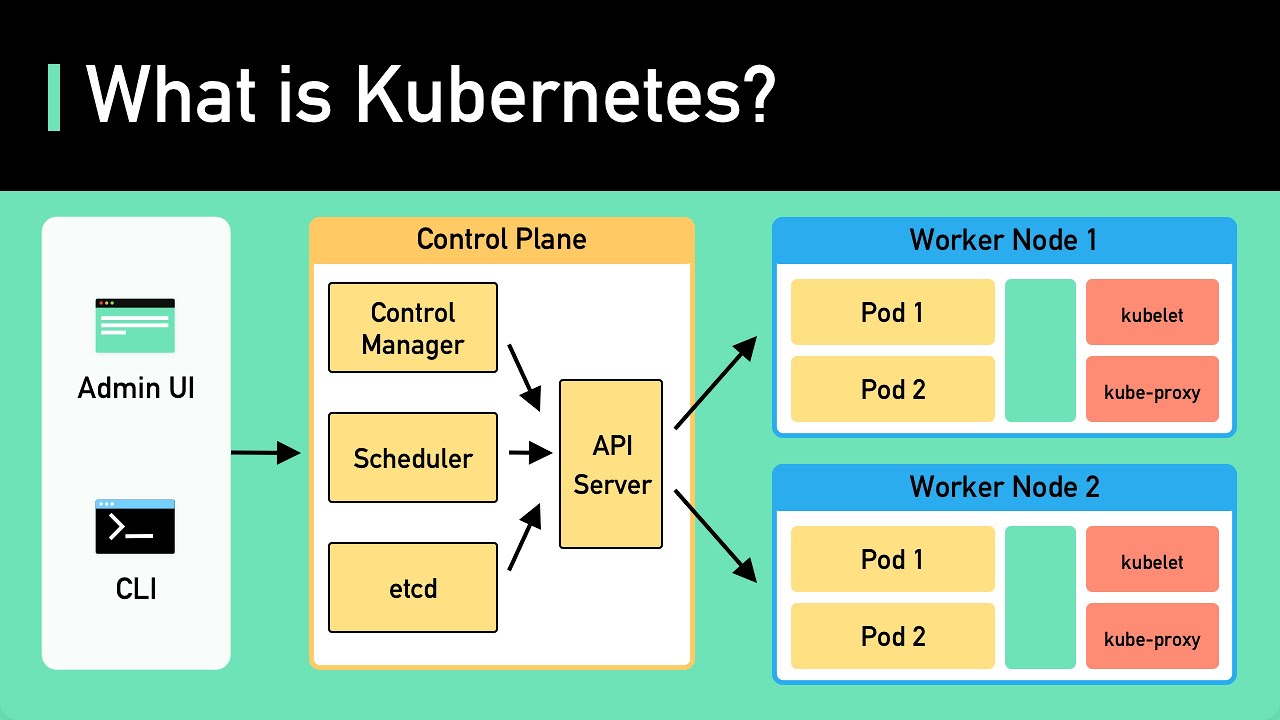
Start with a monolith. Split into microservices only when separate teams or sharply different load profiles justify the added operating cost.
| Dimension | Monolith | Microservices |
|---|---|---|
| Deployment | One unit, one release | Many units, released separately |
| Scaling | Run more copies of the whole app | Scale only the busy service |
| Failure | One bug can take down everything | Faults stay local, but calls between services can fail or slow |
| Operating cost | Low | Higher: networking, tracing, many pipelines |
A monolithic design keeps routing, business logic, and data access in one deployable codebase, which makes local development and releases simple, debugging included.
Splitting the back end into independent services, the idea behind microservices-based design, lets each service ship and scale on its own. The price is network calls between services, which add latency and new ways to fail.
Prime Video’s monitoring team moved one service from distributed serverless components to a monolith and cut infrastructure cost by over 90%, according to the team’s 2023 post on Prime Video Tech.
The original design hit a hard scaling limit at around 5% of the expected load, because of how some components were used.
That post covers one service, not the whole platform, and commentators split on what it proves. The cost drivers it names, orchestration and data moving between components, apply to any design that cuts services too finely.
Deployment tooling is mostly shared between the two styles. A Docker container is a sandboxed process isolated from other processes on the host, and its image holds everything needed to run the app (Docker documentation). A load balancer spreads incoming requests across several copies of a service, which is how a monolith scales out.
On the cloud side, Amazon Web Services hosts containers on ECS and servers on EC2, the two platforms Prime Video moved its consolidated service to. A CI/CD pipeline turns every commit into an automated build, test run, and release, and microservices multiply that by one pipeline per service.
Splitting earns its cost when independent teams own separate parts of the product and those parts face very different load.
Without both, one deployable unit scaled out behind a load balancer is cheaper to run. Monolith strain shows up as slow releases and teams colliding in the same codebase, and that is the signal to carve out the first service.
What Does a Back-End Developer Do?

Day to day, the job is building and maintaining the APIs, databases, and server logic behind an application, testing them, and keeping them running in production.
The U.S. Bureau of Labor Statistics does not list back-end developers separately. The closest category is software developers, quality assurance analysts, and testers.
For that category, the BLS Occupational Outlook Handbook puts median pay in 2025 at $134,040 per year. Projected job growth for 2025 to 2035 is 10%, much faster than average. The earlier 2022 to 2032 edition projected 25%.
The growth figure fell from 25% to 10% between editions, so a page quoting one number is quoting one edition. Pages that show very different numbers often read the web developers and digital designers category instead.
Core Responsibilities
Developers design and build the API endpoints that the front end and other services call, model the data and write the queries, and implement the business logic. Authentication, authorization, and input validation get added on top. Then come automated tests, deployments, log reading, and fixing production incidents.
Contract talks with front-end developers (which fields, which errors) happen before the first endpoint ships.
Everyday Tools

Back-end code lives in a repository managed with Git, so every change has an author and a diff, and can be rolled back.
Developers cover business rules with unit tests that run on every commit in the CI/CD pipeline, and a failing test blocks the merge.
A debugger steps through a request to find where state goes wrong. Logs and metrics trace production failures after a deploy and show which endpoint is slow.
Back-End Development FAQ
Is back-end development harder than front-end development?
No, neither one is harder across the board. They are different problems.
Back-end work rewards comfort with data modeling and failure handling, security included, whereas the front end asks for layout precision and patience with browser differences.
Do back-end developers need to know front-end code?
Not in depth, but the basics pay off. Reading HTML and JavaScript shows how clients consume an API.
It matters most with Node.js, where one language runs on both sides.
How long does it take to learn back-end development?
A first working API takes months of steady practice with one language, SQL, and one framework. Job-ready skill takes longer, because security and testing, plus deployment, form a second layer on top.
How do you become a back-end developer?

Learn one language and its framework, then SQL and a relational database, then Git and automated testing. Deployment comes last.
The BLS lists a bachelor’s degree as the typical entry requirement for the broader software developer category.
How much does a back-end developer earn?
Pay rises with experience and shifts with location, industry, and stack. Job-board averages for back-end roles disagree with each other, so read any single figure as one publisher’s estimate.
What a Beginner Should Build First
A beginner in back-end development should build one small CRUD API on a single framework and a relational database, because that project touches every layer a request passes through.
Start with endpoints on one framework, then add a PostgreSQL schema and its queries. Authentication, tests, and a deployment come after that.
Deployment goes last because a public endpoint without access checks is already live to every visitor.
A single-database monolith teaches fundamentals but won’t teach you service boundaries or distributed failures, which is the trade-off.
A project whose data fits a backend-as-a-service platform teaches less through a custom API than it costs in time, as of October 2026.
Pairing framework and database is a stack decision, and web app tech stack options show workable combinations.

- Protecting Users and Brand Standards Across Image-Driven Platforms - November 10, 2026
- Go Cheat Sheet - November 9, 2026
- Build or White-Label Software? How Software Teams Decide What to Resell in 2026 - November 9, 2026


