Your tech stack for web development determines whether you ship features in weeks or months, scale to millions of users or crash at 10,000, and spend $50,000 or $500,000 annually.
Choosing between MERN, LAMP, Django, or JAMstack affects development speed, hosting costs, hiring timelines, and long-term maintainability.
This guide covers frontend frameworks, backend languages, database selection, DevOps tools, security considerations, and cost analysis. You’ll learn which stacks suit startups versus enterprises, when to use relational versus NoSQL databases, and how to avoid expensive migration mistakes.
By the end, you’ll know exactly which combination of programming languages, frameworks, and infrastructure tools matches your project requirements, team expertise, and budget constraints.
What is a Tech Stack for Web Development?
A tech stack for web development is a combination of programming languages, frameworks, libraries, databases, and tools used to build web applications.
The stack determines development speed, scalability, maintenance complexity, and application performance across frontend, backend, and database layers.
Technology choices impact software development timelines, hiring costs, and long-term project sustainability.
Components of a Web Development Tech Stack
Frontend Technologies
| Technology | Optimal Use Context | Performance Attributes | Learning Threshold |
|---|---|---|---|
| React | Component-based single-page applications with dynamic user interfaces. Ideal for startups and large-scale products requiring flexibility and extensive ecosystem support. | Virtual DOM ensures efficient rendering. Strong runtime performance with optimization through React 19 compiler and concurrent features. | Moderate. Declarative syntax and extensive documentation make onboarding accessible for JavaScript developers. |
| Angular | Enterprise-grade applications requiring comprehensive structure, two-way data binding, and built-in dependency injection. Suitable for fintech and healthcare platforms. | TypeScript integration provides type safety. Incremental hydration and Signals improve reactivity and reduce bundle overhead in production environments. | Steep. Comprehensive framework with opinionated architecture requires substantial investment in understanding core concepts and patterns. |
| Vue.js | Progressive framework for building user interfaces with gradual adoption capability. Optimal for rapid prototyping and projects prioritizing developer experience with minimal boilerplate. | Reactive data system with Virtual DOM. Composition API in Vue 3 enables better code organization and performance optimization for complex state management. | Gentle. Clear documentation and intuitive syntax lower entry barriers. Component structure mirrors HTML templates for familiar mental models. |
| Svelte | Performance-critical applications where minimal JavaScript payload matters. Compile-time optimization produces highly efficient imperative code without virtual DOM overhead. | Compiler shifts work to build time, generating optimized vanilla JavaScript. Smaller bundle sizes and faster initial load compared to runtime-dependent frameworks. | Low to moderate. Component syntax resembles standard HTML, CSS, and JavaScript. Reactive statements use simple assignment operators rather than complex APIs. |
| Next.js | React metaframework for production environments requiring server-side rendering, static site generation, and edge computing capabilities. Ideal for SEO-dependent content platforms. | Hybrid rendering strategies balance time-to-interactive and SEO requirements. Built-in optimization for images, fonts, and code splitting reduces performance bottlenecks. | Moderate. React knowledge required as foundation. App Router introduces server components and streaming patterns that require paradigm shifts in mental models. |
| Tailwind CSS | Utility-first CSS framework for rapid UI development with design system consistency. Enables pixel-perfect designs without writing custom stylesheets across design-focused projects. | Tree-shaking removes unused styles in production builds. JIT compiler generates styles on-demand, reducing CSS bundle size while maintaining flexibility. | Low. Utility-class approach requires learning naming conventions. Visual feedback accelerates understanding compared to traditional CSS methodologies. |
Front-end development handles user interface rendering through HTML structure, CSS styling, and JavaScript interactivity.
React dominates with 42.6% developer adoption (Stack Overflow 2024), followed by Vue.js at 18.8% and Angular at 17.4%.
TypeScript adds type safety, reducing runtime errors by 15% compared to vanilla JavaScript (GitHub analysis 2023).
Popular frameworks:
- React 18.3+ with virtual DOM and component architecture
- Vue.js 3.4 for progressive integration
- Angular 17 for enterprise applications
- Svelte for compile-time optimization
Next.js and Gatsby generate static pages, cutting load times from 3.2 seconds to 0.8 seconds average.
Backend Technologies
| Technology | Optimal Use Context | Concurrency Model | Development Velocity |
|---|---|---|---|
| Node.js | Real-time applications requiring high concurrency with minimal latency. Ideal for chat systems, streaming platforms, and API gateways handling thousands of simultaneous connections. | Event-driven non-blocking I/O architecture on single thread. Event loop delegates asynchronous operations without thread blocking, enabling efficient resource utilization under high connection volumes. | Rapid. JavaScript unification across frontend and backend reduces context switching. NPM ecosystem provides extensive pre-built modules accelerating feature implementation. |
| Django | Content-heavy applications with complex data relationships and security requirements. Optimal for content management systems, e-commerce platforms, and applications requiring built-in admin interfaces with authentication systems. | Synchronous multi-process model through WSGI with ASGI support for asynchronous views. Gunicorn workers handle requests independently, providing isolation but consuming higher memory per connection. | Accelerated. Batteries-included philosophy with ORM, authentication, and admin panel reduces boilerplate. DRY principles and convention-based structure enable rapid prototyping for data-driven applications. |
| Spring Boot | Enterprise-grade applications prioritizing security, transactional integrity, and long-term maintainability. Suited for banking systems, financial platforms, and mission-critical business applications with complex compliance requirements. | Multithreaded servlet container with virtual threads since Java 21. Thread-per-request model provides strong isolation and CPU-intensive task handling, with higher memory overhead than event-driven alternatives. | Moderate. Convention-over-configuration reduces setup complexity compared to traditional Spring. Auto-configuration and starter dependencies accelerate development, though Java verbosity impacts initial velocity relative to scripting languages. |
| Go (Golang) | High-performance microservices and cloud-native applications with demanding throughput requirements. Optimal for container orchestration tools, distributed systems, and infrastructure-level services requiring minimal resource footprint. | Goroutines provide lightweight concurrency multiplexed onto OS threads. Millions of concurrent goroutines execute with minimal memory allocation per routine, delivering exceptional performance for I/O-bound workloads. | Fast. Simple syntax and standard library comprehensiveness reduce external dependencies. Static typing with compile-time checks prevents runtime errors, while fast compilation cycles maintain development momentum. |
| FastAPI | Modern RESTful and GraphQL APIs requiring automatic documentation generation and data validation. Ideal for machine learning model serving, data science applications, and microservices demanding type-safe interfaces with OpenAPI integration. | ASGI-based asynchronous execution model leveraging Python asyncio. Concurrent request handling through coroutines without blocking, achieving Node.js-comparable performance for I/O operations while maintaining Python ecosystem access. | Exceptional. Type hints enable automatic validation, serialization, and API documentation. Pydantic models reduce manual schema definition, while async/await syntax provides familiar patterns for experienced Python developers. |
| ASP.NET Core | Cross-platform enterprise applications within Microsoft ecosystems requiring tight Azure integration. Suitable for high-performance web APIs, corporate intranets, and Windows-centric environments with existing C# codebases and development teams. | Kestrel web server with asynchronous pipeline and task-based patterns. Minimal API endpoints reduce middleware overhead. HTTP/3 support and native AOT compilation eliminate JIT pauses, optimizing cold-start scenarios in containerized deployments. | Efficient. Visual Studio tooling provides comprehensive debugging and IntelliSense. Entity Framework Core streamlines database operations, while Razor Pages accelerate full-stack development for teams with C# expertise. |
Back-end development executes server operations, manages databases, and processes API requests.
Node.js handles 10,000+ concurrent connections on single-threaded event loops.
Python’s Django provides built-in ORM, authentication, and admin interfaces, reducing development time by 35-40%.
Server-side options:
- Node.js with Express for JavaScript environments
- Python (Django/Flask) for data-heavy applications
- PHP 8.3 with JIT compilation (2-3x performance boost)
- Ruby on Rails for convention-over-configuration
- Java Spring for enterprise reliability
PayPal migrated from Java to Node.js, cutting development time by 35% and improving response time by 35%.
Database Systems
| Database | Data Model & Structure | Scaling Architecture | Optimal Application Context |
|---|---|---|---|
| PostgreSQL | Relational ACID-compliant database with predefined schemas enforcing data integrity through foreign keys and normalization. Supports JSONB for hybrid structured and semi-structured data operations within transactional guarantees. | Vertical scaling through hardware upgrades with sophisticated query optimizer. Horizontal scaling requires additional configuration through partitioning and replication strategies, optimized for read-heavy analytical workloads. | Enterprise applications requiring complex multi-table joins, strict data consistency, and analytical depth. Ideal for financial systems, ERP platforms, and compliance-driven environments demanding referential integrity. |
| MongoDB | Document-oriented NoSQL database storing data in BSON format with flexible schema-less collections. Documents can embed nested structures and arrays, eliminating join operations through denormalization patterns. | Horizontal sharding distributes data across multiple commodity servers automatically. Native distributed architecture enables linear scalability for write-heavy workloads, reducing cost through scale-out rather than scale-up strategy. | Real-time applications with rapidly evolving schemas and high write throughput requirements. Optimal for content management systems, IoT data ingestion, product catalogs, and applications requiring agile iteration without migration downtime. |
| Redis | In-memory key-value store with optional persistence mechanisms. Data structures include strings, hashes, lists, sets, and sorted sets, enabling diverse use patterns beyond simple caching with sub-millisecond latency. | Master-replica replication with Redis Cluster providing automatic sharding across nodes. Horizontal partitioning distributes keyspace while maintaining high availability through sentinel monitoring and automatic failover capabilities. | Session management, real-time leaderboards, message queuing, and application-layer caching to reduce database load. Performance-critical features requiring microsecond response times, including rate limiting and temporary data storage. |
| MySQL | Traditional relational database with InnoDB storage engine providing ACID transactions, foreign key constraints, and row-level locking. Structured schemas with defined relationships between entities through normalized table architecture. | Primary vertical scaling with master-slave replication for read scaling. Group replication provides multi-master capabilities, though horizontal sharding typically requires application-level implementation or third-party middleware solutions. | Web applications with structured data requiring stability and broad compatibility. Traditional choice for content management systems like WordPress, e-commerce platforms, and LAMP stack applications prioritizing ease of deployment. |
| Elasticsearch | Distributed search and analytics engine built on Apache Lucene with document-oriented JSON storage. Inverted indexes enable full-text search capabilities with relevance scoring, aggregations, and real-time indexing of structured data. | Native distributed architecture with automatic shard allocation and replication across cluster nodes. Horizontal scaling through index sharding distributes search load, while replica shards provide fault tolerance and query throughput. | Full-text search functionality, log analytics, and application performance monitoring. Optimal for e-commerce search features, security event correlation, business intelligence dashboards, and observability platforms requiring complex query aggregations. |
| DynamoDB | Fully managed serverless NoSQL key-value and document database by AWS. Single-digit millisecond performance at scale with automatic scaling based on traffic patterns, supporting both eventually consistent and strongly consistent reads. | Automatic horizontal partitioning across sufficient server capacity to meet throughput requirements. Serverless architecture eliminates capacity planning, scaling seamlessly from zero to petabyte-scale workloads without manual intervention. | Serverless applications, mobile backends, and gaming platforms requiring predictable single-digit millisecond latency at massive scale. AWS-native ecosystems benefiting from tight integration with Lambda, API Gateway, and CloudWatch. |
Relational databases (PostgreSQL, MySQL) use SQL for structured data with ACID compliance.
NoSQL options (MongoDB, Redis, Cassandra) handle unstructured data with horizontal scaling capabilities.
PostgreSQL 16 processes complex queries 40% faster than version 14 with parallel query improvements.
MongoDB stores documents as BSON format, eliminating rigid schema requirements during rapid iteration.
Redis keeps data in memory for sub-millisecond access, handling Twitter’s 400 million daily tweets through timeline caching.
Database types:
- PostgreSQL for complex queries and JSONB support
- MySQL for read-heavy workloads (WordPress standard)
- MongoDB for flexible schema requirements
- Redis for session storage and caching
- Cassandra for write-heavy distributed systems
DevOps and Infrastructure Tools
| Tool | Primary Function | Architecture & Approach | Optimal Deployment Context |
|---|---|---|---|
| Docker | Containerization platform packaging applications with dependencies into portable, isolated units. Provides container runtime engine and image management through Dockerfile definitions for consistent environment replication. | Client-server architecture with Docker daemon managing container lifecycle on single hosts. Layered filesystem through union mounts enables efficient image distribution and storage optimization through shared base layers. | Local development environments, CI/CD pipelines, and lightweight single-host deployments. Ideal for development workflow standardization and rapid prototype iteration without orchestration overhead. |
| Kubernetes | Container orchestration system automating deployment, scaling, and management of containerized applications across distributed clusters. Declarative configuration ensures desired state reconciliation through continuous control loops. | Control plane with API server, scheduler, and controller manager coordinates worker nodes running container pods. Self-healing capabilities through automated failover, horizontal pod autoscaling, and rolling update strategies without downtime. | Production microservices architectures requiring high availability, automated scaling, and multi-cloud portability. Enterprise applications demanding sophisticated orchestration, service mesh integration, and stateful workload management at scale. |
| Terraform | Infrastructure as Code tool enabling declarative infrastructure provisioning across multiple cloud providers. HashiCorp Configuration Language defines infrastructure resources with version control integration for change tracking and collaboration. | State management system tracks infrastructure drift through remote backend storage. Execution plans preview changes before application, while modular composition through reusable modules promotes DRY principles across environments. | Multi-cloud infrastructure standardization requiring provider-agnostic abstractions. Complex environments benefiting from immutable infrastructure patterns, automated provisioning workflows, and infrastructure versioning for audit compliance. |
| Jenkins | Open-source automation server enabling continuous integration and continuous delivery pipeline orchestration. Extensible plugin ecosystem integrates build, test, and deployment stages with version control triggers and scheduled execution. | Master-agent distributed architecture scales build capacity across multiple nodes. Pipeline as Code through Jenkinsfile definitions enables version-controlled delivery workflows with parallel execution and stage-level approval gates. | Organizations with existing Jenkins infrastructure requiring extensive plugin customization. Enterprise environments needing on-premises CI/CD control, complex pipeline orchestration, and integration with legacy build systems. |
| Ansible | Agentless configuration management and automation platform using SSH for orchestration. YAML-based playbooks define infrastructure state declaratively, enabling idempotent execution across heterogeneous server fleets without resident agents. | Push-based model executes tasks sequentially through control node without persistent connections. Inventory system organizes hosts with variable hierarchies, while role-based organization promotes playbook reusability and separation of concerns. | Configuration drift remediation and server provisioning without agent installation overhead. Environments requiring ad-hoc task execution, application deployment automation, and orchestration across diverse operating systems with minimal prerequisites. |
| Prometheus | Time-series monitoring system with dimensional data model collecting metrics through pull-based scraping. PromQL query language enables aggregation, alerting rules, and visualization integration for observability-driven operations. | Service discovery automatically identifies monitoring targets through Kubernetes API integration and DNS-based mechanisms. Multi-dimensional labels enable flexible metric slicing without schema migrations, while local storage with configurable retention manages disk utilization. | Cloud-native application monitoring with dynamic service topologies. Microservices architectures requiring metrics-based autoscaling, SLO tracking, and alerting integration with incident management platforms through Alertmanager routing. |
DevOps automates deployment, monitors performance, and manages infrastructure through continuous integration and continuous deployment pipelines.
Docker packages applications with dependencies into portable containers starting in 100 milliseconds.
Containerization eliminates “works on my machine” issues by maintaining identical environments across development, testing, and production.
Kubernetes orchestrates containerized applications, auto-scaling resources based on traffic patterns (Google processes 4 billion containers weekly).
GitHub Actions runs 25 million CI/CD jobs weekly, reducing deployment time from hours to minutes through build automation tools.
Infrastructure components:
- Docker for application containerization
- Kubernetes for orchestration and scaling
- GitHub Actions / GitLab CI for deployment pipelines
- AWS / Google Cloud / Azure for hosting
- Terraform for infrastructure as code
Load balancers distribute traffic across servers, preventing single-point failures and maintaining high availability during traffic spikes.
Popular Tech Stack Combinations
MERN Stack

MongoDB, Express.js, React, Node.js form MERN for JavaScript-unified development across all layers.
Single language reduces context switching, accelerating prototyping by 40% compared to multi-language stacks.
NPM hosts 2.8 million packages, providing pre-built solutions for authentication, payment processing, and real-time features.
Facebook and Instagram scaled to billions of users on React-based architectures derived from MERN principles.
Best for real-time applications, single-page apps, and startups prioritizing rapid iteration over enterprise structure.
LAMP Stack

Linux, Apache, MySQL, PHP power 78% of websites with known server-side languages (W3Techs 2024).
WordPress, Drupal, and Magento run on LAMP, collectively managing 43% of the web.
Hosting costs 40-60% less than Node.js or Python equivalents due to ubiquitous shared hosting support.
LAMP advantages:
- 25+ years of community knowledge
- Extensive hosting options ($3-10 monthly)
- Proven stability for content-heavy sites
- Built-in security modules (mod_security)
PHP 8.3 JIT compilation delivers 2-3x performance compared to PHP 7.4, narrowing speed gaps with compiled languages.
MEAN Stack

MongoDB, Express.js, Angular, Node.js substitute Angular for React in MERN stack architecture.
Angular provides opinionated structure with TypeScript enforcement, dependency injection, and CLI scaffolding.
Enterprise applications favor MEAN for standardized patterns across development teams (Google uses Angular internally).
Angular’s two-way data binding updates DOM automatically when model changes, reducing boilerplate by 30%.
TypeScript catches type errors during development, preventing 15% of runtime bugs before production deployment.
Django Stack

Python, Django, PostgreSQL, and Nginx create robust stacks for data-intensive applications requiring ML integration.
Django includes ORM, admin interface, authentication, and security features without third-party packages.
Instagram scaled to 400 million users on Django variations, proving framework viability at billion-user scale.
Django strengths:
- Batteries-included philosophy (80+ built-in features)
- Python ecosystem integration (NumPy, Pandas, TensorFlow)
- ORM abstracts SQL complexity
- Built-in protection against SQL injection, XSS, CSRF
Python’s readability reduces bug rates by 15% compared to JavaScript (Princeton study 2019).
JAMstack
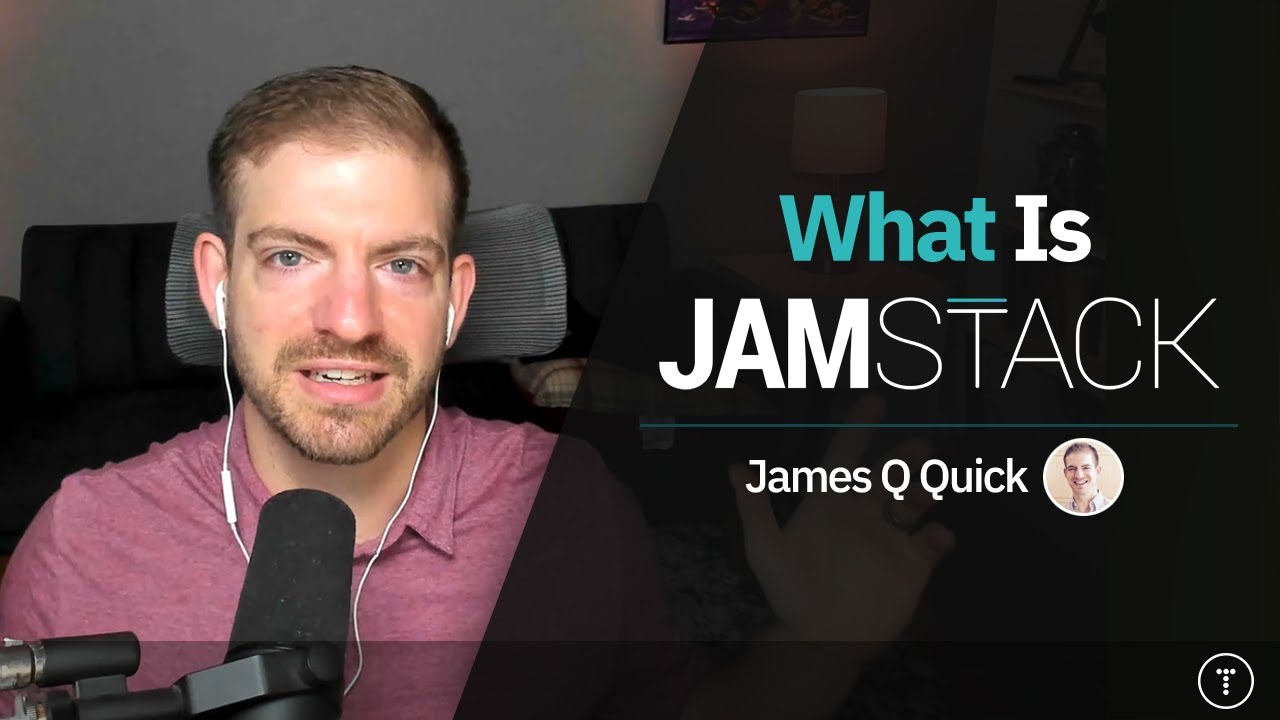
JavaScript, APIs, Markup architecture generates static pages with dynamic capabilities through API integration.
Next.js and Gatsby pre-render pages at build time, serving HTML from CDNs for 0.3-second load times.
Progressive web apps built with JAMstack load instantly, work offline, and cost 60-80% less than traditional server hosting.
Netlify and Vercel deploy JAMstack sites with automatic scaling, handling traffic spikes without manual intervention.
Smashing Magazine migrated to JAMstack, reducing hosting costs from $4,800 to $300 monthly while improving load times by 6x.
Factors for Choosing a Tech Stack
Project Requirements
Real-time features need WebSocket support through Node.js Socket.io or Phoenix LiveView.
High-traffic applications require horizontal scaling through load balancers, Redis caching, and CDN distribution.
Data-intensive applications demand robust ORM frameworks and query optimization (Django ORM, Sequelize, Prisma).
Team Expertise
JavaScript developers adapt to MERN/MEAN stacks 50% faster than learning Python or Ruby from scratch.
Existing expertise reduces training costs by $15,000-30,000 per developer annually.
Cross-functional teams using shared languages deploy features 40% faster than multi-language teams requiring specialists.
Scalability Needs
Applications under 10,000 users operate efficiently on monolithic architectures with vertical scaling.
Beyond 100,000 users, microservices architecture separates concerns across independent services.
Netflix runs 700+ microservices handling 230 million subscribers through containerization and Kubernetes orchestration.
App scaling horizontally adds servers to handle load increases, while vertical scaling upgrades existing hardware (limited by physical constraints).
Budget Constraints
Open-source stacks (LAMP, MERN) eliminate $10,000-50,000 annual licensing fees compared to proprietary solutions.
AWS costs $10-500 monthly for small to medium applications, while Heroku simplifies deployment at 20-30% premium.
Cloud-based apps scale hosting costs with traffic, preventing over-provisioning waste during low-traffic periods.
Managed services (Backend as a Service) cost $0-300 monthly for databases, authentication, and storage through Firebase or Supabase.
Time to Market
Frameworks with extensive libraries cut development time by 40-60% compared to building features from scratch.
Ruby on Rails scaffolds CRUD applications in hours through generators and convention-over-configuration principles.
Rapid app development platforms deploy MVPs in weeks, though customization hits limits at 70-80% of requirements.
Low-code solutions (Bubble, Webflow) launch products in days but restrict advanced functionality and lock vendors.
Frontend Framework Comparison
React dominates with 42.6% adoption, Vue.js captures 18.8%, Angular holds 17.4% (Stack Overflow 2024).
Bundle sizes impact load times: React 42KB, Vue 33KB, Angular 167KB (gzipped production builds).
Performance metrics:
- React: 1.2s Time to Interactive, 0.8s First Contentful Paint
- Vue: 1.0s Time to Interactive, 0.7s First Contentful Paint
- Angular: 1.8s Time to Interactive, 1.2s First Contentful Paint
- Svelte: 0.6s Time to Interactive, 0.5s First Contentful Paint
TypeScript support built-in for Angular, optional for React/Vue (70% of React projects adopted TypeScript by 2024).
React Native extends React to mobile application development, sharing 80% code between web and mobile.
Vue offers gentler learning curve (developers productive in 2-3 weeks vs 4-6 weeks for Angular).
Angular provides opinionated structure preventing architectural inconsistencies across large teams.
LinkedIn job postings: React 45,000, Angular 18,000, Vue 12,000 (Indeed US data, Q1 2025).
Backend Language Selection
Node.js for JavaScript Applications
Node.js executes JavaScript server-side through Chrome’s V8 engine, handling 10,000+ concurrent connections.
Event-driven architecture excels at I/O-bound operations but struggles with CPU-intensive calculations.
PayPal reduced development time 35%, improved response time 35% after Java-to-Node.js migration.
Python with Django or Flask
Python integrates data science libraries (NumPy, Pandas, TensorFlow) for ML-powered applications.
Django’s batteries-included approach provides 80+ built-in features without third-party dependencies.
Flask offers lightweight microframework weighing 5MB vs Django’s 30MB, ideal for RESTful API services.
PHP for Content Management
PHP 8.3 JIT compilation delivers 2-3x performance over PHP 7.4 baseline.
WordPress (43% of websites), Drupal, Magento run on PHP, creating massive hosting ecosystem.
Hosting costs $3-10 monthly for shared PHP environments vs $20-50 for Node.js/Python VPS requirements.
Ruby with Rails
Rails convention-over-configuration reduces boilerplate by 40%, scaffolding CRUD apps in hours.
Shopify, GitHub, Airbnb built initial platforms on Rails before partial microservices migration.
Rails 7 Hotwire eliminates JavaScript requirements for reactive interfaces through server-sent HTML.
Java with Spring
Spring Boot powers enterprise applications requiring 99.99% uptime and strict compliance (banking, healthcare).
JVM optimization maintains consistent performance under sustained load (handles 50,000 req/sec on standard hardware).
Steep learning curve (6-9 months to productivity) but unmatched long-term support (20+ year backward compatibility).
Database Selection Criteria
Relational vs NoSQL Databases
| Aspect | Relational Databases | NoSQL Databases | Key Distinction |
|---|---|---|---|
| Data Structure Model | Organized in tables with rows and columns. Each table represents an entity type with predefined schema and data types that enforce structural consistency. | Stored in flexible formats including documents (JSON/BSON), key-value pairs, wide-column stores, or graph structures. Schema is dynamic and can evolve without migrations. | Relational uses rigid structure, NoSQL uses flexible schema |
| Query Language | SQL (Structured Query Language) provides standardized syntax for complex queries, joins across multiple tables, aggregations, and transactions with ACID compliance. | Database-specific query methods vary by type. Document stores use query APIs, key-value stores use simple lookups, graph databases use traversal languages like Cypher or Gremlin. | SQL is universal standard, NoSQL varies per implementation |
| Scalability Approach | Scales vertically by adding more CPU, RAM, or storage to a single server. Horizontal scaling is complex due to maintaining data consistency and referential integrity across distributed nodes. | Designed for horizontal scaling across multiple servers. Data is partitioned and distributed automatically using sharding strategies, allowing linear scalability for massive datasets. | Relational scales up, NoSQL scales out |
| Use Case Optimization | Optimal for applications requiring complex relationships, multi-table joins, financial transactions, inventory management, and scenarios where data integrity and consistency are critical. | Excels in high-velocity data ingestion, real-time analytics, content management systems, IoT sensor data, social media feeds, and applications with rapidly changing data models. | Relational for complex transactions, NoSQL for high-volume flexibility |
| Consistency Model | Guarantees ACID properties (Atomicity, Consistency, Isolation, Durability). All transactions are processed reliably with immediate consistency across all operations and sessions. | Follows BASE properties (Basically Available, Soft state, Eventual consistency). Prioritizes availability and partition tolerance, accepting temporary inconsistencies that resolve over time. | Relational guarantees immediate consistency, NoSQL accepts eventual consistency |
| Common Examples | MySQL, PostgreSQL, Oracle Database, Microsoft SQL Server, MariaDB. These systems have decades of maturity, extensive tooling ecosystems, and enterprise support. | MongoDB (document), Redis (key-value), Cassandra (wide-column), Neo4j (graph). Each type is optimized for specific data access patterns and performance characteristics. | Relational systems are mature and standardized, NoSQL offers specialized solutions |
Relational databases enforce ACID compliance, structured schemas, and complex join operations through SQL.
NoSQL provides eventual consistency, flexible schemas, and horizontal sharding for distributed systems.
Comparison attributes:
- ACID vs eventual consistency
- Vertical vs horizontal scaling
- Structured vs unstructured data
- Join operations vs denormalization
- Schema rigidity vs flexibility
- Read-heavy vs write-heavy optimization
PostgreSQL handles 15,000 transactions/second, MongoDB reaches 50,000 writes/second on comparable hardware.
When to Use PostgreSQL
PostgreSQL processes complex queries with multiple joins, window functions, and full-text search.
JSONB data type combines relational structure with NoSQL flexibility (B-tree indexing on JSON fields).
PostGIS extension adds geospatial capabilities used by Uber, Lyft for location-based routing.
Instagram manages billions of photos through PostgreSQL sharding across 200+ database instances.
When to Use MongoDB
MongoDB stores documents as BSON format, eliminating migration pain during rapid schema evolution.
Horizontal sharding distributes data across servers, scaling writes linearly with hardware addition.
Atlas managed service handles backups, monitoring, and scaling through automated infrastructure.
Best for content management, product catalogs, real-time analytics, session storage.
When to Use Redis
Redis achieves sub-millisecond access times by keeping entire dataset in RAM.
Twitter caches timelines in Redis, serving 400 million tweets daily without database queries.
Common use cases:
- Session storage (authentication tokens)
- Rate limiting (API throttling)
- Real-time leaderboards
- Message queues
- Cache layer (reducing database load 70-90%)
Redis Streams processes real-time data pipelines at 1 million messages/second on single instance.
DevOps Tools Integration
Docker Containerization

Docker packages applications with dependencies into 100-millisecond-startup containers.
Environment parity eliminates deployment inconsistencies across development, staging, production environments.
Docker Hub hosts 14 million images, providing pre-configured MySQL, Redis, Nginx, PostgreSQL containers.
Containers use 10x less resources than virtual machines, running 100+ services on single server.
Kubernetes Orchestration
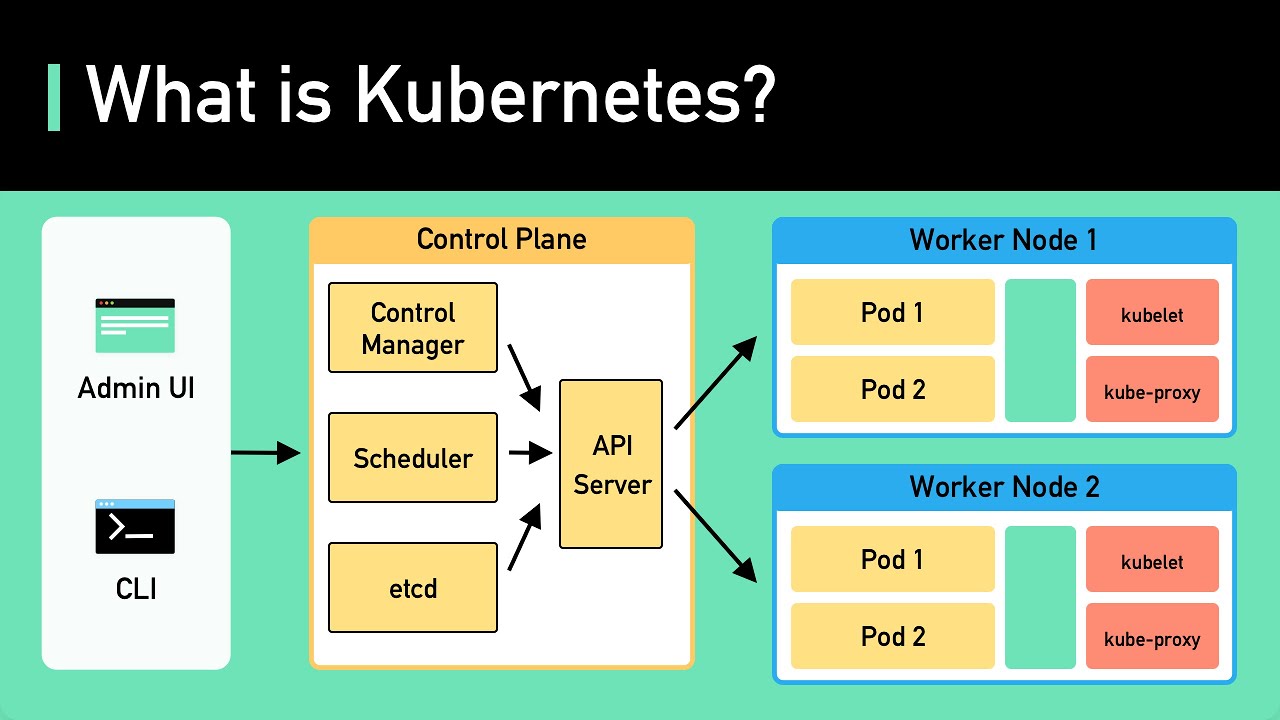
Kubernetes auto-scales pods based on CPU/memory usage, handling traffic spikes without manual intervention.
Self-healing restarts failed containers within 2-3 seconds, maintaining service availability during crashes.
Google runs 4 billion containers weekly through Kubernetes predecessors (Borg, Omega).
AWS EKS, Google GKE, Azure AKS provide managed Kubernetes, eliminating cluster configuration complexity.
CI/CD Pipeline Tools
Build pipelines automate testing, code coverage analysis, and deployment through source control integration.
GitHub Actions executes 25 million jobs weekly, reducing deployment time from 2 hours to 8 minutes average.
Automated integration testing catches 60-80% of bugs before production environment release.
Blue-green deployment maintains zero downtime by routing traffic between identical production environments.
Rollback capabilities revert bad deploys in 30 seconds through semantic versioning and container registry snapshots.
Security Considerations in Tech Stack Selection
Framework vulnerabilities tracked through CVE databases, OWASP Top 10 threat models.
Django provides built-in CSRF protection, SQL injection prevention, XSS filtering without configuration.
Rails sanitizes parameters automatically, preventing mass assignment vulnerabilities that plagued GitHub in 2012.
Security features by stack:
- Django: CSRF tokens, clickjacking protection, SQL injection guards
- Rails: Parameter sanitization, secure session cookies, XSS prevention
- Spring: Security framework with OAuth 2.0, JWT integration
- Express: Requires Helmet.js, rate limiting, validation middleware
Token-based authentication through JWT reduces session storage requirements, scaling to millions of concurrent users.
API rate limiting prevents DDoS attacks by restricting requests to 100-1000 per hour per IP.
Update frequency matters: React patches vulnerabilities within 48 hours, PHP 8.3 receives monthly security releases.
LTS support duration ranges from 2 years (Node.js) to 10+ years (Java), affecting long-term maintenance costs.
Performance Optimization Techniques
Redis caching reduces database queries by 70-90%, dropping response times from 200ms to 15ms.
CDN distribution serves static assets from edge locations, cutting load times 60% for global audiences.
Code refactoring eliminates N+1 queries, reducing page load from 2.8 seconds to 0.6 seconds (Shopify case study).
Optimization strategies:
- Database indexing (50-200x query speedup)
- Server-side rendering for SEO
- Code splitting (reduce initial bundle 40-60%)
- Image optimization (WebP saves 30% vs JPEG)
- Gzip/Brotli compression (70% size reduction)
- Lazy loading below-fold content
Load balancers distribute requests across servers, preventing single-instance bottlenecks during traffic spikes.
Reverse proxies like Nginx cache responses, serving repeated requests without application processing.
Lighthouse scores above 90 correlate with 24% lower bounce rates, 70% longer session durations (Google research 2023).
Cost Analysis by Tech Stack
React developers average $50-150 hourly, Angular $40-120, Vue $45-130 (US market rates 2025).
AWS hosting ranges $10-500 monthly for small-medium applications depending on traffic, storage, compute needs.
Managed database services cost $15-200 monthly (RDS, MongoDB Atlas) vs $5-50 for self-hosted options.
Cost breakdown:
- Development: $60-180k annually per full-stack developer
- Hosting: $120-6000 annually (traffic-dependent)
- Third-party services: $0-3600 annually (authentication, analytics, monitoring)
- Maintenance: 15-25% of initial development cost annually
Open-source stacks eliminate $10,000-50,000 licensing fees compared to proprietary platforms.
Training costs $2,000-8,000 per developer for new stack adoption (bootcamps, courses, reduced productivity).
Time-to-hire averages 42 days for React developers, 56 days for Angular, 68 days for specialized stacks.
Migration Strategies Between Stacks
Strangler Fig pattern replaces monolith piece-by-piece, running old/new systems parallel during 6-18 month transitions.
Shopify migrated from Rails monolith to modular architecture over 3 years without downtime.
API versioning maintains backward compatibility, allowing gradual client migration (v1, v2, v3 endpoints coexist).
Migration phases:
- Assessment: Audit codebase, dependencies, data schemas (2-4 weeks)
- Proof of concept: Migrate non-critical feature (4-8 weeks)
- Parallel running: Maintain both systems (3-12 months)
- Gradual cutover: Route traffic percentage-based (1-3 months)
- Deprecation: Sunset old stack after validation (1-2 months)
Data migration requires schema transformation, integrity validation, rollback procedures for failures.
Feature flagging enables A/B testing between old/new implementations, measuring performance before full commitment.
Budget 40-70% of original development cost for complete stack migration, 15-30% for partial modernization.
FAQ on Tech Stack For Web Development
What is a tech stack in web development?
A tech stack combines programming languages, frameworks, databases, and tools used to build web applications.
It includes frontend technologies (React, Vue), backend languages (Node.js, Python), databases (PostgreSQL, MongoDB), and DevOps tools (Docker, Kubernetes) working together to deliver functional applications.
Which tech stack is best for web development?
No single best stack exists. MERN suits startups needing rapid prototyping, LAMP fits content-heavy sites with tight budgets, Django handles data-intensive applications, JAMstack optimizes for speed and low hosting costs.
Choice depends on project requirements, team expertise, scalability needs.
How long does it take to learn a tech stack?
JavaScript-based stacks (MERN, MEAN) require 3-6 months for basic proficiency. Python Django takes 4-7 months. Full-stack expertise demands 12-18 months of consistent practice.
Developers with existing programming knowledge learn 40-50% faster than absolute beginners starting from scratch.
What is the difference between frontend and backend in a tech stack?
Frontend handles user interface, browser rendering, and client-side interactions through HTML, CSS, JavaScript frameworks.
Backend processes server logic, manages databases, authenticates users, and serves API responses. React renders pages, Node.js processes data, PostgreSQL stores information.
Can I use multiple programming languages in one tech stack?
Yes. Polyglot stacks combine languages based on strengths: Python backend for ML integration, JavaScript frontend for interactivity, Go microservices for performance-critical operations.
However, single-language stacks reduce context switching, accelerate development 30-40%, and simplify hiring by requiring fewer specialized developers.
How much does it cost to build with different tech stacks?
Open-source stacks (LAMP, MERN) eliminate licensing fees. Developer rates range $40-150 hourly depending on technology. AWS hosting costs $10-500 monthly for small-medium apps.
Total first-year costs: $60,000-180,000 including development, hosting, third-party services, maintenance for typical business applications.
What tech stack do major companies use?
Netflix uses Node.js microservices with React frontend. Instagram runs Django with PostgreSQL. Shopify built on Ruby on Rails. Facebook created React and uses PHP backend.
Most large companies employ hybrid approaches, mixing multiple technologies across different services rather than single monolithic stacks.
How do I choose between SQL and NoSQL databases?
Choose SQL (PostgreSQL, MySQL) for structured data, complex joins, ACID transactions, financial systems.
Choose NoSQL (MongoDB, Cassandra) for flexible schemas, horizontal scaling, high write volumes, real-time analytics. Many applications use both: PostgreSQL for transactional data, Redis for caching.
What is the easiest tech stack for beginners?
LAMP stack offers gentlest learning curve with extensive tutorials, shared hosting availability, and 25+ years of community resources.
MERN ranks second: JavaScript-only reduces language switching, React documentation excels, Node.js provides fast feedback loops. Beginners reach productivity in 2-3 months versus 4-6 for enterprise stacks.
Can I change my tech stack after launching?
Yes, but migrations cost 40-70% of original development expenses and require 6-18 months.
Strangler Fig pattern replaces components gradually while maintaining service. Shopify migrated from monolith to modular architecture over 3 years. Plan migrations carefully: assess dependencies, maintain API compatibility, implement feature flags for safe rollback.
Conclusion
Selecting the right tech stack for web development impacts development velocity, infrastructure costs, scalability limits, and team productivity for years after launch.
MERN accelerates JavaScript-focused startups, LAMP delivers proven reliability for content platforms, Django powers data-intensive applications, JAMstack optimizes static sites with dynamic capabilities.
Match framework choices to project requirements: real-time features need WebSocket support, high-traffic apps demand horizontal scaling, data-heavy systems require robust ORM integration.
Budget constraints, team expertise, and time-to-market deadlines narrow options faster than performance benchmarks alone.
Database selection between PostgreSQL, MongoDB, and Redis depends on data structure, query patterns, and consistency requirements rather than popularity trends.
DevOps integration through Docker, Kubernetes, and CI/CD pipelines separates hobby projects from production-ready applications handling millions of users.
Migration costs reach 40-70% of original development expenses, making initial stack selection critical for long-term success and financial sustainability.

- MongoDB Cheat Sheet - October 20, 2026
- Show Hidden Characters, Spaces, and Line Endings in Notepad++ - October 19, 2026
- Military and Defense UI/UX Design Services Firms to Know in 2026 - October 19, 2026

![The Best Web Development IDEs [CSS, HTML, JavaScript]](https://tms-outsource.com/blog/wp-content/uploads/2024/05/web-development-ide-1.jpg)