

Vibe coding can produce a working prototype in twenty minutes. But vibe coding complex apps, the kind with authentication flows, database relationships, and third-party API calls, is where most projects fall apart.
AI-generated code now accounts for 41% of all code written globally. Tools like Cursor, Replit Agent, and Lovable have made it possible for anyone to describe an app in plain language and get functional output. The speed is real.
So are the risks. Security flaws, compounding technical debt, and codebases nobody can maintain.
This guide covers what actually works when you push vibe coding past simple prototypes. You’ll learn where AI generation breaks down, which hybrid workflows produce shippable results, and how to avoid the failure patterns that have already burned thousands of developers and founders.
What Is Vibe Coding
Vibe coding is a development approach where you describe what you want in plain language and an AI model writes the code for you. The developer steers direction through prompts and conversation. The AI handles syntax, structure, and implementation.
Computer scientist Andrej Karpathy coined the term in February 2025, describing it as fully giving in to the vibes and forgetting the code even exists. Merriam-Webster added the term that same month. Collins English Dictionary named it Word of the Year for 2025.
The numbers back up the hype. 41% of all code written globally in 2024 was AI-generated, according to industry data, representing 256 billion lines. GitHub’s 2024 developer survey found 97% of developers had used AI coding tools in some capacity.
But there’s a gap between using AI to autocomplete a function and handing over your entire codebase to a chatbot. That gap is where vibe coding lives.
Vibe Coding vs. AI-Assisted Coding
These two things get confused constantly, and they shouldn’t be.
AI-assisted coding (think GitHub Copilot in autocomplete mode) suggests lines while you type. You stay in control. You review every suggestion. You understand what’s happening under the hood.
Vibe coding flips that dynamic. You describe intent. The AI generates entire files, modules, sometimes full applications. You accept the output based on whether it works, not whether you’ve read every line.
Simon Willison, a well-known developer, put it well: if an LLM wrote your code but you reviewed, tested, and understood all of it, that’s not vibe coding. That’s using an LLM as a typing assistant.
If you want to understand the broader differences between AI-driven approaches and manual programming, the comparison of vibe coding vs traditional coding goes deeper into this.
Where the Term Comes From
Karpathy posted about it on X in February 2025. He wasn’t describing some formal methodology. He was talking about his own workflow with Cursor and Claude Sonnet, where he’d just talk to the AI, accept what it gave him, and course-correct when things broke.
The idea spread fast. By March 2025, 25% of Y Combinator’s Winter 2025 batch had codebases that were 95% AI-generated. The concept of vibe coding as a practice had jumped from a single social media post to funded startups shipping real products.
It’s worth knowing that the term covers a wide range of behaviors. Some people vibe code a weekend side project and throw it away. Others are building production SaaS apps this way. The stakes vary enormously depending on what you’re building.
Why Complex Apps Break the Vibe Coding Model

Vibe coding works brilliantly for small things. Landing pages, single-feature tools, CRUD prototypes. The entire context fits in one prompt window, and the AI can hold it all in memory at once.
Complex apps are a different story.
Once you introduce state management across multiple components, authentication flows, database migrations, third-party API integrations, and role-based access control, you’re past what any current large language model can reliably reason about in a single session.
Context Window Limits Are the Ceiling
GPT-4, Claude, Gemini. They all have context window limits. Even the largest windows (200K+ tokens) can’t hold an entire complex application’s code, configuration, test files, and documentation at once.
When the AI can’t see your full project, it makes assumptions. Those assumptions compound.
A METR randomized controlled trial in mid-2025 tested this directly. Experienced open-source developers (averaging 5 years and 1,500+ commits on their projects) were 19% slower when using AI tools on real tasks in large repositories. The projects averaged over 1 million lines of code. At that scale, AI loses the thread.
Error Compounding Across Modules
Here’s the thing that bites you. A small hallucination in one module (say, a slightly wrong database schema) cascades through every service that touches that table.
Veracode’s 2025 report found AI-generated code introduces security flaws in 45% of cases. Cross-site scripting failures hit 86%. Log injection, 88%. These aren’t isolated bugs. In a complex system with interconnected services, one bad function poisons the whole pipeline.
GitClear’s longitudinal analysis of 211 million lines of code (2020-2024) found code duplication increased roughly fourfold, and the share of refactored lines dropped from 25% to under 10%. Complex projects with AI-generated code accumulate technical debt at a pace that would have been unthinkable five years ago.
Google’s 2024 DORA report confirmed the pattern: a 25% increase in AI usage correlated with a 7.2% decrease in delivery stability.
What Counts as a Complex App

Most developers don’t have a clean answer for when an app crosses the line from “vibe-codeable” into “this needs real architecture.” Here’s a rough framework.
The Complexity Threshold
If your app has more than one database table and talks to external APIs, you’re in complex territory. That’s the quick test.
But there’s more to it. Apps that look simple on the surface can hide surprising depth.
Took me a while to stop underestimating form builders. A three-step wizard with branching logic and file uploads is actually harder to vibe code correctly than a static e-commerce catalog page.
Characteristics That Push Past the Comfort Zone
Multiple data models with relationships: Once you have users, organizations, projects, and permissions all linked together, the AI needs to maintain consistency across every query and mutation.
Third-party service integrations: Stripe for payments, Twilio for SMS, OAuth for login. Each adds authentication flows, webhook handling, and error states that compound fast.
Real-time features: WebSocket connections, live updates, presence indicators. The AI can scaffold the client-side code but almost never gets the server-side state management right on the first pass.
The full mobile app development process gives you a sense of how many moving parts exist beyond just writing code, and why each step gets trickier when AI is generating the output.
Tools That Enable Vibe Coding for Larger Projects

The tooling landscape has exploded. Cursor, Bolt, Lovable, Replit Agent, Claude Code, Windsurf, Vercel v0. Each approaches the problem differently, and the differences matter a lot when you’re building something with more than a few files.
The combined valuation of the leading vibe coding startups (Cognition, Lovable, Replit, Cursor, Vercel) grew 350% year-over-year, from roughly $7-8 billion in mid-2024 to over $36 billion in 2025, according to Vestbee research.
AI Code Editors with Multi-File Awareness
Cursor as a vibe coding IDE is where most experienced developers start. It’s built on VS Code, supports .cursorrules files for project-level context, and can reason across multiple open files simultaneously. For complex projects, that multi-file awareness is the difference between useful code and garbage.
Bolt went viral almost immediately after launch, hitting $1 million ARR within a week. Its advantage is the WebContainers engine that runs code locally in the browser. Fast iteration. Low latency. But the trade-off is limited backend complexity.
Lovable reached $100 million ARR in just eight months, making it the fastest-growing startup on record by some measures. Its fully agentic AI engine interprets requests, modifies code, debugs issues, and creates assets. But Lovable’s rapid growth also exposed serious security concerns: in May 2025, researchers found 170 out of 1,645 Lovable-created apps had critical database exposure vulnerabilities.
Choosing the right tool matters. A detailed look at the best vibe coding tools can help you match your project’s complexity to the right platform.
Agentic Coding Workflows
This is where the real action is for complex apps. Agentic coding means the AI doesn’t just generate code. It runs terminal commands, reads error output, installs dependencies, and self-corrects.
Replit Agent goes the furthest here. It can provision databases, handle deployment, and manage full-stack workflows from natural language. Replit closed a $250 million funding round in 2025 backed by Google’s AI Futures Fund, Andreessen Horowitz, and Khosla Ventures.
Claude Code takes a different approach, operating from the command line as a terminal-based agent. It’s especially strong for developers who want to keep their existing IDE setup and add AI capabilities alongside it.
Windsurf rounds out the field with its own editor that focuses on long-context reasoning across files. Each of these agentic coding tools has different strengths depending on whether your project is primarily front-end heavy, back-end intensive, or a full-stack mix.
Prompt Architecture for Complex Vibe Coding
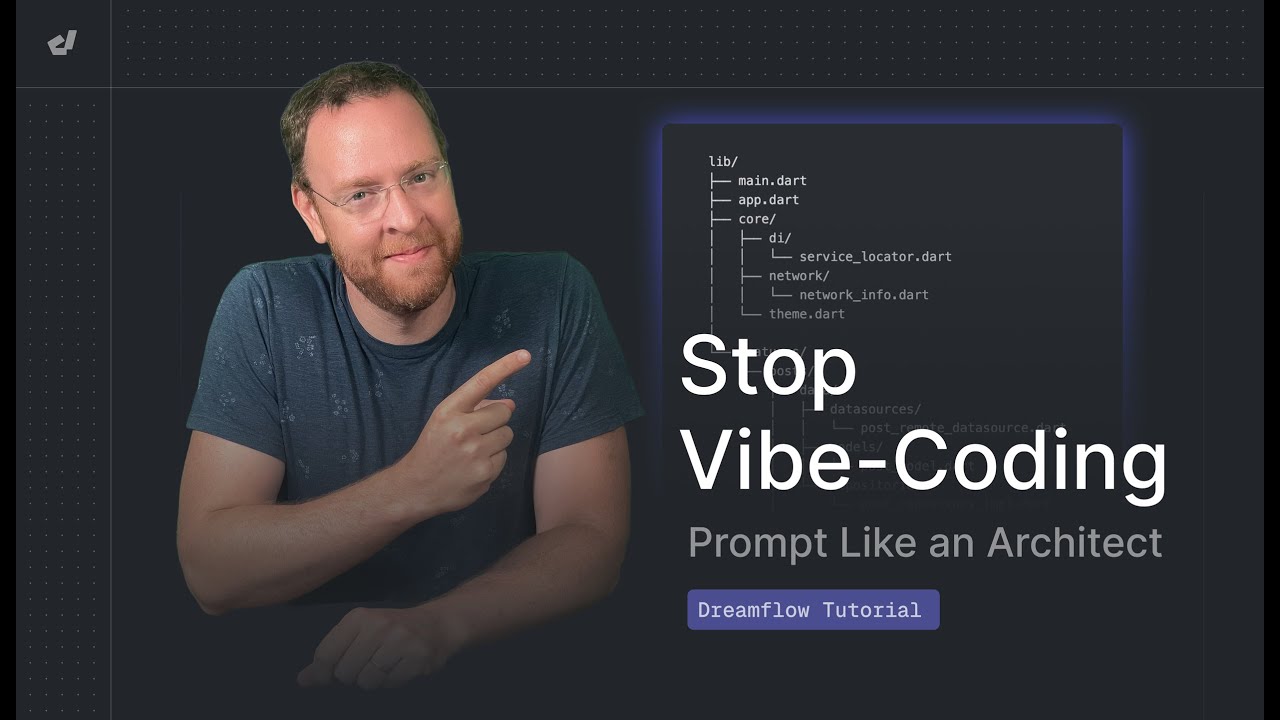
The prompt is the new programming language. And most people are terrible at it.
When you’re vibe coding a to-do app, prompt quality barely matters. Describe what you want, get working code. Done. But for complex applications, the difference between a well-structured prompt sequence and a messy one is the difference between shipping and starting over.
Prompt Sequencing and Modular Builds
The biggest mistake people make is dumping everything into one massive prompt. “Build me a project management app with user roles, Kanban boards, time tracking, and Stripe billing.” The AI will try. The output will be a tangled mess of half-implemented features.
What works instead is breaking the build into modular prompt sequences.
Phase 1: Define the data model. Tables, relationships, constraints. Get the AI to outline it and confirm before any code is written.
Phase 2: Build authentication and authorization in isolation. Get token-based authentication working before touching anything else.
Phase 3: Scaffold core features one at a time. Each prompt builds on the confirmed, working output from the previous step.
This mirrors how experienced developers already think about the software development process. The difference is you’re instructing an AI at each stage instead of writing the code yourself.
Good vibe coding prompts follow a pattern: describe the current state, specify what you want changed or added, and define what “done” looks like. Vague prompts produce vague code.
Using Specification Documents as Context
The “plan, then build” pattern consistently outperforms winging it. Developers who write a software requirement specification or even a rough product requirements document (PRD) before touching a vibe coding tool get dramatically better results.
Here’s why. The specification becomes a persistent context document. You paste it at the start of each session. The AI now has guardrails: what the app should do, what the data model looks like, what the user flows are.
Without it, every new prompt session starts from scratch. The AI has no memory. It doesn’t know your business rules unless you spell them out. Every. Single. Time.
Some teams maintain a design document alongside their code that gets fed into every AI session. It’s an extra step. But it cuts the amount of time spent fixing misunderstandings by more than half, based on what I’ve seen in practice.
Investing in prompt engineering for developers is probably the highest-return skill you can pick up right now if you’re serious about vibe coding beyond toy projects.
Where Human Oversight Still Matters

Only 3% of developers highly trust AI-generated code without reviewing it first, according to JetBrains and Stack Overflow data. That number dropped from 43% general trust in 2024 to just 33% in 2025. Developers are using AI more while trusting it less.
There’s a reason for that.
Security Is the Biggest Gap
Veracode tested over 100 large language models across four programming languages. AI-generated code contained 2.74x more vulnerabilities than human-written code. The worst areas were cross-site scripting (86% failure rate) and log injection (88% failure rate).
Escape’s research team analyzed over 5,600 publicly available vibe-coded applications in 2025. They found more than 2,000 vulnerabilities, 400+ exposed secrets, and 175 instances of personally identifiable information including medical records and bank details.
Authentication, authorization, input sanitization, API key handling. These are the areas where AI-generated code consistently fails. The AI doesn’t think about adversarial scenarios. It solves the prompt, not the threat model. You can review a deeper analysis of mobile app security best practices to see where the common gaps land.
Database Design Needs Human Judgment
Schema decisions, indexing strategies, migration logic. The AI will give you something that works for the current feature. It rarely considers what happens six months from now when your data grows 100x.
A 2024 empirical study found roughly 30% of Copilot-generated code snippets contained security weaknesses across 43 different vulnerability categories. Database-related flaws, especially around SQL injection and improper access controls, showed up repeatedly.
Choosing the right database for your app is a decision that needs to factor in growth, query patterns, and data relationships. That’s a judgment call, not a prompt.
Testing Gaps Are Predictable
Vibe-coded apps almost never come with adequate test coverage. The AI generates features. It doesn’t generate the unit tests, integration tests, or edge-case handling that would catch problems before users do.
CodeRabbit’s December 2025 analysis of 470 open-source pull requests found AI co-authored code had 1.7x more major issues than human-written code. Logic errors (incorrect dependencies, flawed control flow) were 75% more common.
If you’re building something that people will actually rely on, a structured software test plan isn’t optional. It’s the difference between a prototype that impresses in a demo and a product that survives real usage.
Hybrid Approaches That Actually Work
Pure vibe coding produces prototypes. Pure manual coding takes forever. The sweet spot is somewhere in between, and most teams that ship real products with AI have landed on a similar pattern.
Addy Osmani, a well-known engineering lead, describes his workflow as writing a detailed spec first, having the AI generate a project plan, then coding in modular steps with review at each checkpoint. He calls the upfront planning a “waterfall in 15 minutes.” At Anthropic, engineers using Claude Code got so deep into this hybrid approach that roughly 90% of Claude Code’s own codebase was written by Claude Code itself.
Scaffold and Refine
Let the AI do the boring parts. Boilerplate code, CRUD endpoints, form layouts, configuration files. Then manually write the parts that matter: business logic, security layers, data validation.
This sounds obvious. But the discipline is in knowing where to draw the line.
SaaStr founder Jason Lemkin estimates the 20-minute prototype from a vibe coding tool represents about 5% of the actual work needed for a commercial-grade app. The other 95% is testing, security review, and refinement. Budget roughly 150 hours total for anything production-bound.
If you’re working within a structured rapid app development workflow, the scaffold-and-refine approach fits naturally into that cycle.
Front-End Generation with Manual Backend Control
This is the pattern I’ve seen work most consistently for complex apps.
AI tools are genuinely good at generating UI/UX design implementations. React components, Tailwind CSS layouts, responsive grids. Vercel’s v0 tool produces clean React components that many developers use as starting points for their interfaces.
Where it falls apart: the backend. Database queries, server-side validation, webhook handlers, RESTful API endpoint logic with proper error handling. These need a human who understands the tech stack and the business rules behind it.
Bubble’s 2025 survey of 793 builders found that 86.7% would recommend visual development tools (with human-controlled backends) to new entrepreneurs, compared to only 51.4% for pure vibe coding. The control gap matters once you move past the prototype stage.
Technical Debt from Vibe-Coded Codebases

Code you didn’t write is code you don’t understand. And code you don’t understand has a cost, every single time something breaks.
GitClear’s 2025 report introduced a metric called Cumulative Refactor Deficit (CRD). AI-heavy repositories showed a 34% higher CRD than traditional codebases. Teams are shipping more but touching less of the underlying architecture.
The Patterns That Keep Showing Up
Duplicated code blocks: GitClear tracked an 8-fold increase in code blocks with five or more duplicated lines during 2024. Copy-pasted lines exceeded moved (refactored) lines for the first time in twenty years of tracked data.
Inconsistent naming and structure: AI-generated modules often follow different conventions within the same project. One file uses camelCase, the next uses snake_case. One component handles errors with try-catch, the next silently ignores them.
Premature code churn: The share of new code revised within two weeks of being written rose from 3.1% in 2020 to 5.7% in 2024. Developers are spending more time correcting recently generated code than improving older systems.
MIT professor Armando Solar-Lezama put it bluntly: AI is like a new credit card that lets us accumulate technical debt in ways we never could before.
When to Rewrite vs. Maintain
Forrester predicts that by 2026, 75% of technology decision-makers will face moderate to severe technical debt. Much of this will come from AI-generated codebases where nobody fully understands the code they shipped.
Here’s the rough decision framework most teams use.
- If the app has fewer than 15 core components and the AI-generated structure is mostly coherent, code refactoring works
- If the codebase has contradictory patterns, no test coverage, and multiple developers can’t trace data flow, a rewrite is cheaper
- If you’re planning to bring on a dev team, audit the AI output first (a thorough code review process will save weeks of confusion later)
Long-term maintainability should be a factor in every decision about how much to vibe code. The faster you ship now, the more you pay to fix later, unless you’re deliberate about review checkpoints along the way.
Who Should and Shouldn’t Vibe Code Complex Apps
Not everyone gets the same results from vibe coding. Skill level changes everything.
Experienced Developers Use It as a Multiplier
Senior developers with 10+ years of experience report that 32% of their shipped code is AI-generated, compared to just 13% for junior developers, according to Stack Overflow and JetBrains data.
The difference isn’t about using the tools more. It’s about knowing when the output is wrong.
An experienced developer spots a bad database schema in seconds. A junior developer (or a non-technical founder) might not notice until the app breaks under real traffic. The METR study confirmed this: developers on large, familiar codebases got slowed down by AI tools. But controlled studies in smaller, less familiar projects show juniors gaining 21-40% productivity improvements.
The skill floor is real. If you can’t read the code the AI generates, you can’t judge whether it’s correct. And that judgment is the whole game when building something complex.
Non-Technical Founders Building MVPs
About 44% of non-technical founders now build their initial prototypes using AI coding assistants rather than hiring developers, according to industry reports. Klarna’s CEO, who describes himself as someone with no formal coding background, shared that he receives working prototypes in 20 minutes for concepts that previously took his engineering team weeks.
That’s real and impressive. But it has limits.
Wiz research found 20% of vibe-coded apps have serious vulnerabilities or configuration errors. The Stanford University study on AI-assisted coding showed developers wrote less secure code while being more confident it was safe. For founders who can’t read the code at all, that confidence gap becomes dangerous.
If you’re a non-technical founder, here’s what actually works. Vibe code the prototype. Show it to users. Validate the idea. Then bring in someone who understands the full software development process to rebuild the parts that need to be production-ready.
Looking at how successful startups handle this transition is instructive. Most don’t skip the engineering phase entirely. They compress it by starting with a vibe-coded proof of concept.
Team Dynamics in Shared Repositories
GitClear found that team review participation dropped nearly 30% in projects using AI-generated code. Developers assumed small AI-authored commits were safe and skipped the review. Over time, subtle logical errors accumulated.
When vibe-coded modules sit alongside hand-written code in the same repo, source control management becomes trickier. AI-generated code follows different patterns. Naming conflicts appear. Architectural inconsistencies pile up quietly.
Teams that make this work usually establish clear rules: which modules are AI-generated, which are human-owned, and who is responsible for reviewing what. A shared set of development best practices becomes more critical, not less, when AI is part of the team.
Measurable Outcomes from Vibe Coding Complex Projects
The data on vibe coding results is surprisingly messy. Speed gains are obvious. Quality metrics tell a more complicated story.
Speed Gains and What They Actually Cost
GitHub’s controlled study found developers completed tasks 55.8% faster with AI assistance. Separate research showed 26% more tasks completed overall. Teams using AI tools produced 55% more commits per month on average, according to GitClear.
But those commits were also smaller, narrower, and less connected to each other. The AI-generated code appeared in isolated patches (quick fixes, UI elements) while deeper architectural work nearly disappeared.
Google’s DORA report quantified the trade-off: code reviews sped up with a 25% increase in AI use, but delivery stability dropped 7.2%. Faster code, less stable deployments.
Projects That Shipped Successfully
The common thread across projects that actually worked: they combined AI speed with structured human oversight. None of them shipped pure, unreviewed vibe-coded output to production users.
Projects That Failed and Why
SaaStr founder Jason Lemkin documented his experience with Replit’s AI agent: it deleted a database despite explicit instructions not to make changes. Fast Company reported the “vibe coding hangover” in September 2025, with senior engineers citing “development hell” when maintaining AI-generated code.
One founder built an entire SaaS with AI tools, shipped publicly, and within 48 hours had users bypassing his subscription system, maxing out API keys, and writing directly to his database. He shut down the whole thing.
The failure patterns are consistent:
- No software testing lifecycle before deployment
- Missing authentication and authorization checks
- Exposed API keys and database credentials in client-side code
Every failed project skipped the same steps that established development principles have recommended for decades. AI didn’t change what makes software reliable. It just made it easier to skip the parts that do.
If you want to understand how to start vibe coding the right way, the most important thing isn’t which tool you pick. It’s whether you build review and testing into the process from day one. The people who do that are shipping real products. The people who don’t are writing cautionary tales on Reddit.
FAQ on Vibe Coding Complex Apps
Can you vibe code a complex app from scratch?
You can vibe code a working prototype of a complex app. But shipping it to real users without human review of security, database design, and business logic is risky. Most successful vibe coding examples combine AI generation with manual refinement.
What are the biggest risks of vibe coding complex applications?
Security vulnerabilities top the list. Veracode found AI-generated code contains 2.74x more flaws than human-written code. Technical debt, inconsistent architecture, and missing test coverage are close behind. The AI doesn’t think about what could go wrong.
Which tools work best for vibe coding larger projects?
Cursor, Claude Code, and Replit Agent handle multi-file projects better than most alternatives. Each approaches context management differently. The best AI for vibe coding depends on whether your project is front-end heavy, backend intensive, or full-stack.
Is vibe coding safe for production applications?
Not without human oversight. Escape’s research found over 2,000 vulnerabilities across 5,600 vibe-coded apps. Production deployment needs security audits, proper authentication, and testing that AI tools don’t generate on their own.
How does vibe coding handle database design?
Poorly, in most cases. AI generates schemas that work for the current prompt but rarely accounts for future growth, indexing, or complex relationships. Schema decisions and migration logic still need a human who understands data modeling.
Can non-technical founders vibe code a startup MVP?
Yes, for validation purposes. About 44% of non-technical founders now prototype with AI tools. But treat it as disposable. Once you’ve confirmed demand, rebuild the critical parts with someone who understands custom app development.
What’s the difference between vibe coding and using an AI coding assistant?
An AI coding assistant suggests code while you stay in control. Vibe coding means describing what you want and accepting the AI’s full output. The key difference is how much you review versus how much you trust.
How do you manage technical debt from vibe-coded projects?
Set review checkpoints after every major feature. Audit for duplicated code, inconsistent patterns, and missing tests. GitClear data shows AI-heavy repos have 34% more refactoring deficit. Catch it early or plan for a rewrite later.
Does vibe coding work for mobile app development?
It works for prototyping interfaces and basic flows. Complex mobile application development with native features, offline support, and platform-specific behavior still requires manual work. AI handles the UI layer better than the platform integration layer.
Will vibe coding replace traditional software developers?
No. It changes what developers spend time on. Writing boilerplate goes away. Architecture decisions, security review, and debugging AI output become the job. The question of whether vibe coding is the future depends on how fast AI improves at reasoning about complex systems.
Conclusion
Vibe coding complex apps is possible right now. But “possible” and “production-ready” are very different things.
The tools have matured fast. Cursor, Claude Code, Replit Agent, and Windsurf each handle multi-file AI code generation better than anything available even a year ago. Prompt-driven development is a legitimate workflow, not a gimmick.
The gap is in what happens after the code is generated. Security review, software scalability, proper testing, and long-term post-deployment maintenance still require human judgment.
Use AI to scaffold fast. Review everything before it touches users. Build testing into your workflow from the start, not after something breaks.
The developers and founders shipping real products with natural language programming tools aren’t skipping steps. They’re doing the same work faster, with better starting points, and keeping a human in the loop where it counts.

- How to Run a React App in VS Code Step by Step - October 23, 2026
- Transactional or marketing email: which messages your app should send itself - October 23, 2026
- How Software Teams Write SOPs for Releases and Deployments - October 22, 2026


