

Code reviews used to mean waiting days for senior developers to check your pull requests. Now AI does it in seconds.
The best AI-powered code review tools analyze your code the moment you commit, catching bugs that manual reviews miss. They scan for security vulnerabilities, enforce coding standards, and suggest fixes before human reviewers even look at your PR.
The challenge? Picking the right tool when dozens claim to be the fastest, smartest, or most accurate.
This guide breaks down 24 leading platforms. You’ll see what each tool actually does, which languages and frameworks it supports, how it integrates with your workflow, and what it costs. Whether you need automated testing, deep codebase context, or security scanning, you’ll find the tool that fits your team’s needs without wasting time on features you’ll never use.
The Best AI-Powered Code Review Tools
| Tool Name | Primary Code Analysis Capability | Integration Model | Distinctive Feature |
|---|---|---|---|
| Qodo Merge (Qodo) | Automated pull request review with contextual suggestions | Git platform integration | Real-time PR feedback automation |
| GitHub Copilot | AI-powered code completion and generation | IDE native integration | Context-aware code suggestions in development environment |
| CodeRabbit | Intelligent pull request review with conversation threads | GitHub, GitLab workflow | Contextual code conversation management |
| Bito | AI-assisted code explanation and review | CLI and IDE plugins | Code comprehension acceleration for developers |
| Snyk Code AI | Security vulnerability detection with AI analysis | DevSecOps pipeline integration | Real-time security flaw identification |
| SonarQube | Continuous code quality inspection and metrics | CI/CD pipeline integration | Technical debt quantification and tracking |
| Codacy | Automated code quality analysis with standards enforcement | Repository monitoring system | Customizable coding standards enforcement |
| DeepSource | Static analysis for bug detection and code health | Continuous analysis workflow | Automated issue resolution suggestions |
| Amazon CodeGuru | Machine learning-based code review and profiling | AWS development ecosystem | Performance optimization recommendations |
| CodeScene | Behavioral code analysis with technical debt assessment | Repository historical analysis | Code evolution pattern recognition |
| Greptile | Codebase search and understanding acceleration | API-driven integration | Natural language codebase queries |
| AskCodi | AI-powered code generation and documentation | Multi-IDE support | Natural language to code translation |
| Tabnine | AI code completion with team learning capabilities | IDE plugin ecosystem | Private model training on team codebase |
| Zencoder | Intelligent code review automation | Development workflow integration | Context-aware review prioritization |
| CodeAnt AI | Automated code quality improvement suggestions | Git platform integration | Proactive code health monitoring |
| CodeClimate | Engineering intelligence with quality metrics | Continuous monitoring platform | Team productivity analytics and insights |
| PullRequest | Expert human reviewers augmented by AI analysis | On-demand review service | Human expertise combined with AI screening |
| Codeium | Free AI code acceleration and autocomplete | Multi-language IDE support | Zero-cost AI assistance for developers |
| ReviewPad | YAML-based automated review workflow customization | GitHub Actions integration | Programmable review rules and automation |
| CodiumAI | Automated test generation and code integrity analysis | IDE and Git integration | Intelligent test suite creation |
| DeepDocs | AI-powered documentation generation and maintenance | Codebase documentation workflow | Automated technical documentation creation |
| GitLab Duo | Integrated AI assistance across GitLab DevOps platform | Native GitLab integration | End-to-end DevOps AI assistance |
| Pieces | AI-powered code snippet management and context retention | Developer workflow assistant | Intelligent code snippet organization with context |
| HackerOne Code | Security-focused code analysis with vulnerability detection | Security testing platform | Ethical hacker-informed vulnerability identification |
Qodo Merge (Qodo)

Qodo Merge is an AI code review agent that automates pull request workflows. The tool goes beyond basic syntax checks and digs into code context, catching bugs that manual reviews miss.
Core Capabilities
Qodo Merge scans every pull request for security vulnerabilities, logic errors, and compliance violations. It generates PR summaries automatically with /describe command and validates code against ticket requirements with /compliance. Security scanning happens through /review security while /improve suggests performance optimizations.
The tool analyzes code changes in real-time and provides line-by-line feedback. It learns from your team’s review patterns and adapts suggestions based on what gets approved or rejected.
Supported Languages & Frameworks
Supports all major programming languages. The tool works with Python, JavaScript, TypeScript, Java, C#, C++, Ruby, Rust, Go, PHP, Kotlin, and others without language-specific configuration.
Integration Options
Git platforms: GitHub, GitLab, Bitbucket IDEs: VS Code, JetBrains, Cursor, Windsurf Project management: Jira, Linear Communication: Slack, Microsoft Teams, Discord
The Chrome extension provides private chat sessions without sending code to external servers. Installation takes under 5 minutes through GitHub or GitLab accounts.
AI/ML Technology
Uses multiple LLM models including GPT-4o, Claude Sonnet 4, and Gemini 2.5 Pro. The platform combines generative AI with static analysis tools for comprehensive reviews. Code embeddings capture project-specific patterns while maintaining zero data retention policy.
Qodo employs AST analysis for deeper code structure understanding. Each review runs in a sandboxed environment with 40+ integrations for linters and security tools.
Key Features
Auto-learning from feedback: Adapts review criteria based on merged PRs and team comments Context-aware analysis: Understands entire codebase relationships across multiple repos One-click fixes: Applies suggested changes directly through the interface Custom review profiles: Configure “chill” or strict modes based on project needs PR description generation: Creates comprehensive summaries including walkthroughs and labels
For software development teams working on enterprise applications, Qodo Merge saved a Fortune 100 retailer 450,000 developer hours annually (about 50 hours per developer monthly).
Pricing Model
Developer (Free): 250 credits/month, includes code generation, reviews, autocomplete Teams ($30/user/month): 2,500 credits/month, PR descriptions, ticket compliance checks Enterprise (Custom): Full platform access, SSO, self-hosting options, multi-repo awareness
Free forever for public repositories. Only developers who create PRs need paid seats.
Best For
Mid-size to enterprise teams shipping multiple PRs daily who need to scale reviews without sacrificing quality. Works well for organizations using AI coding assistants and requiring strong compliance tracking.
GitHub Copilot

GitHub Copilot extends beyond code completion into comprehensive code review capabilities. Built by GitHub and OpenAI, it provides AI assistance throughout the software development lifecycle.
Core Capabilities
Performs automated code reviews finding bugs, performance issues, and security vulnerabilities. The review agent analyzes pull requests and suggests fixes directly in comments. Code referencing feature searches public repos for matching code and displays license information.
Reviews happen automatically through repository rules or on-demand via PR comments. The tool filters for insecure code patterns including hardcoded credentials, SQL injections, and path injections.
Supported Languages & Frameworks
Generally available: C, C++, C#, Go, Java, JavaScript, Kotlin, Python, Ruby, Swift, TypeScript Public preview: HTML
All languages supported for code completion. Review quality varies based on training data availability for each language.
Integration Options
IDEs: Visual Studio Code, Visual Studio, Neovim, JetBrains suite, Xcode Platforms: GitHub.com, GitHub Mobile, GitHub Desktop CLI: Copilot command-line interface CI/CD: GitHub Actions integration
Enterprise users get knowledge bases for organization-specific guidance. Reviews integrate directly into existing GitHub workflows without additional configuration.
AI/ML Technology
Powered by OpenAI GPT models and Microsoft AI systems. The platform uses LLMs for code understanding and suggestion generation. Models are fine-tuned specifically for code synthesis and review tasks.
Code indexing enables semantic search across repositories. Premium requests use advanced model capabilities for complex reviews and agent mode operations.
Key Features
Automatic PR reviews: Set up repository rulesets for continuous scanning Code explanations: Natural language descriptions of code behavior Security filtering: Blocks vulnerable patterns before merge IP indemnification: Copyright protection for unmodified suggestions (with filtering enabled) Chat assistance: Ask questions about code directly in your IDE
Over 1 million developers used Copilot code review within the first month of public preview.
Pricing Model
Free: 2,000 completions/month, 50 premium requests Pro ($10/month): Unlimited completions, 300 premium requests, access to premium models Pro+ ($39/month): 1,500 premium requests, full model access Business ($19/user/month): IP indemnity, centralized management, audit logs Enterprise ($39/user/month): 1,000 premium requests, custom models, codebase training
Students and open-source maintainers get free Pro access. Premium requests power chat, agent mode, and code reviews.
Best For
Development teams already using GitHub infrastructure who want integrated AI assistance. Ideal for organizations needing IP protection and those wanting to train models on private codebases.
CodeRabbit

CodeRabbit delivers context-aware code reviews that understand your codebase architecture, not just individual file changes. The platform uses AST analysis and code graph understanding to spot issues human reviewers typically miss.
Core Capabilities
Provides natural-language PR summaries explaining what changed and why. Performs line-by-line reviews catching defects, suggesting refactors, and highlighting missed unit tests. One-click fixes apply suggestions directly to code.
Reviews include sequence diagrams showing how changes affect system architecture. The tool validates Jira and Linear tickets against code changes. Automated release notes and sprint reviews generate from merged PRs.
Supported Languages & Frameworks
Supports all programming languages including JavaScript, TypeScript, Python, Java, C++, Ruby, C#, Go, PHP, Rust, Kotlin. Language proficiency varies based on public training data availability.
The free VSCode extension works with Cursor, Windsurf, and compatible editors.
Integration Options
Git platforms: GitHub, GitLab, Azure DevOps IDEs: VS Code, Cursor, Windsurf (via extension) Project tracking: Jira, Linear Communication: Slack, Microsoft Teams, Discord
Runs 40+ static analyzers, linters, and security tools automatically. Each review executes in a sandboxed environment for isolation.
AI/ML Technology
Uses generative AI combined with traditional static analysis. Code graph analysis provides enhanced context beyond simple pattern matching. The system processes code through multiple AI models for comprehensive coverage.
Ephemeral processing means zero data retention after review completion. LLM queries exist in-memory only. SOC 2 and GDPR compliant.
Key Features
Context-aware reviews: Understands code relationships and downstream dependencies Auto-learning from feedback: Adapts based on accepted suggestions and team patterns Real-time web search: Enriches reviews with latest best practices Custom coding instructions: Configure team-specific standards Agentic workflows: Automates docstring generation and test insertion
Teams report 50% reduction in review time. The tool catches issues in both staged and unstaged commits before PR creation.
Pricing Model
Free: Unlimited summaries, public repos get full Pro features Lite ($12/seat/month): Essential AI reviews, basic features Pro ($24/seat/month): Sandboxed reviews, linters, security analysis, Jira/Linear integration, analytics dashboards Enterprise: Custom pricing, advanced features, SLA support
No limits on PR reviews or repositories for any plan. Only charges for developers creating pull requests.
Best For
Teams managing large repositories with complex dependencies. Works well for organizations wanting both IDE and PR-level reviews. Perfect for groups needing detailed architectural impact analysis.
Bito

Bito provides codebase-aware AI reviews that analyze full repository context, not just changed files. The agent delivers feedback that mimics senior engineer perspective.
Core Capabilities
Performs security, performance, and logic reviews on every PR. Generates effort estimates showing review complexity. Creates clear changelists summarizing impacted files. Provides one-click suggestion acceptance.
Chat directly with the agent in PR comments for clarifications or alternate fixes. Built-in static analysis runs Mypy, fbinfer, and other tools automatically. Linters like ESLint, golangci-lint, and Ruff check code consistency.
Supported Languages & Frameworks
Supports 20+ languages including JavaScript, TypeScript, Python, PHP, C, C++, C#, Go, Java, Ruby, Scala, Swift, Objective-C. Advanced understanding for popular frameworks.
Posts feedback in 20+ spoken languages based on agent settings.
Integration Options
Git platforms: GitHub (cloud and self-hosted), GitLab (cloud and self-hosted), Bitbucket (cloud and Enterprise) IDEs: VS Code extension for reviews before PR creation Security tools: Snyk, Whispers, detect-secrets Linters: ESLint, golangci-lint, Astral Ruff
One-click setup for workflows. Can run via self-hosted Docker images for enhanced security.
AI/ML Technology
Uses Claude Sonnet 3.7 and GPT-4o for comprehensive analysis. Processes PRs with deep learning models that understand code dependencies and architectural patterns. AST parsing and symbol indexing give real edge over pattern-matching tools.
Code isn’t stored on Bito servers unless explicitly allowed. Choose local, cloud, or Bito storage. No data used for AI model training.
Key Features
Full codebase context: Analyzes entire repository for accurate suggestions Custom review guidelines: Set repository-specific standards Analytics dashboard: Track PRs reviewed, issues found, lines analyzed per contributor Incremental reviews: Focused feedback on latest updates only Auto-refinement: Learns from feedback to improve future reviews
Teams report 89% faster PR merges, 34% fewer regressions, and $14 ROI for every $1 spent.
Pricing Model
Free trial: 14 days full access Team ($15/user/month): Standard features Professional ($25/user/month): Advanced capabilities Enterprise: Custom pricing, advanced enterprise features
Transparent pricing scales with team size.
Best For
Fast-moving teams pushing 100+ PRs weekly who need consistent quality enforcement. Great for organizations building with AI coding assistants who want security-first reviews.
Snyk Code AI

Snyk Code AI combines security scanning with automated fixing capabilities. The DeepCode AI engine finds vulnerabilities 50x faster than traditional SAST tools.
Core Capabilities
Performs real-time security scanning in IDEs and pull requests. Detects OWASP Top 10 vulnerabilities, insecure dependencies, and hardcoded secrets. Snyk Agent Fix generates pre-validated fixes with 80% accuracy.
Scans happen automatically on every PR and repo. Provides context-specific explanations helping developers understand security implications. Priority-based findings focus on deployed or publicly exposed code.
Supported Languages & Frameworks
Covers 19+ languages including Java, C#, C, C++, JavaScript, TypeScript, Python, Go, PHP, Ruby, Kotlin, Swift, and others. Particularly strong for automotive C/C++ development.
Works across popular platforms and frameworks. Broader application coverage than most competitors.
Integration Options
IDEs: Real-time in-line scanning with instant apply fixes CI/CD: Integrates into build process with PR checks Version control: GitHub, GitLab, Bitbucket, Azure DevOps Project management: Jira integration
Seamless workflow integration without disrupting development. No waiting for SAST reports.
AI/ML Technology
DeepCode AI uses 8 years of security research with 25M+ data flow cases. Multiple fine-tuned AI models trained on permissively licensed open source projects with verified fixes. Never uses customer data for training.
Combines symbolic AI with machine learning methods including generative AI. Privately hosted AI ensures data security without hallucinations.
Key Features
80% accurate autofixes: One-click remediation in IDE and PRs Vulnerability-free development: Prevents issues before entering project Security intelligence: Industry-leading threat detection Contextual filtering: Eliminates noisy false positives Real-time feedback: Complete automatic scans with instant results
Reduces time to remediate by 84% or more compared to manual security testing.
Pricing Model
Pricing varies by developer count and product bundle. At 50 developers: $34,886-$47,413 annually. At 100 developers: $67,552-$89,858 annually. Per-developer costs decrease with scale.
Cloud Security Bundle available. Analytics with Snowflake often included free for 100+ developers. Renewal pricing offers 5-12% better discounts than new purchases.
Best For
Security-conscious organizations needing real-time vulnerability detection. Perfect for teams using AI coding tools like Copilot who want automated security guardrails. Strong fit for healthcare and fintech requiring compliance.
SonarQube

SonarQube brings continuous code quality and security inspection directly into CI/CD pipelines. The platform has been enterprise-proven for over a decade.
Core Capabilities
Performs static code analysis detecting bugs, vulnerabilities, security hotspots, and code smells. Generates SBOMs and provides comprehensive security recommendations. Quality gates prevent substandard code from reaching production.
Secrets detection finds exposed credentials in repos and IDEs. AI CodeFix generates context-aware suggestions for bugs and security issues. Automated scanning on all branches, PRs, and merges.
Supported Languages & Frameworks
Community Edition: 17 languages Developer/Enterprise/Data Center: 35+ languages including Java, C#, C, C++, JavaScript, TypeScript, Python, Go, Kotlin, Ruby, PHP, Swift, HTML, CSS Enterprise/Data Center only: Apex, COBOL, JCL, PL/I, RPG, VB6
Covers frameworks and IaC platforms. Over 6,500 analysis rules with industry-leading taint analysis.
Integration Options
DevOps platforms: GitHub, GitLab, Azure, Bitbucket (cloud and on-premises) IDEs: SonarQube for IDE (formerly SonarLint) – Eclipse, VS Code, Cursor, Windsurf, IntelliJ, Xcode CI/CD: Jenkins, CircleCI, GitHub Actions Containers: Docker and Kubernetes support
SonarQube Server is self-hosted. SonarQube Cloud is fully managed SaaS.
AI/ML Technology
AI CodeFix uses LLMs for automated fix generation. Applies expertly curated rules and compliance standards during scans. Analysis engine built on years of security research.
Semantic analysis beyond pattern matching. Context-aware suggestions understand code relationships.
Key Features
Quality gates: Customizable pass/fail criteria for releases Real-time dashboards: Monitor code health across multiple projects AI-powered fixes: One-click resolution for complex issues Comprehensive reporting: OWASP Top 10, code coverage, tech debt tracking IDE integration: Real-time feedback while coding
Provides educational guidance helping developers improve skills. Super-fast analysis with high accuracy and low false positives.
Pricing Model
Community Edition: Free, open source, 17 languages Developer Edition: Priced per instance/year based on lines of code Enterprise Edition: All 35+ languages, advanced security, custom pricing Data Center Edition: High availability, better scalability for large teams
Standard support included with Enterprise/Data Center at 30M+ LOC. Free IDE plugin for all users.
Best For
Enterprises with strict compliance requirements and large monolithic codebases. Organizations needing self-hosted solutions with flexible deployment. Teams wanting comprehensive historical analysis and quality tracking.
Codacy

Codacy provides an all-in-one DevSecOps platform scanning both AI-generated and human-written code. The tool runs entirely in the cloud without pipeline dependencies.
Core Capabilities
Scans code health and security across 49 languages. Detects OWASP Top 10 vulnerabilities, hardcoded secrets, and insecure dependencies. SAST, DAST, SBOM generation, license scanning, and penetration testing built in.
Codacy AI adds smart context to PRs with coaching on best practices. One-click fix suggestions speed resolution. Merge gates block non-compliant code from production.
Supported Languages & Frameworks
Supports 49 ecosystems covering back-end, front-end, infrastructure-as-code, and mobile development. Includes Python, JavaScript, Java, Ruby, C++, PHP, Go, and others.
Works with codebases of any size and flavor. SOC 2 Type 2 certified.
Integration Options
Git platforms: GitHub, GitLab, Bitbucket IDEs: Query results directly from IDE Communication: Slack, Jira, YouTrack Version control: One-click webhook integration
Pipeline-less scans eliminate need for build steps. Every commit and PR scanned automatically on the fly.
AI/ML Technology
Codacy AI provides intelligent issue detection and automated remediation. AI Guardrails detect vulnerabilities in AI-generated code patterns that traditional tools miss.
Uses trusted static analysis paired with existing AI coding assistants. Doesn’t add another AI model but enhances current tools.
Key Features
AI protection: Guardrails specifically for AI-generated code vulnerabilities Test coverage enforcement: Blocks PRs below testing thresholds Duplicate code detection: Finds cloned and unused blocks Complexity reduction: Enforces formatting across all code Pull request integration: Seamless GitHub, GitLab, Bitbucket workflow
The duplicate detection algorithms excel at identifying refactoring opportunities. Real-time updates on code quality grades.
Pricing Model
Free Plan: Available for open source projects Pro Plan ($25/month): Individual developers Business/Enterprise: Custom pricing with advanced features
Pricing considered high by some reviewers. Free access for open source maintainers.
Best For
Teams using AI coding tools who need protection against AI-specific vulnerabilities. Organizations wanting unified security and quality checks without managing separate tools. Great for open source projects.
DeepSource

DeepSource delivers all-in-one code health with guaranteed below 5% false-positive rate. The platform provides both cloud and self-hosted options.
Core Capabilities
Static analysis detecting bug risks, anti-patterns, security flaws, and performance issues. Autofix automatically generates and applies fixes in a couple clicks. Code style formatting runs on autopilot preventing CI breaks.
Integrated code coverage tracking discovers missing tests on every PR. Continuous analysis runs on every commit. Infrastructure-as-code scanning prevents misconfigurations.
Supported Languages & Frameworks
Covers 24+ languages including Python, Go, JavaScript, Ruby, Java, C++, C#, .NET, PHP. Strong coverage for major programming stacks.
Analysis works across front-end, back-end, and infrastructure code. Docker support included.
Integration Options
Version control: GitHub, GitLab, Bitbucket Cloud platforms: Google Cloud IDEs: PyCharm, IntelliJ IDEA, VS Code CI/CD: CircleCI, Ansible
One-click integration with major version control systems. Self-hosted option with one-click installation and upgrades.
AI/ML Technology
Highly accurate static analyzers with proprietary analysis engine. Machine learning continuously improves detection capabilities. AI-powered analysis reduces false positives.
Automated issue remediation uses intelligent fix generation. Analysis considers full codebase context.
Key Features
Guaranteed accuracy: Below 5% false-positive rate promise Automated Autofix: Generates fixes requiring minimal review Security reporting: OWASP Top 10, SANS Top 25 compliance Maintainability Index: Track code health over time Custom rule configuration: Adapt analysis to team standards
Project dashboards keep stakeholders informed on code quality and release readiness. Free for open source with project badges.
Pricing Model
Starter (Free): Basic features for up to 3 users Team ($8/month starting): Additional features Enterprise: Custom pricing with full platform access
Free trial available. Priced per seat basis for teams. Free forever for open source projects.
Best For
Small to mid-size teams wanting comprehensive analysis with low false positives. Organizations needing self-hosted deployment with simple setup. Projects requiring both security and maintainability tracking in one tool.
Amazon CodeGuru

Amazon CodeGuru is AWS’s machine learning-powered service that finds defects and performance issues before production. Note: As of November 7, 2025, new repository associations cannot be created in CodeGuru Reviewer.
Core Capabilities
Detects security vulnerabilities, resource leaks, concurrency issues, and incorrect input validation. Identifies OWASP Top 10 and AWS internal security best practices violations. CodeGuru Profiler finds expensive lines of code and provides optimization recommendations.
Performs incremental code reviews on pull requests automatically. Full repository scans analyze all code under specified branches. Integrates with AWS Secrets Manager for secrets detection.
Supported Languages & Frameworks
CodeGuru Reviewer: Java, Python (general availability), JavaScript CodeGuru Profiler: Java, Python (preview), JVM languages (Scala, Kotlin) CodeGuru Security: Java, Python, JavaScript, TypeScript, C#, CloudFormation, Terraform, Go, Ruby
Limited language coverage compared to competitors. Java support stuck at version 8 (latest LTS is 17).
Integration Options
Version control: GitHub, GitHub Enterprise, Bitbucket, AWS CodeCommit, Amazon S3 (via GitHub Actions) Compute: Amazon EC2, ECS, EKS, AWS Fargate, Lambda
No GitLab support (cloud or on-premise). Can only review one language per project, determined automatically by file count.
AI/ML Technology
Uses machine learning and program analysis for vulnerability detection. Profiler samples CPU utilization and latency characteristics. Creates application profiles every five minutes for performance insights.
Automated reasoning provides fix suggestions. Security analysis based on Amazon internal best practices and OWASP standards.
Key Features
Incremental reviews: Automatic analysis on every pull request Full repository scans: Two monthly scans included per repo Performance profiling: Identifies most expensive code lines Predictable pricing: Fixed monthly rate based on repository size AWS integration: Native support for AWS services and APIs
CodeGuru Detector Library provides detailed information on all detectors. Real-time testing integrated into developer workflows.
Pricing Model
Free Tier: 90 days, up to 100K lines of code Standard Pricing: $10/month for first 100K LOC, $30/month per additional 100K
Only largest branch counts. Comments and empty lines excluded. Includes unlimited incremental reviews and two full repository scans monthly. Additional scans: $10 per 100K LOC.
Profiler: First 500 sampling hours free monthly, then $0.005 per sampling hour.
Best For
AWS-focused teams needing basic Java/Python analysis. Organizations prioritizing AWS API usage correctness. Teams wanting integrated performance profiling with code review.
Limited appeal due to: Language version restrictions, lack of GitLab support, service deprecation concerns.
CodeScene

CodeScene analyzes behavioral patterns in codebases to prioritize technical debt based on actual development impact. It goes beyond static analysis by understanding how teams work with code.
Core Capabilities
Identifies hotspots where poor code quality slows progress. Uses proprietary CodeHealth metric measuring 25+ factors. Detects knowledge distribution risks and team coupling issues.
Provides augmented code analysis accepting contextual goals. Supervises planned refactorings and alerts on code degradation. Combines delivery data from project management tools with Git history.
Supported Languages & Frameworks
Supports 28+ programming languages including Java, C#, Python, JavaScript, TypeScript, Ruby, Go, PHP, C++. Works across front-end, back-end, IaC, and mobile development.
Analysis works regardless of language, focusing on change patterns and complexity metrics.
Integration Options
Git platforms: GitHub, BitBucket, Azure DevOps, GitLab IDEs: Extension provides real-time Code Health feedback Project management: Integrates with ticket tracking for delivery metrics CI/CD: Quality gates trigger on code health decline
Available as SaaS or on-premises deployment. Webhook integration for automated PR analysis.
AI/ML Technology
AI-powered refactoring directly in IDE. Machine learning identifies development patterns and change coupling. Behavioral code analysis mines Git history for risk prediction.
Algorithms analyze deeper patterns beyond surface metrics. Continuous learning from codebase evolution.
Key Features
Hotspot detection: Visualizes millions of LOC in seconds, spots critical debt Context-aware gating: Different quality bars for different codebase parts Delivery performance: Lead time metrics, planned vs unplanned work analysis Knowledge distribution: Identifies key personnel dependencies and offboarding risks Virtual code reviewer: Combines social and technical analysis for assessment
Teams set refactoring goals and track measurable progress. Alerts when code violates quality standards.
Pricing Model
Free: Open source projects Starter (€18/active author/month): Code health and knowledge insights for small teams Professional (€27/active author/month): Full feature set, 360° development view
Active author = anyone committing code in past 3 months. Each author counted once across all repos.
Best For
Enterprise teams managing legacy codebases with 15+ year history. Organizations needing to visualize and prioritize technical debt by business impact. Technical coaches analyzing team dynamics and knowledge distribution.
Perfect for understanding social aspects of code development, not just technical metrics.
Greptile

Greptile builds complete understanding of your entire codebase before reviewing pull requests. The AI generates detailed graphs of functions, variables, classes, and their connections.
Core Capabilities
Reviews PRs with full codebase context, not just the diff. Catches 3X more bugs while merging 50-80% faster according to user reports. Provides natural-language PR summaries explaining what changed and why.
In-line comments identify bugs, anti-patterns, and suggest click-to-accept fixes. Remembers patterns across PRs for increasingly consistent reviews. Interactive chat lets developers request clarifications by tagging @greptileai.
Supported Languages & Frameworks
Supports 30+ programming languages. Works with monolithic and microservices architectures. Regular updates with every commit maintain accuracy.
Language-agnostic codebase understanding through architectural analysis.
Integration Options
Version control: GitHub, GitLab (both public and private repos) IDEs: Works where code lives via git integration Documentation: Quip, Google Docs, Notion for knowledge base integration Deployment: Cloud-hosted or fully air-gapped self-hosting in your VPC
Initial setup takes 5 minutes. Codebase indexing usually completes in 10-30 minutes.
AI/ML Technology
LLMs understand large codebases through detailed code graph generation. Learns team’s coding standards by reading every engineer’s PR comments. Tracks 👍/👎 reactions to infer new rules and team preferences.
Reinforcement learning from user feedback improves suggestion quality. Retrieval models automatically find relevant context.
Key Features
Full codebase context: Understands how changes impact entire architecture Custom rules: Write guidelines in English or point to markdown style guides Rule analytics: Track effectiveness and usage over time
Memory across PRs: Learns from previous reviews for consistency Auto-generate commit messages: Context-aware based on codebase understanding
Used by 250+ companies including Stripe, Amazon, PostHog, Raycast. Y Combinator-backed with $4M seed funding.
Pricing Model
Code Reviews: $30/developer/month, unlimited reviews included 14-day free trial: No credit card required Annual contracts: Up to 20% discount for 1+ year commitments
Chat pricing based on fixed monthly subscription with unlimited requests. Genius API for advanced model access.
Best For
YC companies and fast-moving startups needing deep codebase understanding. Teams struggling with complex dependency networks. Organizations requiring air-gapped deployment for security.
Strong fit for companies with distributed teams needing consistent review standards.
AskCodi

AskCodi is an AI coding assistant streamlining the full development process from code generation to documentation. It’s built for developers who need versatile tooling in their IDE.
Core Capabilities
Generates code in multiple languages including Python, Java, TypeScript, Rust, Ruby, Kotlin. Answers programming questions in natural language. Provides code suggestions to improve and fix existing code.
Bug detection automatically scans and suggests fixes. Language translator converts code between programming languages. Refactoring assistance improves code structure and maintainability.
Supported Languages & Frameworks
Supports Python, Java, JavaScript, TypeScript, Rust, Ruby, Kotlin, C++, C#, PHP, Go. Works across web, mobile, and backend development.
Broad language support for polyglot teams.
Integration Options
IDEs: VSCode, JetBrains (native integration) Features: Codi Apps, Codespaces, AI Sandbox Collaboration: Smart commit messages, real-time team collaboration Project management: AI-driven project insights
Integrates seamlessly into popular development environments for smooth workflow.
AI/ML Technology
Leverages LLMs for code generation and analysis. Natural language processing for question answering. Pattern recognition for bug detection and improvement suggestions.
Context-aware code completions based on project structure.
Key Features
Code generator: Produces snippets and full structures quickly Bug detector: Automatically finds and suggests fixes Code fixer: Resolves syntax errors and logical issues Documentation writer: Creates technical docs automatically Project management: AI-powered file interaction and codebase search
Practical for both speeding workflows and tackling coding challenges. Helps with learning, debugging, and writing better code.
Pricing Model
Premium Plan: $14.99/month Ultimate Plan: $34.99/month
Positioned for individual professionals needing steady monthly assistance.
Best For
Individual developers and small teams wanting comprehensive coding assistance. Freelancers needing versatile tooling without enterprise overhead. Developers learning new languages or frameworks.
Strong refactoring and debugging capabilities make it valuable for code improvement tasks.
Tabnine

Tabnine accelerates software development with context-aware AI suggestions while maintaining complete code privacy. The platform ensures zero data retention without permission.
Core Capabilities
Provides highly personalized, context-aware code suggestions throughout SDLC. AI code review checks PRs and IDE code, flagging deviations from team standards. Generates documentation automatically from code.
Offers code explanations, refactoring assistance, and linting. AI chat enhances every development phase. Debugging support identifies and fixes issues.
Supported Languages & Frameworks
Supports all popular languages and frameworks. Deep integration with leading IDEs. Works across various technology stacks without language-specific configuration.
Trained on permissively licensed code, avoiding IP liability issues.
Integration Options
IDEs: Leading development environments Deployment: On-premises, VPC, or secure SaaS SDLC tools: End-to-end development lifecycle support Privacy: Never retains or shares user code without explicit permission
Flexible deployment options for different security requirements.
AI/ML Technology
Context-aware AI models personalized to teams and projects. Industry-leading AI code assistant built on extensive open-source training. Machine learning adapts to team’s unique coding standards.
Custom rule enforcement learns and applies organization-specific practices.
Key Features
AI coding assistance: Accelerates software delivery with intelligent suggestions Total code privacy: Complete confidentiality and security guarantees Copyright compliance: Code scanning with license-compliant models Personalized AI: Adapts to organizational context and project needs Full SDLC coverage: Supports creation, review, testing, documentation
30-day free trial lets teams evaluate before committing. Strong focus on enterprise security and compliance.
Pricing Model
Pro Plan: $9/month Enterprise Plan: $39/month 30-day free trial included
Pricing scales for individual developers through enterprise organizations.
Best For
Privacy-conscious organizations needing on-premises deployment. Teams wanting IP protection with comprehensive SDLC support. Enterprises requiring flexible deployment (SaaS, VPC, on-prem).
Ideal for companies with strict compliance requirements and code confidentiality needs.
Zencoder

Zencoder is an AI coding assistant providing personalized, context-aware suggestions while automatically detecting and resolving bugs. Built for developers prioritizing code quality.
Core Capabilities
Receives tailored code suggestions based on project requirements. Automatically detects and resolves bugs, minimizing errors. Optimizes and refactors code for maintainability without disrupting workflow.
Creates and fine-tunes AI assistants for specific coding tasks. Leverages models trained on your codebase for deeper insights.
Supported Languages & Frameworks
Analyzes entire repositories across multiple languages. Works with TypeScript, Java, Python, and other major languages. Supports complex enterprise monoliths and microservices.
Repository-wide understanding enables architectural pattern recognition.
Integration Options
IDEs: VS Code, IntelliJ, PyCharm extensions CI/CD: GitHub Actions for automated PR analysis Version control: Deep integration with git workflows
Context-aware analysis on every pull request.
AI/ML Technology
AI models trained on specific codebases for relevant suggestions. Understands architectural intent beyond surface syntax. Pattern recognition respects existing conventions.
Whole-project context eliminates legacy system overhead.
Key Features
Personalized suggestions: Context-aware recommendations enhancing efficiency Automatic bug fixing: Detects and resolves issues reducing debugging time Code optimization: Refactors for performance and maintainability Custom AI assistants: Fine-tuned for specific project tasks Codebase-trained models: Deep insights from your actual code
Catches dependency violations before runtime. Maintains consistency with established patterns.
Pricing Model
Specific pricing not publicly disclosed. Positioned for mid-size teams (15-50 developers).
Value proposition: Deep analysis without enterprise overhead.
Best For
Mid-size teams managing multiple services needing comprehensive analysis. Organizations wanting AI trained on their specific codebase. Senior developers requiring whole-project context for legacy system work.
Perfect for teams needing more than surface-level code review without heavy enterprise tooling.
CodeAnt AI

CodeAnt AI accelerates reviews by detecting and auto-fixing code quality issues, bugs, and security vulnerabilities with every change. Combines AI with static analysis accuracy.
Core Capabilities
Instant AI-powered PR reviews with detailed summaries. One-click fixes for common issues like unused variables and insecure endpoints. Security and quality checks across 30+ languages.
Detects code smells, anti-patterns, dead code, duplicate code, complex functions. Finds security vulnerabilities using AI + AST engines.
Supported Languages & Frameworks
Supports 30+ programming languages. Works across web, mobile, backend, and infrastructure code. Comprehensive ecosystem coverage.
AST-based analysis provides language-specific intelligence.
Integration Options
IDEs: Seamless integration for in-editor feedback CI/CD: Pipeline integration for automated checks Version control: GitHub, GitLab, Bitbucket, Azure DevOps
Integration setup described as simple in user reviews.
AI/ML Technology
AI + AST (Abstract Syntax Tree) engines for accurate detection. Static analysis combined with machine learning. Automated fix generation for identified issues.
Pattern recognition across codebase for consistency checking.
Key Features
30,000+ checks: Comprehensive static security analysis Auto-fix capability: One-click resolution for detected issues Multi-language support: 30+ languages covered Fast reviews: Accelerates code review process significantly Security focus: Application security and infrastructure security scanning
Users report immediate efficiency gains during testing on large codebases.
Pricing Model
Pricing details available on website. Positioned as cost-effective for security-focused teams.
Free tier may be available for evaluation.
Best For
Teams needing fast, automated security and quality checks. Organizations managing codebases across many languages. Security-conscious developers wanting automated vulnerability detection.
Strong choice for teams cutting review time while maintaining security standards.
CodeClimate

CodeClimate provides engineering intelligence analyzing codebases for quality, technical debt, and team performance. Delivers automated code review with real-time feedback.
Core Capabilities
Automated code review comments on pull requests. Highlights issues related to test coverage, maintainability, and style. Line-by-line test coverage reports within diffs.
Identifies frequently changed files with inadequate coverage. Maintainability alerts focus teams on areas requiring attention. Custom metrics and benchmarks available.
Supported Languages & Frameworks
Works with GitHub, GitLab, and Bitbucket repositories. Supports multiple programming languages. Broad ecosystem compatibility.
Language coverage spans common development needs.
Integration Options
Version control: GitHub, GitLab, Bitbucket CI/CD: Real-time feedback integration Team tools: Custom metrics dashboards
Seamless integration with existing version control systems.
AI/ML Technology
Analyzes code quality using machine learning algorithms. Pattern recognition for technical debt identification. Team performance analytics through behavioral analysis.
Engineering intelligence beyond basic static analysis.
Key Features
Automated review comments: Quality feedback on every PR Test coverage insights: Prevents merging insufficiently tested code Maintainability tracking: Monitors code health trends Team performance: Insights into development patterns Custom benchmarks: Define organization-specific quality standards
Free for open source projects. Paid plans start at $16.67 for teams of 4+.
Pricing Model
Free: Open source projects Paid plans: Starting $16.67/month (4+ team members)
Pricing scales with team size.
Best For
Teams prioritizing code quality metrics and technical debt tracking. Organizations wanting engineering intelligence dashboards. Open source projects needing free quality analysis.
Good fit for teams wanting to measure and improve maintainability over time.
PullRequest

PullRequest combines AI-driven analysis with expert human validation for code reviews. Offers hybrid approach balancing automation with human expertise.
Core Capabilities
AI code review for initial analysis and pattern detection. Expert human reviewers provide context-aware feedback. Security vulnerability detection with validation. Performance issue identification and recommendations.
Continuous incremental reviews throughout development. Contextual feedback during code reviews for learning.
Supported Languages & Frameworks
Supports all major programming languages and frameworks. Broad technology stack coverage. Language-agnostic human review process.
Expert reviewers match your technology stack.
Integration Options
Version control: GitHub, GitLab, Bitbucket Workflow: Integrates into existing review processes Communication: Direct feedback channels
Seamless addition to current development workflows.
AI/ML Technology
AI for initial scanning and common issue detection. Machine learning identifies patterns and anomalies. Human experts provide AI oversight and validation.
Hybrid model combines automation speed with human judgment.
Key Features
Hybrid AI-human approach: Best of automation and expertise Security focus: Expert validation of vulnerabilities Expert matching: Reviewers aligned with your tech stack Learning opportunity: Contextual feedback improves team skills Comprehensive coverage: Full application security review
Reduces false positives through human validation. Provides mentorship alongside automation.
Pricing Model
Pricing varies based on review volume and team size. Custom quotes for enterprise needs.
Premium pricing reflects human expert involvement.
Best For
Security-critical applications requiring expert validation. Teams wanting mentorship alongside automated reviews. Organizations needing compliance-level review rigor.
Premium option for teams where review quality justifies higher cost.
Codeium (Windsurf)

Codeium (now Windsurf) is an advanced AI coding assistant and agentic IDE combining copilot assistance with independent problem-solving. Makes AI an active coding partner.
Core Capabilities
Supercomplete predicts next actions for intuitive coding. Cascade understands and edits across multiple files automatically. AI Flows collaborate in real-time, automating tasks.
Context-awareness engine integrates with SCMs for deep codebase understanding. Provides intelligent code completions, suggestions, and refactoring. Reduces development time with accurate, efficient snippets.
Supported Languages & Frameworks
Supports multiple programming languages across stacks. Works with popular IDEs including VS Code, Neovim, IntelliJ. Broad framework compatibility.
Multi-language support for diverse development needs.
Integration Options
IDEs: VS Code, Neovim, IntelliJ, JetBrains suite SCM: Deep source control integration Workflows: Seamless existing workflow integration
Accessible for individual developers and teams.
AI/ML Technology
Analyzes code context for accurate completions. Machine learning models predict developer actions. Automated task handling through AI agents.
Context-awareness provides personalized, relevant suggestions.
Key Features
Cascade: Multi-file editing maintaining codebase consistency AI Flows: Real-time collaboration keeping developers focused Supercomplete: Predictive completion reducing errors Context engine: Deep codebase understanding Workflow automation: Task automation boosting productivity
Transforms coding into faster, smarter, more intuitive experience.
Pricing Model
Free Plan: Available with basic features Individual Plans: Starting $15/month Organization Plans: Starting $35/month, Enterprise custom pricing
Generous free tier for individual developers.
Best For
Developers wanting AI as active partner, not background tool. Teams needing multi-file context awareness. Organizations seeking comprehensive IDE-integrated AI assistance.
Strong choice for developers wanting beyond basic autocomplete.
ReviewPad
ReviewPad automates code review workflows with AI-powered analysis and continuous integration. Streamlines PR management and review processes.
Core Capabilities
Automated PR review with AI analysis. Custom workflow automation based on rules. Integration with popular git platforms. Code quality checks and standards enforcement.
Pull request management and triage. Automated labeling and routing.
Supported Languages & Frameworks
Language-agnostic workflow automation. Works with various programming languages. Platform-focused rather than language-specific.
Flexible across different technology stacks.
Integration Options
Git platforms: GitHub, GitLab CI/CD: Pipeline integration for automated workflows Team tools: Slack and other communication platforms
Configurable rules engine for custom workflows.
AI/ML Technology
AI-powered analysis for PR triage and routing. Pattern recognition for review prioritization. Automated decision-making based on custom rules.
Machine learning improves routing accuracy over time.
Key Features
Workflow automation: Custom rules for PR handling Automated triage: Intelligent PR routing and labeling Quality gates: Standards enforcement before merge Team collaboration: Improved review distribution Integration flexibility: Works with existing tools
Reduces manual PR management overhead.
Pricing Model
Pricing details available on request. Likely scales with team size and usage.
Positioned for teams wanting workflow automation.
Best For
Teams with high PR volume needing better triage. Organizations wanting custom review workflows. Developers seeking automated PR management.
Ideal for reducing review bottlenecks through automation.
CodiumAI

CodiumAI focuses on enhancing automated testing workflows with AI-powered test generation. Emphasizes test quality and code integrity.
Core Capabilities
Generates meaningful test cases automatically. Creates comprehensive test coverage. Suggests edge cases and test scenarios. Improves test quality through AI analysis.
Test generation directly in IDEs. Code behavior analysis for better tests.
Supported Languages & Frameworks
Supports major programming languages. IDE integration for popular development environments. Framework-agnostic testing approach.
Language support focused on testing scenarios.
Integration Options
IDEs: VS Code, JetBrains Testing frameworks: Works with common testing tools CI/CD: Automated test generation in pipelines
Native IDE integration for seamless testing.
AI/ML Technology
AI models trained on testing patterns. Learns from existing test suites. Generates contextually relevant test cases.
Machine learning identifies critical test scenarios.
Key Features
Automatic test generation: Creates comprehensive test suites Edge case detection: Identifies scenarios developers might miss Code behavior analysis: Understands code intent for better tests IDE integration: Generate tests while coding Test quality improvement: Suggests test enhancements
Saves time on manual test writing.
Pricing Model
Pricing available on website. Free tier likely available for basic usage.
Scales for individual and team needs.
Best For
Developers wanting better test coverage without manual effort. Teams prioritizing automated testing. Organizations improving test-driven development practices.
Strong for teams needing test generation more than general code review.
DeepDocs
DeepDocs uses AI to analyze and document codebases automatically. Focuses on keeping documentation synchronized with code changes.
Core Capabilities
Automatically generates documentation from code. Keeps docs updated with code changes. Creates API documentation. Explains complex code sections.
Documentation generation across entire codebases. Natural language code explanations.
Supported Languages & Frameworks
Supports major programming languages. Works with various documentation formats. Language-agnostic documentation approach.
Flexible across different coding styles.
Integration Options
Version control: Git platform integration Documentation tools: Exports to common formats IDEs: May offer editor plugins
Automated documentation pipeline.
AI/ML Technology
Natural language processing for code explanation. AI models understand code structure and intent. Automated documentation generation from analysis.
Keeps documentation current with code evolution.
Key Features
Auto-documentation: Generates docs from code automatically Synchronization: Updates docs with code changes API documentation: Creates comprehensive API guides Code explanations: Natural language descriptions Multi-format export: Works with various doc formats
Reduces documentation maintenance burden.
Pricing Model
Pricing details likely on website. May offer tiered plans based on usage.
Positioned for teams struggling with documentation upkeep.
Best For
Teams with poor or outdated documentation. Organizations needing API documentation automation. Developers wanting to reduce documentation time.
Specialized tool for documentation-specific needs.
GitLab Duo
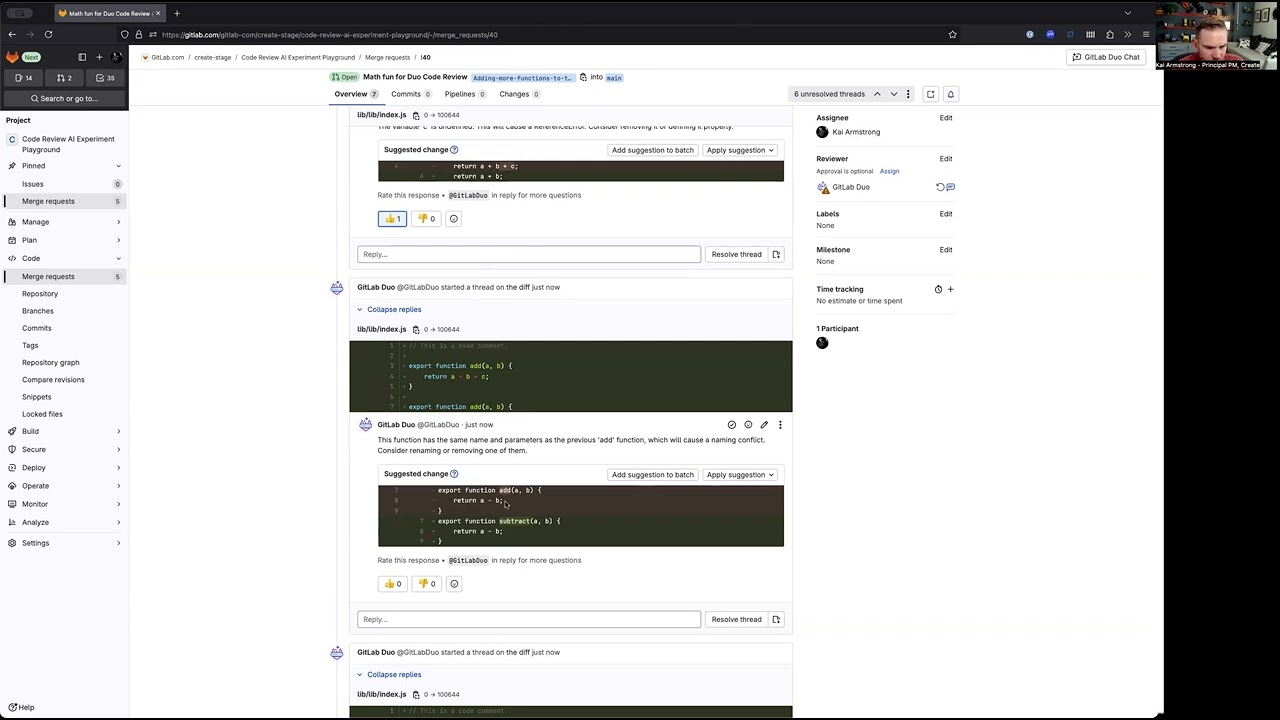
GitLab Duo integrates AI capabilities directly into GitLab’s DevSecOps platform. Provides end-to-end AI assistance throughout the development lifecycle.
Core Capabilities
AI-powered code suggestions within GitLab. Code review assistance integrated with merge requests. Security scanning with AI analysis. Pipeline optimization recommendations.
Chat interface for coding questions. Documentation generation from commits.
Supported Languages & Frameworks
Supports languages GitLab handles. Broad language coverage for enterprise needs. Framework-agnostic approach.
Native GitLab integration advantage.
Integration Options
Platform: Native GitLab integration CI/CD: Built into GitLab pipelines Security: DevSecOps workflow integration Collaboration: Merge request and issue tracking
Seamless for existing GitLab users.
AI/ML Technology
AI models integrated throughout GitLab platform. Machine learning for code analysis and suggestions. Security vulnerability detection with AI.
End-to-end AI across development lifecycle.
Key Features
Native integration: Built directly into GitLab Full SDLC coverage: From code to deployment Security scanning: AI-enhanced vulnerability detection Code suggestions: Context-aware recommendations Pipeline optimization: AI-driven CI/CD improvements
Advantage for GitLab-centric organizations.
Pricing Model
Included with GitLab tiers. Pricing follows GitLab subscription model.
May require specific GitLab plan level.
Best For
Organizations standardized on GitLab. Teams wanting unified DevSecOps platform with AI. Enterprises needing end-to-end AI integration.
Natural choice for existing GitLab customers.
Pieces
Pieces is an AI-powered developer productivity tool that saves, shares, and reuses code snippets with context. Focuses on knowledge management for developers.
Core Capabilities
Saves code snippets with full context. AI-powered search across saved snippets. Shares code with team members. Generates explanations for code.
Context preservation including source, tags, descriptions. Workflow integration for easy access.
Supported Languages & Frameworks
Language-agnostic snippet management. Works with any programming language. Universal code snippet handling.
Focuses on snippet utility rather than analysis.
Integration Options
IDEs: Plugins for major development environments Browsers: Extensions for web-based code Team tools: Sharing and collaboration features Cloud sync: Access snippets anywhere
Cross-platform availability.
AI/ML Technology
AI-powered search finds relevant snippets quickly. Context understanding for better organization. Natural language queries for snippet retrieval.
Machine learning improves search relevance.
Key Features
Snippet management: Save and organize code with context AI search: Find snippets using natural language Team sharing: Collaborate on code snippets Context preservation: Maintains snippet source and metadata Workflow integration: Access snippets in development flow
Reduces time searching for previously written code.
Pricing Model
Free tier available. Paid plans for advanced features and team collaboration.
Accessible for individual developers.
Best For
Developers frequently reusing code patterns. Teams wanting to share knowledge through snippets. Individuals building personal code libraries.
Different focus than traditional code review tools.
HackerOne Code

HackerOne Code combines AI-driven security analysis with expert human validation. Focuses specifically on security vulnerability detection and fixing.
Core Capabilities
Identifies security vulnerabilities before production. AI analysis with expert validation. Real-time security guidance during development. Continuous, contextual feedback on code security.
Security-first code review approach. Vulnerability detection across SDLC.
Supported Languages & Frameworks
Supports all major programming languages and frameworks. Platform-agnostic security analysis. Comprehensive technology stack coverage.
Expert reviewers handle any language.
Integration Options
Developer tools: Integrates into existing workflows CI/CD: Security checks in pipelines
Version control: Git platform integration Communication: Direct feedback channels
Minimal friction integration approach.
AI/ML Technology
AI-driven security pattern recognition. Machine learning identifies vulnerability patterns. Expert validation reduces false positives.
Hybrid approach balances speed and accuracy.
Key Features
AI + human validation: Best of automation and expertise Real-time guidance: Security feedback as you code Production protection: Catch vulnerabilities before deployment Security habits: Build lasting secure coding practices Custom configuration: Adjust review depth and targeting
Smart review selection with out-of-box defaults.
Pricing Model
Pricing based on team size and needs. Enterprise pricing for larger organizations.
Premium positioning for security-critical needs.
Best For
Security-focused teams requiring expert validation. Organizations with strict security compliance. Applications handling sensitive data.
Specialized tool for security-first development practices.
FAQ on The Best AI-Powered Code Review Tools
What do AI code review tools actually do?
AI code review tools analyze pull requests automatically, detecting bugs, security vulnerabilities, and code smells. They enforce coding standards, suggest fixes, and provide feedback within seconds. Most integrate with GitHub, GitLab, or Bitbucket for automated analysis.
How accurate are AI-powered code reviewers compared to human reviewers?
Accuracy varies by tool. DeepSource guarantees below 5% false positives, while Snyk Code AI offers 80% accurate autofixes. AI catches consistent pattern issues humans miss but struggles with business context and architectural decisions requiring human judgment.
Can AI code review tools replace human code reviewers?
No. AI handles routine checks like syntax errors, security patterns, and style violations efficiently. Human reviewers remain essential for evaluating architecture, understanding business logic, mentoring junior developers, and making context-dependent decisions about code quality.
Which programming languages do these tools support?
Coverage varies widely. SonarQube supports 35+ languages, Codacy handles 49 ecosystems, while Amazon CodeGuru only supports Java, Python, and JavaScript. Most tools cover popular languages like JavaScript, TypeScript, Python, Java, and C#.
How much do AI code review tools cost?
Pricing ranges dramatically. GitHub Copilot starts at $10/month, CodeRabbit at $12/seat/month, Bito at $15/user/month, and Greptile at $30/developer/month. Enterprise plans with custom pricing suit larger organizations. Many offer free tiers for open source projects.
Do these tools work with my existing development workflow?
Yes. Most integrate seamlessly with version control systems like GitHub, GitLab, Bitbucket, and Azure DevOps. They also connect with popular IDEs including VS Code, JetBrains, and provide CI/CD pipeline integration for continuous integration and deployment workflows.
What’s the difference between static analysis and AI code review?
Static analysis uses predefined rules to scan code without execution. AI code review combines static analysis with machine learning, understanding code context and patterns. AI adapts to your codebase, learns from feedback, and provides intelligent suggestions beyond basic rule checking.
How do AI tools handle code security and privacy?
Security approaches vary. Tabnine offers on-premises deployment with zero data retention. CodeRabbit uses ephemeral processing with SOC 2 compliance. Greptile provides air-gapped self-hosting. Most tools encrypt data in transit and don’t train models on customer code.
Can AI code reviewers learn my team’s coding standards?
Advanced tools adapt to team standards. Qodo Merge learns from merged pull requests and review comments. CodeRabbit adjusts based on accepted suggestions. Greptile reads engineer PR comments and tracks reactions. Custom rules let teams define organization-specific coding practices explicitly.
What metrics should I track to measure ROI from AI code review tools?
Track review time reduction, bugs caught before production, merge velocity, and developer satisfaction. Bito users report 89% faster merges and 34% fewer regressions. CodeRabbit teams see 50% review time reduction. Focus on quality improvements and productivity gains.
Conclusion
Choosing the best AI-powered code review tools depends on your specific needs. Security-focused teams lean toward Snyk Code AI or HackerOne Code, while enterprises managing technical debt prefer CodeScene’s behavioral analysis.
GitHub Copilot works if you’re already in that ecosystem. CodeRabbit and Bito excel at full codebase context understanding.
The tools covered here handle everything from static analysis to automated testing and continuous integration. Some offer machine learning that adapts to your coding standards, while others provide deployment pipeline integration for seamless workflows.
Start with free tiers or trials. Test how tools handle your actual pull requests, not marketing demos. The right platform catches bugs faster, enforces quality standards consistently, and speeds up your software development lifecycle without disrupting proven processes.

- venv vs conda vs poetry: Which One for Which Project - October 9, 2026
- How to Delete a Python venv Without Breaking Your Project - October 7, 2026
- Google Play Account Suspended: What to Do - October 5, 2026


