

Netflix processes roughly 1 million Kafka messages per second. Uber handles trillions of events daily across multiple regions. Both run on event-driven architecture.
So what is event-driven architecture, and why have the largest distributed systems in the world adopted it? At its core, EDA is a software design pattern where services communicate through events rather than direct calls, enabling asynchronous, loosely coupled systems that scale independently.
This article breaks down how event-driven architecture works, the patterns behind it (event sourcing, CQRS, pub/sub), the tools teams actually use in production, and when it makes sense to adopt it. You’ll also learn where EDA falls short, because the trade-offs are real and worth understanding before you commit.
What Is Event-Driven Architecture
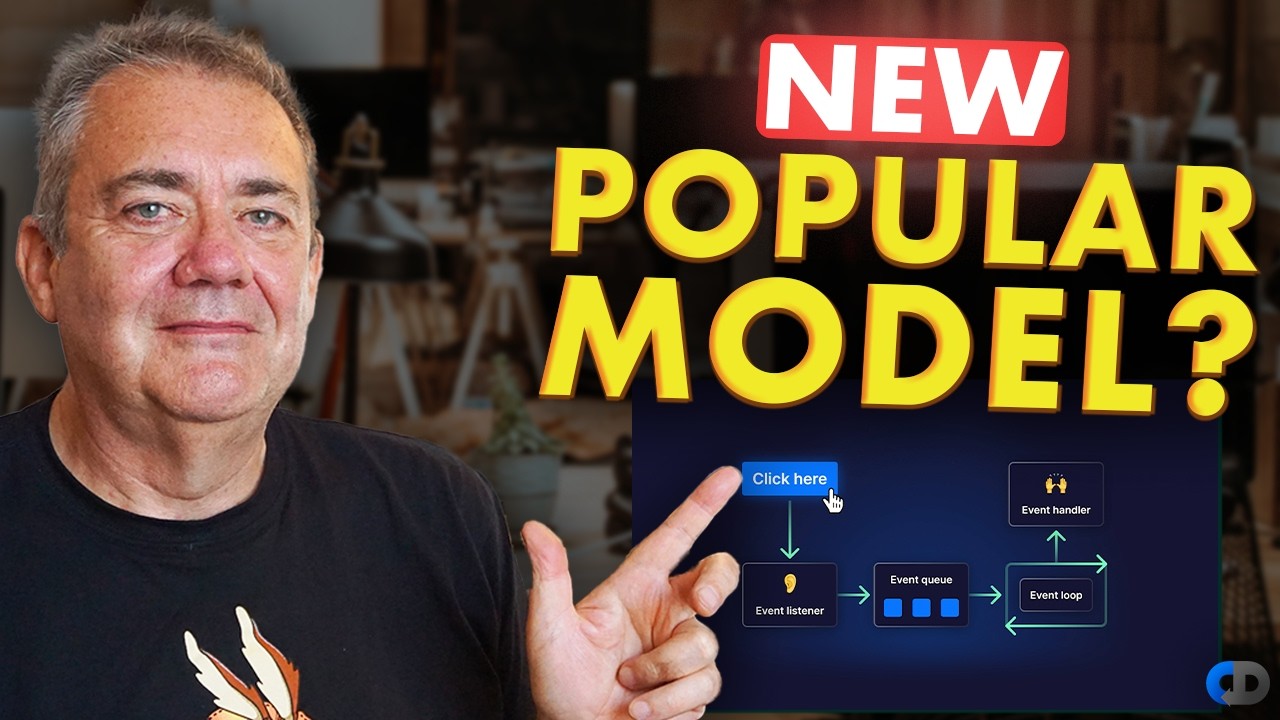
Event-driven architecture (EDA) is a software design pattern where the flow of a program is determined by events. User actions, sensor outputs, messages from other services, database changes. Any of these can trigger a response.
Instead of one service calling another and waiting around for a reply, EDA flips the model. Services produce events and other services react to them, independently and often asynchronously.
The idea has been around since the 1950s. Forrester analyst David Mooter has noted that computers have been responding to events in various forms for decades. But advances in cloud computing, distributed systems, and microservices pushed EDA from a niche pattern into something close to standard practice for large-scale applications.
A Solace global survey found that 72% of organizations use event-driven architecture in some capacity, though maturity levels vary widely. Only 13% consider themselves fully mature in their EDA adoption.
Three components sit at the core of every event-driven system:
- Event producers: services, devices, or user interfaces that generate events
- Event consumers: services that listen for and react to specific events
- Event channels: the infrastructure (brokers, queues, streams) that routes events between producers and consumers
The big difference between EDA and traditional request-response systems comes down to coupling. In a typical REST-based setup, Service A calls Service B and blocks until it gets a response. If Service B is slow or down, Service A suffers too.
With EDA, the service posting an event doesn’t care who picks it up or when. That loose coupling makes systems more resilient. It also makes them harder to debug, but we’ll get to that.
Events vs. Commands vs. Queries
These three get confused constantly. An event is a fact that already happened (“OrderPlaced,” “PaymentReceived”). It’s past tense. Nobody argues with it.
A command is a request for something to happen (“PlaceOrder,” “ProcessPayment”). It can be rejected. A query is a request for data that doesn’t change anything.
EDA centers on events. Services broadcast what happened and let other services decide what to do about it. This distinction matters more than most tutorials make it seem, because it shapes how you design your system documentation and contracts between teams.
How Event-Driven Architecture Works

An event goes through four stages: creation, routing, processing, and (optionally) storage. Sounds simple. The complexity lives in the details of each step.
When something happens in a system, a producer creates an event. That event gets published to a channel, which is managed by a broker or streaming platform. Consumers subscribed to that channel pick up the event and act on it.
The whole thing can happen synchronously or asynchronously. Most real EDA implementations lean heavily toward async because that’s where the scaling benefits kick in.
According to a Gartner poll, 68% of IT leaders plan to increase their usage of event-driven architecture. The growth is tied directly to organizations needing faster, more responsive applications that handle real-time data.
Event Producers and Consumers
Producers can be almost anything. A mobile app submitting an order. An IoT sensor reporting temperature. A back-end service completing a database write.
Consumers subscribe to event channels and process events as they arrive. One event can trigger multiple consumers simultaneously. An “OrderPlaced” event might notify inventory, billing, and shipping services all at once, with none of them knowing (or caring) about the others.
This decoupling is the whole point. Producers and consumers operate independently, which means you can add new consumers without touching the producer’s codebase at all.
Event Channels and Brokers
The broker sits between producers and consumers. It handles routing, buffering, and often persistence of events.
Two main patterns exist here:
| Pattern | How It Works | Best For |
|---|---|---|
| Message Queue | Each message is consumed by exactly one consumer | Task distribution, job processing |
| Event Stream | Events are stored in a log; multiple consumers can read independently | Real-time analytics, event sourcing, audit trails |
Apache Kafka dominates the event streaming space. Over 80% of Fortune 100 companies use it, according to the Apache Foundation. Kafka is used by over 100,000 organizations as the de facto standard for data streaming.
RabbitMQ fills a different niche. It’s a traditional message broker, better suited for task queues where you need guaranteed delivery to a single consumer. For managed cloud options, Amazon EventBridge, Azure Event Grid, and Google Cloud Pub/Sub each offer event routing without the operational overhead of running your own broker.
Choosing between them usually comes down to throughput needs, ordering guarantees, and whether your team wants to manage infrastructure or pay for a managed service.
Event-Driven Architecture Patterns
Not all event-driven systems work the same way. The pattern you choose changes how data flows, how state is managed, and how much complexity your team inherits.
Four patterns show up most often in production systems. Each solves a different problem.
Event notification is the simplest. A service broadcasts that something happened, and that’s it. No payload beyond the basics. Consumers who care about the details go fetch them separately. Low coupling, but it can create chatty systems if consumers constantly need to call back for data.
Event-carried state transfer takes the opposite approach. The event itself contains all the data consumers need. No callbacks required. This reduces network traffic between services but increases event size and can lead to data duplication across the system.
Event Sourcing

This pattern stores state as a sequence of events rather than as a current snapshot. Instead of updating a row in a database, you append an event to a log.
Want to know the current state? Replay all the events from the beginning. Want to know the state as of last Tuesday? Replay events up to that point and stop.
Greg Young popularized the concept, and EventStoreDB was built specifically for this pattern. The trade-offs are real, though. Storage grows continuously because you never delete events. Querying becomes harder because you can’t just SELECT from a table. And the learning curve is steep for teams accustomed to CRUD-style persistence.
Financial institutions and healthcare systems often adopt event sourcing because they need complete audit trails. According to Mia-Platform, event sourcing and CQRS are especially common in industries where accurate record-keeping and flexible data management are non-negotiable.
CQRS with Event-Driven Architecture

Command Query Responsibility Segregation splits your system into two sides. The write side handles commands and stores events. The read side maintains optimized views for queries.
CQRS pairs naturally with event sourcing because event-sourced systems already separate how data is written from how it’s read. Microsoft’s Azure Architecture Center documentation describes how the event store becomes the write model and the single source of truth, while the read model generates materialized views from those events.
But here’s the thing. CQRS adds real complexity. You’re maintaining two separate data models, dealing with eventual consistency, and writing synchronization logic. For a straightforward CRUD application, it’s overkill. The pattern makes sense when read and write workloads have fundamentally different performance, scaling, or security requirements.
Tools like the Axon Framework and ksqlDB (built on Kafka) simplify implementation, but “simplify” is relative. Your team still needs to understand distributed data management patterns well enough to handle edge cases.
Event-Driven Architecture vs. Request-Driven Architecture

Most teams default to request-response. And honestly, for a lot of applications, that’s the right call.
A RESTful API where Service A sends a request and Service B sends back a response works perfectly when you need an immediate answer and the system is small enough that tight coupling won’t bite you.
EDA makes more sense when services don’t need to wait for each other, when you’re dealing with high-throughput data, or when you need to broadcast state changes to multiple consumers.
| Factor | Request-Driven | Event-Driven |
|---|---|---|
| Coupling | Tight (caller depends on callee) | Loose (producer doesn’t know consumers) |
| Communication | Synchronous | Asynchronous |
| Debugging | Straightforward request tracing | Requires distributed tracing tools |
| Scaling | Scale the entire call chain | Scale consumers independently |
| Consistency | Immediate (usually) | Eventual |
An empirical study published in ScienceDirect compared the same application implemented with both architectures. The monolithic architecture consumed fewer computational resources and had better response times. EDA’s advantages showed up in resilience, flexibility, and independent scalability of components.
The honest answer? Most production systems use both. You’ll see synchronous REST or GraphQL APIs on the edges (client-facing) and asynchronous event-driven communication between backend services. Trying to go pure EDA everywhere usually creates more problems than it solves.
Benefits of Event-Driven Architecture

A RisingWave survey found that 85% of organizations recognize significant business value in adopting EDA. That number tracks with what you see in practice once systems hit a certain scale.
Loose Coupling Between Services
Producers don’t know who consumes their events. Consumers don’t know who produced them. This means teams can build, deploy, and update their services independently.
A new analytics team wants to tap into order data? They subscribe to the “OrderPlaced” event stream. Zero changes to the order service. Zero coordination meetings. This is where EDA pays for itself in organizations with multiple development teams working on the same software system.
Scalability Through Independent Consumer Scaling
Each consumer scales on its own. If your notification service gets hammered during Black Friday but your inventory service handles fine, you scale notifications without touching inventory.
LinkedIn processes trillions of events daily through Kafka using partitioning and sharding, according to Growin. That kind of throughput is possible because each part of the system scales to what it actually needs.
Real-Time Processing and Resilience
Events get processed as they happen. Not in a nightly batch job. Not after a polling interval. Immediately.
Netflix consumes roughly 1 million messages per second across several Kafka topics, according to their engineering blog. This event-driven pipeline powers personalization and monitoring for over 260 million subscribers.
If a consumer goes down, events queue up in the broker. When it recovers, it catches up. The producer never knew anything was wrong. That resilience is baked into the architecture, not bolted on as an afterthought.
Challenges and Trade-Offs

EDA is not free. Every benefit comes with a cost, and teams that adopt it without understanding the trade-offs end up with systems that are harder to manage than what they replaced.
Eventual Consistency
When Service A publishes an event and Service B processes it asynchronously, there’s a window where they disagree about the state of the world. A user might place an order and see “processing” for a few seconds before the inventory service confirms stock is available.
For some applications, that’s totally fine. For others (financial transactions, safety-critical systems), it’s a dealbreaker. Your requirements engineering process needs to explicitly address which parts of the system can tolerate eventual consistency and which can’t.
Debugging Distributed Event Flows
A request-response system gives you a clean call stack. An event-driven system gives you a scattered trail across multiple services, brokers, and consumer groups.
Spotify’s event delivery infrastructure processes up to 8 million events per second, or roughly 500 billion events daily. At that scale, debugging a single business transaction that spans dozens of events across multiple services requires serious investment in observability and tracing.
Correlation IDs (attaching a unique identifier to every event in a chain) are table stakes. Beyond that, teams need distributed tracing with tools like OpenTelemetry, Datadog, or New Relic. Both Datadog and New Relic expanded their Kafka and EventBridge integrations in 2024 to provide better visibility into consumer lag, throughput, and error rates.
Event Ordering and Idempotency
Ordering: In a partitioned system like Kafka, events within a single partition are ordered. Across partitions, they’re not. If your business logic depends on processing “OrderPlaced” before “OrderShipped,” you need to design your partitioning strategy carefully.
Idempotency: Events can be delivered more than once (network hiccups, consumer restarts). Every consumer must handle duplicate events gracefully. Uber addressed this by generating unique identifiers for records, enabling deduplication and exactly-once semantics in their Kafka and Flink pipelines.
Schema Evolution and Infrastructure Complexity
Event schemas change over time. A field gets added, a type changes, a field gets deprecated. If producers and consumers aren’t aligned on schema versions, things break.
Tools like Apache Avro, Protocol Buffers, and schema registries help manage this. But they add another layer to your configuration management process.
And then there’s the infrastructure itself. Running a Kafka cluster (or any message broker) in production means monitoring broker health, managing topic partitions, tuning consumer groups, and planning for disaster recovery. The cloud microservices market was valued at USD 1.84 billion in 2024 and is projected to reach USD 8.06 billion by 2032, according to Fortune Business Insights. Part of that growth is driven by organizations choosing managed services specifically to avoid the operational burden of self-hosted brokers.
Event-Driven Architecture in Microservices

EDA and microservices architecture grew up together. The whole point of microservices is independent services that own their own data. But the moment you need those services to coordinate, you’ve got a problem.
Traditional request-response creates tight coupling between services. Service A calls Service B, which calls Service C. If C is slow, everyone waits. If C is down, the whole chain breaks.
Event-driven communication fixes this by letting services broadcast what happened instead of telling other services what to do. A Gartner report found that roughly 74% of surveyed organizations already use microservices. Most of them eventually land on some form of asynchronous event-driven messaging between those services.
Choreography vs. Orchestration
Two approaches to coordinating microservices through events:
Choreography: Each service publishes domain events that trigger actions in other services. No central controller. The order service emits “OrderCreated,” the payment service picks it up, processes it, and emits “PaymentCompleted.” Nobody is directing traffic.
Orchestration: A central orchestrator tells each service what to do and when. It tracks the overall workflow state and handles failures by issuing rollback commands.
| Approach | Best For | Watch Out For |
|---|---|---|
| Choreography | Simple flows, 3–5 services | Hard to trace, implicit dependencies |
| Orchestration | Complex flows, many participants | Single point of control, tighter coupling |
In practice, most teams use a hybrid. Simple flows get choreography. Complex multi-step business processes get an orchestrator. Both patterns can coexist in the same system.
The Saga Pattern for Distributed Transactions
Microservices can’t use traditional database transactions across service boundaries. The saga pattern, introduced by Hector Garcia-Molina and Kenneth Salem in 1987, breaks a distributed transaction into a sequence of local transactions.
Each service completes its piece and publishes an event. If any step fails, compensating transactions roll back the previous steps. An order saga might reserve inventory, charge payment, and schedule shipping as three separate local transactions connected by events.
Netflix built its Content Finance platform on event-driven microservices with Kafka, using keyed messages to maintain event ordering across finance data processing services. Uber runs one of the largest Kafka deployments on the planet, processing trillions of messages daily with exactly-once semantics across multiple regions.
Tools and Technologies for Event-Driven Systems

The tooling has matured a lot. You’re no longer choosing between “Kafka or nothing.” Managed cloud services, lightweight brokers, and full frameworks each serve different needs and team sizes.
Forrester now classifies data streaming platforms as a formal software category. Apache Kafka remains the de facto standard, used by over 100,000 organizations according to the Apache Foundation, but it’s not always the right pick.
Event Streaming Platforms
Apache Kafka handles high-throughput, low-latency data streams. It can process millions of messages per second and provides durable, replayable event logs. Kafka 4.0 completed the transition to KRaft mode, removing the ZooKeeper dependency that had been a pain point for years.
Apache Pulsar offers multi-tenancy and tiered storage out of the box. It’s gaining traction for organizations that need strict isolation between different teams or workloads consuming from the same cluster.
NATS JetStream, a lighter alternative, has been adopted for edge computing and IoT workloads where Kafka’s footprint is too heavy.
Message Brokers
Kafka processes millions of messages per second using its distributed log architecture. RabbitMQ handles thousands per second with stronger message delivery guarantees.
- RabbitMQ: AMQP-based, supports complex routing via exchanges, great for task queues and webhook delivery
- Redis Streams: lightweight, works well when you already run Redis for caching
- Amazon SQS: fully managed, zero operational overhead, fits well inside AWS-heavy cloud-based applications
AWS breaks it down clearly: RabbitMQ prioritizes end-to-end message delivery with a push model, while Kafka uses a pull model optimized for high-throughput streaming. They’re not competing tools. They solve different problems.
Managed Cloud Services
Not every team wants to run brokers themselves. Managing Kafka clusters at scale is a full-time job for at least one engineer, sometimes a whole team.
| Service | Provider | Best For |
|---|---|---|
| Amazon EventBridge | Amazon Web Services | Serverless event routing, AWS-native apps |
| Azure Event Grid | Microsoft | Reactive programming, Azure integrations |
| Google Cloud Pub/Sub | Global message delivery, multi-cloud | |
| Confluent Cloud | Confluent | Managed Kafka with governance tools |
Confluent, the company founded by Kafka’s original creators, projected revenue growth of 23-25% in 2024-2025 according to Oppenheimer analysts. That growth reflects how many enterprises prefer paying for a managed streaming platform over building in-house Kafka expertise.
Frameworks and Libraries
The software development process for event-driven systems gets easier with dedicated frameworks:
- Axon Framework for event sourcing and CQRS in Java/Spring
- MassTransit for .NET microservices with RabbitMQ or Kafka
- Spring Cloud Stream for building message-driven microservices with configurable binders
For stream processing, Apache Flink leads the space. Flink 2.0, released in 2024, added APIs for machine learning inference over streams. Kafka Streams offers a lighter embedded alternative for services that consume directly from Kafka without a separate cluster.
When to Use Event-Driven Architecture
EDA is not a default choice. It adds complexity. The question is whether that complexity buys you something your system actually needs.
Solace survey data shows that 94% of organizations that successfully implemented EDA said they would apply it to additional use cases. But “successfully implemented” is doing a lot of heavy lifting in that sentence. The 46% who cited improving application responsiveness as their top priority had clear use cases. The ones who adopted EDA because it sounded modern had a rougher time.
Strong Use Cases
High-volume real-time data: IoT sensors, financial market feeds, and ad tech platforms generate continuous streams of data that need immediate processing. Citi Commercial uses EDA for algorithmic trading where milliseconds matter.
Multiple consumers for the same data: When an “OrderPlaced” event needs to trigger inventory, billing, shipping, analytics, and fraud detection simultaneously, EDA is the natural fit. Each consumer processes independently.
Audit and compliance requirements: Industries like finance and healthcare need complete records of every state change. Goldman Sachs shared in 2023 how its event-driven trading platform balanced eventual consistency with strict financial accuracy through compensating mechanisms.
When to Avoid It
Simple CRUD applications don’t need event brokers. If your app reads and writes to a single database and serves a handful of users, adding Kafka is like buying a semi-truck to deliver groceries.
Small teams struggle with the operational overhead. Running event infrastructure, managing schemas, tracing distributed flows, and handling eventual consistency all require skills and headcount that a three-person startup probably doesn’t have.
A Solace study found that 27% of organizations recognized EDA’s benefits but simply lacked the resources to implement it. That’s an honest assessment and sometimes the right call.
Signs Your Current System Needs EDA
- Services frequently time out waiting for downstream responses
- Deploying one service requires redeploying others
- Batch jobs run nightly when the business needs real-time data
- Adding a new consumer means modifying producer code
If two or more of those sound familiar, it’s worth evaluating event-driven patterns for at least part of your system. You don’t have to go all-in. Most production architectures use EDA selectively, applying it where the benefits justify the added complexity and sticking with API integrations where simple request-response works fine.
The right software architecture is the one that matches your actual constraints, not the one that looks best on a conference slide.
FAQ on What Is Event-Driven Architecture
What is event-driven architecture in simple terms?
Event-driven architecture is a software design pattern where services communicate through events instead of direct calls. When something happens (a user clicks, an order is placed), the system broadcasts that event and other services react to it independently.
What is an example of event-driven architecture?
An e-commerce checkout. When a customer places an order, the system publishes an “OrderPlaced” event. Inventory, payment, shipping, and notification services all consume that event and process it simultaneously without waiting on each other.
What is the difference between event-driven and request-driven architecture?
Request-driven architecture uses synchronous calls where one service waits for a response. Event-driven architecture uses asynchronous communication where producers broadcast events and consumers react independently. EDA offers looser coupling but introduces eventual consistency.
What are the main benefits of event-driven architecture?
Loose coupling between services, independent scaling of consumers, real-time data processing, and built-in resilience. If a consumer goes down, events queue up in the broker and get processed once the service recovers.
What tools are used to build event-driven systems?
Apache Kafka dominates event streaming. RabbitMQ handles traditional message queuing. Managed options include Amazon EventBridge, Azure Event Grid, and Google Cloud Pub/Sub. Frameworks like Axon and MassTransit simplify implementation for development teams.
What is the difference between event sourcing and event-driven architecture?
Event-driven architecture is a broad design pattern for how services communicate. Event sourcing is a specific data persistence pattern within EDA that stores state as a sequence of immutable events rather than current-state snapshots in a database.
Is event-driven architecture the same as microservices?
No. Microservices is an architectural style for structuring applications as independent services. Event-driven architecture is a communication pattern. Microservices can use REST, gRPC, or events. EDA just happens to pair well with microservices because both favor loose coupling.
What is CQRS in event-driven architecture?
CQRS (Command Query Responsibility Segregation) separates read and write operations into different models. In EDA, the write side stores events while the read side maintains optimized views. It pairs naturally with event sourcing but adds complexity to your system.
When should you not use event-driven architecture?
Avoid EDA for simple CRUD applications, small teams without distributed systems experience, or systems that need immediate consistency. The operational overhead of running brokers, managing schemas, and debugging async flows isn’t worth it for straightforward use cases.
How do companies like Netflix and Uber use event-driven architecture?
Netflix uses Kafka-based event pipelines to power personalization and monitoring for over 260 million subscribers. Uber processes trillions of messages daily through Kafka and Apache Flink with exactly-once semantics for pricing and fraud detection.
Conclusion
Understanding what is event-driven architecture matters because the pattern sits at the center of how modern distributed systems handle real-time data at scale. From publish-subscribe messaging to event sourcing and CQRS, EDA gives teams a way to build loosely coupled services that scale independently.
The tools are mature. Apache Kafka, RabbitMQ, managed cloud brokers, and frameworks like Axon and Spring Cloud Stream make implementation more accessible than it was five years ago.
But EDA is not a universal fix. Eventual consistency, debugging complexity, and infrastructure overhead are real costs. Small teams with simple applications should stick with REST APIs and synchronous calls until the pain of tight coupling actually shows up.
Start with a clear problem. Apply event-driven patterns where they solve that problem. Skip them where they don’t.

- How Software Teams Write SOPs for Releases and Deployments - October 22, 2026
- Notepad++ Android Options: Apps That Come Close - October 21, 2026
- Data Management Services: A Practical Guide for Growing Companies - October 21, 2026


