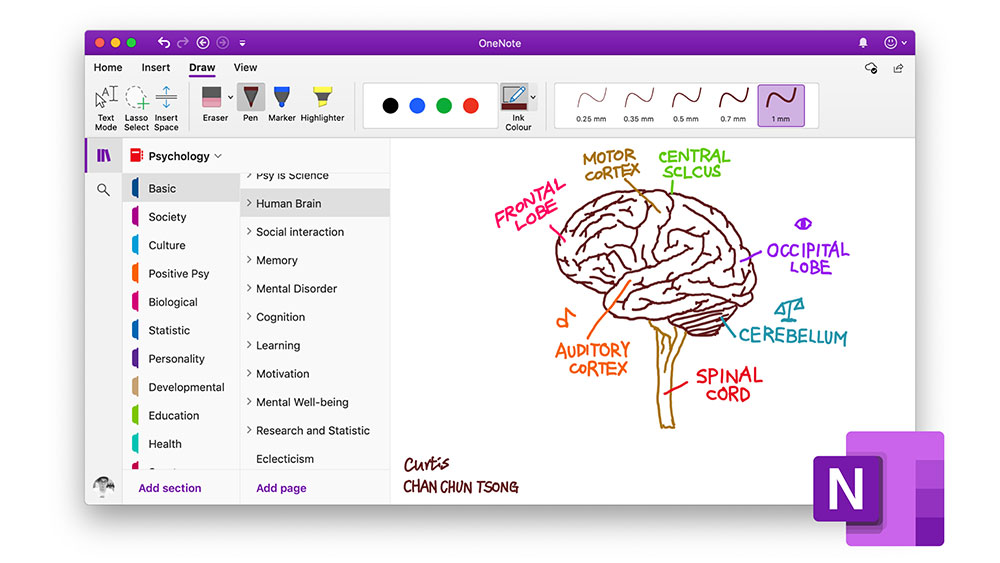
Microsoft OneNote has been the default digital notebook for millions of people. But it’s not the only option anymore, and honestly, it’s not always the best one either.
Maybe the sync issues finally broke you. Maybe the cluttered interface got in the way. Or maybe you just need something that fits how you actually work, whether that’s Markdown note-taking, handwriting on an iPad, or building a connected knowledge base with backlinks.
Whatever the reason, there are solid apps like OneNote worth trying. Some are free. Some are open source. A few do things OneNote never figured out.
This guide covers 10 note-taking alternatives across different platforms and use cases. You’ll find the features, pricing, and honest trade-offs for each one so you can pick the right tool without wasting a week testing everything yourself.
Apps Like OneNote
Notion
What It Does
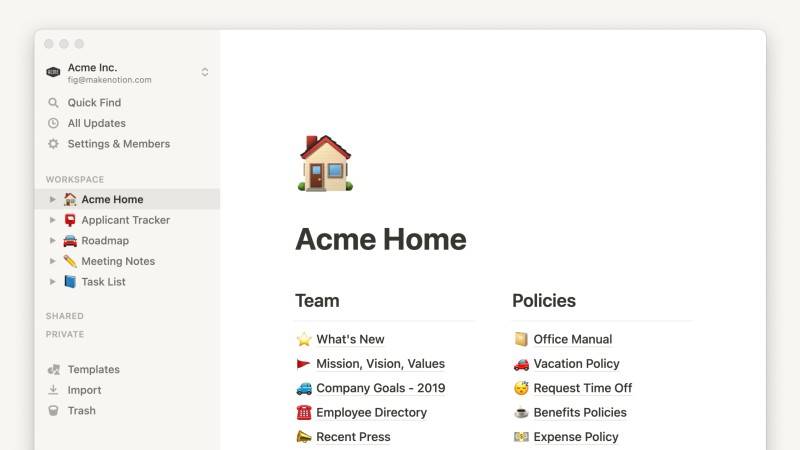
Notion is a full workspace that goes way beyond basic note-taking. You can build pages from blocks, including text, images, databases, kanban boards, calendars, and embedded content.
It works like a personal wiki combined with a project management tool. You write notes, link them together, and organize everything into nested pages.
Think of it as a digital notebook that also handles task management and team documentation. All in one place.
Best For
- Teams that need real-time collaboration on shared docs
- Students building a second brain or course wiki
- Freelancers juggling notes, tasks, and client projects
- Anyone who wants more structure than OneNote offers
Key Features
The slash command menu lets you insert headings, text, images, boards, and calendars quickly. Drag and drop blocks to rearrange your layout on the fly.
Notion supports embedded content from YouTube, Google Docs, Figma, Miro, and more. It also has built-in AI that can summarize meeting notes, generate action items, and answer questions about your workspace.
Templates are everywhere. You can start with pre-built setups for meeting notes, project trackers, habit logs, or build your own from scratch.
Platforms and Pricing
Available on Windows, macOS, iOS, Android, and web.
The free plan gives you unlimited pages and blocks for personal use. The Plus plan costs $10/user/month (billed annually). Business runs $20/user/month and includes full AI access. Enterprise pricing is custom.
What’s Missing
The learning curve is real. Took me a while to stop feeling overwhelmed by all the options. And if you just want to open an app and start writing, Notion might feel like overkill.
Offline support exists but it’s not as reliable as local-first apps. The free plan also caps file uploads at 5MB per file, which gets annoying fast.
Verdict
If OneNote feels too basic for how you work, Notion is probably your best bet. It handles notes, tasks, and documentation better than most alternatives. But it demands more setup time upfront. If you prefer apps that focus on a lighter, more gamified approach to productivity, you might want something simpler.
Evernote
What It Does
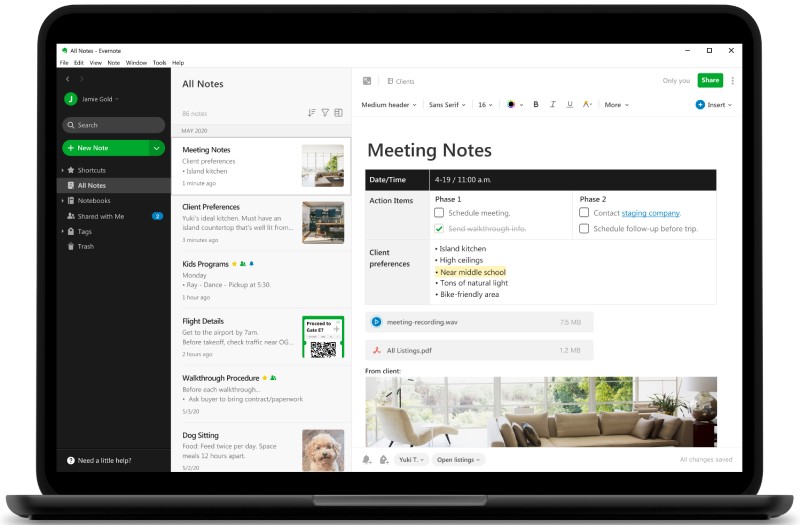
Evernote is one of the oldest digital note-taking apps still around. It captures text, web clippings, images, audio recordings, and scanned documents into searchable notebooks.
The web clipper is still one of the best in the business. It grabs articles, simplified pages, screenshots, or bookmarks directly into your notebooks from any browser.
Best For
- Researchers and heavy web clippers
- People who need OCR text recognition in images and PDFs
- Professionals who want structured notebook organization
- Anyone migrating from OneNote who wants a similar hierarchy system
Key Features
Evernote supports nested tags, saved searches, and internal note linking. Its search function digs through handwritten notes, images, and PDF attachments.
Task management is built in now. You can create to-do lists, set due dates, and flag notes. Calendar integration connects your Google Calendar to relevant notes automatically.
The newer AI features include AI-powered search and content editing tools, available on the Advanced plan.
Platforms and Pricing
Works on Windows, macOS, iOS, Android, and web.
The free tier is extremely limited (50 notes, 1 notebook, 1 device sync). Starter costs $99/year with up to 1,000 notes and 20 notebooks. Advanced is $249.99/year with unlimited everything and AI tools.
What’s Missing
The pricing has gotten aggressive. Long-time users have seen costs jump significantly after Bending Spoons acquired the company. The free plan is basically a trial now.
Collaboration features still lag behind Notion and even OneNote. And the interface, while functional, feels a bit dated compared to newer note-taking apps.
Verdict
Evernote still does well at what it was built for: capturing, organizing, and searching through large volumes of notes. But the price-to-value ratio has shifted. If you’re starting fresh, there are better free alternatives. If you have years of notebooks already in Evernote, switching might not be worth the hassle.
Obsidian
What It Does
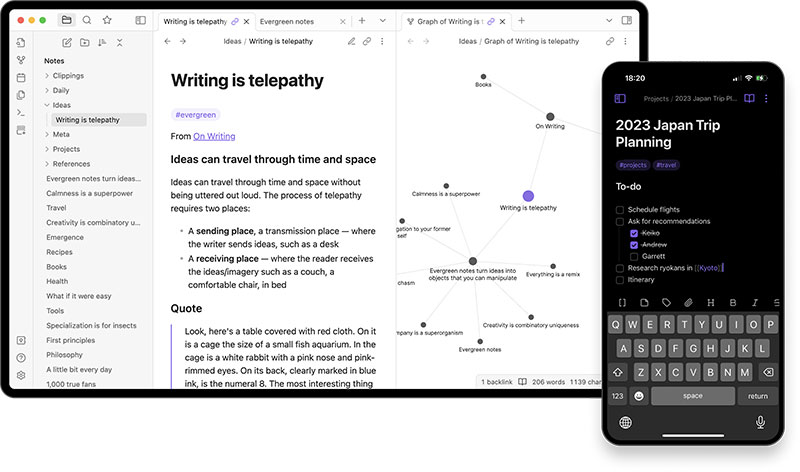
Obsidian stores all your notes locally as plain Markdown files. No cloud dependency, no account required. Your notes live in a folder on your device that you fully control.
The big differentiator is bidirectional linking and a graph view that visualizes how your notes connect. It turns your notebook into a personal knowledge base.
Best For
- Privacy-focused users who want local-first storage
- Writers, researchers, and students building a zettelkasten-style system
- Developers comfortable with Markdown
- Anyone who wants total control over their data
Key Features
Backlinks and graph view are the core features. Every time you link one note to another, Obsidian maps the relationship visually. Over time, your notes form a connected web of ideas.
The plugin ecosystem is massive. Community plugins cover everything from kanban boards to spaced repetition flashcards. Canvas mode gives you an infinite whiteboard for mind mapping.
Templates, daily notes, and split-screen editing come built in. You can customize nearly every aspect of the interface.
Platforms and Pricing
Available on Windows, macOS, Linux, iOS, and Android.
The core app is completely free, even for commercial use. Obsidian Sync (end-to-end encrypted cloud sync) costs $4/month billed annually. Obsidian Publish (turn notes into a website) is $8/month per site.
What’s Missing
No real-time collaboration. At all. This is a solo tool.
The learning curve is steep if you’ve never used Markdown. And syncing across devices requires either paying for Obsidian Sync or setting up your own solution through iCloud, Dropbox, or similar services.
Verdict
Obsidian is the best free note-taking app for people who think in connections rather than folders. If you want a linked notes system that you own completely, nothing else comes close. But it’s not for everyone. If you prefer a ready-to-go cloud-based notebook, look elsewhere. Those who enjoy creative tools with a hands-on setup process, like people who explore drawing apps similar to Procreate for Android, will appreciate Obsidian’s customization depth.
Google Keep

What It Does
Google Keep is a lightweight note app for quick capture. It handles text notes, checklists, voice recordings, and image notes. Everything syncs through your Google account.
Notes show up as color-coded cards. Simple. Fast. No setup needed.
Best For
- Quick reminders, grocery lists, and fleeting ideas
- Users already deep in the Google ecosystem
- People who want the simplest possible digital notebook
Key Features
Labels and color-coding keep things organized. OCR pulls text from images automatically. You can set location-based and time-based reminders on any note.
Collaboration is basic but functional. Share a note with someone and both of you can edit it in real time. Useful for shared shopping lists or quick team notes.
Google Keep integrates with Google Docs, letting you copy note content directly into a document.
Platforms and Pricing
Completely free. Works on iOS, Android, web, and through Chrome extension.
What’s Missing
No rich text formatting. No notebooks or hierarchical structure. Notes can get messy fast once you have more than a few dozen.
It’s not built for long-form writing or deep organization. If you need a structured digital notebook system, Keep won’t cut it.
Verdict
Google Keep is the sticky notes drawer of note-taking apps. Perfect for quick capture, terrible for anything complex. Use it alongside a more capable tool, not as a replacement for OneNote.
Joplin

What It Does
Joplin is a free, open-source note-taking app that supports Markdown, end-to-end encryption, and cross-platform sync. It’s the privacy-first alternative to Evernote.
Notes go into notebooks. You tag them, search them, and sync them using your choice of cloud service.
Best For
- Privacy-conscious users who want open-source software
- Evernote refugees looking for a free alternative
- Linux users (Joplin has excellent Linux support)
- Anyone who values data portability and encryption
Key Features
Markdown editor with WYSIWYG toggle. Notebook hierarchy with tags. Built-in web clipper for Firefox and Chrome.
End-to-end encryption keeps your notes private regardless of which sync service you use. You can sync through Dropbox, OneDrive, Nextcloud, or the official Joplin Cloud.
Supports file attachments, checklists, and inline images. Has a plugin system for extending functionality.
Platforms and Pricing
Available on Windows, macOS, Linux, iOS, and Android.
The app is free. Joplin Cloud starts at about $3/month and adds syncing, 2GB of storage, and note publishing.
What’s Missing
The interface looks dated. There’s no way around it. Compared to Notion or Bear, Joplin feels like it was designed by engineers for engineers.
No real-time collaboration. The mobile apps work but feel clunky compared to native alternatives. And setting up sync for the first time takes a bit of patience.
Verdict
Joplin is the best open-source OneNote alternative if privacy and data ownership matter to you. It does everything a basic note-taking app should. Just don’t expect polish or hand-holding.
Bear

What It Does
Bear is a Markdown note editor built exclusively for Apple devices. It focuses on clean writing, fast organization through hashtags, and a beautiful interface that stays out of your way.
Best For
- Writers and bloggers who love Markdown
- Apple users who want something more capable than Apple Notes
- Anyone who values typography and a distraction-free writing space
Key Features
Hashtag-based organization replaces traditional folders. Type #project/website inside a note and it automatically gets filed. Nested tags give you a flexible hierarchy without rigid structures.
The editor supports rich text previews, tables, code blocks, and inline images. Focus mode dims everything except the current paragraph.
Export options include PDF, HTML, Markdown, Word, and more. iCloud sync keeps everything updated across your Mac, iPhone, and iPad.
Platforms and Pricing
macOS, iOS, and iPadOS only.
Free with limited features. Bear Pro costs $2.99/month or $29.99/year and unlocks sync, advanced exports, and additional themes.
What’s Missing
No Windows, no Android, no web version. If you’re not fully in the Apple ecosystem, Bear isn’t an option. Period.
No collaboration features. No web clipper. And if you want database-style organization or task management, you’ll need a separate tool.
Verdict
Bear is the most elegant Markdown note editor on Apple platforms. If you write a lot and don’t need cross-platform access, it’s hard to beat. But the Apple-only limitation is a dealbreaker for many people.
Apple Notes

What It Does
Apple Notes is the default note-taking app on every Apple device. It handles text, checklists, scanned documents, sketches, photos, and audio clips. Everything syncs through iCloud.
It’s been quietly getting better every year. These days it does way more than most people realize.
Best For
- iPhone, iPad, and Mac users who want a zero-setup note app
- Quick capture and everyday notes
- People who don’t want to learn a new tool or pay for one
Key Features
Folder and tag organization. Smart folders filter notes automatically based on your criteria. Built-in document scanner with OCR.
Tables, checklists, rich text formatting, and inline sketching are all supported. You can lock individual notes with a password or biometric auth.
Collaboration lets multiple people edit the same note in real time. You can also access notes from a browser at icloud.com.
Platforms and Pricing
macOS, iOS, iPadOS, and web (iCloud). Completely free.
What’s Missing
No Windows or Android apps. Web access through iCloud is limited and clunky.
Organization is basic compared to Notion or Evernote. No Markdown support, no backlinks, no plugin ecosystem. If your note-taking needs grow beyond simple capture, Apple Notes starts to feel small.
Verdict
Apple Notes is the best free note-taking app you’re already not using enough. For Apple users who need quick, reliable notes without complexity, it handles the job well. Just know its limits. For people who enjoy video calling from Apple devices and want to explore FaceTime alternatives on other platforms, cross-platform note apps might be a better fit.
Simplenote

What It Does
Simplenote does exactly what the name says. Plain text notes. Instant sync. Nothing else.
No images, no attachments, no rich formatting. Just text and tags.
Best For
- Minimalists who want a distraction-free note app
- Developers who need quick text capture with Markdown
- Anyone who just wants to type and sync without friction
Key Features
Tags for organization. Version history tracks every change automatically. Markdown support for basic formatting.
Publish notes to the web with a single toggle. Pin important notes to the top. Dark mode available.
The search is instant, even with thousands of notes. It’s probably the fastest note app you’ll ever use.
Platforms and Pricing
Available on Windows, macOS, Linux, iOS, Android, and web. Completely free.
What’s Missing
Everything beyond text. No images. No file attachments. No folders. No handwriting. No audio notes.
If you need any kind of rich media in your notes, Simplenote is the wrong tool.
Verdict
Simplenote is the fastest cross-platform note app with zero cost. It’s perfect as a capture tool alongside something more robust. By itself, it can’t replace OneNote for most people.
GoodNotes
What It Does
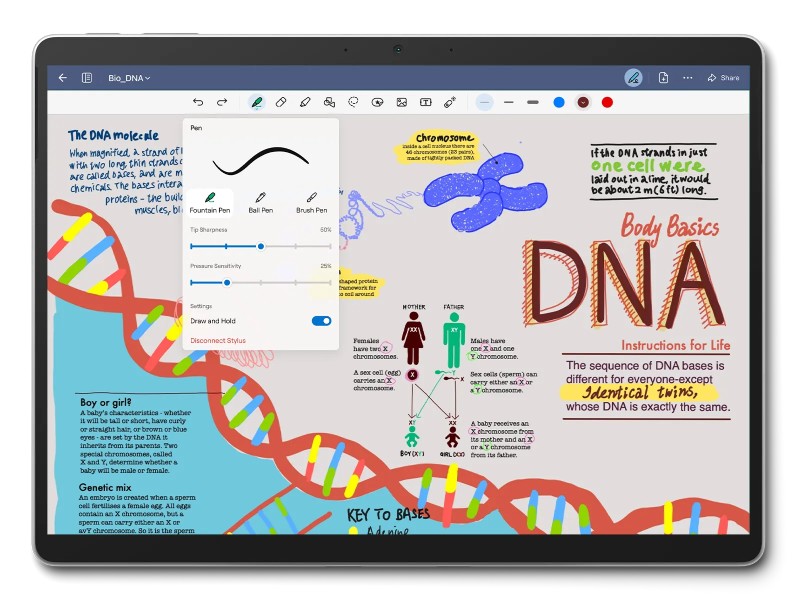
GoodNotes is a handwriting-first note-taking app built around the Apple Pencil experience. You write, sketch, and annotate PDFs on a digital canvas that feels close to real paper.
It recently expanded beyond Apple and now runs on Windows, Android, and web too.
Best For
- iPad users who take handwritten notes
- Students annotating lecture slides and textbooks
- Professionals who prefer pen input over typing
- Anyone who works heavily with PDF annotation
Key Features
Handwriting recognition that converts ink to searchable text. Mix different page templates (lined, grid, blank, dotted) within the same notebook.
AI features generate practice questions and flashcards from your notes. Shape recognition cleans up hand-drawn diagrams. Unlimited nested folders keep notebooks organized.
PDF import and markup tools make it a solid document annotation app. Export to PDF, image, or GoodNotes format.
Platforms and Pricing
iPad, iPhone, Mac, Windows, Android, and web.
Free version gives you 3 notebooks. GoodNotes Essentials costs $11.99/year or $35.99 one-time. Pro plan runs $35.99/year. AI features are an extra $9.99/month.
What’s Missing
Typing support exists but it’s secondary to handwriting. The desktop experience on Windows feels less polished than on iPad. And the AI add-on pricing feels steep for what you get.
No real-time collaboration on documents. Organization can feel rigid if you prefer tag-based systems over folders.
Verdict
GoodNotes is the best digital note-taking app for handwriting on iPad. If you own an Apple Pencil and take handwritten notes regularly, it’s the go-to choice. The cross-platform expansion is welcome but still maturing. People who also enjoy creative mobile tools, like those exploring animation apps similar to FlipaClip, will appreciate GoodNotes’ drawing capabilities.
Notability
What It Does
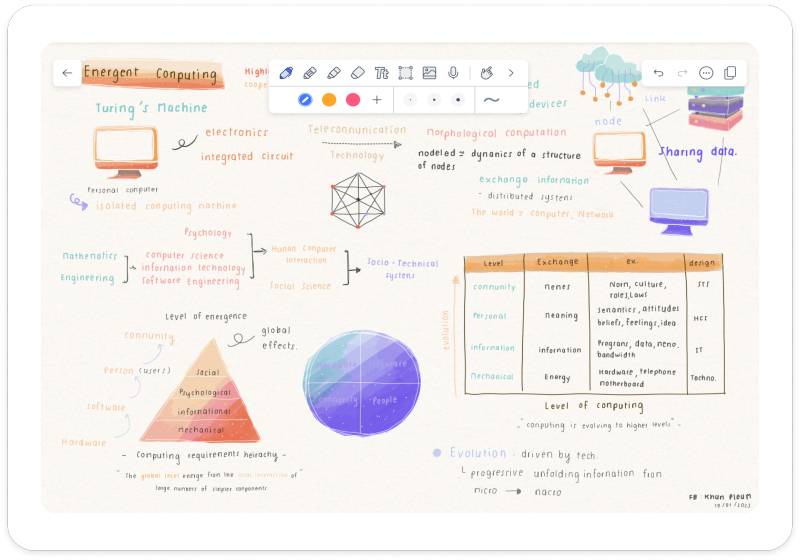
Notability combines handwritten notes with synced audio recordings. Write something down during a lecture or meeting, then tap on any word later to hear exactly what was being said at that moment.
That audio-linked feature alone sets it apart from every other note app.
Best For
- Students recording lectures while taking handwritten notes
- Meeting-heavy professionals who need audio playback
- Stylus users on iPad who want fast, fluid note creation
Key Features
Audio transcription converts recordings into searchable text. The multi-note split view lets you place two notes side by side for comparison.
Organization uses subjects and dividers with up to five levels of nesting. Built-in templates cover everything from Cornell notes to blank music sheets.
AI tools generate quizzes and summaries from your notes. Handwriting-to-text conversion works well for most handwriting styles.
Platforms and Pricing
iPad, iPhone, and Mac.
Free version is usable for casual note-taking. The full subscription unlocks advanced features including AI assistance, unlimited saving, and expanded storage.
What’s Missing
Apple only. No Windows, no Android, no web access.
Most features require the yearly subscription, which has frustrated some long-time users who bought the app when it was a one-time purchase. The organizational system is simpler than GoodNotes’ folder structure.
Verdict
Notability’s audio-synced note-taking is unmatched. If you record lectures, meetings, or interviews while writing, this is the app. But the Apple-only restriction and subscription model limit its appeal. For people exploring other audio-focused apps, you might also check out music creation tools like BandLab for a different kind of audio experience.
FAQ on Apps Like OneNote
What is the best free alternative to OneNote?
Joplin is the strongest free option. It’s open source, supports Markdown, and offers end-to-end encryption. Obsidian is another solid pick if you want local-first storage and a connected knowledge base with backlinks and graph view.
Can I sync notes across devices without OneNote?
Yes. Notion, Evernote, and Simplenote all sync notes across devices through cloud-based notebooks. Obsidian requires its paid Sync add-on or a third-party service like Dropbox or iCloud for cross-platform access.
Which note-taking app works best for handwriting?
GoodNotes and Notability are the top choices for handwriting recognition on iPad. Both support Apple Pencil input, PDF annotation, and handwriting-to-text conversion. GoodNotes recently expanded to Windows and Android too.
Is Notion better than OneNote?
Depends on what you need. Notion offers more flexibility with databases, task management, and real-time collaboration. OneNote is simpler and fully free. Notion has a steeper learning curve but handles complex workflows better.
What is the best OneNote alternative for privacy?
Obsidian stores everything locally as plain Markdown files. No account needed. Joplin adds end-to-end encryption on top of open-source transparency. Both give you full control over your data without cloud dependency.
Are there good note-taking apps for students?
Notion works well for organizing courses and building a personal wiki. GoodNotes and Notability are great for handwritten lecture notes on iPad. Google Keep handles quick reminders. Obsidian suits students building long-term research notes.
What is the simplest app like OneNote?
Google Keep is the simplest option. Color-coded cards, checklists, and voice notes with zero setup. Simplenote is another minimalist choice if you only need plain text notes with fast sync across all platforms.
Can I import my OneNote notebooks into another app?
Evernote and Notion both support OneNote imports directly. Joplin can import from Evernote’s export format. For Obsidian, you’ll need to convert notes to Markdown first using third-party tools or scripts.
Which OneNote alternative has the best collaboration features?
Notion leads for team collaboration. Multiple users can edit pages simultaneously, assign tasks, and comment in real time. Evernote and Apple Notes also support shared notes, but with fewer project management features.
Do any OneNote alternatives work offline?
Obsidian works entirely offline since notes are stored locally. Notion, Evernote, and Bear all support offline access with sync when you reconnect. Joplin also works offline, with notes syncing once your device goes back online.
Conclusion
There’s no shortage of apps like OneNote that can handle your notes, tasks, and documents better than you’d expect. The right pick depends entirely on how you work.
Need a collaborative workspace with databases? Notion. Want local-first privacy with linked notes? Obsidian. Prefer handwriting on a tablet? GoodNotes or Notability.
If you value open-source software with encryption, Joplin gets the job done. For quick capture without complexity, Google Keep and Simplenote are hard to beat.
Evernote and Bear still hold their ground for specific use cases, like web clipping and Markdown editing on Apple devices. Apple Notes quietly handles everyday note-taking better than most people give it credit for.
Try two or three from this list with your actual notes. You’ll know the right one within a week.

- How to Share GitHub Repository Access With Collaborators - October 25, 2026
- Streamlining Client Projects: Modern Cloud ERP Solutions - October 25, 2026
- Build or Buy an AI Chatbot for E-commerce: The Costs Nobody Budgets For - October 24, 2026