Ask around and most Python developers will say they use venv, though not always because they compared it against anything. It’s usually just what showed up first, in whatever tutorial or bootcamp got them started. That default status shows up in the numbers too. 62% of surveyed developers report using Python’s built-in venv module to isolate environments, more than any other single tool in the category (Python Software Foundation and JetBrains, 2024).
Conda and Poetry split most of what’s left, each holding under 20% adoption on its own. Neither one is really trying to beat venv at its own game. A GPU-heavy machine learning pipeline needs binary packages venv can’t touch. A library headed for PyPI needs a lock file venv simply doesn’t have.
None of that stops teams from picking whichever tool a senior developer happened to use at their last job, then running into broken installs and version mismatches eighteen months down the line that a five-minute comparison would have caught early.
What Is venv, Conda, and Poetry
Each tool solves a different slice of the same problem. All three exist to keep one project’s packages from colliding with another’s, or with whatever Python installation already lives on the system.
venv ships with Python itself, so there’s nothing extra to install before it isolates one project’s packages from the system interpreter. Conda goes several steps further, managing environments and binary packages across Python, R, and C libraries, not just Python code. Poetry sits at the other end of that spectrum, built around a single pyproject.toml file that handles both dependency management and building a package you can actually publish.
That venv number keeps climbing too. 62% of surveyed Python developers used it to isolate environments in 2024, up from 55% the year before (Python Software Foundation and JetBrains, 2024).
What Is venv
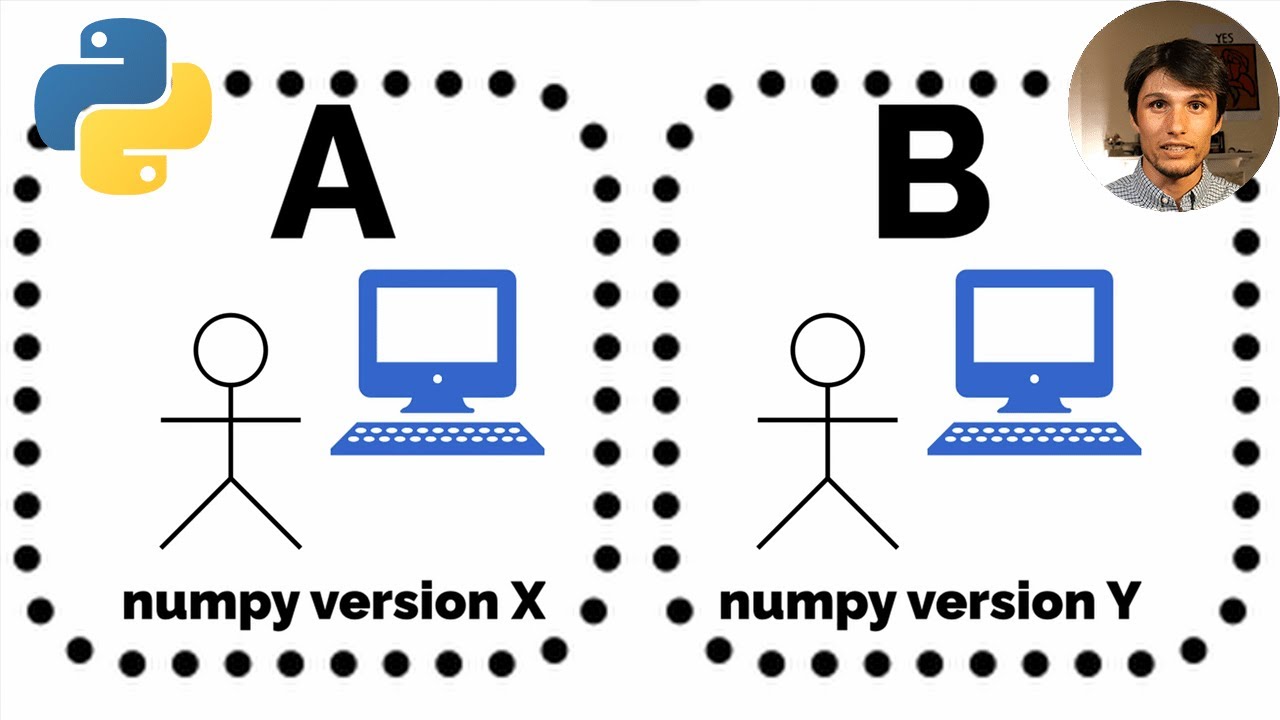
venv joined Python’s standard library with Python 3.3, released in September 2012 under PEP 405 (Python Software Foundation). The design borrows directly from the older third-party virtualenv package, essentially absorbing it into the core language rather than starting from scratch.
venv is a standard library module that creates lightweight, isolated Python environments without installing anything extra. Type python -m venv .venv and it builds a folder holding its own interpreter copy and site-packages directory.
It manages packages, not interpreter versions. Switching Python versions themselves is a job for a separate tool like pyenv.
Removing an environment just means deleting the environment folder. There’s no separate uninstall step to run.
What Is Conda

Conda comes out of Anaconda Inc., though it opened up to the wider community as it grew. Unlike venv, it isn’t limited to Python at all.
It installs precompiled binaries for R, C, and C++ libraries, which venv and Poetry can’t touch. It also comes in two installer sizes, the minimal Miniconda or the full Anaconda Distribution, and pulls packages from its own format and repository rather than PyPI.
Conda is a cross-language package and environment manager at its core, and that broader scope is what separates it from the other two tools here.
19% of surveyed developers used Conda for environment isolation in 2024, little changed from 20% the year before (Python Software Foundation and JetBrains, 2024).
What Is Poetry

18% of Python developers reported using Poetry for environment isolation in 2024, and 20% used it specifically for dependency management (Python Software Foundation and JetBrains, 2024).
Everything about Poetry as a dependency management and packaging tool centers on the pyproject.toml file, introduced back in 2016 by PEP 518. For most of its history Poetry actually relied on its own [tool.poetry] configuration section rather than the standardized format. Native support for PEP 621’s [project] metadata table didn’t arrive until Poetry 2.0, in January 2025.
It replaces pip, venv, and setup.py with one command-line interface. Installing packages and resolving versions happens through the same tool that builds the distributable archives when it’s time to publish.
36% of respondents now store dependency information in pyproject.toml, up from 32% the year before (Python Software Foundation and JetBrains, 2024).
What Are the Core Differences Between venv, Conda, and Poetry
The three tools differ mostly in scope. Each one manages a different slice of the problem, and each records what it installed in its own file format.
| Tool | Scope | Config File | Package Source |
|---|---|---|---|
venv | Environment isolation only | None (pairs with requirements.txt) | PyPI, via pip |
| Conda | Environment plus cross-language packages | environment.yml | Anaconda repository, conda-forge |
| Poetry | Dependency management and packaging | pyproject.toml | PyPI |
75% of surveyed Python developers install packages from PyPI, the Python Package Index, while just 16% pull from Anaconda’s own channels (Python Software Foundation and JetBrains, 2024).
That gap widens by field. 27% of data scientists install from Anaconda channels compared with 6% of web developers (Python Software Foundation and JetBrains, 2024).
venv has no resolver and no package format of its own. It borrows both from pip, which is why the two get mentioned in the same breath almost every time.
How Does Dependency Resolution Differ Between venv, Conda, and Poetry
venv delegates resolution entirely to pip, since the module itself has no logic for choosing package versions.
pip’s resolver only started backtracking automatically in version 20.3, released in November 2020 (Python Software Foundation, 2020). Before that release, pip could produce a dependency conflict silently, installing incompatible versions without much warning.
Conda’s classic solver is SAT-based, built on pycosat, and known for slow resolution once cross-language packages pile up (conda, GitHub release notes). Since conda 23.10.0, released in November 2023, libmamba replaced it as the default solver (conda.org, 2023).
Poetry does something different again. Its resolver is a Python implementation of PubGrub, the conflict-driven algorithm also used by Dart’s package manager, wrapped in a library called mixology (python-poetry.org).
PubGrub doesn’t just fail on a conflict. It traces the exact chain of constraints that caused it, which is why Poetry’s error messages tend to name the specific packages fighting over a version range.
How Do venv, Conda, and Poetry Handle Non-Python Dependencies
Conda installs precompiled binaries directly, including compiled C and C++ libraries that live outside the Python ecosystem entirely.
venv and Poetry are limited to whatever pip can fetch from PyPI, so neither one can install a system library, a driver, or any other non-Python binary. Conda is the outlier. It ships CUDA toolkits, R packages, and compiled math libraries straight through its own channels.
This distinction used to make conda the default choice for GPU machine learning setups, though that has shifted lately.
PyTorch stopped publishing through its Anaconda channel starting with version 2.6.0 in January 2025, pointing users toward pip wheels from download.pytorch.org instead (PyTorch, 2025).
TensorFlow’s current installation guide recommends pip install tensorflow[and-cuda], which bundles CUDA and cuDNN as pip wheels rather than requiring a conda-installed toolkit (TensorFlow official documentation).
Neither change erases conda’s advantage for R or mixed-language projects. It just means GPU deep learning isn’t the slam-dunk case for conda it was a few years back.
How Do Environment and Lock Files Compare Across venv, Conda, and Poetry

| Tool | File | Hash Pinning | Cross-Platform Reliability |
|---|---|---|---|
| venv + pip | requirements.txt | No, by default | Low without pip-tools |
| Conda | environment.yml | No | Moderate, channel-dependent |
| Poetry | poetry.lock | Yes | High |
59% of developers still store dependencies in requirements.txt, down from 63% the year before (Python Software Foundation and JetBrains, 2024).
Generating one with pip freeze captures exactly what’s installed right now. Nothing verifies that list still matches months later though, which is exactly the kind of thing that bites teams during an unrelated deploy.
Conda’s environment.yml is plain YAML, and the syntax gets messy fast once channel priorities and version pins pile up. Running that file through a YAML formatter keeps nested dependency blocks readable when you’re editing one by hand.
poetry.lock is hash-pinned, recording exact package checksums so the same install reproduces bit-for-bit on a teammate’s machine.
Conda doesn’t lock transitive dependencies by default. If Library A depends on Library B, environment.yml records A but not B, which can quietly change what gets installed on a rebuild months later.
How Does Installation and Resolution Speed Compare
Speed differences here come down to the resolver, not the download itself.
libmamba cut conda’s solve times by 50 to 80 percent on complex environments compared with the classic solver, by conda’s own benchmarking (conda.org, 2023). That gain only shows up once an environment gets complicated. A handful of packages resolves quickly either way, regardless of which tool you’re running.
Poetry’s resolver is exhaustive by design, meaning it keeps searching until it finds a valid combination or proves none exists. That thoroughness has a cost. Poetry’s own documentation notes that when a package on PyPI lacks properly declared metadata, the resolver has to download and inspect it directly, which slows locking considerably on some dependency trees (python-poetry.org).
For small projects, venv plus pip wins on speed, mostly because there’s nothing complex to resolve in the first place. Once a dependency graph gets big enough for the solver choice to actually matter, conda running libmamba tends to pull ahead instead.
How Does Each Tool Handle Packaging and Publishing to PyPI

26% of surveyed Python developers have packaged and published an application to a repository like PyPI (Python Software Foundation and JetBrains, 2024).
PyPI itself now lists more than 870,000 projects, a scale that makes clean packaging tooling more than a nice-to-have (PyPI, 2026).
| Tool | Build Backend | Publish Destination |
|---|---|---|
| venv + pip | setuptools (separate) | PyPI, via twine |
| Conda | conda-build | Anaconda.org, conda-forge |
| Poetry | Built in (PEP 517 / PEP 518) | PyPI, via poetry publish |
Publishing a Package with Poetry
Poetry bundles a PEP 517 and PEP 518 compliant build backend, so a project needs no separate setup.py or setup.cfg.
Running poetry build produces a wheel and a source distribution, the build artifacts that poetry publish then uploads to PyPI.
29% of developers who publish packages use Poetry for the job, behind only Twine at 44% and the PyPI Publish GitHub Action at 31% (Python Software Foundation and JetBrains, 2024).
Building and Distributing Conda Packages
Conda packages follow a different path, built with conda-build from a recipe file rather than pyproject.toml. The output uploads to Anaconda.org or a community channel like conda-forge, never to PyPI directly.
conda-forge alone hosts more than 25,000 feedstocks and passed 1 billion monthly package downloads for the first time in April 2025 (conda-forge.org, 2025).
venv and pip need separate tools for this step entirely. setuptools builds the package, and twine handles the upload, since neither one comes bundled into venv itself.
Which Tool Fits Which Project Type
The right tool depends mostly on what kind of dependencies a project pulls in, not on personal preference.
| Project Type | Best Fit | Why |
|---|---|---|
| Data science and ML | Conda | Handles GPU and cross-language binaries |
| Application and library | Poetry | Locks dependencies and builds packages |
| Scripts and teaching | venv | Ships with Python, nothing to install |
Data Science and Machine Learning Projects
38% of surveyed developers train or generate predictions with ML models, up six percentage points from the year before (Python Software Foundation and JetBrains, 2024).
More than two thirds of them use scikit-learn and PyTorch, frameworks that lean on compiled math libraries under the hood. That’s exactly the layer conda covers, and venv or Poetry simply can’t.
A research notebook that needs a specific CUDA build, or an R package running alongside Python, still points toward conda first.
Application and Library Development
- FastAPI usage climbed to 38% of surveyed developers in 2024, up from 29% the year before
- Django rose to 35%, up from 33% the year before, and Flask ticked up to 34% from 33%
Production web apps built on frameworks like these live or die on reproducible installs across a team’s machines and a deploy server (Python Software Foundation and JetBrains, 2024).
That’s the exact case poetry.lock solves, and why application code and publishable libraries tend to settle on Poetry once a project outgrows a single developer’s laptop.
Lightweight Scripts and Teaching Environments
21% of survey respondents had been programming in Python for less than a year (Python Software Foundation and JetBrains, 2024).
Nobody in that group needs a cross-language solver or a publishable package format for a homework assignment or a one-off scraping script.
venv plus pip covers it in two commands, with nothing extra to learn before the first line of actual code runs.
What Are the Limitations of venv, Conda, and Poetry

| Tool | Key Limitation |
|---|---|
venv | No resolver or lock file of its own |
| Conda | Heavier install; licensing considerations on the default channel |
| Poetry | Doesn’t install a Python interpreter; no binary management |
venv’s limitation is what it doesn’t include, not what it does wrong. It has no dependency resolver of its own, and no lock file format either. Anything beyond what pip can fetch from PyPI is simply out of reach.
Conda’s default channel comes with a catch many teams miss until legal asks about it. Anaconda’s Terms of Service require a commercial license for organizations with more than 200 employees or contractors using the default repository, a threshold that has been in place since April 2020, when Anaconda’s Terms of Service first moved to a commercial model (Anaconda, official documentation). conda-forge sidesteps that requirement, but switching channels mid-project is its own migration task.
Poetry won’t install a Python interpreter for you, according to its own documentation (python-poetry.org). It expects one already on the system, or a companion tool like pyenv to provide it.
Conda is the outlier here. 14% of surveyed developers already use it to install or upgrade Python itself, something neither venv nor Poetry can do on its own (Python Software Foundation and JetBrains, 2024).
Can venv, Conda, and Poetry Be Used Together
Combining them is common, though the order you install things in matters more than people expect.
Anaconda’s own documentation doesn’t leave much room for interpretation on this. Install every conda package first, run pip last, and never inside the base environment (Anaconda, official documentation). Reverse that order and conda loses track of what pip changed, since conda’s own metadata has no visibility into pip installs.
Poetry sits differently in this mix. By default it creates and manages its own virtual environment underneath a project.
Setting virtualenvs.create to false tells Poetry to install into whatever environment is already active, including a conda environment that’s been activated before running poetry install. The Poetry team still strongly encourages keeping some virtual environment in place though, whether Poetry manages it or not (python-poetry.org).
conda-lock takes the combination a step further. Its own project documentation confirms it reads dependencies straight out of a Poetry-style pyproject.toml section, then resolves them alongside conda packages in one lock file (conda-lock, GitHub).
The practical pattern that tends to show up in real projects has conda handling the environment and any binary dependencies, with Poetry layered on top for the Python dependency graph, each one doing the part it’s actually good at.
How Do venv, Conda, and Poetry Perform in Continuous Integration and Team Workflows
Two thirds of Python developers regularly use continuous integration systems, and the choice of environment tool shapes how those pipelines get built (Python Software Foundation and JetBrains, 2024).
GitHub Actions leads at 35% adoption, ahead of GitLab CI at 22% and Jenkins or Hudson at 12% (Python Software Foundation and JetBrains, 2024).
| Base Image | Includes | Typical Use |
|---|---|---|
python:slim | Python and pip only | venv- or Poetry-based CI jobs |
continuumio/miniconda3 | Python plus conda | Conda-based CI jobs |
poetry.lock reproduces the same install on a CI runner as on a developer’s laptop, since every package is pinned to a checksum rather than a loose version range. requirements.txt doesn’t offer that by default.
pip-tools closes the gap with a –generate-hashes flag that adds pip’s own hash-checking mode, available since pip 8.0, straight into the generated file (pip-tools documentation).
Conda environments in CI usually lean on a lock file too, since environment.yml alone doesn’t guarantee the same resolve twice. conda-lock fills that role, running a full conda solve ahead of time and writing the result to a platform-specific lock file so CI doesn’t have to invoke the solver at all (conda-lock, GitHub).
FAQ on Venv Vs Conda Vs Poetry
What Is the Difference Between venv and virtualenv
Before venv existed, there was virtualenv, the third-party package it’s modeled on, and virtualenv still supports older Python releases venv can’t reach. venv joined the standard library at Python 3.3, so most new projects default to venv unless they need that legacy support.
Can I Use Conda Without Installing the Full Anaconda Distribution
Yes. Miniconda installs only conda, Python, and their dependencies into a minimal base environment, nothing extra. Anaconda Distribution bundles conda with hundreds of pre-installed data science packages and a graphical Navigator, a much heavier starting point most CI pipelines skip.
Does Poetry Work With Jupyter Notebooks
Yes, though it takes one extra step. Add jupyter as a dependency inside pyproject.toml, run poetry install, then launch it with poetry run jupyter notebook so the kernel points at Poetry’s virtual environment instead of a system-wide Python installation.
How Do I Export a Conda Environment So Teammates Can Recreate It
conda env export > environment.yml writes every installed package to a file. Running conda env export –from-history keeps only what was explicitly requested, without exact transitive versions, producing a cleaner, more portable file across operating systems than the full export does.
What Does Solving Environment Mean When Conda Seems Stuck
That message means conda’s solver is working through package version combinations to satisfy every constraint in the environment. On large or conflicting dependency sets this step can run for minutes, especially with the classic solver instead of libmamba.
Can Two Projects Share the Same Virtual Environment
Technically yes, but it defeats the purpose. Two projects installing conflicting versions of the same library into one venv or conda environment recreates the exact dependency conflict isolation was meant to prevent. Each project should get its own environment.
What File Types Does Poetry Build Actually Produce
poetry build produces a .whl wheel, a prebuilt binary format pip installs directly, and a .tar.gz source distribution holding the raw project files. poetry publish uploads both to PyPI so users can install whichever format fits their system.
Do I Need Internet Access to Create a venv
No. python -m venv only copies files from the local Python installation already on disk. Internet access is only needed afterward, when pip tries to fetch packages from PyPI into that new environment.
Can Poetry Install Packages From a Private Package Index
Yes. Adding a [[tool.poetry.source]] block in pyproject.toml points Poetry at a private index alongside or instead of PyPI. Poetry resolves and locks dependencies from that source the same way it handles public packages, including credentials when required.
Does Upgrading Python Break an Existing venv
Usually, yes. A venv links to the specific interpreter that created it, so upgrading system Python in place can leave the environment pointing at files that no longer exist. Recreating the venv afterward is the safer path.
Conclusion
The venv vs conda vs poetry choice isn’t really about picking a favorite. It comes down to one question, checked first. Does the project touch a non-Python binary or a GPU library?
If yes, Conda wins by default.
If no, the real fork is whether the code ships to someone else. A project headed for PyPI needs poetry.lock’s hash-pinned reproducibility, not just a working install.
Start with venv today. It costs nothing and covers the bulk of day-to-day scripting.
Add Poetry only once publishing or teammate parity becomes a real requirement, not a hypothetical one. Reach for Conda when a specific dependency demands it, never out of habit.
The three tools aren’t really rivals forever. They’re layers that stack as a project outgrows one of them, one at a time.

- Notepad++ Android Options: Apps That Come Close - October 21, 2026
- Data Management Services: A Practical Guide for Growing Companies - October 21, 2026
- MongoDB Cheat Sheet - October 20, 2026