Money moves at digital speed now. Financial software development creates the systems that power our modern economy – from the banking app on your phone to the complex trading platforms moving billions across global markets.
At its core, financial technology programming builds specialized applications that manage, process, and analyze monetary transactions and data. Unlike standard software, these systems must meet exceptional requirements:
- Bulletproof security protocols
- Regulatory compliance across jurisdictions
- Real-time transaction processing
- Mission-critical reliability
Finance software developers create everything from personal budget app coding tools to enterprise-grade core banking systems. The field combines deep financial domain expertise with cutting-edge technical skills.
This article explores the technologies, components, methodologies, and trends driving modern fintech development processes. Whether you’re a developer considering specialization, a financial professional navigating digital transformation, or an entrepreneur exploring opportunities, you’ll discover how financial software shapes our financial landscape.
What Is Financial Software Development?
Financial software development is the process of creating digital tools and platforms for managing financial operations, such as banking, investing, accounting, or budgeting. It involves building secure, scalable applications tailored for users like banks, fintechs, or individuals to streamline transactions, analyze data, and ensure regulatory compliance.
Core Technologies in Modern Financial Software
Financial software development has evolved dramatically. Today’s finance applications require robust technologies to handle complex transactions, maintain security, and process vast amounts of data.
Programming Languages and Frameworks
The backbone of any financial technology programming starts with selecting the right languages. Java remains dominant in enterprise finance applications due to its reliability and platform independence. Many banking software platforms rely on Java for their core functions.
Python has gained tremendous popularity for:
- Financial data analytics tools
- Algorithmic trading development
- Risk assessment programs
C++ still powers high-frequency trading systems where performance is critical. Its speed makes it ideal for transaction processing software that requires microsecond precision.
Specialized frameworks have emerged specifically for fintech development processes. Spring Boot accelerates banking application engineering, while Django simplifies finance system architecture. These frameworks provide pre-built components for common financial functions, significantly reducing development time.
Language choice directly impacts both performance and security. Low-level languages offer speed advantages for trading platform development, but may introduce complexity in maintenance. Higher-level languages facilitate rapid financial product development lifecycle but might sacrifice some performance capabilities.
Database Technologies
Financial data demands powerful storage solutions. SQL databases remain the foundation for core banking systems where transaction integrity is non-negotiable. PostgreSQL and Oracle provide the ACID compliance essential for financial data processing.
NoSQL solutions have found their place in specific finance use cases:
- Document stores for customer profiles
- Key-value databases for session management
- Time-series databases for market data
Data warehousing has become crucial for financial reporting tools. Modern finance organizations implement solutions like Snowflake or Amazon Redshift to consolidate information from multiple sources, enabling comprehensive analytics and automated financial reporting.
Real-time data processing technologies are transforming how financial institutions operate. Apache Kafka and Redis enable real-time transaction processing, powering instant payments and live market data feeds for investment tracking software.
Cloud Infrastructure

Cloud adoption in finance has accelerated. Public cloud providers like AWS and Azure offer specialized services for financial software companies, including compliant infrastructure for handling sensitive data.
Many banking technology providers prefer private cloud models for maximum control. This approach allows for customized security policies while maintaining the benefits of virtualization.
Hybrid cloud represents the pragmatic middle ground. It enables financial software development teams to keep core systems on-premises while leveraging cloud resources for development, testing, and non-sensitive workloads.
Infrastructure-as-a-Service (IaaS) gives finance software developers flexibility to design custom environments. This model supports specialized requirements for financial software security requirements and compliance.
Serverless computing has found applications in:
- Transaction validation
- Periodic reporting
- Customer notifications
This approach reduces operational overhead for fintech startups by eliminating server management concerns and enabling true pay-per-use pricing models.
Key Components of Financial Software
Modern financial applications comprise several interconnected components. Each serves specific business functions while operating within a unified ecosystem.
Trading Platforms
The architecture of modern trading platform development has evolved significantly. These systems now operate across distributed infrastructure to handle massive transaction volumes with minimal latency.
Order matching engines form the heart of trading systems. They implement sophisticated algorithms to pair buyers with sellers efficiently. Performance optimization is critical-microseconds can mean millions in high-frequency scenarios.
Market data integration presents unique challenges. Trading platforms must process information from dozens of exchanges and data providers in real-time. Systems must handle financial data integration from multiple sources while maintaining data integrity and consistency.
Banking and Payment Systems
Core banking software components manage the essential functions of financial institutions:
- Account management
- Loan processing
- General ledger operations
These systems require exceptional reliability and must support banking API development for integration with external services.
Payment processing infrastructure has transformed dramatically with digital innovation. Modern payment systems must support multiple channels-mobile, web, in-person-while maintaining consistent security and reconciliation capabilities across all payment processing software.
Inter-bank communication systems like SWIFT, FedWire, and newer blockchain-based networks facilitate the transfer of funds between institutions. These critical systems must implement strict financial cybersecurity standards while maintaining global compatibility.
Risk Management and Compliance Tools
Credit risk assessment systems evaluate borrower reliability using sophisticated models. Modern solutions incorporate alternative data sources beyond traditional credit scores, enabling more accurate lending decisions.
Market risk monitoring tools track exposure across asset classes. These systems must process vast amounts of market data to calculate value-at-risk and other metrics, helping institutions maintain appropriate risk levels.
Regulatory reporting software has become essential as compliance requirements grow increasingly complex. To stay ahead of these changes, businesses often leverage specialized tax compliance services to automate the calculation and filing process across different regions. These systems automate the creation of required reports for regulatory bodies like SEC, FCA, and FINRA, reducing both error risk and compliance costs.
Personal Finance Applications
Budgeting and expense tracking features form the foundation of consumer finance apps. These tools categorize transactions, visualize spending patterns, and alert users to unusual activity in their money management app development.
Investment portfolio management functionality enables individuals to track assets across accounts. Advanced wealth management features provide performance metrics, asset allocation analysis, and rebalancing recommendations.
Financial goal planning tools help users visualize progress toward objectives like retirement, education funding, or major purchases. These features often incorporate simulation capabilities to show how different saving and investment strategies might affect outcomes.
The digital wallet development trend continues to grow as consumers seek simplified payment options across physical and digital channels, creating opportunities for innovative fintech development processes in the personal finance space.
Current Trends in Financial Software Development
The finance software development landscape changes rapidly. New technologies emerge constantly, reshaping how financial technology programming happens.
API-First Development

Open banking APIs have revolutionized financial services. They enable secure data sharing between institutions and third parties, creating new possibilities for fintech startups and established players alike.
Standards like PSD2 in Europe have accelerated adoption by:
- Mandating standardized access points
- Establishing security protocols
- Creating consistent data formats
Third-party integration has become essential in modern finance application development. The ability to connect with payment processors, data providers, and specialized services defines competitive advantage in today’s market.
API security requires special attention in finance. Organizations implement:
- OAuth 2.0 and OpenID Connect for authentication
- Rate limiting to prevent abuse
- Payload encryption for sensitive data
- Comprehensive logging and monitoring
Finance API integration must balance accessibility with protection. Too many restrictions limit utility, while inadequate safeguards create unacceptable risks to financial data.
Artificial Intelligence and Machine Learning

AI transforms multiple aspects of financial software building. Machine learning models now power critical functions across the industry.
Algorithmic trading applications use reinforcement learning and neural networks to identify patterns and execute trades. These systems analyze vast datasets to find opportunities invisible to human traders.
Fraud detection systems employ anomaly detection and behavioral analysis to identify suspicious transactions. They work in real-time, blocking potentially fraudulent activity before completion.
Customer service has evolved through banking application engineering with AI. Chatbots handle routine inquiries while intelligent routing systems direct complex issues to appropriate specialists. The result? Faster resolution and improved satisfaction.
Credit scoring models have grown more sophisticated through machine learning. They incorporate alternative data sources beyond traditional credit reports, enabling more accurate risk assessment for underserved populations.
Blockchain and Distributed Ledger Technology

Cryptocurrency platform creation represents just one application of blockchain in finance. The technology’s impact extends far beyond digital currencies.
Smart contracts automate agreement execution without intermediaries. They enable self-executing transactions when predefined conditions are met, reducing costs and eliminating delays in payment processing software.
Blockchain-based identity solutions tackle the complex challenge of digital identity verification. These systems provide secure, privacy-preserving ways to confirm identities across financial services.
Settlement systems built on distributed ledgers reduce transaction times from days to minutes. They eliminate reconciliation challenges by maintaining a single, verified record of truth accessible to all parties.
Low-Code/No-Code Development
Rapid application development tools transform how finance application programming happens. Low-code platforms enable faster creation of financial reporting tools and applications.
Citizen developers within financial institutions can now build simple applications without extensive programming knowledge. This democratization accelerates digital transformation while reducing IT backlogs.
Enterprise integration remains crucial. Low-code solutions must connect with existing core banking systems and enterprise applications to provide real value in complex financial environments.
Security and Compliance in Financial Software
Security isn’t optional in finance-it’s fundamental. Strong protections must be built into every aspect of finance system architecture.
Cybersecurity Measures
Threat modeling must happen early in the development lifecycle. Development teams identify potential vulnerabilities by systematically analyzing attack vectors specific to financial applications.
Financial data demands the strongest encryption and data protection:
- AES-256 for data at rest
- TLS 1.3 for data in transit
- Tokenization for sensitive information
- Field-level encryption for critical values
Secure coding practices specific to finance include:
- Input validation for all transaction data
- Output encoding to prevent injection attacks
- Memory management to avoid leaks and overflows
- Regular dependency updates to eliminate known vulnerabilities
Banking software maintenance must include regular security assessments. Penetration testing, code reviews, and vulnerability scanning help identify weaknesses before attackers do.
Regulatory Compliance
KYC (Know Your Customer) implementation requires sophisticated identity verification. Modern solutions combine document scanning, biometrics, and database checks to confirm user identities while minimizing friction.
Anti-Money Laundering systems monitor transaction patterns to identify suspicious activity. These tools must balance sensitivity with specificity to catch criminal behavior without excessive false positives.
GDPR and data privacy requirements affect how financial software companies handle personal information. Privacy by design principles must guide development, with data minimization and user controls built in from the start.
Regional regulations create additional complexity:
- SOX requirements for public companies
- MiFID II for European markets
- PSD2 for payment services
- Local banking regulations in each jurisdiction
Financial software certifications like PCI DSS for payment handling provide standardized frameworks for security implementation. These certifications require ongoing maintenance and periodic reassessment.
Identity and Access Management
Multi-factor authentication has become standard for financial applications. Systems combine something you know (password), something you have (device), and something you are (biometrics) to verify user identity.
Role-based access control ensures users access only appropriate resources. Granular permission models support the principle of least privilege, limiting potential damage from compromised accounts.
Biometric verification continues to advance through:
- Facial recognition with liveness detection
- Fingerprint scanning
- Voice pattern analysis
- Behavioral biometrics tracking typing patterns and device handling
Digital banking development must balance security with usability. Excessive friction drives users away, while inadequate protection puts assets at risk.
Progressive security measures adjust authentication requirements based on risk assessment. Routine transactions with familiar patterns require less verification than unusual, high-value activities.
Development Methodologies in Financial Software
Creating effective financial software solutions requires specialized approaches. Methods must balance innovation with reliability.
Agile and DevOps Practices
Finance software developers have widely adopted Agile methodologies. Traditional waterfall approaches simply can’t keep pace with changing regulations and market needs.
Sprint planning for financial product development has unique characteristics:
- Regulatory updates often drive priorities
- Risk assessment influences backlog ordering
- Compliance testing must be integrated into each cycle
Teams typically work in 1-2 week sprints. Short cycles allow faster response to market changes while maintaining quality control over sensitive financial data processing functions.
CI/CD pipelines transform how banking software development happens. Automated build, test, and deployment processes enable:
- Multiple daily releases without disruption
- Feature flagging for controlled rollouts
- Immediate rollback capabilities if issues arise
Testing strategies for finance application programming must be comprehensive. Successful teams implement:
- Unit testing for core business logic
- Integration testing across system boundaries
- Performance testing under extreme loads
- Security testing at every release
Finance development methodologies increasingly focus on observable systems. Comprehensive logging, monitoring, and alerting allow teams to identify issues before users experience problems.
Quality Assurance and Testing
Financial applications require exceptional reliability. QA processes must be rigorous and thorough.
Automated testing frameworks have become essential for financial software development. These tools execute thousands of tests before each release, verifying functionality across multiple scenarios and edge cases.
Performance testing receives special attention in finance. Systems must maintain responsiveness under:
- Normal daily operations
- Month/quarter/year-end processing peaks
- Market volatility events
- Unexpected traffic surges
Compliance testing has specific requirements in banking application engineering. Systems must verify adherence to:
- Data protection regulations
- Financial reporting standards
- Trading system requirements
- Anti-fraud measures
Test data management presents unique challenges. Testing must use realistic data without exposing sensitive information, often requiring sophisticated anonymization techniques.
Microservices Architecture
Breaking down monolithic financial software systems has accelerated. Many institutions now favor smaller, specialized services that can be developed and scaled independently.
Benefits of microservices for finance system architecture include:
- Focused teams with domain expertise
- Independent scaling of high-demand components
- Easier replacement of outdated modules
- Technology flexibility for specific requirements
Service mesh implementation has become common for managing communication between services. Tools like Istio and Linkerd provide:
- Service discovery
- Load balancing
- Failure recovery
- Metrics collection
- Security policy enforcement
Data consistency across microservices remains challenging. Financial systems often use:
- Saga patterns for distributed transactions
- Event sourcing for audit trails
- CQRS (Command Query Responsibility Segregation) for complex domains
The transition to microservices requires careful planning. Many banking software platforms adopt incremental approaches, gradually replacing monolithic components with services over time.
User Experience in Financial Software
User experience significantly impacts adoption and satisfaction in financial technology programming. Thoughtful design drives engagement and retention.
Design Principles for Financial Applications
Clarity and simplicity matter more than ever in finance application UI/UX. Users need to understand their financial situation quickly without confusion.
Effective designs focus on:
- Clear information hierarchy
- Consistent terminology
- Progressive disclosure of complexity
- Actionable insights
Data visualization transforms how users interact with financial data analytics tools. Modern applications use:
- Interactive charts showing trends over time
- Color-coding to highlight exceptions
- Drill-down capabilities for detailed analysis
- Comparative views against benchmarks
Accessibility considerations have legal and ethical dimensions. Financial applications should support:
- Screen readers for visually impaired users
- Keyboard navigation for motor limitations
- Sufficient color contrast for readability
- Simple language for complex concepts
Design systems create consistency across large finance applications. They establish standard components, patterns, and interactions that maintain coherence while accelerating development.
Mobile-First Approach
Mobile banking development now drives many design decisions. The smartphone has become the primary financial management tool for millions of users.
Responsive design ensures seamless experiences across devices. Applications adapt to:
- Phone screens (portrait and landscape)
- Tablets of various sizes
- Desktop displays
- Specialized environments like kiosks
Mobile payment features continue to evolve rapidly. Applications must integrate with:
- NFC payment systems
- QR code payments
- Peer-to-peer transfers
- Digital wallets
The debate between native applications and progressive web apps continues. Many fintech startups choose PWAs for their:
- Reduced development costs
- Cross-platform compatibility
- Simplified update process
- Improved discoverability
Offline capabilities remain essential for digital banking development. Users expect basic functionality even without constant connectivity.
Personalization and Customer Experience
User behavior analysis drives personalization in financial software. Applications track interaction patterns to deliver more relevant experiences.
Effective personalization includes:
- Highlighting frequently used features
- Adapting navigation based on usage patterns
- Showing contextual information and guidance
- Remembering user preferences across sessions
Customized financial recommendations add significant value. Modern systems analyze:
- Spending patterns to suggest budget adjustments
- Account balances to recommend savings opportunities
- Investment allocations to identify optimization possibilities
- Bills and subscriptions to highlight potential savings
Omnichannel experience coordination has become essential. Users expect consistency when moving between:
- Mobile applications
- Web interfaces
- Branch interactions
- Call center conversations
- Chatbot communications
Emotional design matters even in financial reporting tools. Applications use positive reinforcement, celebration of milestones, and supportive messaging during financial challenges to build stronger relationships with users.
The most successful personal finance application features balance automation with control. They provide smart defaults and recommendations while empowering users to make informed decisions about their financial lives.
Data Management and Analytics
Data powers modern financial software development. Better data management creates competitive advantages.
Big Data in Finance
Financial data processing has transformed with big data technologies. Legacy systems struggle with today’s volume and variety.
Data lakes consolidate information from disparate sources:
- Core transaction systems
- Market data feeds
- Customer interactions
- External economic indicators
- Social media sentiment
This approach enables financial software companies to maintain historical data at unprecedented scale without predefined schemas limiting future analysis.
The choice between batch and real-time processing depends on use case. Overnight batch jobs handle:
- Regulatory reporting
- Customer statements
- Risk recalculations
- Performance analytics
Meanwhile, real-time systems manage:
- Fraud detection
- Trading decisions
- Payment authorization
- Customer alerts
Data governance frameworks have become essential for banking technology providers. These structures establish:
- Data ownership and stewardship
- Quality standards and metrics
- Privacy controls and consent management
- Retention policies
- Access control guidelines
Without strong governance, financial institutions risk compliance violations, security breaches, and poor decision-making based on inaccurate information.
Business Intelligence
Financial reporting tools continue evolving beyond static documents. Modern BI platforms deliver:
- Interactive dashboards
- Self-service analytics
- Automated distribution
- Natural language queries
- Embedded analytics within operational systems
These capabilities democratize data access across organizations, enabling more informed decisions at all levels.
Predictive analytics transforms business planning in finance. Machine learning models now forecast:
- Customer churn probability
- Lifetime value projections
- Demand for specific products
- Resource requirements
- Economic scenario impacts
The most sophisticated wealth management platforms use these predictions to tailor strategies for individual clients while optimizing organizational resources.
Customer segmentation has grown increasingly nuanced through advanced analytics. Financial institutions move beyond simple demographic groupings to behavioral clusters, enabling precisely targeted products and communications.
The integration of financial data visualization techniques has transformed how insights are communicated. Complex patterns become immediately apparent through:
- Heat maps showing risk concentration
- Network graphs revealing relationships
- Geospatial displays of regional performance
- Time-series comparisons across periods
- Decomposition trees for variance analysis
This visual approach accelerates understanding and decision-making across organizations.
Alternative Data Sources
Social media analysis provides early signals for market sentiment. Trading platform development increasingly incorporates natural language processing to assess public opinion about companies, products, and economic conditions.
Satellite and geospatial data offers unique perspectives for:
- Commercial real estate valuation
- Agricultural yield prediction
- Supply chain disruption detection
- Retail traffic analysis
- Construction progress monitoring
These insights give investment software creation opportunities for alpha generation through non-traditional information sources.
IoT applications in finance continue expanding. Connected devices generate valuable data for:
- Usage-based insurance pricing
- Equipment financing risk assessment
- Supply chain financing decisions
- Physical asset valuation
- Security monitoring for facilities
The integration of these alternative data streams creates both opportunities and challenges for financial software security requirements. Organizations must balance innovation with protection of sensitive information.
Financial data providers increasingly curate and standardize alternative datasets, making them accessible to broader markets. This standardization accelerates adoption while improving data quality and reliability.
Data Integration Challenges
Siloed systems remain common in financial institutions. Financial data integration projects focus on connecting these isolated repositories.
API-based approaches have largely replaced older ETL processes. Benefits include:
- Real-time access to current data
- Reduced duplication
- Clearer data lineage
- Improved governance
- Greater flexibility
Data standardization efforts continue across the industry. Common formats and definitions enable:
- Easier regulatory reporting
- Simplified system integration
- Improved data quality
- Enhanced analytics capabilities
- More efficient operations
Master data management has become critical for banking software platforms. These systems create single sources of truth for:
- Customer information
- Product definitions
- Organization structures
- Account hierarchies
- Reference data
Without effective MDM, inconsistencies multiply across systems, creating compliance risks and customer experience problems.
Data quality management programs implement automated monitoring and remediation. These systems catch issues before they impact:
- Customer experiences
- Regulatory reporting
- Risk calculations
- Financial statements
- Business decisions
The most sophisticated organizations establish data quality as a cultural priority, recognizing its foundational importance to all operations.
Privacy and Ethical Considerations
Financial application deployment must prioritize privacy. Regulations like GDPR, CCPA, and industry-specific requirements establish baseline expectations.
Beyond compliance, leading organizations adopt privacy by design principles:
- Data minimization
- Purpose limitation
- Storage constraints
- Access controls
- Transparency mechanisms
- User consent management
Ethical data use extends beyond legal requirements. Finance software developers must consider:
- Algorithmic bias detection and mitigation
- Explainability of automated decisions
- Proportionality of data collection
- Secondary use limitations
- Fair value exchange for data sharing
These considerations should be embedded throughout the financial product development lifecycle, not addressed as afterthoughts.
Data ethics committees have emerged in many financial institutions. These cross-functional groups establish principles and review complex cases, ensuring responsible innovation in financial data analytics tools.
Financial Software Development Companies
TMS
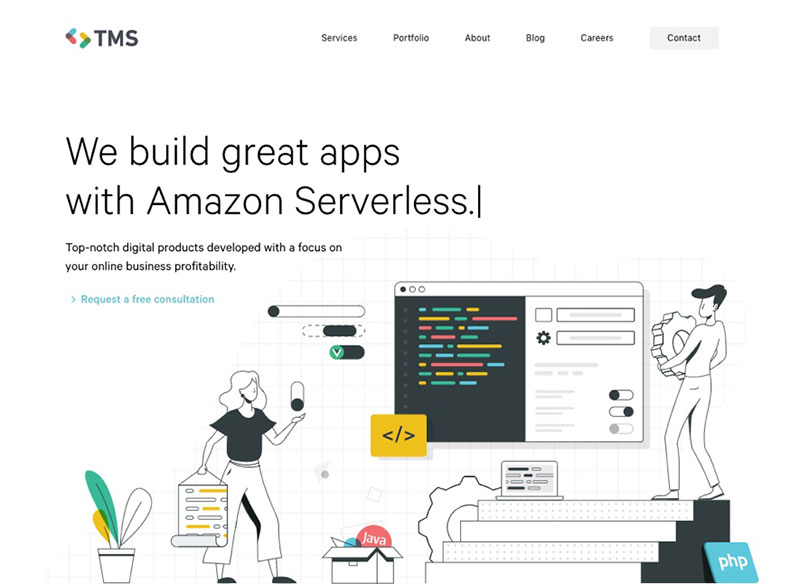
TMS is an award-winning global tech company, that can be found in Belgrade, Serbia. We specialize in the support, planning, building, and improvement of web applications. Our team at TMS uses a variety of tools to deliver solutions for countless business trades. As a leader in financial software development, TMS is leading the way in portfolio management options.
TMS specializes in the following platforms:
- Symfony
- Laravel
- AngularJS
- React
- Vue
- Silex
TMS is one of the leading development hubs for the support, planning, building, and improvement of top-notch web applications. Our company is a perfect example of demonstrating how development companies can step-up their development capabilities in order to improve productivity while decreasing costs.

TMS developers have a wide range of capabilities and experience.
TMS continually works on new technologies, allowing them to leverage high-quality solutions in the near future for these platforms.
TMS has received many recognitions for its exceptional services. One very notable reason is that they are an app development team and company focused on gaining profitability for your online business.
Want to find out more about us? Check out our portfolio or view our complete services.
itjet

itjet is a company that creates web and mobile solutions to drive business success, covering full-cycle software development: from user research to release, including frontend and backend development, UI/UX design, and QA. They work with clients worldwide and in different industries: Fintech, Sports & Wellness, Social, Entertainment, E-commerce & Retail.
What helps itjet deliver modern, high-quality solutions and establish long-term partnerships with their clients?
- transparent processes
- proven track record
- deep tech expertise
- result-oriented approach
If you are looking for a vendor that provides services such as Design, Web Development, iOS and Android Development, and Staff Augmentation, the experienced IT professionals at itjet know how to help your business achieve its goals via modern software solutions and user-friendly, visually appealing design.
DashDevs

DashDevs is a software development company specializing in fintech software solutions. Their experience includes launching over 500 projects and over 50 transformative fintech products.
Their commitment to quality is evident in every aspect of their work, from developing responsive, secure, and high-performance mobile apps to delivering robust web and backend solutions that prioritize user experience.
DashDevs harnesses the power of cloud computing and DevOps to ensure scalability and efficiency, supported by meticulous quality assurance and insightful business analysis.
They also offer comprehensive UI/UX design and solution architecture services, ensuring each client’s unique vision is realized with precision.
This integrated approach to technology solutions, backed by a team of over 200 professionals, enables DashDevs to cater fintech solutions to a diverse range of industries, including media, travel, hospitality, healthcare, and startups.
Agilie
Agilie is a premier partner in FinTech software development, leveraging over a decade of experience to deliver custom solutions tailored to different financial service needs. With expertise in how to develop a fintech app, they offer a streamlined approach to creating applications that cater to the evolving landscape of financial technology.
Agilie specializes in cutting-edge technologies for:
- mobile banking,
- payment solutions,
- blockchain
The company ensures secure, scalable, and cost-effective products and services. The full-cycle development approach encompasses everything from discovery to maintenance, prioritizing security standards, and customized solutions to propel the business forward.
Agilie guarantees innovation and expertise with a robust tech stack and a dedicated team of over 60 passionate engineers. Their development process has 3 steps.
Step 1: Discovery Phase
- Idea validation
- Requirements gathering
- Wireframe design
- Architecture concept building
- Estimation
Step 2: Dev Phase
- MVP building or Proof of Concept (PoC)
- Full-featured platform
Step 3: Delivery Phase
- Testing
- Deploying
They transform challenging ideas into reliable and innovative software solutions through efficient and transparent collaboration. Agilie provides full support during and after the launch to make the product the best it can be.
During 14 years, Agilie crafted over 200 successful projects in 35 countries. Their portfolio showcases various successful FinTech solutions: multi-digital and cryptocurrency wallets, p2p, AI, NFT solutions, etc. Each project reflects their commitment to leveraging the latest technologies to address the unique challenges of the FinTech sector. Dive deep into Agilie’s cases, challenges, and solutions.
Discover Agilie and start your transformative journey in FinTech innovation.
Inoxoft
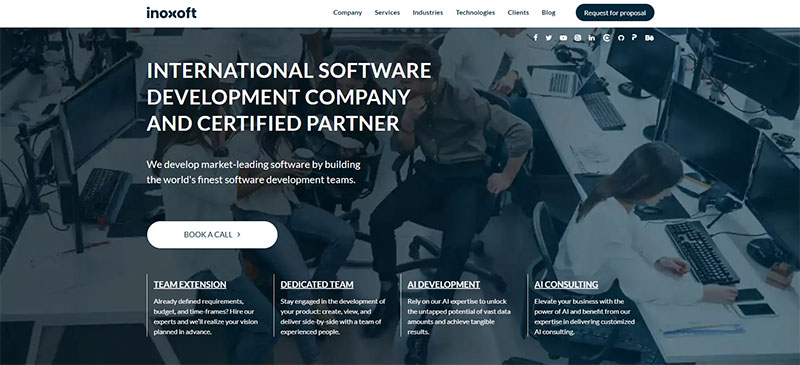
Inoxoft is a dynamic leader in fintech development, passionately committed to transforming the financial industry with innovative solutions. Their services are designed to revolutionize your operations, elevate your trading success, and modernize your banking services, aligning with the future trends in mobile banking.
Inoxoft experience extends to crafting custom financial software, enabling businesses to leverage data-driven insights for strategic decision-making and adding unparalleled value to their operations.
They support fintech startups, guiding them from the ideation stage through the complexities of product development and technical challenges, specializing in automating the trading process, and facilitating efficient and seamless trade across international borders. As a trusted fintech software development company, Inoxoft is dedicated to designing, delivering, and architecting state-of-the-art financial software solutions.
FAQ on Financial Software Development
What skills are needed for financial software development?
Financial software development requires a mix of technical and domain expertise. Key skills include proficiency in programming languages like Java, Python, or C++, understanding of banking software platforms, knowledge of financial regulations, database management, security protocols, and API integration capabilities. Experience with finance application UI/UX is increasingly valuable.
How is financial software different from other types of software?
Finance application programming has unique requirements: extraordinary security standards, regulatory compliance, transaction accuracy to the penny, audit trails for all operations, and high availability (often 99.999%). Financial software security requirements exceed those of most other industries due to the sensitive nature of monetary data and transactions.
What technologies are commonly used in financial software?
Finance software developers typically use Java, Python, and C++ for backend systems, with JavaScript frameworks for interfaces. Financial data processing relies on SQL and NoSQL databases, alongside cloud infrastructure. Specialized tools for payment processing software, real-time transaction processing, and financial data analytics are also essential.
How long does it take to develop financial software?
Timelines for financial software development vary dramatically. Simple personal finance application features might take weeks to build, while comprehensive core banking systems often require years. The financial product development lifecycle includes extensive testing and compliance verification, extending timelines beyond typical software projects.
What are the biggest challenges in financial software development?
The main challenges include meeting strict regulatory requirements, maintaining security against sophisticated threats, achieving high performance under variable loads, integrating with legacy systems, and ensuring data integrity. Banking software maintenance must address these challenges while minimizing disruption to critical financial operations.
How much does financial software development cost?
Cost varies widely based on complexity. Simple budget app coding projects might start at $50,000, while enterprise banking application engineering can run into millions. Factors affecting cost include regulatory requirements, security needs, integration complexity, and performance demands. Many fintech startups begin with MVPs to manage development costs.
What industries use custom financial software?
Custom financial software solutions extend beyond traditional banks to investment firms, insurance companies, payment processors, cryptocurrency exchanges, lending institutions, wealth management companies, regulatory bodies, and increasingly non-financial businesses with complex financial operations. Even retailers now develop payment processing software.
How is security handled in financial software development?
Security is built into every phase of finance system architecture. This includes threat modeling, secure coding practices, multiple encryption layers, extensive testing, penetration assessments, and ongoing monitoring. Financial cybersecurity standards like PCI DSS provide frameworks that guide development and operational security measures.
What’s the difference between fintech and financial software?
Fintech typically refers to innovative, disruptive applications of technology in financial services, often by startups. Financial software development is broader, encompassing all software for financial functions, including traditional systems. Every fintech product is financial software, but not all banking software development is considered fintech.
How is AI changing financial software development?
AI is transforming financial technology programming through automated fraud detection, algorithmic trading, personalized recommendations, risk assessment, and customer service automation. Machine learning models now enhance credit scoring applications and investment tracking software with predictive capabilities that were impossible with traditional programming approaches.
Conclusion
Understanding what is financial software development has become essential in today’s economy. The field combines cutting-edge technology with specialized financial knowledge to create systems that power everything from global markets to personal budgeting tools.
Financial application deployment continues evolving at breakneck speed. As we’ve seen, several factors shape this dynamic landscape:
- Increasing regulatory demands driving compliance systems
- Cloud migration transforming finance software deployment options
- AI and machine learning enhancing risk assessment programs
- API ecosystems enabling open banking platforms
- Blockchain revolutionizing transaction processing software
For organizations seeking competitive advantage, investing in custom financial software solutions offers significant returns through improved efficiency, reduced risk, and enhanced customer experiences. The finance development methodologies outlined in this article provide a roadmap to successful implementation.
Whether you’re building trading platform development solutions or simple expense tracking applications, the principles remain consistent: security first, regulatory compliance always, and user experience throughout. The future belongs to those who master this powerful intersection of finance and technology.
If you liked this article about financial software development, you should check out this article about fintech apps.
There are also similar articles discussing fintech startups.

- Top Demand Side Platform Companies to Use For Programmatic Advertising - September 26, 2025
- What Is Nearshoring and How You Can Benefit from It - September 24, 2025
- MVP Tests You Can Do To Validate Your Idea - September 22, 2025