Your iPhone’s home screen doesn’t have to display the original app names forever. Learning how to rename apps on iPhone gives you control over your device’s appearance and organization.
Apple restricts direct home screen renaming, but App Library and the Shortcuts app offer workarounds. iOS 14 introduced built-in options that work without jailbreaking or complicated tricks.
This guide covers native renaming in App Library, creating custom shortcuts with personalized names and icons, and troubleshooting common issues. You’ll understand which methods work for your iOS version and how to maintain renamed apps after updates.
How to Rename Apps on iPhone: Quick Workflow
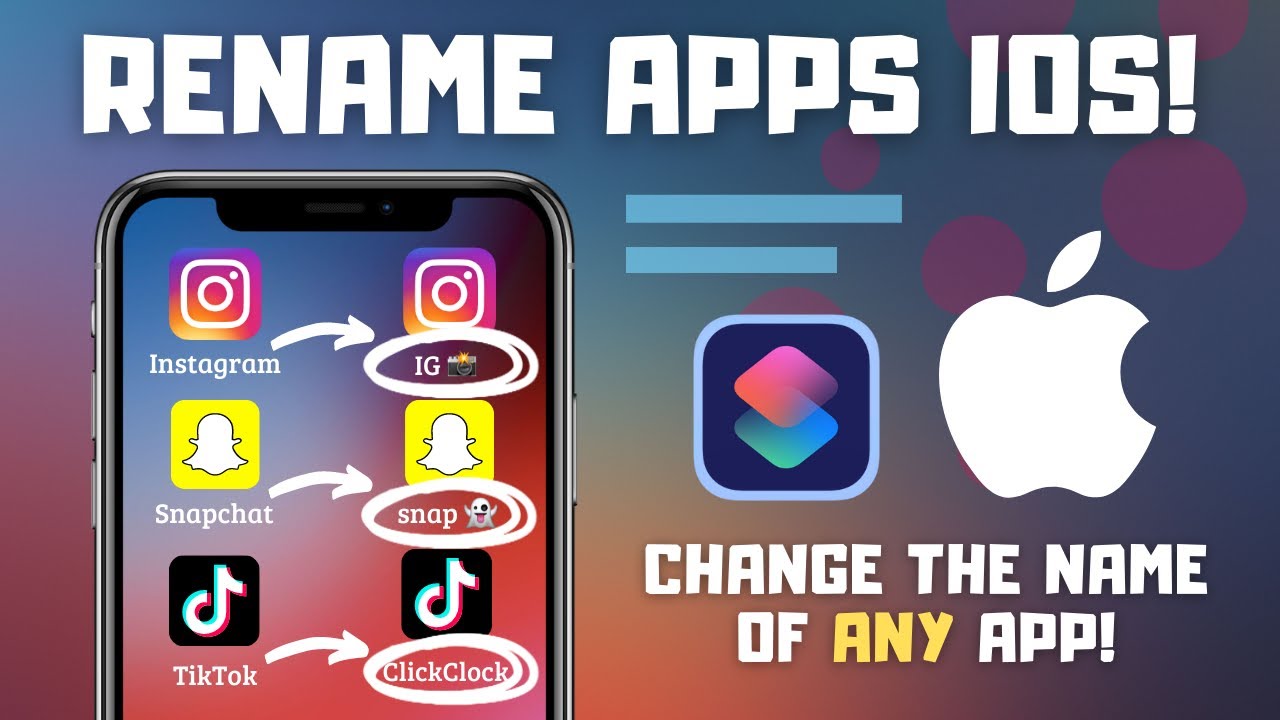
iOS doesn’t let you rename apps directly. But the Shortcuts app gives you a workaround that gets the job done in under a minute.
Here’s what you do:
- Open the Shortcuts app (it’s pre-installed, but grab it from the App Store if you deleted it)
- Tap the “+” button in the top right corner
- Tap “Add Action”, then search for and select “Open App”
- Tap “App” and pick the app you want to rename
- Tap the down arrow next to the shortcut name, then hit “Rename”
- Type your custom name
- Tap the share icon, then select “Add to Home Screen”
- Confirm the name (and optionally pick a custom icon), then tap “Add”
That’s it. Your renamed shortcut shows up on the home screen.
Quick things to know
- This only changes the home screen label. The original app name stays the same in the App Library and settings.
- You can’t rename built-in Apple apps like Mail, Safari, or Camera directly. But you can still create renamed shortcuts for them.
- Don’t delete the original app. Move it to the App Library instead. If you delete it, the shortcut breaks.
- Notifications still come from the original app, not the shortcut.
- There’s a brief flash through the Shortcuts app each time you open a renamed shortcut. Mildly annoying, but you get used to it.
Understanding App Naming on iPhone
What You Can and Cannot Rename
App Library allows direct renaming of any installed application. iOS 14 introduced this feature, giving users basic customization options without workarounds.
Home screen app names cannot be changed directly. Apple restricts display name modifications for apps sitting on your main interface.
The limitation exists to maintain consistency across the iOS ecosystem. You’ll need the Shortcuts app to create custom home screen launchers with different names.
iOS Version Requirements
iOS 14 or later supports App Library renaming. Earlier versions lack this native functionality entirely.
Check your iPhone’s current version in Settings > General > Software Update. Most devices from iPhone 6s onward support iOS 14 and newer releases.
iOS 18 offers the most refined app organization tools. Each update since iOS 14 has improved the App Library’s search and categorization features.
Native Apps vs Third-Party Apps
Apple’s built-in apps (Settings, Photos, Messages) can be renamed in App Library. Third-party apps from the App Store follow the same renaming rules.
System apps maintain their original names in search results. Your custom label only appears in the App Library view itself.
Downloaded applications display both the renamed version and their official title in different contexts. Spotlight search uses the original name regardless of your custom label.
Rename Using Shortcuts Method
Creating Custom App Names on Home Screen
Open the Shortcuts app pre-installed on your iPhone.
Tap the plus icon in the top right corner to create a new shortcut.
Search for and add the “Open App” action from the actions library.
Select your target application from the app picker.
Tap the share icon (square with arrow) at the bottom of the screen.
Choose “Add to Home Screen” from the share menu.
Enter your desired custom name in the name field. This becomes the visible label under your app icon.
Tap Add in the top right to place the shortcut on your home screen.
The original app remains in your App Library. You can delete the home screen version if you only want the custom shortcut visible.
Customizing App Icons
Custom icons require image files stored on your iPhone. Use square PNG or JPEG images for best results.
Tap the icon placeholder while creating your shortcut. Select “Choose Photo” to browse your Photos app or Files app for suitable images.
Icon size should be at least 512×512 pixels for clarity. Smaller images appear pixelated and unprofessional on modern iPhone displays.
Many websites offer free icon packs designed for iOS development aesthetics. Download these directly through Safari and save them to your Photos library.
The custom icon replaces the standard app appearance completely. Notification badges appear on these shortcuts just like regular apps.
Managing Renamed Apps
Organizing Renamed Apps
Create folders by dragging one app onto another on your home screen. Hold and drag your renamed shortcut onto another icon to group them together.
Folder names accept custom labels too. Tap the folder name field while editing to type your preferred title.
App Library automatically sorts apps alphabetically by their original names, not custom labels. Your renamed version appears under its official title in the alphabetical list.
Search uses the original app name for finding applications. Type the real name in Spotlight to locate renamed shortcuts quickly.
Troubleshooting Renamed Apps
Shortcuts sometimes fail to open if the target app was deleted. The system displays an error message saying the app isn’t installed.
App updates don’t affect shortcuts automatically. Your custom launcher continues working after the original app receives updates from the App Store.
Notification badges appear on shortcut icons. iOS treats these launchers as valid app entry points for notification purposes.
Delete malfunctioning shortcuts by long-pressing and selecting “Remove Shortcut.” Create a new one following the same steps if problems persist.
The original app and shortcut can coexist. Many users keep both versions for different organizational purposes across multiple home screen pages.
Alternative Methods
Third-Party Launcher Apps
iOS restricts deep customization compared to Android. Apple’s mobile application development guidelines prioritize security over modification freedom.
Launcher apps from the App Store cannot truly rename apps. They create web-based shortcuts that open URLs, then redirect to installed applications.
These solutions add extra loading steps. You tap the launcher, it opens Safari briefly, then finally launches your target app.
Widget-based alternatives place app grids on your home screen. Widgetsmith and similar tools let you create custom icon layouts that link to apps.
Profile Configuration Options
Enterprise and education deployments can modify app display names. This requires Mobile Device Management (MDM) profiles installed by IT administrators.
Personal users cannot access MDM features. Apple restricts these capabilities to organizational accounts with proper licensing.
Jailbreaking allows system-level modifications but voids warranties. Apple actively patches exploits used by jailbreak tools in regular updates.
The official Shortcuts method remains the most reliable approach. It works within Apple’s app lifecycle restrictions without compromising device security.
Key Components of iPhone App Management
iPhone and iOS Ecosystem
iPhone runs iOS, Apple’s mobile operating system. Current versions range from iOS 14 through iOS 18.
Each iOS update brings refinements to app organization features. The App Library debuted in iOS 14 as Apple’s answer to home screen clutter.
App Library Functionality
App Library sits to the right of your final home screen page. Swipe left repeatedly until you reach the categorized view.
Apps organize automatically into folders like Social, Productivity, Utilities. Machine learning determines which category fits each application based on usage patterns.
Search at the top finds any installed app instantly. Type a few letters to filter the complete alphabetical list.
Shortcuts App Capabilities
Shortcuts functions as Apple’s automation tool. The app handles everything from simple app launchers to complex multi-step workflows.
Actions link together to create custom functions. Open App serves as the basic building block for custom launchers.
Siri integration lets you trigger shortcuts by voice. Name your shortcut strategically if you plan to use voice commands.
Home Screen Customization Limits
Apple restricts home screen modifications compared to Android development freedom. The company prioritizes consistent UI/UX design across all devices.
Icon grid spacing cannot be adjusted. Apps snap to predetermined positions on the layout grid.
Widget placement allows some flexibility. Large, medium, and small widgets can fill empty spaces between apps.
Understanding Contextual Layers
Personalization Context
Custom app names serve different purposes. Some users create shortcuts for aesthetic themes matching their wallpaper.
Others rename apps for accessibility reasons. Dyslexic users benefit from simplified labels that reduce reading complexity.
Language learners use custom names to practice vocabulary. Rename apps in your target language to build daily exposure.
Technical Context
iOS treats shortcuts as separate entities from original apps. The system maintains two database entries pointing to the same executable.
Notification delivery works through both the shortcut and native app. You’ll receive alerts regardless of which icon you tap.
App updates affect the underlying program, not the shortcut wrapper. Your custom launcher continues functioning after updates from the App Store.
Visual Context
Custom icons transform your home screen appearance. Many users create themed layouts matching specific color palettes or design styles.
Icon packs designed for iOS maintain visual consistency. Download entire sets that share unified aesthetics across different apps.
Transparent backgrounds work best for custom icons. PNG files with transparency blend seamlessly with any wallpaper choice.
Organizational Context
Folders group related apps together. Create project-specific folders containing all tools needed for particular tasks.
App placement affects usage patterns. Frequently used apps belong on the first home screen page for quick access.
The dock holds four apps by default. Reserve this prime real estate for your most-used applications.
Entity Relationships in iPhone Customization
iPhone Device Specifications
iPhone models from 6s onward support modern iOS versions. Older devices lack the processing power for recent updates.
Storage capacity affects how many apps you can install. More apps mean more customization possibilities through shortcuts.
Screen size determines visible apps per page. iPhone Pro Max displays more icons than iPhone SE.
iOS Version Dependencies
iOS 14 minimum requirement for App Library. Earlier versions force users to organize apps manually on home screen pages only.
iOS 15 added Focus mode integration. Different home screen layouts activate based on work, personal, or sleep modes.
iOS 16 brought lock screen customization. Widget placement expanded beyond home screens.
iOS 17 improved Shortcuts automation. More actions became available for building complex workflows.
Settings App Configuration
Settings controls system-level app behavior. Navigate to Settings > General > iPhone Storage to view all installed applications.
Notification settings determine badge behavior. Disable badges for specific apps if you don’t want red circles on custom shortcuts.
Background app refresh affects performance. Turn off refresh for apps you rarely use to preserve battery life.
Files App Integration
Files stores custom icon images. Create dedicated folders for organizing icon collections by theme or color scheme.
iCloud sync keeps icons available across devices. Save your icon library to iCloud Drive for access on iPad or other iPhones.
Third-party cloud services work too. Download icons from Dropbox or Google Drive when needed.
Photos App as Icon Source
Photos stores images suitable for app icons. Screenshots of existing icons serve as starting points for modifications.
Album organization helps locate saved icons. Create an album specifically for app icon images.
Editing tools within Photos adjust colors and crop images. Basic modifications happen without leaving the app.
Optimization Techniques
Prioritize Core Information
Place most relevant app attributes first. Users care about launch speed and appearance before technical details.
Action verbs communicate functionality clearly. “Tap to open” beats “This shortcut will launch the application when pressed.”
Attribute order matters for comprehension. Name, icon, location form the primary trio users need to understand.
Sentence Structure for Clarity
Subject-verb-object produces direct statements. “App Library organizes apps automatically” beats “Apps are organized automatically by App Library.”
Attributes before explanations improves scannability. “iOS 14 introduced App Library” flows better than “App Library was introduced in iOS 14.”
Context placement affects understanding. Front-load important details, save qualifiers for sentence endings.
Factual Accuracy Requirements
State capabilities definitively. “App Library allows renaming” instead of “App Library should allow renaming.”
Avoid opinion markers like “might,” “could,” “possibly.” These weaken authoritative tone.
Specify iOS versions exactly. “iOS 14 and later” beats “recent iOS versions.”
Technical terms need no hedging. “Shortcuts creates launchers” requires no qualifier like “essentially” or “basically.”
Word Sequence Impact
Proper ordering enhances relevance. “iPhone App Library feature” beats “feature of App Library on iPhone.”
Entity-first construction improves SEO. Start sentences with the main subject rather than introductory phrases.
Attribute proximity to entity strengthens associations. “App Library’s automatic categorization” keeps related concepts together.
Action clarity drives user behavior. “Long press the app” beats “Press and hold down on the app icon.”
FAQ on How To Rename Apps On iPhone
Can you rename apps directly on iPhone home screen?
No. Apple doesn’t allow direct home screen renaming of installed applications.
You must use the Shortcuts app to create custom launchers with different names and icons. The original app remains unchanged in your App Library.
Does renaming an app in App Library change its home screen name?
Renaming in App Library only affects that specific location. Your home screen displays the original name.
The two areas maintain separate naming systems. iOS doesn’t sync custom labels between App Library and home screen interfaces.
Will renamed apps still receive updates from the App Store?
Yes. App updates work normally regardless of custom names or shortcuts.
The App Store identifies apps by bundle identifier, not display name. Your renamed versions point to the same underlying application that receives automatic updates.
Do notification badges appear on renamed app shortcuts?
Yes. iOS displays notification badges on shortcuts created through the Shortcuts app.
The system treats these launchers as valid entry points. Badges appear on both the original app and any custom shortcuts pointing to it.
Can you rename built-in Apple apps like Safari or Messages?
You can rename them in App Library using the standard long-press method.
Creating custom shortcuts for system apps works identically to third-party applications. Apple imposes no special restrictions on renaming native iOS apps through these methods.
What happens if you delete the original app after creating a renamed shortcut?
The shortcut stops working. Tapping it produces an error message saying the app isn’t installed.
Shortcuts are launchers, not standalone copies. They require the original application to remain on your device to function properly.
Does renaming apps affect Siri voice commands?
Siri recognizes original app names, not custom labels from shortcuts.
Voice commands use the App Store title regardless of renamed versions. Say the official name when asking Siri to open applications through voice control.
Can you use the same custom icon for multiple app shortcuts?
Yes. The same image file can be reused across different shortcuts.
Store your custom icons in Photos or Files app. Select the same image when creating multiple launchers to maintain visual consistency across themed layouts.
Will renamed apps sync across multiple iPhones using the same Apple ID?
Shortcuts sync through iCloud if enabled in Settings.
Your renamed launchers appear on other devices signed into the same Apple ID. Custom icon images must exist in Photos or Files on each device.
How do you delete a renamed app shortcut without removing the original app?
Long press the shortcut icon and select “Remove Shortcut” from the menu.
This deletes only the custom launcher. The original application remains in your App Library and continues functioning normally on your iPhone.
Conclusion
Mastering how to rename apps on iPhone transforms your device’s interface from generic to personalized. App Library renaming works instantly for basic customization needs.
The Shortcuts method demands more effort but delivers complete control over home screen appearance. Custom icons and labels create themed layouts impossible through standard iOS settings.
Both approaches have limitations. App Library changes stay hidden from your main interface, while shortcuts add extra steps to app launching.
Choose the method matching your priorities. Quick organization favors App Library renaming. Visual customization requires building shortcuts with custom icons and personalized labels.
Your iPhone’s home screen reflects your preferences now, not just Apple’s default choices. Experiment with different naming schemes until you find what works.
There are also similar articles discussing how to update Instagram on iPhone, how to see what apps are running in the background on iPhone, how to clear app cache on iPhone, and how to mass delete apps on iPhone.
And let’s not forget about articles on how to move multiple apps on iPhone, how to set up Face ID on iPhone, how to organize apps on iPhone, and how to give apps access to photos on iPhone.

- How to Run a React App in VS Code Step by Step - October 23, 2026
- Transactional or marketing email: which messages your app should send itself - October 23, 2026
- How Software Teams Write SOPs for Releases and Deployments - October 22, 2026