

At its peak, Sbarro ran over 1,000 pizza locations across 34 countries. Then it filed for bankruptcy. Twice.
What happened to Sbarro is a story about debt, declining mall foot traffic, and a food court business model that had no fallback when shopping behavior changed after the Great Recession.
This article covers the full arc: the Brooklyn origins, both Chapter 11 bankruptcy filings, the ownership changes, and how the pizza chain restructured its way back to 827 locations across 27 countries by 2025.
What Was Sbarro Before It Collapsed?
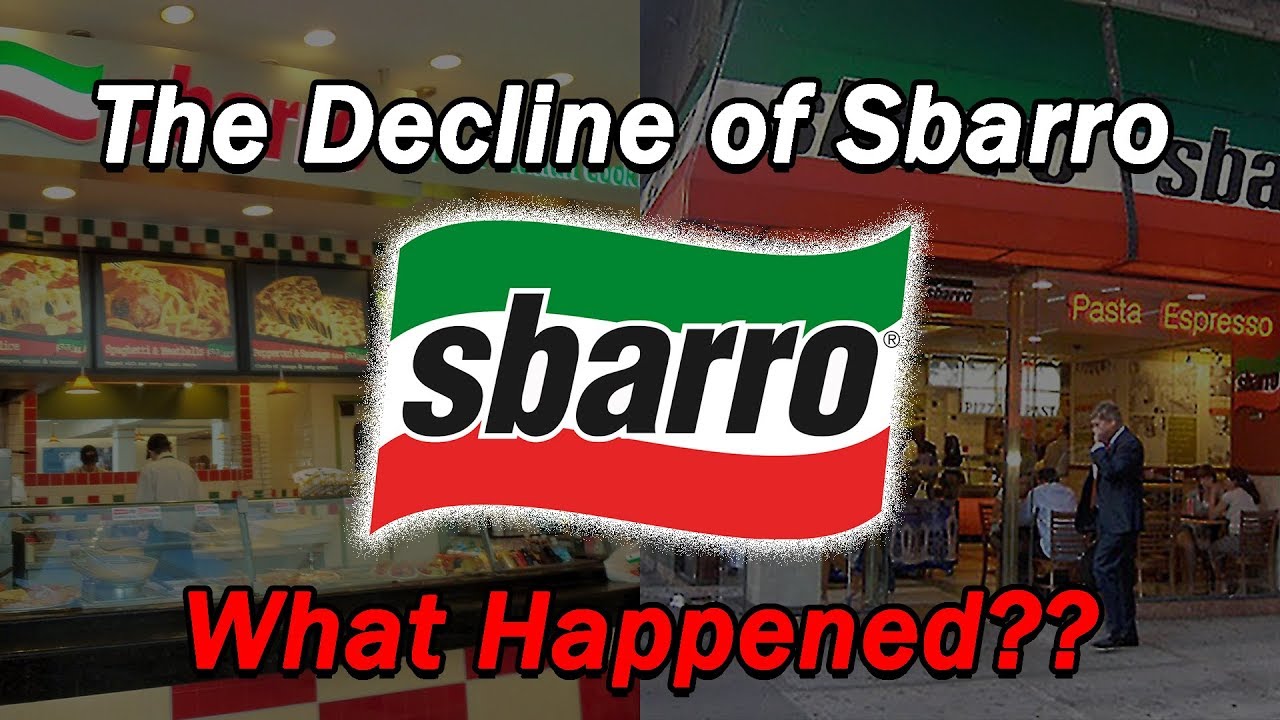
Sbarro was a New York-style pizza chain that grew from a single Italian deli in Brooklyn into one of the most recognized food court brands in the world. At its peak, the chain ran over 1,000 locations across 34 countries, serving oversized pizza slices and pasta to mall shoppers at the height of suburban retail culture.
The story starts in 1956. Gennaro and Carmela Sbarro emigrated from Naples to Brooklyn and opened a small Italian salumeria in the Bensonhurst neighborhood. It was not a pizzeria at first.
Carmela began selling slices to shift workers passing by. Demand grew fast enough that the family opened a second location focused entirely on pizza. By 1964, they had 4 locations. By 1977, the family incorporated all their restaurants as Sbarro, Inc.
How Sbarro Grew Into a Mall Food Court Staple
The timing was almost perfect. In 1970, Sbarro opened its first mall location at Kings Plaza Shopping Center in Brooklyn, right as American suburban mall construction hit full stride.
From 1970 to 2002, over 800 shopping malls were built in the United States (Cornell Law School Journal, 2021). Sbarro moved into food courts in most of them.
The growth was systematic:
- 97 stores and $20 million in revenue at the time of Gennaro’s death in 1984
- Went public on the American Stock Exchange in 1985, raising $8 million
- 157 company-owned restaurants and 63 franchises by mid-1987
- Over 1,000 units across 34 countries by the mid-2000s
The Sbarro family sold the chain to private equity firm MidOcean Partners in January 2007 for $450 million.
What Made Sbarro’s Business Model Distinct From Other Pizza Chains
Single-channel revenue. Nearly all Sbarro locations sat inside mall food courts. The business ran entirely on walk-by foot traffic, no delivery, no drive-through, no suburban street presence.
Pizza was sold by the slice, which kept the transaction fast and cheap. Shoppers stopped, ate, and moved on. It worked brilliantly as long as malls stayed full.
The model also avoided the franchise complexity of competitors like Pizza Hut. Sbarro kept tight operational control. That structure made rapid scaling possible, but it also locked the brand into a single type of real estate.
Key vulnerability: no fallback revenue stream if mall traffic dropped.
—
Why Did Sbarro File for Bankruptcy the First Time in 2011?
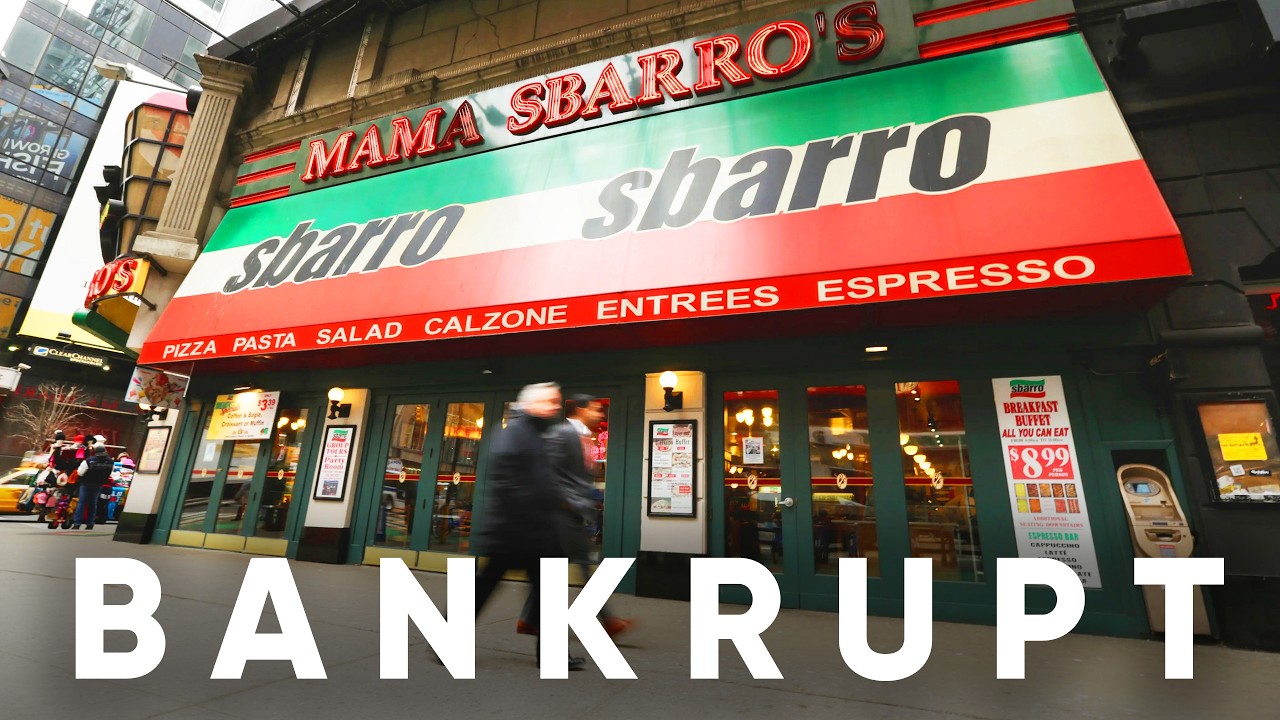
Sbarro filed for Chapter 11 bankruptcy in April 2011 with approximately $487 million in debt against only $471 million in assets (Mashed, 2022). The chain had 1,045 locations at the time of filing.
3 primary causes drove the collapse:
| Cause | What Happened | Impact |
|---|---|---|
| Private equity debt load | MidOcean Partners acquired Sbarro in 2007 using leveraged financing | Left no financial flexibility when revenue dropped |
| Mall traffic decline | Great Recession drove shoppers away from malls starting 2008 | Same-store sales fell with no alternative revenue channel |
| Fixed lease obligations | Long-term mall leases could not be exited quickly | Costs continued even as underperforming stores bled cash |
How Private Equity Debt Contributed to the 2011 Filing
MidOcean Partners bought Sbarro for $450 million in 2007, just before the Great Recession. The deal was structured with leveraged financing, which loaded the balance sheet with debt obligations that had to be serviced regardless of revenue performance.
By 2011, interest payments alone were consuming cash that should have funded operations and adaptation. EBITDA fell to approximately $22 million in 2011, down from projections of $25 million for 2012 and $31 million for 2013 that never materialized (court filings, 2014).
Comparable cases from the same period: RadioShack, J.C. Penney, and Steak Escape all faced similar private equity debt spirals tied to declining mall-dependent revenue.
The Role of Declining Mall Traffic in Sbarro’s Revenue Drop
Mall visits during the 2010-2013 holiday shopping season dropped by 50% (Time, 2017). For Sbarro, holiday quarter traffic was not a bonus. It was the business.
Moody’s noted in early 2014 that “Sbarro’s cash flow is seasonal due to its reliance on shopping mall traffic patterns in the fourth quarter, which saw significant weakness during the 2013 holiday season.”
ShopperTrak data confirmed a 14.6% drop in holiday foot traffic at retail centers during this period, even as overall retail sales grew 2.7%. Shoppers were buying online, then skipping the food court entirely.
Sbarro had no digital ordering, no delivery model, and no non-mall locations to absorb the loss.
—
How Did Sbarro Exit Bankruptcy in 2011?
Sbarro emerged from Chapter 11 in November 2011, roughly 7 months after filing. The restructuring shed $200 million in debt and closed 25 underperforming locations (QSR Magazine).
The 2014 second filing revealed what the 2011 restructuring actually achieved, and what it missed:
- Achieved: reduced total debt load, secured $30 million in new capital from a second private equity investor
- Achieved: brought in new CEO Jim Greco to lead an operational turnaround
- Missed: did not exit bad mall lease deals
- Missed: did not address the fundamental mall-dependence of the revenue model
- Missed: remaining debt was still $130 million after reduction, too high relative to actual EBITDA
Greco upgraded the pizza recipe, using higher-quality tomatoes and cheese. Customer feedback on the pizza itself improved. But recipe quality could not compensate for empty food courts.
Greco left the company a year before the second filing. Standard and Poor’s downgraded Sbarro’s ratings further in early 2014, noting that management’s reinvigoration efforts had not reversed declining sales and traffic through December 2013.
—
Why Did Sbarro File for Bankruptcy a Second Time in 2014?

Sbarro filed for Chapter 11 a second time in March 2014 with approximately $148 million in debt (Fortune, 2014). The second filing came less than 3 years after emerging from the first one.
In 2013, Sbarro generated just $4 million in EBITDA. Interest payments on its debt were $17 million that same year (Restaurant Business, 2025). The math was impossible.
Why the 2011 Restructuring Did Not Solve the Core Problems
Debt reduction without model change. The 2011 bankruptcy cut the balance sheet but left the underlying business identical. Sbarro still operated almost entirely inside mall food courts with long-term lease obligations.
Mall traffic continued falling after 2011. It declined 1.9% in 2012 and 1.6% in 2013 (court filings, ABI, 2014). These numbers look small, but for a chain with no alternative revenue, each percentage point meant fewer customers and lower same-store sales.
EBITDA trajectory after the first restructuring:
- 2011: $22 million (pre-restructuring charges)
- 2012: $15 million
- 2013: $4 million
J. David Karam, who took over as CEO in March 2013, assessed it directly: “The prior restructuring wasn’t as effective as it could have been. There was still too much debt relative to EBITDA, and they didn’t take the opportunity to abrogate bad lease deals.” (Franchise Times, 2023)
How Fast-Casual Pizza Competitors Took Sbarro’s Customers
Blaze Pizza launched in 2012. MOD Pizza opened its first location in 2008 and expanded aggressively through 2012-2014. Both brands offered made-to-order, assembly-line pizza at similar price points to Sbarro. Both surpassed $270 million in sales within their first decade (Restroworks, 2025).
The fast-casual format hit Sbarro from two directions:
- Customers who would have stopped at a food court Sbarro now went to a stand-alone fast-casual pizza shop nearby
- The perceived freshness gap between Sbarro’s pre-made slices and made-to-order fast-casual pies widened as food culture shifted
A widely cited tweet from 2014 captured the consumer attitude bluntly: “No one’s ever been tempted by Sbarro. It’s an ‘I’m starving and it’s the only real food nearby’ thing. Losing strategy in 2014.” (Standard and Poor’s cited this in its 2014 downgrade note, via Restaurant Finance Across America)
—
What Happened to Sbarro Locations During the 2014 Bankruptcy?
In February 2014, one month before filing, Sbarro closed 182 North American locations. That represented nearly half of all U.S. stores in a single announcement.
Over 400 North American locations closed across both the 2011 and 2014 bankruptcy proceedings combined.
Store count at key milestones:
| Year | Total Locations | Status |
|---|---|---|
| Mid-2000s | 1,000+ | Peak operation |
| April 2011 (filing) | 1,045 | First Chapter 11 |
| November 2011 (exit) | ~800+ | 25 locations closed |
| March 2014 (filing) | ~400 | Second Chapter 11 |
| June 2014 (exit) | Under 600 | Restructured, franchise-focused |
International franchise locations stayed open throughout both proceedings. The domestic footprint took the full damage.
High-profile U.S. locations in Times Square, major airports, and large urban malls permanently closed. The company moved its headquarters from Melville, New York to Columbus, Ohio as part of the restructuring.
—
Who Bought Sbarro After the Second Bankruptcy?
Sbarro exited the second bankruptcy in June 2014 after a federal judge approved a restructuring plan. The $148 million debt load was resolved by converting approximately 85% of it into equity held by creditors Apollo Global Management, Babson Capital Management, and Guggenheim Investment Management (Fortune, 2014).
The second bankruptcy effectively reduced the company’s debt by 80%, according to a Sbarro spokesman cited in court proceedings.
Ownership after the second exit: Apollo and Guggenheim held controlling equity. J. David Karam, who had been CEO since March 2013, remained in the role and over time became the majority owner alongside his sons. MidOcean’s and Ares’ equity stakes were completely wiped out.
This was not a typical private equity acquisition. The creditors who took equity were lenders, not operators. That distinction mattered: it left Karam with operational authority and a long runway to execute a turnaround without pressure for a quick exit.
Karam described the situation plainly in a Restaurant Business podcast (2025): “It had been owned by private equity for a while. It had become heavily indebted and hadn’t really crafted a growth strategy beyond the malls.”
For a parallel case of what happened to Quiznos, the pattern of private equity debt followed by a collapse of a food-court-adjacent fast-food brand repeats almost identically.
—
How Did Sbarro Attempt Its Turnaround After 2014?
The turnaround Karam ran after 2014 was operationally different from the 2011 restructuring. The first restructuring cut debt. The second one changed the business model.
After closing about 175 stores in the 2014 proceedings, Sbarro emerged with the best traffic performance it had seen in nearly a decade, according to QSR Magazine (2016). New unit growth returned. Systemwide sales went positive.
How the Franchise-Only Model Changed Sbarro’s Cost Structure
Refranchising removed fixed costs from the balance sheet. Under the company-owned model, Sbarro carried lease obligations, labor costs, and operational overhead for every location. Under a franchise model, those costs shift to franchisees.
The shift meant Sbarro’s corporate structure could survive lower systemwide volumes without the same cash burn. Franchisees absorbed the local operational risk.
Karam explained the venue strategy shift directly: “We knew that there was a limited development potential in the mall venues, and that’s where we started to push harder into convenience stores and travel centers, casinos, and colleges and places where there was high foot traffic, and thank God it’s worked.” (QSR Magazine, 2022 via Tasting Table)
What the New Store Format Was Designed to Fix
The 2015 brand overhaul replaced the dated logo and visual identity with a clean, sans-serif design tagged with “NYC.1956,” reconnecting the brand to its Brooklyn origins.
Inside the stores, the changes were more substantive:
- Open kitchen design showing food preparation in real time
- Emphasis on fresh ingredients and hand-stretched dough
- Menu simplified to focus on core New York-style pizza and stromboli
- Positioning shifted toward direct competition with Domino’s and Papa John’s on quality, not just convenience
The Pizza Cucinova concept also launched during this period, offering made-to-order Neapolitan pizzas as a separate format test. It was a direct response to the fast-casual pizza threat from failed startup patterns in the segment, where brands like MOD Pizza later ran into their own financial difficulties despite early rapid growth.
No new indoor megamalls have been built in the U.S. since 2014 (Capital One Shopping, 2025). That context made the non-mall pivot not just smart but necessary. Sbarro’s airport, campus, and convenience store locations now represent the majority of its domestic footprint.
Where Is Sbarro Today?
Sbarro operates 827 restaurants across 27 countries as of 2025, making it the fourth consecutive year the chain has opened more than 100 new locations globally (QSR Magazine, January 2026).
The domestic and international split has flipped since the bankruptcy years. As of 2024, 52% of Sbarro locations are international, up from 48% the previous year (Restaurant News Resource, 2025).
| Metric | 2014 (post-bankruptcy exit) | 2025 |
|---|---|---|
| Total locations | Under 600 | 827 |
| Countries | 23 | 27 |
| International share | ~40% | 52% |
| New openings (annual) | Minimal | 100+ per year |
480 new restaurants have opened over the past 5 years. Sbarro has expanded into Scotland, Belize, and Chile for the first time, and holds a growing partnership with the U.S. Military across 6 on-base locations opened in 2025.
How Sbarro’s Venue Mix Shifted After 2014
60% of Sbarro outlets are still in malls globally. But the non-mall segment is what drove the recovery.
Convenience stores now make up 15% of the global store count, a format that barely existed in the Sbarro portfolio before 2014 (Restaurant News Resource, 2025).
Current venue categories beyond malls:
- Airports and travel plazas
- Convenience stores and truck stops
- University campuses
- Casinos
- U.S. Military bases
- Neighborhood stand-alone locations
CEO David Karam put it plainly: “We knew that there was a limited development potential in the mall venues.” The non-mall push was not a backup plan. It became the primary growth engine.
What Sbarro’s Current Revenue and Ownership Look Like
Privately held. No IPO, no new private equity acquisition since the 2014 exit. David Karam is the majority owner alongside his sons, with Apollo Global Management and Guggenheim Investment Management retaining minority equity stakes from the debt-to-equity conversion.
U.S. revenue was reported at $185 million in 2021 (Wikipedia / company filings). The brand does not publish current systemwide sales figures publicly.
Karam was also named by QSR Magazine as a “Top 25 Brand to Work For” in 2024, and Sbarro received Great Place to Work certification the same year. Not the typical profile of a chain still in survival mode.
In 2025, Sbarro hired Mario Bojorquez, an 11-year veteran of Restaurant Brands International, as President of North America. That hire signals a professionalization of the domestic operation beyond what a simple franchise maintenance mode would require.
—
What Did Sbarro’s Collapse Reveal About Mall-Dependent Restaurant Chains?

Sbarro’s story is not unique. It is the clearest documented case of what happens when a food chain builds its entire revenue model on a single real estate format that has a structural expiration date.
The numbers put the problem in context. U.S. mall count fell from approximately 1,500 in 2005 to roughly 1,150 by late 2022, with an average of 40 shopping malls closing every year between 2017 and 2022 (Capital One Shopping, 2025).
Why Long-Term Mall Leases Became a Liability After 2008
Lease structure mattered as much as debt load. Most Sbarro mall agreements were long-term. Exiting them early triggered financial penalties that cost more than operating at a loss.
This is exactly what Karam identified when he took over: “They didn’t take the opportunity to abrogate bad lease deals.” The 2011 restructuring cut debt but left the lease portfolio intact. The 2014 filing finally allowed Karam to exit those agreements.
Hot Dog on a Stick filed for bankruptcy in February 2014, one month before Sbarro’s second filing. Mrs. Fields filed in 2008 and again in 2018. Steak Escape has shrunk to around 2 dozen U.S. locations as of 2025, still declining. The pattern holds across every food court brand that failed to diversify venue types before 2010.
How Single-Channel Traffic Dependency Accelerated the Decline
Mall holiday traffic dropped 50% between 2010 and 2013 (Time, 2017). For most retailers, that was a serious problem. For Sbarro, it was an existential one.
Domino’s, Pizza Hut, and Papa John’s all weathered the same consumer shift away from malls because their revenue came from delivery, drive-through, and standalone street locations. None of them needed a shopper to walk past a food court counter to generate a sale.
Sbarro had no delivery infrastructure, no app, no loyalty program, and no standalone street presence until after 2014. The business was a passive recipient of foot traffic. When that traffic stopped coming, there was no lever to pull.
| Chain | Primary Revenue Channel | Outcome After Mall Decline |
|---|---|---|
| Sbarro | Mall food court walk-by | 2 bankruptcies, rebuilt via venue diversification |
| Hot Dog on a Stick | Mall food court walk-by | Bankruptcy 2014, significantly reduced footprint |
| Steak Escape | Mall food court walk-by | Shrank to ~24 U.S. locations, still declining |
| Domino’s | Delivery and carryout | Grew through the same period |
The lesson is not that malls killed Sbarro. The lesson is that single-channel dependency left no room to adapt when the channel contracted.
For anyone studying what happened to Sears or what happened to American Apparel, the same pattern appears. A business model that works brilliantly inside one retail ecosystem becomes a structural trap the moment that ecosystem shrinks. The chains that survived, like Sbarro eventually did, were the ones that recognized the trap early enough to escape it, even if it took two bankruptcies to force the move.
Sbarro’s 480 new openings over the past 5 years are not a comeback story built on nostalgia for the food court era. They are the result of a pizza brand that finally stopped depending on someone else’s real estate for its entire business model.
FAQ on What Happened To Sbarro
Why Did Sbarro Go Bankrupt?
Sbarro filed for Chapter 11 bankruptcy twice due to excessive private equity debt, long-term mall lease obligations, and a complete dependence on mall foot traffic for revenue. When shopping behavior shifted online after the Great Recession, same-store sales collapsed with no fallback.
How Many Times Did Sbarro File for Bankruptcy?
Sbarro filed for bankruptcy twice. The first Chapter 11 filing came in April 2011. The second followed in March 2014, less than three years after the chain emerged from the first restructuring.
When Did Sbarro Close Its Locations?
The largest closure wave happened in February 2014, when Sbarro shut 182 North American locations in a single announcement. Over 400 North American stores closed across both bankruptcy proceedings between 2011 and 2014.
Who Owns Sbarro Now?
CEO David Karam is the majority owner alongside his sons. Apollo Global Management and Guggenheim Investment Management hold minority equity stakes, retained from the debt-to-equity conversion that resolved the 2014 bankruptcy.
Is Sbarro Still in Business?
Yes. Sbarro operates 827 restaurants across 27 countries as of 2025. It has opened more than 100 new locations every year for four consecutive years, with growth driven by airports, convenience stores, campuses, and international franchise expansion.
What Killed Sbarro’s Mall Business?
Mall holiday foot traffic dropped 50% between 2010 and 2013. Sbarro had no delivery model, no app, and no non-mall locations to absorb that loss. The business relied entirely on walk-by food court traffic, which made the decline impossible to offset.
How Did Sbarro Recover After Bankruptcy?
David Karam exited bad mall lease deals, converted to a franchise-only model, and pushed aggressively into non-mall venues. The brand repositioned around fresh New York-style pizza and expanded into convenience stores, airports, and international markets.
Who Founded Sbarro?
Gennaro and Carmela Sbarro founded the chain. They emigrated from Naples to Brooklyn and opened an Italian salumeria in Bensonhurst in 1959. The first mall location opened at Kings Plaza Shopping Center in Brooklyn in 1970.
What Role Did Private Equity Play in Sbarro’s Collapse?
MidOcean Partners acquired Sbarro in 2007 for $450 million using leveraged financing. The resulting debt load left no flexibility when mall revenue fell. By 2011, Sbarro carried $487 million in debt against only $471 million in assets.
How Does Sbarro Compare to Other Failed Mall Food Chains?
Hot Dog on a Stick filed for bankruptcy the same month as Sbarro’s second filing. Steak Escape shrank to around 24 U.S. locations. Sbarro is the clearest case of a mall-dependent pizza chain that survived by fully restructuring its venue strategy.
Conclusion
This conclusion is for an article presenting the Sbarro pizza chain bankruptcy history as a case study in what single-channel revenue dependency actually costs.
Gennaro and Carmela Sbarro built something real in Brooklyn. MidOcean Partners loaded it with leveraged debt, and the retail mall decline did the rest.
The two Chapter 11 filings, the 400-plus store closures, the EBITDA collapse from $22 million to $4 million in two years. All of it traces back to one structural flaw: no plan beyond the food court.
David Karam fixed that. The franchise model shift, the venue diversification, the international expansion into 27 countries. 480 new openings in five years is not luck.
It is what a pizza brand recovery looks like when someone finally changes the model instead of just the balance sheet.

- How Software Teams Write SOPs for Releases and Deployments - October 22, 2026
- Notepad++ Android Options: Apps That Come Close - October 21, 2026
- Data Management Services: A Practical Guide for Growing Companies - October 21, 2026


