Audiomack does a lot right. Free streaming, offline downloads, no subscription required, and a catalog that runs deep into hip-hop, Afrobeats, and R&B. But it isn’t the only option.
Maybe you want better audio quality. Maybe you need stronger tools as an independent artist, or just a bigger catalog. Whatever the reason, there are solid apps like Audiomack worth knowing about.
This guide covers 10 music streaming platforms that match what Audiomack offers and, in some cases, go further. You’ll find out which ones support free offline playback, which platforms pay artists the most per stream, and which apps serve hip-hop and Afrobeats listeners best.
Each option is broken down by features, pricing, and who it actually suits.
Apps Like Audiomack
Audiomack is solid for free music streaming, offline downloads, and independent artist discovery. But it isn’t the only option. Some platforms offer better audio quality, larger catalogs, or stronger tools for artists.
Here are 10 free music streaming apps worth checking out.
SoundCloud
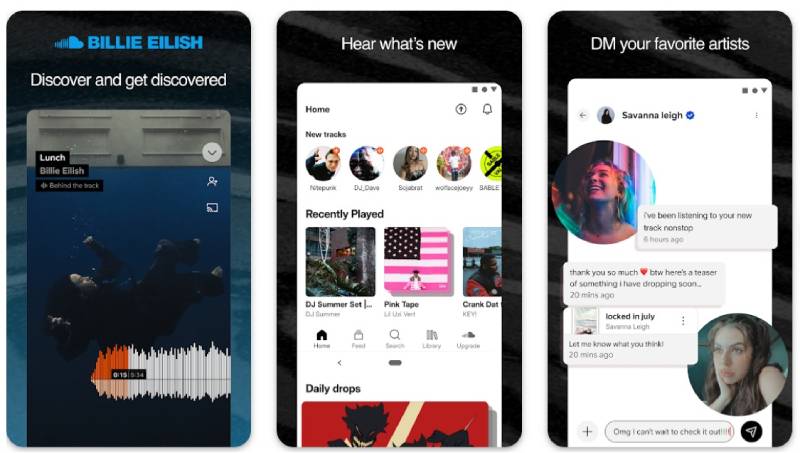
SoundCloud is an open audio streaming platform that lets anyone upload, share, and discover music. It targets independent artists and music fans who want access to underground and emerging content across all genres.
What Does SoundCloud Do?
SoundCloud lets users stream and upload audio tracks directly from a browser or mobile app, with no label or distributor required.
How Is SoundCloud Similar to Audiomack?
Both are open music upload platforms where independent artists can share music directly with fans. Both support free streaming with ad-supported playback and offer mobile apps on iOS and Android.
How Is SoundCloud Different from Audiomack?
SoundCloud has 180 million total users (sqmagazine, 2025) vs. Audiomack’s 30 million monthly active users. SoundCloud hosts over 320 million tracks from 40 million creators. Free uploads are capped at 3 hours; Audiomack has no upload limit.
Who Is SoundCloud Best For?
SoundCloud suits indie artists and listeners who need a large, open music discovery platform with no genre restrictions and community-driven recommendations.
Key Features of SoundCloud
- Free upload tier: Up to 3 hours of audio
- Track discovery: “Fans Also Like” drives 18% of cross-genre discoveries
- Offline listening: Available on SoundCloud Go and Go+ plans
- Creator tools: Royalty insights, A/B testing for track intros, press kit support
Pricing
- Free plan: Yes – ad-supported, 3-hour upload limit
- Paid plans: SoundCloud Go from $4.99/month; Go+ from $9.99/month
- Free trial: Yes – 30 days
Spotify
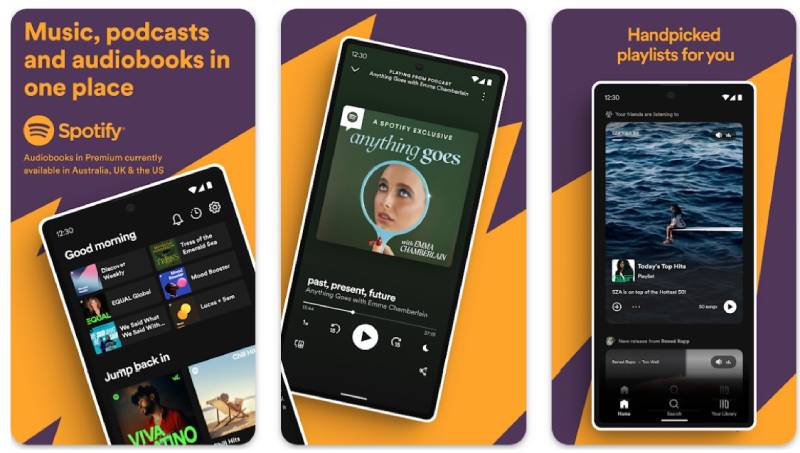
Spotify is a mainstream music streaming service that gives users access to over 100 million tracks and 6 million podcasts. It targets casual listeners and music fans who want algorithm-driven playlist recommendations.
What Does Spotify Do?
Spotify streams music and podcasts on-demand with personalized playlist curation through its Discover Weekly and Release Radar algorithms.
How Is Spotify Similar to Audiomack?
Both offer a free ad-supported tier with mobile apps on iOS and Android. Both support playlist creation, music discovery, and genre-based browsing. Hip-hop is among the top genres on both platforms.
How Is Spotify Different from Audiomack?
| Feature | Spotify | Audiomack |
| Monthly active users | 615 million (Q1 2025) | 30 million |
| Free offline listening | No | Yes |
| Artist uploads | Requires distributor | Direct upload |
| Pay per stream | $0.003-$0.005 | Lower rates |
Who Is Spotify Best For?
Spotify suits mainstream listeners who want algorithm-curated playlists, a massive catalog, and seamless cross-device syncing.
Key Features of Spotify
- Discover Weekly: Drives 56 million new artist discoveries every week
- Catalog size: 100+ million tracks
- Offline listening: Premium only
- Podcast support: 6 million titles
Pricing
- Free plan: Yes – ad-supported, shuffle-only on mobile
- Paid plans: Premium from $11.99/month
- Free trial: Yes – 1 month
YouTube Music
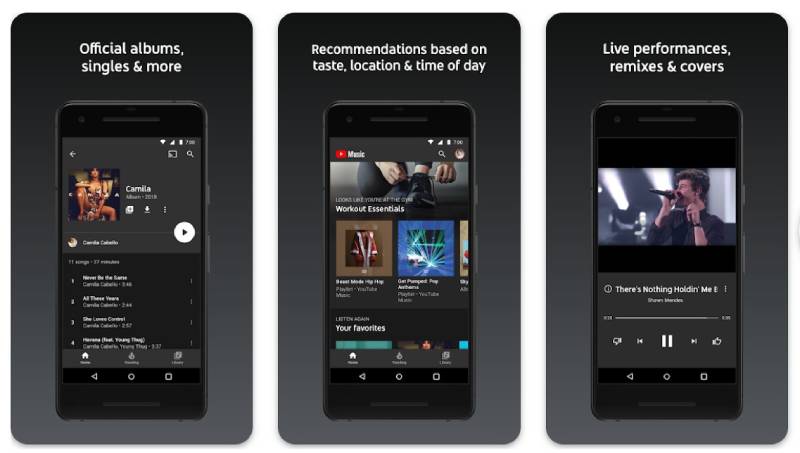
YouTube Music is a streaming app built on YouTube’s video and audio catalog. It targets users who want both official releases and unofficial remixes, live sessions, and user-uploaded content in one place.
What Does YouTube Music Do?
YouTube Music streams audio and video tracks from YouTube’s full library, including official releases, covers, and live recordings, with personalized radio stations.
How Is YouTube Music Similar to Audiomack?
Both offer a free, ad-supported streaming tier on iOS and Android. Both support music discovery and playlist creation. Both carry strong hip-hop and R&B catalogs.
How Is YouTube Music Different from Audiomack?
YouTube Music does not support direct artist uploads from a music-hosting standpoint. It pulls content from YouTube, which means the catalog includes unofficial and fan-uploaded content Audiomack doesn’t have. Offline listening requires a paid plan, unlike Audiomack’s free offline downloads.
Who Is YouTube Music Best For?
YouTube Music suits listeners who want access to rare versions, live recordings, and remixes alongside standard releases, without juggling multiple apps.
Key Features of YouTube Music
- Catalog depth: Includes official tracks plus user-uploaded content from YouTube
- Personalized radio: Based on listening history and YouTube activity
- Background play: Premium only on mobile
- Offline downloads: Premium only
Pricing
- Free plan: Yes – ad-supported, no background play
- Paid plans: Premium from $10.99/month (includes YouTube Premium)
- Free trial: Yes – 1 month
Audius

Audius is a decentralized music streaming platform built on blockchain technology. It targets independent artists in electronic music and hip-hop who want direct fan-to-artist connection with no label involvement.
What Does Audius Do?
Audius lets artists upload music directly to a blockchain-based network, retain full content ownership, and earn through its native $AUDIO cryptocurrency token system.
How Is Audius Similar to Audiomack?
Both are completely free with no subscription required. Both allow direct artist uploads and support free offline playback. Both platforms lean toward hip-hop and electronic music.
How Is Audius Different from Audiomack?
No ads, ever. Audius streams at 320 kbps with no ad interruptions and no premium tier. Artists keep full ownership of their content via blockchain. Audius has 7.5 million monthly active users (RouteNote, 2025), smaller than Audiomack’s 30 million.
Who Is Audius Best For?
Audius suits independent artists and listeners who want a fully free, ad-free streaming platform with transparent creator compensation and no gatekeeping from labels.
Key Features of Audius
- Cost: Completely free, no ads, no subscription
- Audio quality: 320 kbps for all users
- Blockchain ownership: Artists retain full rights
- TikTok integration: Direct track sharing to TikTok
- Offline playback: Free for all users
Pricing
- Free plan: Yes – fully free, unlimited
- Paid plans: None
- Free trial: N/A
Boomplay
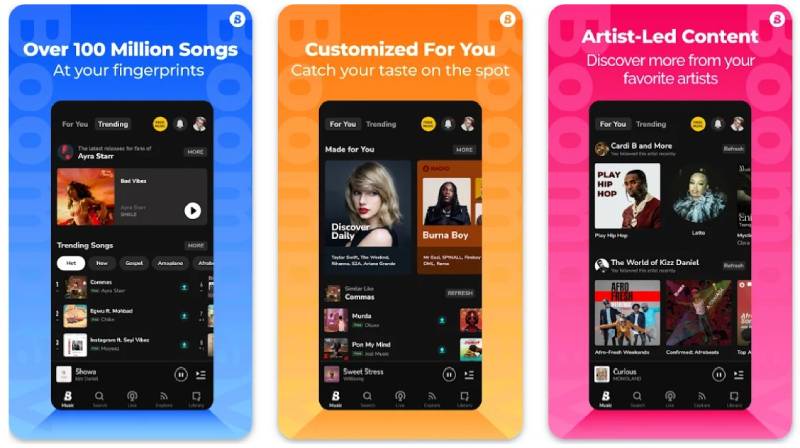
Boomplay is an African music streaming app with over 100 million songs. It targets listeners in Africa and the African diaspora who want deep coverage of Afrobeats, Amapiano, Afropop, and regional genres.
What Does Boomplay Do?
Boomplay streams and offers free offline downloads across African and global genres, with curated playlists and a music news section called “The Buzz.”
How Is Boomplay Similar to Audiomack?
Both focus on African music genres and independent artist support. Both offer free offline downloads without a paid subscription. Both have strong Afrobeats catalogs and run on iOS and Android.
How Is Boomplay Different from Audiomack?
Boomplay has 75 million monthly active users concentrated in Africa (Music Ally, 2024), while Audiomack’s audience skews more toward North America and the diaspora. Boomplay also integrates music news and artist interviews directly in the app, something Audiomack doesn’t offer.
Who Is Boomplay Best For?
Boomplay suits listeners in Africa or fans of African music who want the deepest available catalog of regional genres with free offline access.
Key Features of Boomplay
- Catalog: 100+ million tracks, strongest in Afrobeats and Amapiano
- Free offline downloads: No subscription needed
- Music news: Artist interviews and entertainment content in-app
- Curated playlists: Genre, mood, and region-based
Pricing
- Free plan: Yes – includes offline downloads
- Paid plans: Premium from $2.99/month (varies by region)
- Free trial: Yes – 30 days
DatPiff

DatPiff is a free mixtape hosting and download platform focused entirely on hip-hop. It targets fans of underground rap, street music, and mixtape culture who want direct downloads from artists. You can explore more alternatives to DatPiff if the platform doesn’t quite fit your needs.
What Does DatPiff Do?
DatPiff hosts and distributes free mixtapes from hip-hop artists, letting fans stream or download full projects with no account required.
How Is DatPiff Similar to Audiomack?
Both are free platforms with strong hip-hop mixtape catalogs and no subscription required. Both support free audio downloads and cater to independent artists in the rap and R&B space.
How Is DatPiff Different from Audiomack?
DatPiff is strictly hip-hop. No Afrobeats, no EDM, no other genres. The platform focuses on mixtape downloads rather than a streaming-first experience. It also doesn’t offer artist upload tools or profile pages in the same way Audiomack does.
Who Is DatPiff Best For?
DatPiff suits hip-hop fans who want to download full mixtapes from underground and mainstream rap artists without signing up or paying.
Key Features of DatPiff
- Mixtape catalog: Thousands of free hip-hop mixtapes
- No account needed: Stream or download without registering
- Full project downloads: Download complete mixtapes in MP3 format
- Genre focus: Exclusively hip-hop and rap
Pricing
- Free plan: Yes – fully free
- Paid plans: None
- Free trial: N/A
Tidal

Tidal is a premium music streaming service focused on high-fidelity audio and artist compensation. It targets audiophiles and music fans who prioritize sound quality and supporting artists directly.
What Does Tidal Do?
Tidal streams music at lossless FLAC quality up to 24-bit/192 kHz, with exclusive releases, music videos, and live content from a catalog of over 80 million songs.
How Is Tidal Similar to Audiomack?
Both platforms have historically leaned toward hip-hop, R&B, and pop. Both support offline playback and run on iOS and Android. Tidal’s roots in artist ownership mirror Audiomack’s emphasis on creator support.
How Is Tidal Different from Audiomack?
Tidal pays $0.013 per stream, the highest rate among major platforms. No free tier. Audiomack is free with offline downloads included. Tidal focuses on mainstream and mid-tier artists rather than underground or independent music.
Who Is Tidal Best For?
Tidal suits audiophiles and artists who want lossless streaming and the highest per-stream payout rate available on any major platform.
Key Features of Tidal
- Audio quality: HiRes FLAC up to 24-bit/192 kHz
- Artist payout: $0.013 per stream
- Catalog: 80+ million songs, 350,000+ music videos
- Exclusive content: Early drops and exclusive releases
Pricing
- Free plan: No
- Paid plans: $10.99/month (single plan as of April 2024)
- Free trial: Yes – 30 days
Deezer
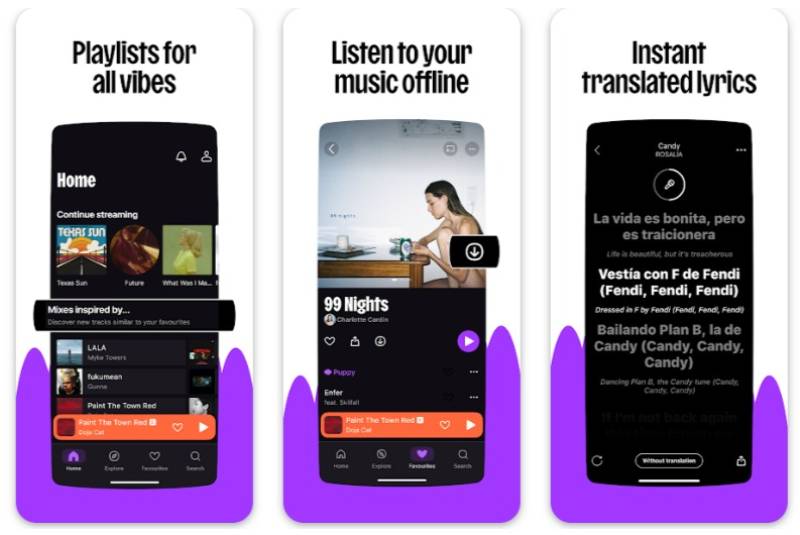
Deezer is a global music streaming app with over 90 million tracks and a strong music discovery feature called Flow. It targets listeners who want personalized radio-style recommendations alongside an on-demand catalog.
What Does Deezer Do?
Deezer streams music on-demand with a Flow algorithm that creates a continuous, personalized listening session based on your taste profile and listening history.
How Is Deezer Similar to Audiomack?
Both offer free ad-supported streaming on iOS and Android. Both cover hip-hop and R&B genres and support playlist creation. Deezer’s free tier, like Audiomack, requires no upfront payment.
How Is Deezer Different from Audiomack?
Deezer’s free mobile experience is notably restricted, shuffle-only with no on-demand track selection. It had 10.5 million paid subscribers as of February 2024 (Music Ally). No direct artist upload feature. HiFi plan delivers 1411 kbps FLAC, well beyond what Audiomack supports.
Who Is Deezer Best For?
Deezer suits listeners who want smart, passive music discovery through Flow and are willing to pay for full on-demand access and lossless audio.
Key Features of Deezer
- Flow: Continuous personalized radio based on taste profile
- HiFi audio: 1411 kbps FLAC on paid plan
- Catalog: 90+ million tracks
- Lyrics support: Real-time lyrics on all plans
Pricing
- Free plan: Yes – ad-supported, shuffle-only on mobile
- Paid plans: Premium from $10.99/month
- Free trial: Yes – 30 days
Bandcamp

Bandcamp is a music sales and streaming platform where independent artists sell music directly to fans. It targets listeners who want to own their music files and support artists with a larger share of the revenue. Fans of platforms like BandLab may also find Bandcamp worth exploring, especially if music creation is part of the picture.
What Does Bandcamp Do?
Bandcamp lets artists sell digital and physical music directly to fans, with buyers receiving DRM-free files in multiple formats including MP3, FLAC, and WAV.
How Is Bandcamp Similar to Audiomack?
Both support direct artist uploads and are built around independent music discovery. Both platforms allow fans to stream music before deciding to download or purchase. Both prioritize the artist-fan relationship over label involvement.
How Is Bandcamp Different from Audiomack?
Bandcamp is a purchase-first platform. Artists set prices and fans buy files. There is no free streaming catalog. Audiomack is fully free with no purchase required. Bandcamp passes 82-85% of revenue directly to artists, far above any streaming platform.
Who Is Bandcamp Best For?
Bandcamp suits fans of niche and independent music who want to own DRM-free files and support artists with a direct payment rather than passive streaming.
Key Features of Bandcamp
- File formats: MP3, FLAC, WAV, AAC, OGG, ALAC
- Artist revenue share: 82-85% per sale
- Bandcamp Fridays: Monthly event where 100% of sales go to artists
- Physical merch: Artists can sell vinyl, CDs, and merchandise
Pricing
- Free plan: Yes – stream previews for free
- Paid plans: Bandcamp Pro for artists at $10/month
- Free trial: No
Pandora

Pandora is a US-based internet radio and music streaming app powered by the Music Genome Project. It targets passive listeners who prefer curated radio stations over on-demand track selection.
What Does Pandora Do?
Pandora generates personalized radio stations by analyzing 450 musical traits per track across 600 genres, playing music that matches a listener’s taste without manual curation.
How Is Pandora Similar to Audiomack?
Both offer a free, ad-supported listening tier on iOS and Android. Both support hip-hop and R&B discovery. Both platforms have dedicated mobile apps and serve listeners who don’t want to pay for music.
How Is Pandora Different from Audiomack?
Pandora has 42 million monthly active users but is available only in the US, Australia, and New Zealand (Statista, Q1 2025). No direct artist uploads. No free offline listening. Audiomack is available globally with free offline downloads.
Who Is Pandora Best For?
Pandora suits US-based listeners who prefer passive, radio-style music discovery over building manual playlists, and who don’t need offline access.
Key Features of Pandora
- Music Genome Project: 450 attributes analyzed per track
- Genre coverage: 600+ genres
- Weekly listening: 263 million hours across all users
- Podcast support: Thousands of shows included
Pricing
- Free plan: Yes – ad-supported radio
- Paid plans: Pandora Plus from $4.99/month; Premium from $9.99/month
- Free trial: Yes – 30 days
What Makes an App a Real Alternative to Audiomack?
Not every music streaming app qualifies as a real Audiomack alternative. The platform’s core value sits in three areas: free access, offline playback without a subscription, and support for independent artists uploading directly.
Any app worth comparing to Audiomack needs to clear at least two of these three bars.
| Qualifying Criteria | Why It Matters |
| Free streaming tier | Audiomack’s main draw is zero cost |
| Free offline playback | 46% of listeners pick free tiers to save on data (Tekrevol, 2025) |
| Direct artist uploads | Core to independent music discovery |
| iOS and Android support | Baseline mobile requirement |
| Hip-hop, Afrobeats, or R&B catalog | Audiomack’s primary genre strength |
The global music streaming market hit $46.66 billion in 2024, with on-demand streaming holding over 70% share (Grand View Research). That scale means the top alternatives are well-funded and feature-rich.
Apps without a free tier (Apple Music) or genre alignment (classical-focused IDAGIO) don’t belong in this comparison, regardless of catalog size.
How Do Free Music Streaming Apps Like Audiomack Compare on Audio Quality and Catalog Size?
Audio quality is where Audiomack’s free tier falls short compared to several alternatives. Catalog depth varies just as much.
Global audio streams hit 4.8 trillion in 2024, a 14% year-on-year increase, according to Luminate. The platforms that captured most of that growth did so on the back of large catalogs and accessible free tiers.
| App | Free Streaming Quality | Max Paid Quality | Catalog Size |
| Audiomack | 128 kbps | 320 kbps | 40M+ tracks |
| Audius | 320 kbps | 320 kbps | 1M+ tracks |
| SoundCloud | 128 kbps (AAC) | 256 kbps (AAC) | 400M+ tracks |
| Tidal | 160 kbps | 24-bit / 192 kHz (FLAC) | 110M+ tracks |
| Deezer | 128 kbps | 1411 kbps (HiFi FLAC) | 120M+ tracks |
Audius is the only app that delivers 320 kbps to free users. Every other free tier caps out at 128-256 kbps, including Audiomack itself.
For catalog size, SoundCloud’s 320 million tracks dwarf the competition. That depth comes from its open upload model, not licensed label content, so quality across that catalog varies significantly.
Bandcamp sits outside this chart intentionally. It doesn’t stream in the traditional sense. Buyers download DRM-free files in formats up to FLAC and WAV after purchase, which means audio quality is determined entirely by the artist’s upload.
Luminate reports that 91.8% of tracks uploaded to streaming platforms in 2024 came from indie distributors, not major labels. That shift directly benefits open platforms like SoundCloud and Audius over gated services.
Which Apps Like Audiomack Support Independent Artist Uploads?
Artist upload support splits the 10 alternatives into two distinct groups. This matters because a large portion of Audiomack’s user base consists of creators, not just listeners.
In 2024, streaming surpassed physical and digital download sales as the primary revenue source for independent artists, according to Glide Magazine. Platforms that allow direct uploads capture both sides of that market.
Platforms with Direct Artist Uploads
No distributor required. These platforms let artists upload and go live immediately:
- SoundCloud: free uploads up to 3 hours; unlimited on paid plans
- Audius: no upload limit, blockchain ownership, no intermediaries
- Bandcamp: artists set their own prices, keep 82-85% of revenue
- DatPiff: hip-hop mixtape uploads, no account required for listeners
Post Malone uploaded “White Iverson” to SoundCloud in 2015 before any label deal. That track launched his career. It’s a clear example of what open upload platforms enable.
Platforms That Require a Distributor
Third-party distribution required to get music on these services:
- Spotify: requires DistroKid, TuneCore, CD Baby, or similar
- Tidal: no direct upload, label or distributor deal needed
- YouTube Music: content pulled from YouTube, no direct music upload
- Deezer: requires distribution partner
Distributor fees range from free (DistroKid’s basic tier) to percentage-based cuts. That friction is exactly what Audiomack, SoundCloud, and Audius eliminate.
Payout comparison matters here too. Tidal pays $0.012-$0.013 per stream, the highest of any major platform (Rebel Music, 2025). Spotify pays $0.003-$0.005. Pandora pays $0.0013, the lowest on this list.
Which Apps Like Audiomack Work Best for Hip-Hop and Afrobeats Listeners?
Genre alignment is the main reason users stick with Audiomack. R&B and hip-hop account for 29.9% of all US on-demand audio streams, making it the top recorded genre by streaming share (SQ Magazine, 2025).
Afrobeats streams on Spotify in Latin America are up over 400% since 2020, with Brazil alone seeing a 500% spike. That growth is reshaping which platforms serve African music fans best.
Best Apps for Hip-Hop Mixtapes and Underground Rap
DatPiff is the most focused option. The entire platform exists for hip-hop mixtapes. No other genres, no algorithm pushing mainstream content, just free downloads from underground and mainstream rap artists.
SoundCloud comes second. Its open upload model means independent hip-hop artists upload directly, without label filters. The platform hosts over 58,000 new DJ mixes per week (sqmagazine, 2025), many of them hip-hop focused.
Spotify carries the largest mainstream hip-hop catalog but pushes algorithmic discovery over artist-fan connection. Useful for established artists. Less useful for finding underground releases before they chart.
Best Apps for Afrobeats and African Music
Boomplay is the clear leader. 75 million monthly active users in Africa (Music Ally, 2024), the deepest catalog of Afrobeats, Amapiano, and Afropop, and free offline downloads. No other platform in this list gets close on African genre coverage.
Audiomack itself is a strong second. Asake and Seyi Vibez lead with 1.46 billion combined streams on the platform. The app has 30 million monthly active users, with significant growth in North America among the African diaspora.
Between 2017 and 2022, Afrobeats streams on Spotify grew 550%, with 14 billion streams on the platform in 2023 alone (Rest of World). Boomplay and Audiomack captured that growth in the markets Spotify wasn’t serving well.
Which App Like Audiomack Is Best for Offline Listening Without a Subscription?
Free offline playback is Audiomack’s most distinct feature. Most major platforms lock offline listening behind a paid plan. Only a handful of alternatives match it for free.
| App | Free Offline? | Paid Offline? | Note |
| Audiomack | Yes | Yes (Premium) | No subscription needed for many tracks |
| Audius | Yes | N/A | Fully free, no ads |
| Boomplay | Yes | Yes | Free offline access primarily in Africa |
| DatPiff | Yes | N/A | Specialized in full mixtape downloads |
| Spotify | No | Yes (Premium) | Requires $11.99/month for downloads |
| Tidal | No | Yes | Requires $10.99/month for downloads |
Audius is the strongest free alternative. No ads, no subscription, 320 kbps streaming, and full offline access. The only limitation is catalog size: 1 million tracks versus Audiomack’s 40 million.
Boomplay matches Audiomack for free offline in Africa-focused markets. Outside Africa, its catalog relevance drops sharply for hip-hop and Western genres.
Pandora offers something different: auto-cached stations that play offline, but only on the Pandora Plus plan ($4.99/month). It isn’t truly free offline listening.
For users who travel frequently or have limited mobile data, Audius plus Boomplay covers both the underground music discovery gap and the Afrobeats catalog gap that neither alone can fill.
How Do Audiomack Alternatives Differ in Pricing?
Music streaming apps generated $53.7 billion in revenue in 2024, a 12.5% increase year-on-year (Business of Apps). That growth has pushed most platforms toward more distinct paid tiers.
Audiomack Premium at $5.99/month sits in the lower-mid range. Spotify at $11.99/month costs double.
| App | Free Tier | Paid Plan (Starting) | Free Trial |
| SoundCloud | Yes (Ads + 3hr upload) | $4.99/month (Go) | 30 days |
| Spotify | Yes (Ads + shuffle only) | $11.99/month | 1 month |
| YouTube Music | Yes (Ads, no background play) | $10.99/month | 30 days |
| Audius | Yes (Fully free) | None | N/A |
| Boomplay | Yes (Includes offline) | ~$2.99/month | 30 days |
| DatPiff | Yes (Fully free) | None | N/A |
| Tidal | No | $10.99/month | 30 days |
| Deezer | Yes (Shuffle only on mobile) | $10.99/month | 30 days |
| Bandcamp | Yes (Preview streaming) | $10/month (Artists) | No |
| Pandora | Yes (Ad-supported radio) | $4.99/month (Plus) | 30 days |
Best free-only setup: Audius for ad-free streaming, DatPiff for hip-hop mixtapes, Boomplay for Afrobeats.
Best value paid plan: Boomplay at ~$2.99/month for African music fans. SoundCloud Go at $4.99/month for indie and underground content.
Best for audiophiles: Tidal at $10.99/month. One plan, lossless FLAC up to 24-bit/192 kHz, and the highest artist payout rate of any major platform at $0.012-$0.013 per stream (Rebel Music, 2025).
Spotify’s premium user base generates 90% of the platform’s revenue despite being only 42% of total users (Royalty Exchange, 2025). That premium-to-free revenue ratio is why free tiers on most platforms stay restricted. Audius and DatPiff are the exceptions because neither needs ad or subscription revenue to operate at their current scale.
FAQ on Apps Like Audiomack
What is the best free alternative to Audiomack?
Audius is the strongest free alternative. It streams at 320 kbps with no ads, no subscription, and free offline playback. SoundCloud is a close second, offering a massive catalog of independent and underground tracks on a free ad-supported tier.
Which apps like Audiomack offer free offline listening?
Audius, Boomplay, and DatPiff all support free offline downloads without a paid plan. Spotify, Tidal, and Deezer require a subscription for offline access. Audiomack itself remains one of the few mainstream platforms offering offline playback at no cost.
Is SoundCloud a good replacement for Audiomack?
Yes, for independent music discovery. SoundCloud hosts over 320 million tracks from 40 million creators and allows direct artist uploads. Free uploads are capped at 3 hours. It’s stronger on catalog depth but weaker on Afrobeats coverage compared to Audiomack.
What app is best for Afrobeats streaming?
Boomplay. It has 75 million monthly active users concentrated in Africa and the deepest catalog of Afrobeats, Amapiano, and Afropop available on any mobile platform. Free offline downloads are included without a subscription in most African markets.
Which music streaming app pays artists the most?
Tidal pays the highest rate at roughly $0.012-$0.013 per stream, the best among major platforms. Bandcamp takes a different approach, passing 82-85% of each sale directly to the artist. Both significantly outperform Spotify’s $0.003-$0.005 per stream.
Are there apps like Audiomack for hip-hop mixtapes?
DatPiff alternatives aside, DatPiff itself is the most focused option. The platform is built entirely around free hip-hop mixtape downloads, no account needed, no other genres. SoundCloud and Audius also carry strong underground rap catalogs for listeners wanting on-demand streaming.
Does Spotify have the same features as Audiomack?
Partially. Both offer free streaming and hip-hop catalogs on iOS and Android. But Spotify requires a paid subscription for offline listening and doesn’t support direct artist uploads. Audiomack is more accessible for independent creators and budget-conscious listeners.
What music apps work without Wi-Fi for free?
Audiomack, Audius, Boomplay, and DatPiff all work offline without paying. Audius stands out because it’s completely ad-free with no limits. Most other platforms, including Spotify and YouTube Music, restrict offline playback to premium subscribers only.
Which app is better for independent artists, SoundCloud or Audius?
Audius gives artists full ownership through blockchain and pays via its native $AUDIO token with no label involvement. SoundCloud offers broader reach with 180 million users. Most independent artists use both: Audius for ownership, SoundCloud for discovery.
Is there a free music streaming app with no ads?
Audius is the only major platform that streams at 320 kbps with zero ads and no subscription required. DatPiff is also ad-light for mixtape downloads. Every other app on this list, including Audiomack’s free tier, includes some form of ad-supported playback.
Conclusion
This conclusion is for an article presenting apps like Audiomack that cover every major use case, from free mixtape downloads to lossless audio streaming.
No single platform wins across the board. DatPiff leads for underground hip-hop. Boomplay dominates Afrobeats and African music. Audius is the only option with zero ads, free offline playback, and full artist ownership through blockchain.
For independent artists, the upload model matters as much as the listener base. SoundCloud and Bandcamp give creators direct access to fans without distributor fees eating into revenue.
Budget-conscious listeners get the most from Audius and Boomplay combined. Those willing to pay get better audio quality on Tidal or Deezer.
Try two or three. Your listening habits will tell you which one sticks.

- VS Code Extensions That Are Actually Worth Installing - October 13, 2026
- Google Play App Signing Explained - October 11, 2026
- 5 Best NinjaOne Alternatives for Focused Endpoint Management - October 10, 2026