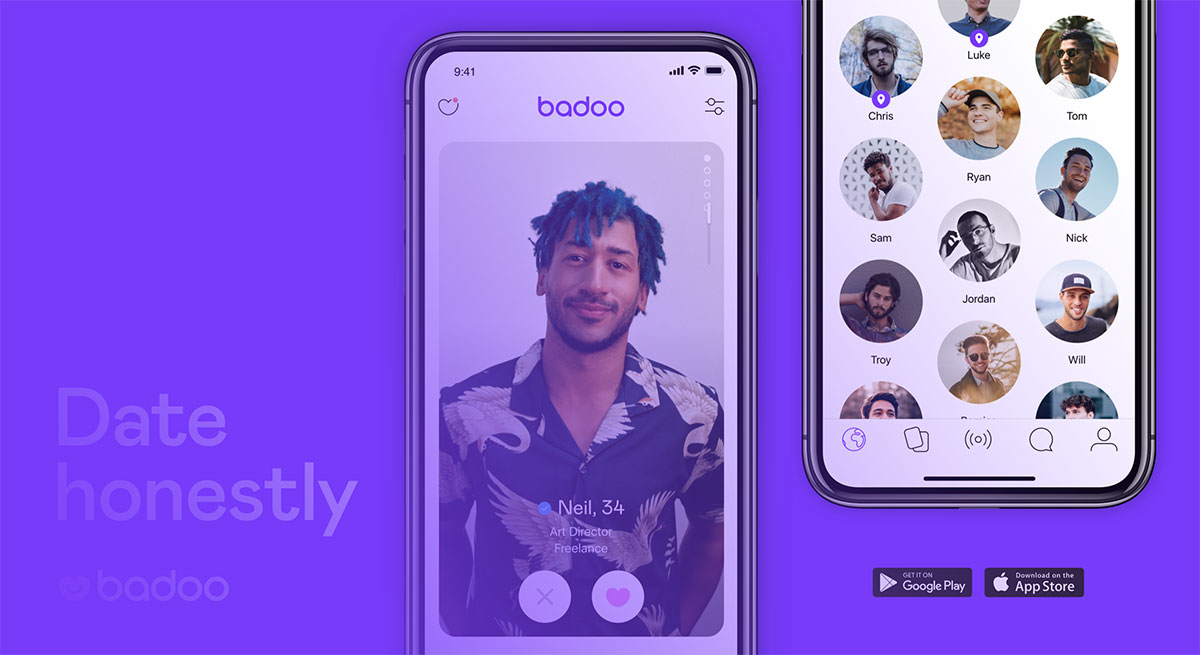
Badoo has over 400 million registered users, yet millions of people are actively looking for something better.
Maybe the match quality has dropped off. Maybe you want women to message first, or you’re after serious relationships instead of casual connections. Whatever the reason, the right alternative exists.
This guide covers the best apps like Badoo available right now, from swipe-based platforms like Tinder to compatibility-driven options like OkCupid and Hinge.
For each app, you’ll find a clear breakdown of features, pricing, and who it actually suits, so you can switch without wasting time on the wrong platform.
Apps Like Badoo
Badoo has over 400 million registered users globally, but it is not the right fit for everyone. Maybe the algorithm feels stale, or you want women to message first, or you are after serious relationships instead of casual connections.
Whatever the reason, there are solid Badoo alternatives built around different matching philosophies. Some focus on swipe-based dating, others on compatibility scores or real-world proximity.
This guide covers the 10 best apps like Badoo available right now, with features, pricing, and who each one suits best.
Tinder
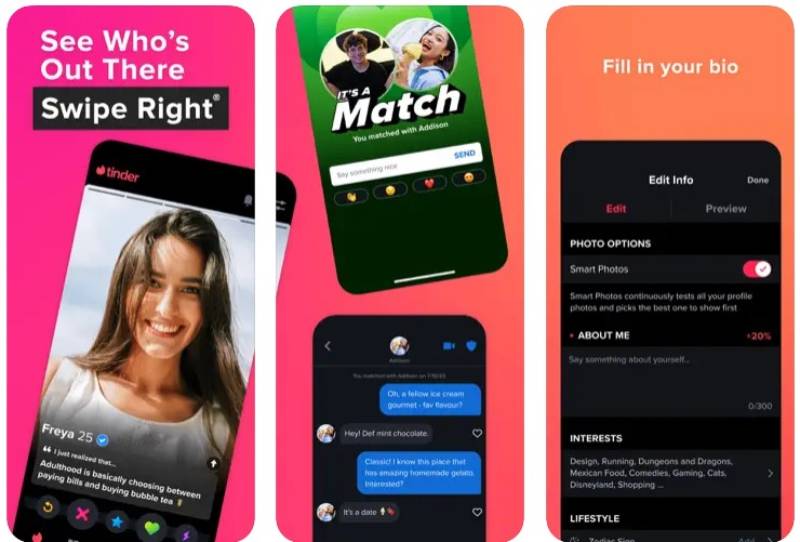
Tinder is a swipe-based dating app that matches users through mutual right-swipes for adults seeking casual connections or serious relationships. It popularized the swipe mechanic that most dating platforms now copy and supports iOS and Android globally.
What Does Tinder Do?
Tinder lets users swipe on profiles filtered by age, gender, and distance. When two users both swipe right, a match is created and in-app messaging opens.
How Is Tinder Similar to Badoo?
Both use photo-based profiles, location-based matching, and free access with optional premium upgrades. Both target adults 18+ and support casual dating and friendship-finding.
How Is Tinder Different from Badoo?
- Tinder has a significantly larger user base (75+ million monthly active users vs. Badoo’s ~28 million)
- Tinder’s free tier limits daily swipes; Badoo offers more free features by default
- Tinder’s Passport feature lets users match in other cities before traveling, which Badoo does not offer
Who Is Tinder Best For?
Tinder suits singles who want the largest possible dating pool and a fast, swipe-driven experience without filling out lengthy compatibility questionnaires.
Key Features of Tinder
- Swipe matching: Mutual right-swipe system, unlimited with premium
- Passport: Browse matches in any city worldwide
- Super Like: Notifies a user you liked them before they see your profile
- Photo verification: Selfie-based identity check to reduce fake profiles
Pricing
- Free plan: Yes – limited daily swipes, no ability to see who liked you
- Paid plans: Tinder Plus from $9.99/month, Gold from $14.99/month, Platinum from $19.99/month
- Free trial: No standard trial; occasional promotional offers
Bumble
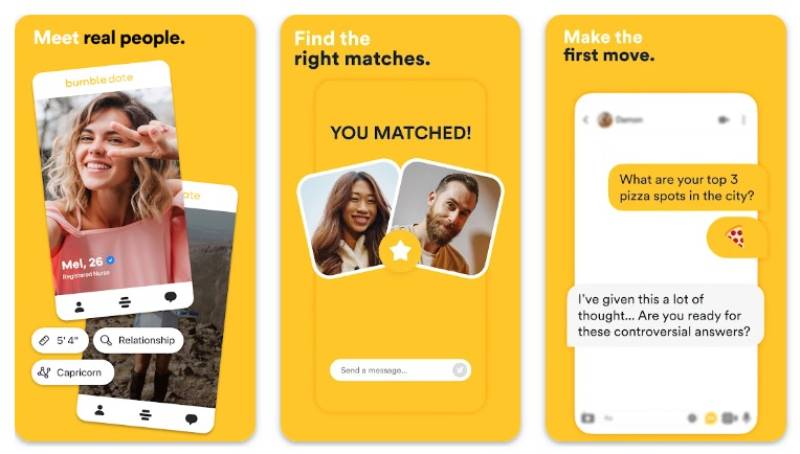
Bumble is a women-first dating app that requires women to send the first message in heterosexual matches for adults who want a more balanced online dating experience. It removes unsolicited messages from men and supports iOS and Android.
What Does Bumble Do?
Bumble matches users through swiping and enforces a 24-hour window for women to initiate contact in heterosexual matches. In same-gender matches, either person can message first.
How Is Bumble Similar to Badoo?
Both apps use location-based matching, photo profiles, and a free base tier. Both support casual dating and making new friends, and both are available on iOS and Android.
How Is Bumble Different from Badoo?
- Bumble requires women to message first in straight matches; Badoo has no such restriction
- Bumble includes BFF (friendship) and Bizz (networking) modes, which Badoo does not
- Unresponded matches expire after 24 hours on Bumble, creating urgency Badoo lacks
Who Is Bumble Best For?
Bumble suits women who are tired of receiving unsolicited messages and want more control over who they connect with on a social discovery platform.
Key Features of Bumble
- Women-first messaging: Women initiate in heterosexual matches
- BFF mode: Find platonic friends, not just dates
- Bizz mode: Professional networking within the same app
- Video chat: In-app video calls before meeting in person
Pricing
- Free plan: Yes – limited swipes, no rematching with expired connections
- Paid plans: Bumble Boost from $14.99/month, Bumble Premium from $29.99/month
- Free trial: No
Hinge
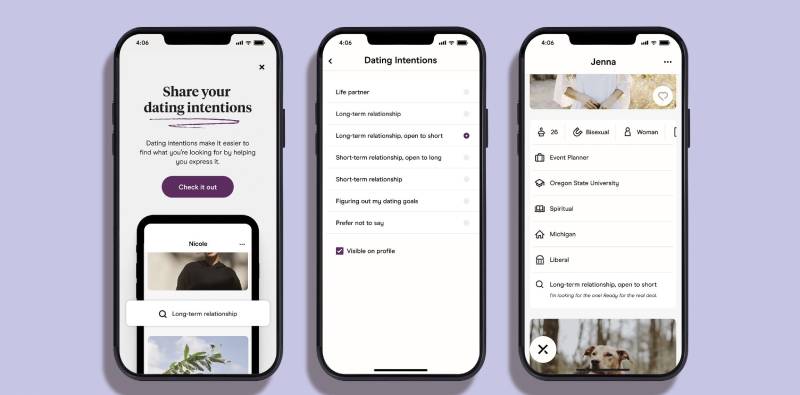
Hinge is a relationship-focused dating app that matches users through prompt-based profiles and mutual likes for adults seeking meaningful, long-term connections. It deliberately limits superficial swiping and supports iOS and Android.
What Does Hinge Do?
Hinge shows profiles with photo prompts and written answers. Users like a specific photo or answer rather than the whole profile, which starts a focused conversation.
How Is Hinge Similar to Badoo?
Both use mutual interest to create matches, include free tiers, and are available on iOS and Android. Both support in-app messaging and photo-based profiles.
How Is Hinge Different from Badoo?
| Feature | Hinge | Badoo |
| Matching Style | Prompt-based interactions (Likes/Comments) | Swipe-based (Encounters) & “People Nearby” |
| Core Intent | Long-term relationships (“Designed to be deleted”) | Casual dating, friendship, and social discovery |
| Daily Likes (Free) | Strictly limited (8 per day) | More generous (approx. 50 per day) |
| Growth Rate (2025) | +25% revenue growth; increasing paying users | Declining; lost ~3 million users in 2025 |
| Trust & Safety | Higher (Strict verification, fewer bots) | Lower (Higher reports of fake/spam profiles) |
Who Is Hinge Best For?
Hinge suits adults aged 25-35 who want serious relationships and prefer conversation-starting prompts over quick swipe-based matching.
Key Features of Hinge
- Profile prompts: Written answers replace the bio, sparking real conversations
- Roses: Premium likes that signal strong interest
- Your Turn queue: Tracks whose turn it is to respond
- Voice notes: Audio messages available in-app
Pricing
- Free plan: Yes – 8 likes per day, basic filters
- Paid plans: Hinge+ from $19.99/month, HingeX from $34.99/month
- Free trial: No
OkCupid

OkCupid is a compatibility-driven dating app that matches users through detailed questionnaires and personality-based scoring for adults who prioritize shared values over physical attraction alone. It supports iOS, Android, and web.
What Does OkCupid Do?
OkCupid generates compatibility percentages by asking users hundreds of optional questions about politics, lifestyle, and relationship goals. Matches are ranked by score.
How Is OkCupid Similar to Badoo?
Both have a free base tier with messaging, both use profile photos and bios, and both are available across multiple platforms. OkCupid’s user base skews 25-34, overlapping with Badoo’s primary demographic.
How Is OkCupid Different from Badoo?
- OkCupid uses a compatibility percentage system; Badoo relies on proximity and swiping
- OkCupid lets users message matches before mutual liking; Badoo requires a match first
- Premium pricing is steeper: OkCupid Basic starts at $9.95/month, Premium at $34.90/month
Who Is OkCupid Best For?
OkCupid suits millennials and progressive daters who want personality-based matching and care more about shared values than quick visual swiping.
Key Features of OkCupid
- Match percentage: Compatibility score based on answered questions
- DoubleTake: Swipe-style card deck powered by compatibility score
- Free messaging: Message matches without paying
- Inclusive filters: 22 gender identities and 13 sexual orientations
Pricing
- Free plan: Yes – limited likes, ads shown
- Paid plans: OkCupid Basic from $9.95/month, Premium from $34.90/month
- Free trial: No
Plenty of Fish (POF)
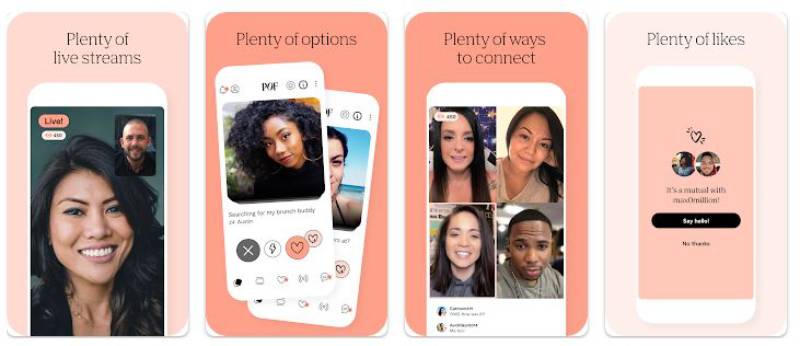
Plenty of Fish is a free dating platform that connects singles through detailed profiles and a high-volume messaging system for adults who want more communication freedom than most apps allow. It supports iOS, Android, and web.
What Does Plenty of Fish Do?
POF lets users browse profiles, apply detailed search filters, and message matches directly. The app also includes a “Meet Me” discovery section for quicker swiping.
How Is POF Similar to Badoo?
Both apps have strong free tiers, large user bases, location-based matching, and support casual dating. POF’s 50+ million users create a dating pool comparable to Badoo’s reach in English-speaking markets.
How Is POF Different from Badoo?
- POF offers more granular search filters (income, education, body type) than Badoo
- POF skews toward an older demographic (30+); Badoo is more popular with 18-25 users
- POF’s interface feels dated compared to Badoo’s more modern profile-based layout
Who Is POF Best For?
POF suits budget-conscious singles aged 30+ who want free messaging and detailed search filters without committing to a paid subscription.
Key Features of POF
- Free messaging: Full messaging access without a paid plan
- Chemistry Predictor: Personality test for better match suggestions
- Meet Me section: Quick swipe discovery mode
- Advanced search: Filters by education, height, income, and more
Pricing
- Free plan: Yes – full messaging, basic filters
- Paid plans: POF Premium from $9.99/month (unlocks profile boosts and read receipts)
- Free trial: No
Zoosk
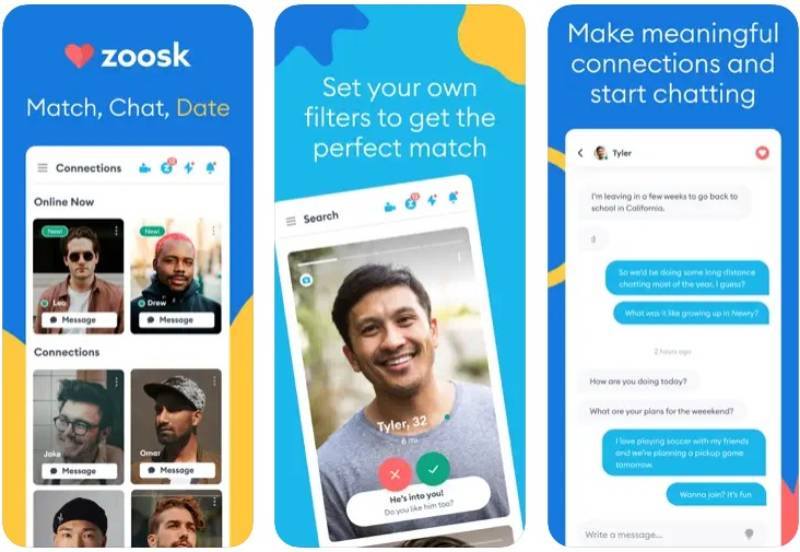
Zoosk is a behavioral matchmaking app that learns user preferences through actions rather than questionnaires for adults who want a low-effort setup with smarter suggestions over time. It supports iOS, Android, and web.
What Does Zoosk Do?
Zoosk tracks who users like, message, and skip to build a preference model. That model refines match suggestions automatically without requiring users to fill out long surveys.
How Is Zoosk Similar to Badoo?
Both use location-based matching, support profile photos and bios, and offer a freemium model. Both have large user bases (Zoosk claims 40 million registered users) with a global reach.
How Is Zoosk Different from Badoo?
- Zoosk’s SmartPick engine learns from behavior; Badoo matches based on proximity and swipes
- Messaging on Zoosk requires a paid subscription; Badoo offers limited free messaging
- Zoosk’s paid plan starts at $29.95/month, making it pricier than Badoo Premium
Who Is Zoosk Best For?
Zoosk suits adults who dislike filling out long compatibility tests and prefer a matching algorithm that improves based on their actual in-app behavior.
Key Features of Zoosk
- SmartPick: Behavioral matching engine that refines suggestions over time
- Carousel: Swipe-style discovery mode for quick browsing
- Photo verification: Video selfie check to confirm profile authenticity
- Coins system: Virtual currency for premium in-app actions
Pricing
- Free plan: Yes – browsing and likes, messaging requires paid plan
- Paid plans: From $29.95/month (1 month), $19.98/month (3 months), $12.49/month (6 months)
- Free trial: No
Happn

happn is a proximity-based dating app that connects users with people they have physically crossed paths with in real life for urban singles who want matches tied to shared locations. It supports iOS and Android.
What Does happn Do?
happn logs the real-world locations users pass through and shows profiles of other users who were at the same spot. A match happens when both users like each other.
How Is happn Similar to Badoo?
Both rely on real-world proximity to generate matches, both offer free base access, and both target casual daters interested in meeting nearby singles. happn’s premium pricing ($16.66/month) sits close to Badoo’s range.
How Is happn Different from Badoo?
- happn shows only people you have physically crossed paths with; Badoo uses a radius-based browse
- happn works best in dense urban areas; Badoo has broader coverage in suburban and rural zones
- happn has roughly 100 million registered users, smaller than Badoo’s global footprint
Who Is happn Best For?
happn suits city-dwelling singles who want to reconnect with someone they saw in passing, like at a coffee shop or on a commute, rather than browsing a broad pool of profiles.
Key Features of happn
- Crossed paths: Shows users you have been physically near
- CrushTime: Guessing game where you identify who liked you from 4 options
- FlashNote: Send a message before matching
- Audio mode: Voice-only profile option for more personal introductions
Pricing
- Free plan: Yes – basic matching and messaging
- Paid plans: happn Premium from ~$16.66/month (varies by subscription length)
- Free trial: 7-day free trial available
Coffee Meets Bagel
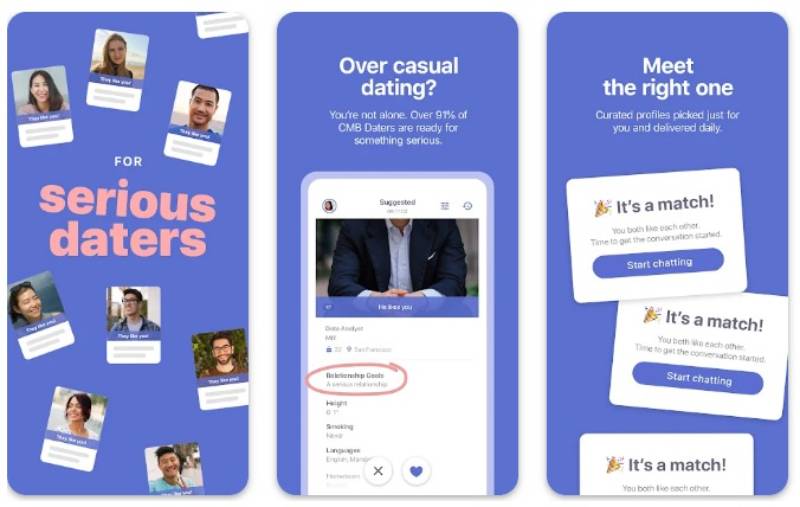
Coffee Meets Bagel is a curated matching app that delivers a small daily selection of highly compatible profiles at noon for adults who are tired of endless swiping and want fewer, better matches. It supports iOS and Android.
What Does Coffee Meets Bagel Do?
CMB sends men up to 21 curated “bagels” (matches) per day, while women see only men who have already liked them. Conversations expire after 8 days to push real-world meetings.
How Is Coffee Meets Bagel Similar to Badoo?
Both use profile verification, photo-based profiles, and in-app messaging. Both offer free access with premium upgrades, and both target users aged 18-35.
How Is Coffee Meets Bagel Different from Badoo?
| Feature | Coffee Meets Bagel | Badoo |
| Daily match volume | Curated (Women: 6; Men: Up to 21) | Unlimited browsing (Encounters) |
| Match expiry | 8-day chat expiration | No expiry |
| User demographics | 90%+ with bachelor’s degree | Global, broad demographic |
| Market focus | US and Asia (Singapore, Hong Kong) | Europe and Latin America (Brazil) |
Who Is Coffee Meets Bagel Best For?
CMB suits educated professionals in their late 20s to 40s who prefer a small, curated batch of matches over high-volume swiping across a large dating pool.
Key Features of Coffee Meets Bagel
- Daily bagels: Curated matches delivered at noon each day
- Activity score: Ranks profiles by recent engagement, not just photo appeal
- 8-day expiry: Conversations expire if neither user moves the chat forward
- Icebreakers: Suggested openers to reduce blank-message anxiety
Pricing
- Free plan: Yes – limited daily bagels, basic features
- Paid plans: CMB Premium from approximately $34.99/month
- Free trial: No standard trial
MeetMe

MeetMe is a social networking and live video app that combines dating discovery with live streaming for teens and young adults who want real-time social interaction beyond standard profile matching. It supports iOS and Android.
What Does MeetMe Do?
MeetMe lets users browse nearby profiles, join live video streams, send virtual gifts, and chat in real time. It blends social media features with dating app mechanics.
How Is MeetMe Similar to Badoo?
Both apps mix social discovery with dating, both support chat with strangers and location-based browsing, and both offer free access. MeetMe and Badoo both attract younger users in the 18-25 range.
How Is MeetMe Different from Badoo?
- MeetMe’s live streaming and virtual gifting economy is more developed than Badoo’s video features
- MeetMe’s gamified interaction model (points, gifts) is absent from Badoo
- MeetMe is stronger in North America; Badoo dominates Europe and Latin America
Who Is MeetMe Best For?
MeetMe suits 18-25 year olds who want a social platform that mixes live video, casual chat, and dating discovery rather than a pure swipe-and-match app.
Key Features of MeetMe
- Live streaming: Broadcast or watch live video from other users
- Virtual gifts: Send animated gifts during live streams
- Match&Chat: Swipe-based quick matching feature
- Nearby feed: Real-time activity from users in your area
Pricing
- Free plan: Yes – full chat and browse access
- Paid plans: MeetMe+ from $9.99/month; virtual gift credits sold separately
- Free trial: No
Tagged

Tagged is a social discovery app that connects users for dating, friendship, and casual meetups through a games-based interaction model for adults who want a more relaxed, social-network feel alongside dating features. It supports iOS and Android.
What Does Tagged Do?
Tagged lets users browse profiles, play “Are You Interested” (a swipe-like game), send virtual gifts, and chat. It positions itself as a social platform where dating is one of several interaction modes.
How Is Tagged Similar to Badoo?
Both platforms blend online dating features with social networking. Both use profile-based discovery, location filters, and free messaging access with optional premium features.
How Is Tagged Different from Badoo?
- Tagged has a more diverse user demographic with strong adoption in African-American and Latino communities in the US; Badoo skews heavily European
- Tagged’s virtual pet and games features are a core engagement tool, absent from Badoo
- Tagged has a smaller global footprint than Badoo’s 400+ million registered users
Who Is Tagged Best For?
Tagged suits users who want a casual social discovery experience with built-in games and gifting, and who are less focused on structured profile-based dating mechanics.
Key Features of Tagged
- Are You Interested: Swipe-style game for quick discovery
- Virtual pets: Gamified engagement feature unique to Tagged
- Live streaming: Real-time video broadcast and viewing
- Free messaging: Chat without a paid subscription
Pricing
- Free plan: Yes – messaging and browsing included
- Paid plans: Tagged VIP from $9.99/month
- Free trial: No
Quick Comparison: Apps Like Badoo at a Glance
| App | Best For | Free Messaging | Starting Paid Price (Approx.) |
| Tinder | Large dating pool, fast swiping | No | $22.48/month |
| Bumble | Women making the first move | No | $32.99/month |
| Hinge | Serious relationships, high intent | No | $29.99/month |
| OkCupid | Compatibility-based matching | Yes | $34.99/month |
| POF | High-volume free interaction | Yes | $29.99/month |
| Zoosk | Behavioral matching, low setup | No | $29.99/month |
| happn | Urban proximity-based matching | Yes (limited) | $21.99/month |
| Coffee Meets Bagel | Curated quality over quantity | No | $34.99/month |
| MeetMe | Young adults, live video + dating | Yes | $9.99/month |
| Tagged | Casual social discovery, games | Yes | $9.99/month |
What Is Badoo and What Kind of App Is It?
Badoo is a social discovery and dating platform launched in 2006 by Andrey Andreev, built around location-based matching, photo profiles, and swipe-based encounters.
It operates in 190 countries, supports 47 languages, and has accumulated over 400 million registered accounts since launch.
That is a massive footprint. But registered users and active users are two very different numbers.
As of 2025, Badoo has roughly 30 million monthly active users, about half of Tinder’s active base, with its strongest engagement in Europe (Spain, Italy, France, Poland) and Latin America (Brazil being its single largest market), according to data from World Population Review.
In the US, Badoo holds around 4.3 million users, a fraction compared to Tinder’s 75 million monthly active users globally (Business of Apps, 2024).
How Badoo Works
Badoo combines three core discovery modes: the Encounters swipe feed, People Nearby browsing, and Live streams.
Unlike Tinder, Badoo allows messaging before a mutual match, which lowers the barrier to initiate contact.
Key product attributes:
- Freemium model: free swiping, messaging, and browsing with paid credits for boosted visibility
- Photo Verification and AI-powered Deception Detector (launched 2024, blocks 95% of scam accounts automatically)
- Private Detector: auto-blurs inappropriate photos using AI
- Available on iOS, Android, and web
The user base skews 18-35, with the 25-34 bracket being the largest segment.
Gender split runs roughly 69% male and 31% female, consistent with most major dating platforms.
Why People Look for Badoo Alternatives
Badoo ratings on Sitejabber sit at 1.5 stars from 607 reviews, with fake profiles and credit billing issues as the two most cited complaints.
Bumble Inc., which owns Badoo, reported a revenue decline of nearly 10% in 2025, with paying users falling by more than 11% across both platforms (Players Time, 2026).
The reasons users switch are consistent:
- Stale or inactive match pools, especially outside major cities
- Heavy paywall friction for core features
- Fake profiles despite AI moderation
- Weak presence in the US market compared to Tinder or Hinge
The global online dating market reached $6.07 billion in 2025 (Business of Apps), with over 350 million people using dating apps worldwide. Plenty of alternatives exist.
Which Apps Like Badoo Are Best for Casual Dating and Social Discovery?
Badoo’s core use case is casual social discovery: swipe, chat, meet nearby people, no heavy commitment required. These four apps serve the same intent.
| App | Matching Model | Free Messaging | Strongest Market |
| Tinder | Mutual swipe | No | Global, US-dominant |
| happn | Real-world proximity | Limited | Dense urban areas |
| MeetMe | Social feed + swipe | Yes | North America, 18-25 |
| Tagged | Games + browse | Yes | US, diverse demographics |
Tinder
Tinder invented the swipe mechanic in 2012 and still leads the swipe-based dating market by a wide margin.
75 million monthly active users globally, 9.8 million paying subscribers, and $1.96 billion in revenue in 2024 (Business of Apps). No other app in this category comes close.
Where it beats Badoo:
- Far larger user base in the US, UK, and Australia
- Passport feature: browse matches in any city before traveling
- Noonlight safety integration for in-person meetups
Where Badoo has an edge: Badoo’s free tier is more generous. Tinder limits daily swipes and hides who liked you behind a paywall.
61.2% of Tinder users fall in the 18-34 age group, almost identical to Badoo’s core demographic (DemandSage, 2025).
happn
happn takes a different approach entirely. Instead of a radius browse, it shows you profiles of people you have physically crossed paths with during your day.
That means your coffee shop, your commute, your gym. If they were there too, they show up.
Over 100 million registered users globally, with premium at ~$16.66/month, placing it in the same price range as Tinder Gold.
The crossed-paths model creates a genuine alternative to Badoo’s location radius for city dwellers. Rural users will find it too sparse to be useful.
MeetMe
MeetMe blends social discovery with live video streaming, making it feel closer to a social network than a standard dating app.
Users broadcast live, send virtual gifts, and browse a real-time feed of nearby activity alongside a standard swipe-matching feature.
It is especially popular with 18-25 year olds in North America, the same crowd most likely to leave Badoo for something with more social energy. Free messaging is available without a subscription.
Tagged
Tagged occupies a niche Badoo does not serve well: gamified social discovery with a strong presence among African-American and Latino users in the US.
Its “Are You Interested” game works like a swipe feed, but the platform surrounds it with virtual pets, live streams, and gifting mechanics that keep users engaged beyond matching.
Free messaging, no match required to chat. In that sense it is structurally more open than Badoo’s default mode.
Which Apps Like Badoo Are Better for Serious Relationships?
Badoo sits in the middle: not built specifically for hookups, not built for long-term matching either. Users who want clearer intent from their matches consistently migrate to these four apps.
30% of U.S. adults have used a dating site or app, and among partnered adults under 30, 1 in 5 met their current partner online (Pew Research Center).
Hinge
87% of Hinge users say they are looking for a serious relationship, compared to roughly 50% on Tinder (DoULike, 2026).
That intent gap is the whole product. Hinge replaced the swipe with likes on specific photos and prompts, forcing more deliberate engagement before a conversation opens.
The results show up in behavior: conversations on Hinge are on average 2x longer than on Tinder, and the median message-to-phone-number exchange takes 17 messages on Hinge vs. 34 on Tinder (Aurale, 2024).
Hinge recorded 25.4% year-over-year download growth in 2025, the fastest growth rate among major dating apps (Players Time, 2026).
OkCupid
Compatibility percentage: OkCupid generates a match score based on hundreds of optional questions covering politics, lifestyle, religion, and relationship goals.
Free messaging: Users can message matches without a paid plan, unlike Badoo which requires credits or premium for non-matched outreach.
Inclusivity: 22 gender identities and 13 sexual orientations, the most expansive options among mainstream dating platforms.
49% of OkCupid users fall in the 25-34 age range, aligning directly with Badoo’s peak demographic (AppTechies, 2025).
Coffee Meets Bagel
Coffee Meets Bagel deliberately limits matches. Men receive up to 21 curated “bagels” per day; women see only men who have already liked them.
Every conversation expires after 8 days, pushing both parties toward real-world meetings rather than endless messaging.
The user base skews highly educated: 96% of CMB users hold a bachelor’s degree or higher, with 35% holding a master’s (SwipeStats, 2025).
CMB co-founder Arum Kang confirmed in late 2025 that the app has facilitated over 200 million matches and more than 10 million dates worldwide.
Bumble
Bumble’s women-first messaging rule cuts unsolicited contact structurally, not just through moderation. In heterosexual matches, women have 24 hours to send the first message or the match expires.
72% of Bumble users say they are looking for a long-term partner (Bumble 2025 Trend Report).
The Knot’s 2024 survey found 20% of couples who met online got engaged after meeting on Bumble, placing it second only to Tinder in relationship outcomes.
Bumble also offers BFF and Bizz modes, making it one of only two apps in this list (alongside MeetMe) with social networking functionality beyond dating.
How Do Badoo Alternatives Compare on Pricing and Free Features?
Only about 25% of dating app users pay for subscriptions globally (iainmyles.com, 2025). The majority rely on free tiers, so what you can actually do for free matters more than most reviews acknowledge.
| App | Free Messaging | Cheapest Paid Plan | Free Trial |
| Tinder | No (matches only) | $9.99/month (Plus) | No |
| Bumble | No (matches only) | $19.99/week (Boost) | No |
| Hinge | No (limited likes) | $14.99/month (Plus) | No |
| OkCupid | Yes | $29.99/month (Basic) | No |
| POF | Yes | $19.99/week | No |
| Zoosk | No | $29.95/month | No |
| happn | Limited | ~$16.66/month | 7 days |
| Coffee Meets Bagel | No | ~$20.00/month | No |
| MeetMe | Yes | $7.99/month | No |
| Tagged | Yes | $9.99/month (VIP) | No |
Apps with Genuinely Usable Free Tiers
POF, OkCupid, Tagged, and MeetMe all allow real two-way messaging without a paid plan.
That puts them ahead of Tinder, Bumble, and Hinge on pure free access. If budget is a constraint, those four are the practical starting point.
POF’s free tier is particularly broad: full messaging, the Chemistry Predictor personality test, and a Meet Me swipe section all available at no cost.
Mid-Range and Premium Pricing
Tinder Plus at $9.99/month and OkCupid Basic at $9.95/month represent the cheapest entry points among paid plans.
On the expensive end, Coffee Meets Bagel at ~$34.99/month and Zoosk at $29.95/month both charge significantly more than Badoo Premium for similar or narrower feature sets.
Hinge shows the best value for the price in terms of actual relationship outcomes. The average cost per date on Hinge is estimated at $9.83 for men, the lowest efficiency figure across all paid dating apps (Players Time, 2026).
In-App Purchases vs. Subscriptions
Badoo uses a credits system alongside its premium subscription, a model that can obscure the true monthly cost.
Tinder, Bumble, and Hinge use flat-rate subscriptions that are easier to track and budget.
MeetMe and Tagged layer virtual gifts and in-app currency on top of optional VIP subscriptions, similar to Badoo’s credits model. Costs can escalate without feeling like a subscription.
What Features Should You Look for in a Badoo Alternative?
Picking a replacement based on name recognition alone wastes time. The right app depends on four specific variables.
Matching Mechanism
Different apps use fundamentally different systems to surface profiles. Choosing the wrong type means fighting the app’s design rather than working with it.
Swipe-based (Tinder, Badoo, MeetMe): High volume, fast feedback, broad pool. Good for exploration, poor for depth.
Compatibility-scored (OkCupid, Zoosk): Algorithm surfaces profiles based on answered questions or behavioral signals. Less swiping, more targeted.
Proximity-triggered (happn): Shows only people physically crossed paths with. Hyper-local, city-dependent.
Curated daily batches (Coffee Meets Bagel): Small, high-quality set delivered daily. Reduces decision fatigue, limits volume.
Communication Model
This is where apps diverge most sharply from Badoo, and where the choice has the most practical impact.
Badoo allows messaging before a mutual match, which is actually more open than most competitors. Only POF, OkCupid, Tagged, and MeetMe match or exceed that freedom on the free tier.
Video chat availability varies: Bumble, MeetMe, and happn all support in-app video calls, which reduces the need to move off-platform before feeling comfortable enough to meet in person.
Audience Fit and Geographic Strength
Badoo’s weakness in the US market is a feature in Europe. The reverse applies to Tinder and Bumble.
Match the app to where your dating pool actually lives:
- US urban centers: Tinder, Bumble, Hinge dominate
- Europe and Latin America: Badoo still holds strong; happn works well in dense cities
- Suburban and rural US: POF and OkCupid offer deeper search filters for smaller pools
- Young adults 18-25 in North America: MeetMe and Tagged serve this segment better than Badoo
Platform availability: all 10 alternatives support iOS and Android. POF, OkCupid, and Zoosk also have full-featured web versions, which Badoo supports but fewer competitors match comprehensively.
How Do Badoo Alternatives Perform on User Safety and Profile Verification?
Romance scam losses reached $1.3 billion globally in 2024 according to the FTC, with the FBI reporting ongoing rises in AI-generated fake profiles on dating platforms.
The 2025 Norton Cyber Safety Insight Report found 1 in 4 online daters have been targeted by a scam, and fewer than half can distinguish a real profile photo from an AI-generated one.
Verification Methods Across Apps
Verification quality varies widely, and no platform has fully solved the fake profile problem.
| App | Verification Method | Fake Profile Risk |
| Tinder | Liveness Check & Video Selfie | Moderate (Scams rose 37% in 2025; AI deepfakes target high volume) |
| Bumble | AI-Powered Photo Verification | Lower (Facial recognition blocks repeat offenders; women-first logic) |
| Hinge | Biometric “Face Check™” Scan | Lowest (Mandatory in many regions; 3D mapping thwarts bots) |
| Zoosk | Video Selfie Verification | Moderate (Still targeted by legacy “military” and romance scams) |
| Badoo | AI Deception Detector & Selfie | Moderate (Automated blocking is high, but user volume attracts spam) |
| Coffee Meets Bagel | Mandatory Phone/Social Sync | Low (Curated, slow-paced model makes bot scaling unprofitable) |
Structural Safety Features
Some apps reduce safety risks through design rather than just moderation.
Bumble’s women-first rule structurally prevents unsolicited messages from men, the most common vector for harassment and spam on open platforms like Badoo.
Hinge’s limited daily likes (8-10 on the free tier) make mass-messaging bot behavior economically unviable, since each like costs effort relative to the small daily quota.
Coffee Meets Bagel’s 8-day chat expiry removes dormant match clutter, which scammers often exploit by waiting for users to lower their guard over long periods.
App Store Ratings as a Proxy
User satisfaction scores reflect real moderation experience over time.
Hinge holds a 4.5-star iOS rating, POF sits at 4.2 stars, and Tinder at 3.8 stars (iOS App Store data, 2024). Badoo’s 1.5-star Sitejabber average (607 reviews) reflects persistent dissatisfaction specifically around fake profiles and billing.
Switching to a higher-rated app is one of the most practical steps a user can take to reduce exposure to anonymous social apps and unverified encounters.
No app is scam-free. But verification depth, structural design choices, and active moderation records differ enough to make the comparison meaningful before you commit to a platform.
FAQ on Apps Like Badoo
What is the best app like Badoo?
Tinder is the closest match for casual dating and social discovery, with 75 million monthly active users globally. For serious relationships, Hinge consistently outperforms Badoo on match quality and user intent.
Is there a free dating app like Badoo?
Yes. Plenty of Fish and OkCupid both offer free messaging without a paid subscription. MeetMe and Tagged also allow full chat access at no cost, making them strong free alternatives to Badoo.
What app is better than Badoo for serious relationships?
Hinge. Around 87% of its users are looking for a long-term relationship. Coffee Meets Bagel is another solid option, delivering curated daily matches instead of endless swiping, which tends to attract more intentional daters.
Which apps like Badoo work best for meeting people nearby?
happn shows profiles of people you have physically crossed paths with, making it ideal for urban singles. Tinder and Badoo both use radius-based location matching, but happn’s proximity model is more specific.
Is Bumble similar to Badoo?
Somewhat. Both use location-based matching and photo profiles. The key difference is Bumble requires women to message first in heterosexual matches, which Badoo does not. Bumble also has BFF and Bizz modes beyond dating.
What dating app has the most users like Badoo?
Tinder leads with roughly 75 million monthly active users. Badoo sits at around 30 million. Plenty of Fish and Zoosk also maintain large user bases, each with tens of millions of registered profiles globally.
Are there apps like Badoo without fake profiles?
No platform is entirely fake-profile-free. Hinge and Coffee Meets Bagel have lower exposure due to limited daily likes and curated matching. Bumble’s selfie verification and Zoosk’s video selfie check add extra layers of identity confirmation.
Which Badoo alternative is best for young adults?
MeetMe and Tinder both skew toward the 18-25 demographic. MeetMe adds live video streaming and a social feed, giving it more of a social discovery feel that tends to resonate with younger users looking beyond standard swiping.
What is the best Badoo alternative for women?
Bumble is the top choice. Women control who can message them first, which reduces unsolicited contact significantly. The 24-hour match window also keeps conversations active rather than letting them sit dormant for days.
Can I use apps like Badoo without paying?
Yes, several work well on free tiers. OkCupid, POF, MeetMe, and Tagged all allow messaging without a subscription. Tinder and Hinge offer limited free access, but core features like seeing who liked you require a paid plan.
Conclusion
This conclusion is for an article presenting the strongest Badoo alternatives across every use case, from casual social discovery to long-term compatibility matching.
The right choice depends on what Badoo is actually missing for you.
Want a larger dating pool? Tinder. Need women-first messaging? Bumble. Looking for personality-based matching with free messaging? OkCupid or Plenty of Fish.
For curated, high-intent connections, Hinge and Coffee Meets Bagel consistently deliver better results than open-browse platforms.
Don’t limit yourself to one app. Most singles near you are spread across multiple online dating platforms, so testing two or three free tiers first makes sense before committing to a paid subscription.
Start with what fits your intent. Your next match is closer than you think.

- Build or Buy an AI Chatbot for E-commerce: The Costs Nobody Budgets For - October 24, 2026
- How to Run a React App in VS Code Step by Step - October 23, 2026
- Transactional or marketing email: which messages your app should send itself - October 23, 2026