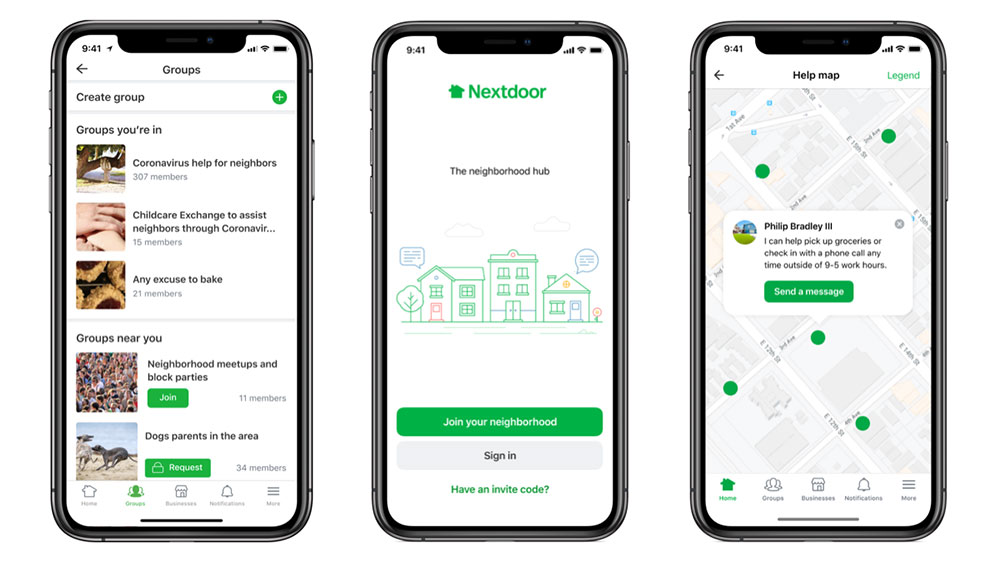
Nextdoor has over 100 million verified neighbors on its platform, yet millions of people are actively looking for something different.
Maybe the neighborhood feed turned political. Maybe your local community is too small to be active. Or maybe you just need one specific thing, like real-time safety alerts or local business referrals, and a full social network feels like overkill.
There are solid apps like Nextdoor that do one thing exceptionally well. Some focus on hyperlocal news with actual reporters. Others handle neighborhood safety using verified 911 data. A few are built entirely around sharing food and household items with people nearby.
This guide covers 10 local community apps worth trying, what each one does, who it suits, and where it falls short compared to Nextdoor.
Apps Like Nextdoor
Nextdoor has over 100 million neighbors on its platform. But it’s not the only option for local community networking. Some people want safety alerts without the neighborhood drama. Others want local news with actual reporters, not just neighbor opinions. A few just want to share extra food or connect local businesses.
The apps below each take a different approach to hyperlocal social networking. Some overlap heavily with Nextdoor. Others fill a specific gap it never quite covered.
Neighbors by Ring
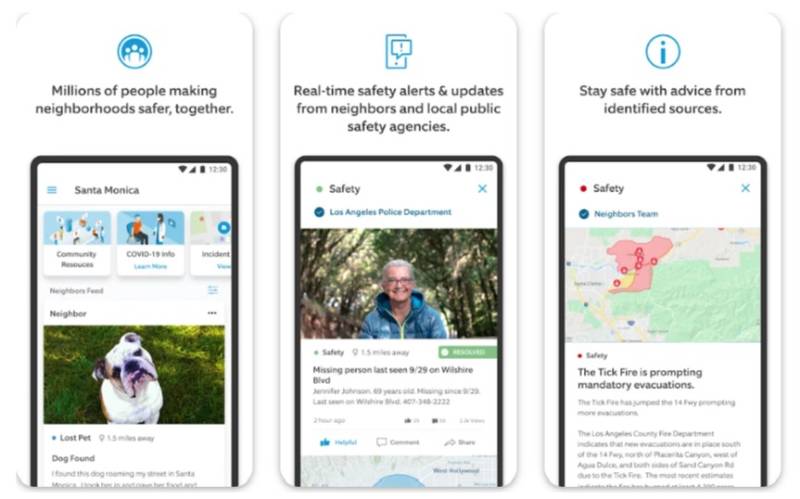
Neighbors by Ring is a neighborhood safety app built around real-time crime and safety alerts for residents who want hyperlocal incident tracking. It integrates directly with Ring security devices and supports iOS and Android.
What Does Neighbors by Ring Do?
Neighbors lets users share and receive crime alerts, safety updates, and video clips within a 5-mile radius of their home address. It also connects directly with local law enforcement agencies who can post verified public safety updates.
How Is Neighbors by Ring Similar to Nextdoor?
Both are location-based community platforms focused on residential neighborhoods. Both support safety alerts, lost pet posts, and local incident reporting. Neither requires a paid subscription for core features, and both are available on iOS and Android.
How Is Neighbors by Ring Different from Nextdoor?
- Neighbors is safety-only — no marketplace, no general discussion forum, no local business directory
- Posts are anonymous on Neighbors; Nextdoor requires real names and address verification
- Neighbors integrates natively with Ring doorbells and security cameras; Nextdoor has no hardware integration
Who Is Neighbors by Ring Best For?
Neighbors suits residents who own Ring devices or who want a focused neighborhood watch app without the social clutter of a full community platform.
Key Features of Neighbors by Ring
- 5-mile alert radius: Customizable, can be expanded in rural areas
- Incident map: Visual map of reported events by type and location
- Law enforcement integration: Verified posts from local police and fire departments
- Anonymous posting: No real name required to share or comment
Pricing
- Free plan: Yes — full access, no feature limits
- Paid plans: None
- Free trial: N/A
Citizen

Citizen is a personal safety network that tracks 911 calls and emergency incidents in real time for urban residents who want immediate local threat awareness. It supports iOS and Android and is available in 60+ U.S. cities.
What Does Citizen Do?
Citizen monitors police scanners and 911 dispatch feeds, then pushes verified incident alerts to users based on their location. It has over 10 million U.S. users and reached $34.6M in revenue in 2025 (Latka).
How Is Citizen Similar to Nextdoor?
Both deliver location-based safety alerts and support community awareness around local incidents. Both are free to use at a basic level and available on iOS and Android.
How Is Citizen Different from Nextdoor?
| Feature | Citizen | Nextdoor |
| Data source | 911 feeds + police scanners | Neighbor-submitted posts |
| Anonymity | No real name required | Real name required |
| Scope | Safety alerts only | Full community platform |
| Premium tier | $19.99/month (Protect) | No paid tier |
Who Is Citizen Best For?
Citizen suits city residents who want real-time, scanner-verified incident alerts and are willing to pay for on-demand emergency response features via the Protect subscription.
Key Features of Citizen
- 911 feed monitoring: Live alerts from verified dispatch sources
- Incident map: Real-time visual overlay of active events nearby
- Protect Mode: AI audio monitoring that auto-connects to an agent if a threat is detected
- Live streaming: Users can stream incidents from the scene
Pricing
- Free plan: Yes — real-time alerts and incident map
- Paid plans: $19.99/month (Citizen Protect)
- Free trial: Yes (Citizen Premium)
Patch
Patch is a hyperlocal news platform covering 1,900+ U.S. communities with professional journalism, local event listings, and community discussion for residents who want reported news rather than neighbor opinions. Available on iOS and Android.
What Does Patch Do?
Patch publishes original local news through 85 full-time staff reporters across all 50 states. In 2025, it expanded AI-powered newsletters from 1,100 communities to 30,000 almost overnight (Axios). It reaches over 25 million unique visitors monthly.
How Is Patch Similar to Nextdoor?
Both are hyperlocal platforms focused on community-level information. Both cover local events, school updates, and neighborhood happenings. Both are free for end users.
How Is Patch Different from Nextdoor?
Nextdoor is neighbor-generated content. Patch is journalist-generated content. No marketplace, no safety alerts, no neighbor-to-neighbor messaging. Patch is closer to a local newspaper app than a community social network.
Who Is Patch Best For?
Patch suits people who mainly used Nextdoor to stay informed on local news, school closings, and civic events — and who prefer reported stories over unmoderated neighbor posts.
Key Features of Patch
- Professional local journalism: 1,200+ Patch towns with original reporting
- AI newsletters: Twice-weekly or daily digests for 30,000+ communities
- Local event listings: Community-submitted events and announcements
- Push notifications: Breaking news alerts by location
Pricing
- Free plan: Yes — full access, no paywall
- Paid plans: None for readers
- Free trial: N/A
Meetup

Meetup is a local event and community platform with 60 million members globally that connects people through shared interests, in-person gatherings, and group activities. It supports iOS, Android, and web.
What Does Meetup Do?
Meetup lets users find and join local groups organized around hobbies, professions, fitness, social causes, and more. Around 100,000 events run weekly across the platform. Bending Spoons acquired it in January 2024 and rolled out a fresh redesign in 2025.
How Is Meetup Similar to Nextdoor?
Community engagement is the shared core. Both foster local connections, support group discussions, and help residents find people nearby. Both have free tiers for regular members.
How Is Meetup Different from Nextdoor?
Nextdoor is location-locked to your neighborhood. Meetup is interest-locked — you can join groups across an entire city or attend virtual events from anywhere. No crime alerts, no local classifieds, no neighbor messaging. It’s purely event-driven community engagement.
Who Is Meetup Best For?
Meetup suits people who want to build local social connections through shared activities — hiking, tech networking, book clubs — rather than general neighborhood discussion.
Key Features of Meetup
- 60 million users: Active global community across every interest category
- Event discovery: ~100,000 events weekly, in-person and virtual
- Group management tools: RSVPs, member communication, co-organizer roles
- Meetup Starter (2025): Free tier for new organizers with smaller groups
Pricing
- Free plan: Yes — join groups and RSVP to events
- Paid plans: $14.99/month (up to 50 members), $19.99/month (unlimited)
- Free trial: Yes — 1 month for Meetup Pro
Facebook Groups

Facebook Groups is a community group feature within Facebook that lets residents create or join private or public neighborhood groups for local discussion, buy-and-sell, and event coordination. Available on iOS, Android, and web.
What Does Facebook Groups Do?
Facebook Groups lets any user create a geographically defined community space with posts, events, polls, and a marketplace. Neighborhood groups on Facebook are common in most towns and suburbs. No address verification is required to join.
How Is Facebook Groups Similar to Nextdoor?
- Both support local community discussion, event posting, and local buy/sell listings
- Both are free with no core feature limits
- Both work on iOS and Android with a mobile-first experience
How Is Facebook Groups Different from Nextdoor?
No address verification, so anyone can join a neighborhood group regardless of where they live. Nextdoor confirms your address before you can post. Facebook Groups also shows posts from the broader Facebook algorithm, not just your local area.
Who Is Facebook Groups Best For?
Facebook Groups suits residents who already use Facebook daily and want to avoid signing up for a separate platform — and who don’t need verified-neighbor trust for their community discussions.
Key Features of Facebook Groups
- Public or private groups: Admins control who joins and who sees posts
- Facebook Marketplace integration: Local buy/sell listings in the same app
- Events and polls: Built-in community coordination tools
- No address verification: Open joining — advantage or drawback depending on use case
Pricing
- Free plan: Yes — unlimited groups and posts
- Paid plans: None
- Free trial: N/A
Front Porch Forum
Front Porch Forum (FPF) is a hyperlocal community platform covering every town in Vermont and parts of upstate New York, built around moderated daily email digests and real-name neighbor discussion. Available on iOS, Android, and via email.
What Does Front Porch Forum Do?
FPF collects neighbor posts throughout the day, then sends a once-daily digest per town. Every post is reviewed by a human moderator before publishing. As of 2025, it had nearly 250,000 members and 12 full-time moderators on staff (Wikipedia).
How Is Front Porch Forum Similar to Nextdoor?
Real-name, address-verified community discussion is the core overlap. Both focus on local neighbor-to-neighbor communication. Both cover the same topic types: lost pets, local recommendations, safety concerns, and local events. Both are free.
How Is Front Porch Forum Different from Nextdoor?
FPF publishes once daily — no endless scroll, no algorithm, no real-time feed. A 2023 University of Texas-Austin survey found 80% of FPF members say people treat each other with respect, versus much lower scores for Nextdoor on the same metric. FPF is also geographically limited to Vermont, upstate New York, and parts of Massachusetts.
Who Is Front Porch Forum Best For?
FPF suits Vermont and upstate New York residents who want a slower, more civil alternative to Nextdoor — with no algorithm, no ads targeting, and no viral dynamics.
Key Features of Front Porch Forum
- Human moderation: Every post reviewed before publishing
- Daily digest format: Once-per-day email or app notification per town
- No algorithm: All members in an area see the same content
- Real-name posting: Full name and street displayed on every post
Pricing
- Free plan: Yes — full access
- Paid plans: None for residents
- Free trial: N/A
Alignable

Alignable is a local business networking platform with 10 million+ members across 30,000+ communities in the U.S. and Canada, designed for small business owners to exchange referrals and build local B2B relationships. Available on iOS, Android, and web.
What Does Alignable Do?
Alignable lets small business owners create profiles, connect with local businesses, join discussion groups, and generate referrals from neighbors in their community. Think LinkedIn, but focused entirely on your local business district.
How Is Alignable Similar to Nextdoor?
Both are location-based community networks. Nextdoor has a local business directory; Alignable takes that concept and builds an entire platform around it. Both support local event posting and community Q&A forums.
How Is Alignable Different from Nextdoor?
| Dimension | Alignable | Nextdoor |
| Audience | Small business owners | Residential neighbors |
| Primary use | Referrals + B2B networking | General community discussion |
| Paid plans | $49–$89/month | None |
| Residential features | None | Safety alerts, lost pets, classifieds |
Who Is Alignable Best For?
Alignable suits local business owners who want warm referrals and peer-to-peer networking within their city or town, not general neighborhood social features.
Key Features of Alignable
- 10M+ members: 30,000+ communities across the U.S. and Canada
- Smart Connect: AI-matching to surface relevant local business owners
- Q&A forums: Industry-specific discussion and advice
- Referral network: Request and give business recommendations within your community
Pricing
- Free plan: Yes — profile creation and 5 connection requests/month
- Paid plans: $49/month (Premium), $89/month (Premium+)
- Free trial: No
Olio

Olio is a local sharing and waste-reduction app with 8.8 million users across 60 countries, built for neighbors to give away, sell, lend, or claim free food and household items nearby. Available on iOS and Android.
What Does Olio Do?
Olio connects neighbors who have surplus items — food, clothes, furniture, books — with people nearby who want them. Two in three Olio users say sharing on the app improves their mental health and sense of connection (Olio). By 2025, it had facilitated the rescue of 120 million meals from waste.
How Is Olio Similar to Nextdoor?
Both are location-based community platforms free to join. Both support neighbor-to-neighbor exchanges and local resource sharing. Nextdoor has a “Free” section and marketplace — Olio is that feature, expanded into an entire app.
How Is Olio Different from Nextdoor?
Olio is entirely focused on sharing and waste reduction. No safety alerts. No general community discussion. No local news. Activity also varies heavily by location — London has hundreds of listings; smaller U.S. towns can feel empty. Free items typically get claimed within two hours, so you need to check frequently.
Who Is Olio Best For?
Olio suits eco-conscious residents in active urban areas who want to reduce household waste, declutter, and connect with neighbors through the act of giving rather than just talking.
Key Features of Olio
- Free and pre-loved listings: Give, sell, lend, or borrow items locally
- Food Waste Heroes programme: Volunteers collect surplus from retailers like Tesco and Iceland
- Retail integrations: Partners with Boots, Asda, Iceland for near-expiry food listings
- Impact tracker: Shows each user how many meals and items they’ve saved from waste
Pricing
- Free plan: Yes — core listing and claiming features
- Paid plans: £2.99/month or £17.99/year (Olio Supporter — ad-free, faster alerts, map view)
- Free trial: No
WhatsApp Groups

WhatsApp Groups is a private group messaging feature within WhatsApp that many neighborhoods use as an informal local community platform for real-time communication. Available on iOS, Android, and web.
What Does WhatsApp Groups Do?
WhatsApp lets users create groups of up to 1,024 members. Communities (a newer feature) can link multiple related groups under one hub, supporting up to 5,000 members across all subgroups. Messaging, polls, file sharing up to 2GB, and voice calls with up to 32 participants are all built in.
How Is WhatsApp Groups Similar to Nextdoor?
Both support real-time local communication and neighbor-to-neighbor discussion. Both are free. Both work across iOS and Android. Many neighborhood watch programs and local resident groups already run on WhatsApp.
How Is WhatsApp Groups Different from Nextdoor?
WhatsApp is a general-purpose messaging app, not a dedicated neighborhood platform. No address verification, no local news feed, no safety alert system, no built-in marketplace. Group quality depends entirely on who manages it and how active members are.
Who Is WhatsApp Groups Best For?
WhatsApp suits close-knit neighborhoods that already have trust established and want a simple, private group chat without the noise of a full social platform.
Key Features of WhatsApp Groups
- Communities feature: Link multiple groups under one hub, up to 5,000 total members
- End-to-end encryption: All messages encrypted by default
- File sharing: Documents, photos, and video up to 2GB per file
- Polls: Built-in polling for group decisions
Pricing
- Free plan: Yes — unlimited groups and messages
- Paid plans: None for personal use
- Free trial: N/A
Craigslist

Craigslist is a local classifieds platform covering 700+ cities globally with listings for housing, jobs, items for sale, services, and community forums. Available on web and iOS/Android via third-party apps.
What Does Craigslist Do?
Craigslist runs city-level classified listings with free posting for most categories. No account required to browse. Housing, gigs, free items, buy/sell, and a community discussion board are all in one place, stripped down with almost no UI changes since 2000.
How Is Craigslist Similar to Nextdoor?
Both are free local platforms for community resource sharing and classifieds. Both have a “free stuff” section and local services. Both serve as a local community hub where residents can find, buy, sell, and connect nearby.
How Is Craigslist Different from Nextdoor?
No social features, no verified neighbors, no safety alerts. Craigslist operates at the city level, not the neighborhood level. It’s anonymous by default — there’s no trust network, no real names, and no community moderation in the Nextdoor sense.
Who Is Craigslist Best For?
Craigslist suits people who want fast, no-frills local classifieds without creating an account or sharing personal information with a platform.
Key Features of Craigslist
- 700+ cities: Global coverage with city-level geographic targeting
- Free posting: Most categories cost nothing to list
- Anonymous contact: Built-in email relay hides personal addresses
- Community forums: Local discussion boards alongside classifieds
Pricing
- Free plan: Yes — most categories are free to post
- Paid plans: $5-$75 per post for job listings and certain city-specific categories
- Free trial: N/A
Comparison Overview
| App | Best For | Free? | Scope |
| Neighbors by Ring | Ring device owners | Yes | Safety alerts only |
| Citizen | Urban safety tracking | Free + $19.99/mo | 911-verified alerts |
| Patch | Local news readers | Yes | 1,900+ U.S. communities |
| Meetup | Social event-goers | Free to attend | 60M global users |
| Facebook Groups | Existing Facebook users | Yes | No address verification |
| Front Porch Forum | Vermont/upstate NY | Yes | Human-moderated |
| Alignable | Small business owners | Free + $49-89/mo | 10M+ businesses |
| Olio | Sharing/waste reduction | Free + supporter plan | 8.8M users, 60 countries |
| WhatsApp Groups | Close-knit neighborhoods | Yes | Private group chat |
| Craigslist | No-frills classifieds | Mostly free | 700+ cities globally |
What Features Define a Neighborhood App?
Not all local community platforms work the same way. The differences in how they handle identity, geography, and content shape the entire experience.
Approximately 49% of Nextdoor users cite crime and safety as their primary reason for joining (MatrixBCG, 2024). That single statistic explains why safety alerts consistently top feature priority lists across every comparable platform.
| Feature Category | What It Covers | Examples |
| Identity model | Real name vs. anonymous | Nextdoor, Front Porch Forum vs. Citizen |
| Geographic scope | Block, neighborhood, city, region | FPF (Vermont only), Citizen (60+ U.S. cities) |
| Moderation model | Human review vs. algorithm + reports | FPF (12 moderators) vs. Nextdoor (automated) |
| Content type | Safety, news, classifieds, events, sharing | Patch (news only), Olio (sharing only) |
The geographic scope question matters more than most people think.
A block-level social network like Nextdoor pins you to a verified address. Meetup’s interest-based model lets you join groups anywhere in the city. Craigslist operates at the metro level. Each scope creates a different type of community and a different trust dynamic.
Speed vs. civility is the other tradeoff nobody advertises.
Real-time platforms (Citizen, Neighbors by Ring) get information out fast, but moderation is reactive. Front Porch Forum publishes once daily, which forces people to slow down. That deliberate friction is a design choice, and it shows in the numbers: 80% of FPF members say people treat each other with respect (University of Texas-Austin, 2023), versus significantly lower scores for Nextdoor on the same metric.
How Do Neighborhood Apps Handle Safety Alerts?
Safety alert systems split into two camps: verified data feeds and crowd-sourced reports. The distinction matters when you’re trying to figure out whether what you’re reading is actually true.
Verified 911 feed (Citizen): Pulls directly from police scanner dispatch and 911 call data. Covers 60+ U.S. cities. Faster, more accurate, less subject to neighbor bias.
Crowd-sourced reports (Nextdoor, Neighbors by Ring): Any user can post. Content quality varies widely. Nextdoor has struggled with racial profiling in crime descriptions since at least 2016, when it revised its policy to require at least two descriptors beyond race after documented incidents (NPR, 2020).
The Surveillance Technology Oversight Project documented that Nextdoor, Neighbors by Ring, and Citizen can all facilitate racial profiling toward BIPOC communities through unmoderated crowd-sourced crime reports.
Law enforcement integration splits differently across platforms:
- Ring/Amazon built a direct portal where police departments can request video footage from Neighbors users
- Nextdoor allows verified public agency accounts to post directly to neighborhood feeds
- Citizen operates a $19.99/month Protect service where trained agents can call 911 on behalf of users
Senator Edward Markey’s investigation into Ring found no restrictions on law enforcement sharing users’ footage with third parties and no policies prohibiting police from keeping shared video footage indefinitely (CBS News).
The practical takeaway: Citizen gives you the most accurate, fastest incident data in major cities. Neighbors by Ring works best if you already own Ring devices. Neither replaces Nextdoor’s full community platform, but both beat it on raw safety alert quality.
Which Apps Like Nextdoor Work for Local Business Discovery?
38% of consumers discover new small businesses by word of mouth, and 31% discover them through social media (SimpleTexting, 2024). Local community apps sit squarely at the intersection of both.
Nextdoor reports that over 25% of platform conversations involve local business recommendations (SlashGear, 2024). That’s a meaningful share of activity for a platform built around general neighbor communication.
The apps serve different business use cases depending on what you actually need:
Active referral network: Alignable connects 10 million+ business owners across 30,000+ communities in the U.S. and Canada. It’s B2B-focused, not consumer-facing. A plumber won’t find homeowner clients there directly, but they will find referral partners who send them work.
Local advertising platform: Patch reaches 25 million unique monthly visitors and offers a self-serve ad platform for local businesses. Unlike Nextdoor’s ad model, Patch’s revenue comes from editorial context, not user targeting based on verified address data.
Passive discovery: Facebook Groups, Yelp, and Google Maps handle the “people searching for you” use case. Nextdoor and Alignable handle the “your neighbors recommend you to each other” use case. These are different problems.
One real example worth noting: Alignable has case studies of small business owners reporting 34 quote requests and 14 sales in their first three days on the platform (Alignable, via App Store testimonials). That’s unusually fast for a B2B referral tool and reflects how concentrated local business networks can be.
For most small businesses, the honest answer is: use Nextdoor for hyperlocal residential discovery, Alignable for peer business referrals, and Patch for content-adjacent advertising. None of them fully replaces the others.
How Do Free and Paid Plans Compare Across Community Apps?
Most neighborhood apps are free. The ones that charge do so for specific, high-value features, not for basic community access.
| App | Free Tier | Paid Tier | What Paid Unlocks |
| Nextdoor | Full access | None | N/A |
| Citizen | Alerts + map | $19.99/month | On-demand emergency agent, AI audio monitoring |
| Alignable | Profile + 5 connections/month | $49-$89/month | Boosted visibility, 25-75 connection requests/month |
| Meetup | Attend events free | $14.99-$19.99/month | Organize groups, advanced event tools |
| Olio | Core listing features | £2.99/month | Ad-free, faster alerts, map view |
Meetup’s pricing structure creates a real problem worth knowing about. Attending is free, but organizing groups costs $14.99 to $19.99 per month. That gap has pushed some long-time organizers off the platform, which reduces group quality in certain cities (Capterra reviews, 2024).
Alignable’s free tier is genuinely limited. Five connection requests per month is very few, and acceptance rates average 20% or less according to user reviews. You’d need roughly 25 months to build a 100-connection network on the free plan alone.
The fully free options (Nextdoor, Neighbors by Ring, Patch, Facebook Groups, Front Porch Forum, WhatsApp, Craigslist) cover the vast majority of what most neighborhood residents actually need. The paid tiers make more sense for safety professionals, small business owners, or community organizers who use these platforms as primary tools.
What Are the Privacy and Moderation Differences Between These Apps?
Privacy and moderation are linked. An anonymous platform with weak moderation is a different problem than a real-name platform with inconsistent moderation. Both create distinct risks.
Real-name requirements cut two ways. Nextdoor’s address verification and real-name policy creates accountability but also means your neighborhood-level location is tied to your public posts. Front Porch Forum goes further: every post shows the author’s full name and street name (not house number).
Citizen and Neighbors by Ring allow anonymous posting. That reduces accountability but also means users from communities that have been racially profiled on Nextdoor have a lower-friction option for reporting incidents without exposing themselves.
The moderation gap between platforms is significant:
- Front Porch Forum: 12 full-time human moderators review every post before publication across 250,000 members
- Nextdoor: Algorithmic moderation plus local volunteer “leads” — inconsistent and slow on harassment
- Facebook Groups: Admin-dependent; quality varies completely by who runs the group
- WhatsApp Groups: No platform moderation; entirely admin responsibility
On data privacy, the differences are structural, not just policy-based.
WhatsApp uses end-to-end encryption by default — Meta cannot read group messages. Nextdoor’s business model is advertising-funded, meaning it analyzes verified neighbor data (address, age, homeownership status) to build ad targeting profiles. Ring/Amazon’s law enforcement portal allows police to request footage without a warrant in emergency situations.
Front Porch Forum’s no-algorithm, no-targeted-ad design is a deliberate structural choice. It cannot monetize user data in the way Nextdoor or Facebook Groups can, which is precisely why it does not. That constraint makes it the most private of the full community platforms listed here.
Which App Is the Best Nextdoor Alternative for Each Use Case?
Pick based on what you actually need. A focused app that fits your real use case will always beat a feature-heavy one you stop opening after two weeks.
For safety alerts in urban areas: Citizen. It monitors 911 dispatch feeds across 60+ U.S. cities. Faster and more accurate than crowd-sourced reports on Nextdoor or Neighbors by Ring. The free tier covers alerts; the $19.99/month Protect plan adds on-demand emergency response.
For local news with actual journalists: Patch. It reaches 1,900 communities across all 50 states with original reporting. Nextdoor has neighbor opinions; Patch has reporters. Nextdoor’s full-year 2024 revenue was $247.3 million (Nextdoor Q4 2024 earnings), most of it from advertising — meaning neighbor-generated content is the product. Patch’s content is editorially independent.
For in-person meetups and community events: Meetup. It hosts around 100,000 events weekly across 60 million members globally. Nextdoor lists events, but Meetup was built for exactly this use case.
For sharing and waste reduction: Olio. 8.8 million users across 60 countries, 120 million meals rescued from waste by 2025. Two in three users report it improves their sense of community connection.
For small business peer networking: Alignable. 10 million+ business owners across 30,000+ U.S. and Canadian communities. Nextdoor lets businesses post a profile; Alignable builds referral relationships. Different outcome entirely.
For a quieter, more civil neighborhood forum: Front Porch Forum. Available only in Vermont, upstate New York, and parts of Massachusetts — but if you’re there, 78% of members consider it a reliable information source (University of Texas-Austin, 2023). No algorithm, no ads targeting, one digest per day.
| Use Case | Best App | Key Reason |
| Urban safety alerts | Citizen | Sourced from 911/Police/Fire radio; live video verification |
| Local news | Patch | Professional reporters in 1,200+ towns; localized breaking news |
| In-person meetups | Meetup | 60M+ members; 100,000+ weekly events across all interests |
| Item sharing | Olio | 9M+ users; focus on reducing waste via free food/non-food items |
| Business networking | Alignable | 10M+ members; referral-focused for small business owners |
| Civil community forum | Front Porch Forum | Human-moderated; no algorithms; VT, NY, and MA only |
FAQ on Apps Like Nextdoor
What is the best free app like Nextdoor?
Neighbors by Ring, Patch, and Facebook Groups are all completely free with no feature limits. Citizen offers a solid free tier for safety alerts. Your best pick depends on whether you want safety alerts, local news, or general neighborhood discussion.
Is there a neighborhood app that doesn’t require your real name?
Citizen and Neighbors by Ring both allow anonymous posting. Nextdoor, Front Porch Forum, and WhatsApp Groups require real names. If privacy is a concern, safety-focused apps are the better choice over full community platforms.
What app is better than Nextdoor for local news?
Patch covers 1,900+ U.S. communities with professional journalists, not neighbor opinions. It reaches over 25 million unique visitors monthly and is completely free. For reported local news, it consistently outperforms every hyperlocal social network available.
Are there neighborhood apps that work outside the US?
Olio operates in 60 countries with 8.8 million users. Meetup runs globally with 60 million members. WhatsApp Groups work anywhere. Most safety alert apps like Citizen are U.S.-only, and Front Porch Forum is limited to Vermont and upstate New York.
What app should small business owners use instead of Nextdoor?
Alignable is built specifically for small business networking, connecting 10 million+ owners across 30,000+ North American communities. It focuses on B2B referrals rather than residential neighbors. Nextdoor works for local visibility; Alignable works for peer business referrals.
Which neighborhood app has the best safety alerts?
Citizen pulls directly from 911 dispatch feeds and police scanners across 60+ U.S. cities. That makes it faster and more accurate than crowd-sourced reports on Nextdoor or Neighbors by Ring. For real-time crime alerts, Citizen is the strongest option available.
Is there a Nextdoor alternative with better moderation?
Front Porch Forum has 12 full-time human moderators who review every post before it publishes. 80% of members say people treat each other with respect (University of Texas-Austin, 2023). The tradeoff is geographic — it only covers Vermont, upstate New York, and parts of Massachusetts.
What app is like Nextdoor but for sharing free items?
Olio is built entirely around giving away surplus food, clothes, and household items to people nearby. It has facilitated the rescue of 120 million meals from waste. Free items typically get claimed within two hours, so you need to check the app frequently.
Can I use a neighborhood app without a Facebook account?
Yes. Nextdoor, Citizen, Neighbors by Ring, Patch, Meetup, Olio, and Alignable all operate independently from Facebook. WhatsApp requires only a phone number. Front Porch Forum uses email and a local address. None of these require an existing social media account to join.
What is the best Nextdoor alternative for local events?
Meetup hosts around 100,000 events weekly across its 60 million global members. It covers every interest category from hiking to tech networking. Unlike Nextdoor, Meetup is not location-locked to your neighborhood — you can join groups across your entire city or attend virtual events anywhere.
Conclusion
This article presenting apps like Nextdoor shows one thing clearly: no single platform does everything well.
Citizen wins on verified safety data. Patch covers local news with actual reporters. Olio handles community sharing in a way no neighborhood watch app ever could. Alignable serves small business owners that Nextdoor’s residential focus simply wasn’t built for.
The right local community app depends on what you actually need from it. Pick one that solves a specific problem rather than one that promises everything.
If your neighborhood feed has turned toxic or gone quiet, that’s a signal worth listening to. Private neighborhood groups, moderated forums, and hyperlocal platforms each offer something different from the standard social network model.
Try one. See if your neighbors show up.

- Build or Buy an AI Chatbot for E-commerce: The Costs Nobody Budgets For - October 24, 2026
- How to Run a React App in VS Code Step by Step - October 23, 2026
- Transactional or marketing email: which messages your app should send itself - October 23, 2026