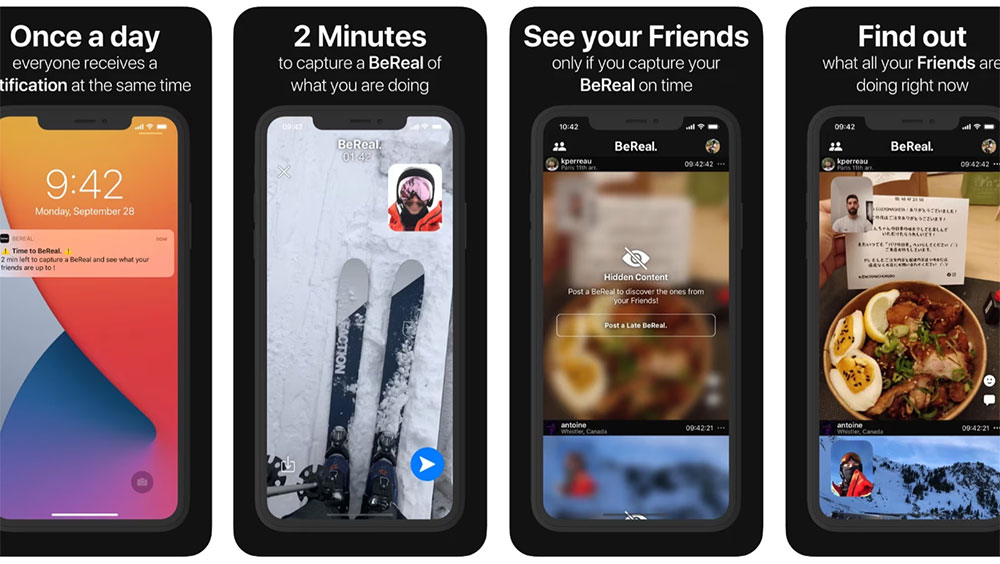
Most social apps want your attention. BeReal wanted something harder to fake: your actual life, captured in two minutes, no filters allowed.
That idea exploded in 2022. It also started showing cracks. Ads arrived, ownership changed, and a lot of users started asking whether apps like BeReal could offer the same candid, unfiltered photo sharing without the compromises.
Turns out, several can.
This guide covers 10 real alternatives built around spontaneous capture, close-friends sharing, and authentic social networking. Some replicate BeReal’s dual-camera format directly. Others take a different approach to the same problem.
Whether you want a disposable camera aesthetic, a home screen widget that shows what your friends are actually doing, or a fully private circle with zero ads, there is an option here worth trying.
Apps Like BeReal
BeReal has 40 million monthly active users as of 2025, with 78% of its audience being Gen Z aged 18-24 (Charle Agency). It was acquired by Voodoo for $537 million in June 2024 and only launched in-feed ads in April 2025.
72% of posts on BeReal get daily interaction. That kind of engagement is hard to ignore, but the platform is not for everyone. Some users want more privacy. Others want a retro aesthetic, or just a different take on candid sharing.
Here are the top apps worth knowing about.
Locket Widget

Locket Widget is a private photo-sharing app that sends real-time photos directly to your friends’ and family’s phone home screens via a widget. It targets people who want intimate, close-circle sharing without a public feed, and supports iOS and Android.
What Does Locket Widget Do?
Locket lets users share candid photos straight to the home screen widgets of up to 20 friends, with no public feed, no follower count, and no likes.
How Is Locket Widget Similar to BeReal?
Both apps push unfiltered, spontaneous photo sharing with a close-friends focus. Neither platform shows public follower counts, and both are built for genuine daily moments rather than curated content.
How Is Locket Widget Different from BeReal?
- No daily prompt or two-minute capture window
- Photos appear directly on the home screen widget, not in an app feed
- No dual-camera capture (front and back simultaneously)
- Capped at 20 friends vs. BeReal’s open friend list
Who Is Locket Widget Best For?
Locket suits users who want an always-on ambient connection with a small inner circle, without opening a social media app at all.
Key Features of Locket Widget
- Home screen widget: Photos from friends appear live on your lock screen
- Friend cap: Max 20 connections keeps it genuinely private
- Monthly recap videos: Auto-generated from shared photos
- Rollcall feature: Group photo dump shared with your circle
Pricing
- Free plan: Yes, up to 20 friends, ad-supported
- Paid plan: ~$4/month for unlimited friends, ad-free, longer video support
- Free trial: No
Locket has over 90 million downloads globally (Cancelmates, 2025). Subscriptions make up 50% of the company’s revenue.
Poparazzi
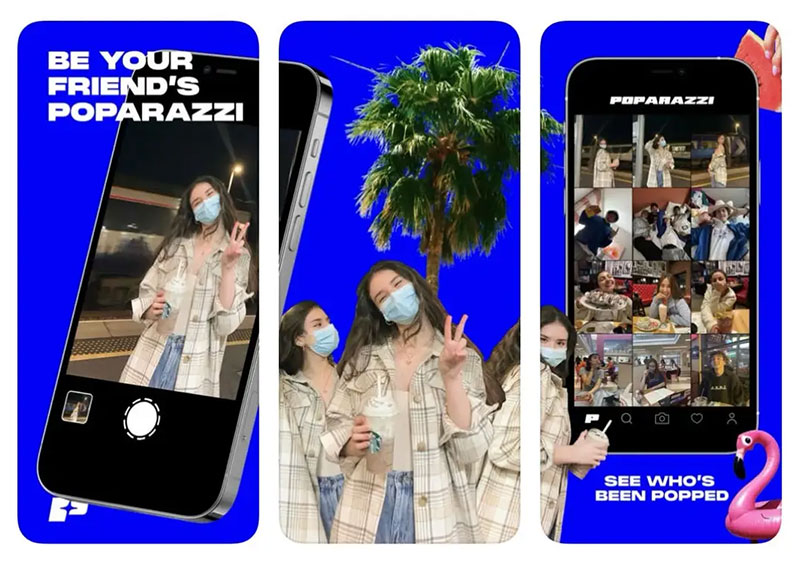
Poparazzi flips the social media dynamic entirely. You can only post photos of other people, not yourself. It is a candid social networking app for users who are tired of selfie culture, available on iOS only.
What Does Poparazzi Do?
Poparazzi lets users build profiles made entirely from photos taken by friends. The front-facing camera is disabled, and no editing tools, captions, or comments are allowed.
How Is Poparazzi Similar to BeReal?
Both apps reject the Instagram model of polished self-presentation. Neither shows follower counts. Both prioritize spontaneous, unposed photos over curated content, and both target Gen Z users who want more authentic social sharing.
How Is Poparazzi Different from BeReal?
| Feature | Poparazzi | BeReal |
| Self-photos | Not allowed | Dual camera (front + back) |
| Daily prompt | No | Yes, once daily |
| Feed type | Friend-curated profile | Personal daily post |
| Platform | iOS only | iOS and Android |
Who Is Poparazzi Best For?
Poparazzi suits people who hate selfies and want their social profile to reflect how their friends actually see them, not how they see themselves.
Key Features of Poparazzi
- No front camera: Physically disabled in-app
- Pop score: Gamified engagement metric based on photos taken
- Top Poparazzi: Shows which friends post the most photos of you
- Emoji reactions only: No likes, no comments
Pricing
- Free plan: Yes, fully free
- Paid plans: None
- Free trial: N/A
Poparazzi hit 5 million downloads in its first year and raised a $15 million Series A led by Benchmark (TechCrunch, 2022). 95% of users are between 14 and 21 years old.
Snapchat

Snapchat is a multimedia messaging app that lets users send disappearing photos and videos, use augmented reality filters, post Stories, and share location via Snap Map. It supports iOS and Android, with over 850 million monthly active users.
What Does Snapchat Do?
Snapchat lets users send photo and video messages that vanish after viewing, create public or private Stories, and use AR lenses. It also has a live map showing where friends are in real time.
How Is Snapchat Similar to BeReal?
Both apps focus on real-time photo and video sharing with friends. Snapchat’s Close Friends feature mirrors BeReal’s private feed. Both platforms are popular with Gen Z and both support spontaneous moment sharing.
How Is Snapchat Different from BeReal?
Snapchat has filters, editing tools, Discover content, brand ads, and a massive creator ecosystem. BeReal has none of that. Snapchat also has a public Snap Map and no daily posting requirement. The platforms overlap in audience but barely overlap in philosophy.
Who Is Snapchat Best For?
Snapchat suits users who want disappearing messages, AR effects, and a wide social graph, and are comfortable with a more polished, feature-heavy platform.
Key Features of Snapchat
- Disappearing messages: Photos and videos delete after viewing
- AR Lenses: Hundreds of real-time augmented reality effects
- Snap Map: Live friend location sharing
- Stories: 24-hour public or private photo/video updates
- Memories: Up to 5GB free cloud storage for saved snaps
Pricing
- Free plan: Yes, full core features free
- Snapchat+: Starting at $3.99/month for premium features
- Free trial: 7 days for Snapchat+
Lapse

Lapse is a disposable camera-style social app that makes photos “develop” over 1-3 hours before you can see them. It targets users who want a nostalgic, low-pressure alternative to real-time sharing, and is available on iOS only.
What Does Lapse Do?
Lapse lets users shoot photos throughout the day that reveal themselves slowly, mimicking the experience of dropping off a roll of film. It also auto-creates monthly photo albums from your shots.
How Is Lapse Similar to BeReal?
Both encourage unfiltered, everyday photography over curated content. Both have a strong friend-group focus and both discourage the polished aesthetic typical of Instagram. They target the same Gen Z audience looking for more honest photo sharing.
How Is Lapse Different from BeReal?
- No dual camera or simultaneous front-and-back capture
- Photos are delayed by 1-3 hours before anyone can view them
- Invite-only model vs. BeReal’s open sign-up
- Retro film aesthetic vs. BeReal’s raw digital look
Who Is Lapse Best For?
Lapse suits users who want a more thoughtful, film-inspired photo experience and do not need the immediacy of real-time sharing.
Key Features of Lapse
- Delayed reveal: Photos develop 1-3 hours after shooting
- Auto photo albums: Monthly dumps created automatically
- Instants: One-time-view direct photos to friends
- Invite-only access: Keeps the community controlled
Pricing
- Free plan: Yes
- Paid plans: Not publicly confirmed
- Free trial: N/A
Lapse hit the No. 1 spot on the App Store in October 2023, though it has since dropped to around No. 99 in the Photo and Video category as of March 2025 (Online Optimism).
Dispo

Dispo is a retro disposable camera social app where photos are locked until 9 AM the next morning. It is built for users who want to shoot freely without obsessing over the result, and supports iOS and Android.
What Does Dispo Do?
Dispo simulates shooting with a physical disposable camera. You take photos throughout the day and they all “develop” at once the next morning, removing the impulse to edit or delete.
How Is Dispo Similar to BeReal?
Both reject editing and promote unfiltered, in-the-moment photography. Both have a strong anti-perfectionism angle and target users frustrated with Instagram’s curated culture. Shared rolls (collaborative albums) mirror BeReal’s friend-sharing format.
How Is Dispo Different from BeReal?
Dispo has a deliberate time delay. Nothing you shoot is visible until the next morning. BeReal is immediate. Dispo also has no daily prompt and no dual-camera feature. The retro grain aesthetic is baked into every photo, which BeReal does not do.
Who Is Dispo Best For?
Dispo suits users who want the freedom to shoot without consequence and love the look and feel of vintage film photography.
Key Features of Dispo
- Morning develop: All photos unlock at 9 AM daily
- Shared rolls: Collaborative disposable camera albums with friends
- Film grain aesthetic: Applied automatically to every photo
- No delete before develop: Forces commitment to the shot
Pricing
- Free plan: Yes
- Paid plans: Not publicly listed
- Free trial: N/A
Noplace

Noplace is a text-based social app that blends real-time status updates with a heavily customizable Myspace-style profile. It targets Gen Z users who want identity expression and friend discovery without photos or videos, and is available on iOS.
What Does Noplace Do?
Noplace lets users share live text updates about what they are doing, watching, or listening to. Profiles are customizable with colors, interest tags (“stars”), relationship status, and a Top 10 friends list.
How Is Noplace Similar to BeReal?
Both apps focus on real-time sharing of what you are actually doing, not curated highlights. Both reject algorithmic feeds. Both are built for Gen Z users who want authentic connection over follower counts, and both launched with strong App Store chart runs.
How Is Noplace Different from BeReal?
| Feature | Noplace | BeReal |
| Content type | Text only | Dual-camera photos |
| Profile style | Colorful, customizable | Minimal |
| Public profiles | Always public | Private to friends |
| Daily prompt | No | Yes |
Who Is Noplace Best For?
Noplace suits Gen Z users who want to express identity, find people with shared interests, and share what they are up to right now without the pressure of taking a good photo.
Key Features of Noplace
- Interest tags (“stars”): Customizable profile markers for fandoms, hobbies, and more
- Dual feed: Friends feed and a global feed, both chronological
- Top 10 friends: Visible on your profile like Myspace’s Top 8
- AI summaries: Catches you up on what you missed without editing your feed
Pricing
- Free plan: Yes, fully free
- Paid plans: None currently
- Free trial: N/A
Noplace raised $19 million total funding including a Series A from 776 (Alexis Ohanian) and Forerunner Ventures. It hit No. 1 on the App Store within days of its public launch in July 2024 (TechCrunch).
Pixelfed
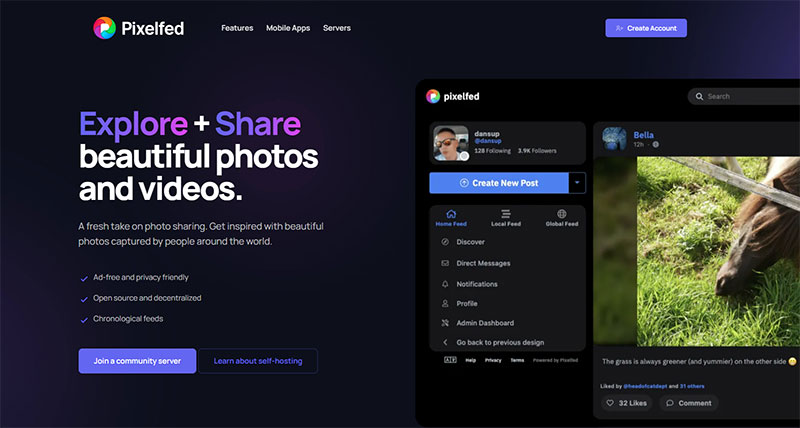
Pixelfed is a free, open-source, decentralized photo sharing platform that gives users full control over their data. It is part of the Fediverse and uses the ActivityPub protocol, supporting iOS, Android, and web.
What Does Pixelfed Do?
Pixelfed lets users share photos on a chronological feed with no ads, no tracking, and no algorithmic manipulation. Users choose which server to host their account on, or can run their own.
How Is Pixelfed Similar to BeReal?
Both platforms reject corporate algorithm feeds and focus on genuine content sharing. Neither platform uses engagement-driven features to push users toward addictive scrolling. Both appeal to users who are skeptical of mainstream social media.
How Is Pixelfed Different from BeReal?
Pixelfed is fully decentralized. No single company owns your data. It connects with Mastodon, PeerTube, and other Fediverse platforms. BeReal is centralized and owned by Voodoo. Pixelfed has no daily photo prompts and no dual-camera feature. It also requires more technical comfort during setup, particularly when choosing a server.
Who Is Pixelfed Best For?
Pixelfed suits privacy-conscious users and open-source advocates who want Instagram-style photo sharing without corporate data collection or algorithmic feeds.
Key Features of Pixelfed
- Decentralized hosting: Choose your own server or self-host
- ActivityPub support: Interoperates with Mastodon and other Fediverse apps
- No ads, no tracking: Zero third-party analytics
- Up to 10 photos per post
- Two-factor authentication via TOTP apps
Pricing
- Free plan: Yes, fully free and open source
- Paid plans: None (some instances may accept donations)
- Free trial: N/A
Instagram (Close Friends)

Instagram is a photo and video sharing social network owned by Meta, with over 2 billion monthly active users. The Close Friends feature within Instagram functions as a private, curated share list for people who want BeReal-style authenticity inside a platform they already use, on iOS and Android.
What Does Instagram Close Friends Do?
Close Friends lets users share Stories only with a manually chosen group, bypassing the public audience. It is Instagram’s built-in response to apps like BeReal that push private, intimate sharing.
How Is Instagram Close Friends Similar to BeReal?
Both offer a private, friend-only photo sharing experience. Both are built around mobile camera capture and both allow spontaneous, unposed sharing to a limited audience. The audience overlap is significant: 30% of Gen Z say BeReal feels more authentic than Instagram (electroiq.com, 2025), yet many still use both.
How Is Instagram Close Friends Different from BeReal?
- Instagram has filters, editing tools, Reels, and a full ad ecosystem
- No daily prompt on Instagram
- Close Friends is a feature inside a larger app, not a dedicated experience
- Instagram shows follower counts; BeReal does not
Who Is Instagram Close Friends Best For?
This suits people who already use Instagram daily and want a private layer for their real inner circle without switching to a new app entirely.
Key Features
- Close Friends list: Stories visible only to selected people
- Notes: Short text updates for close connections
- Collaborative posts: Co-authored feed posts with a friend
- Full Instagram ecosystem: Reels, DMs, Stories all in one
Pricing
- Free plan: Yes
- Meta Verified: Starting at $14.99/month for verified badge and extra features
- Free trial: No
Frontback

Frontback is a dual-camera photo-sharing app that captures front and back camera views in a single image. It targets users who want to show both their reaction and what they are looking at simultaneously, on iOS.
What Does Frontback Do?
Frontback splits the screen between both cameras at the moment of capture: what you see on one side, your face on the other. Photos are shared to a feed or sent to friends.
How Is Frontback Similar to BeReal?
Frontback is arguably the direct predecessor of BeReal’s core mechanic. Both apps use simultaneous front-and-back camera capture. Both produce a split image that shows context (what you see) and reaction (your face) in one frame. The core authenticity concept is nearly identical.
How Is Frontback Different from BeReal?
Frontback has no daily notification or time-limited capture window. It also lacks BeReal’s friend network features like RealMojis or location sharing. The app is older and has a smaller, less active user base compared to BeReal’s 40 million monthly users.
Who Is Frontback Best For?
Frontback suits users who specifically love the dual-camera format and want a simpler, no-frills version of that concept without BeReal’s daily commitment.
Key Features of Frontback
- Simultaneous dual-camera capture: Front and back in one tap
- Split-frame photos: Both perspectives in a single image
- Social feed: Share to followers or a public discovery feed
Pricing
- Free plan: Yes
- Paid plans: None
- Free trial: N/A
LiveIn

LiveIn is a real-time photo and video sharing app that sends content directly to friends’ home screen widgets, similar to Locket Widget but with added live video broadcasting capability. It supports iOS and Android.
What Does LiveIn Do?
LiveIn lets users push unfiltered photos and short videos to their close friends’ home screens instantly. It also supports live streaming, so friends can broadcast moments as they happen.
How Is LiveIn Similar to BeReal?
Both apps prioritize spontaneous, unfiltered content sharing with a close circle. Both reject the staged photography model and focus on ordinary daily moments. LiveIn’s no-filter approach and real-time sharing mechanic closely mirrors BeReal’s philosophy.
How Is LiveIn Different from BeReal?
- Photos appear on the home screen widget, not in an app feed
- Supports live video broadcasting, which BeReal does not
- No daily random notification prompt
- No dual-camera capture
Who Is LiveIn Best For?
LiveIn suits users who want their closest friends’ updates to appear passively on their phone throughout the day, without needing to open a separate app.
Key Features of LiveIn
- Home screen widget: Real-time photo updates without opening the app
- Live video: Broadcast moments as they happen
- No filters required: Raw camera capture encouraged
- Close friends focus: Small, private sharing circle
Pricing
- Free plan: Yes
- Paid plans: Not publicly listed
- Free trial: N/A
If you are exploring other social and communication platforms beyond BeReal, you may also find value in looking at apps like Amino for niche community-based social sharing, or apps like Whisper for anonymous self-expression within a social feed. For live and real-time video interaction, apps like Periscope are worth a look. Those who want casual video chat with new people might also check out apps like Monkey.
What Is BeReal and Why Do People Look for Alternatives?
BeReal is a candid photo-sharing app that sends users a single daily notification at a random time. They have two minutes to take a simultaneous front-and-back camera photo and share it, unedited, with their friends.
No filters. No follower counts. No editing tools. That combination made it the No. 1 free app on the US App Store for nearly two months in 2022 (Online Optimism).
Since then, the landscape has shifted. Downloads fell 60% year-over-year from 2023 to 2024, and declined a further 50% in 2025 (Business of Apps). Monthly active users peaked at 73.5 million in August 2022 before dropping significantly.
The reasons people look for BeReal alternatives tend to fall into a few clear buckets.
- The daily prompt feels like an obligation, not an invitation
- The Voodoo acquisition in 2024 changed ownership and long-term direction
- In-feed ads launched in April 2025, which conflicted with BeReal’s original no-ads promise
- Limited features compared to apps like Snapchat or Instagram Close Friends
- Platform only available in select regions
30% of Gen Z say BeReal feels more trustworthy than Instagram, TikTok, or Snapchat (ElectroIQ, 2025). That trust is the core of its value, and also why any perceived shift away from authenticity sends users searching for alternatives.
How Does BeReal Work?
Core mechanic: One daily notification fires at a random time. Users have exactly two minutes to capture a split image using front and back cameras simultaneously.
BeReal blocks access to friends’ posts until the user posts their own. That single rule is what forces genuine participation over passive scrolling.
The app adds a timestamp showing how late the photo was taken after the prompt, which creates light social accountability. Retakes are allowed, but BeReal logs the number of retakes taken.
Why Did BeReal Lose Users After 2022?
Daily active users dropped 48% between October 2022 and February 2023, falling from 20 million to 10.4 million (Business of Apps / Apptopia).
The core problem: photos of everyday moments are only interesting for so long. Many users began staging their BeReals or waiting until they were doing something worth sharing, which broke the app’s central premise.
The Social Shepherd found that only 34% of users actually view BeReal as an authentic platform, despite it being built entirely around that idea.
What Makes an App a Real Alternative to BeReal?
Not every unfiltered photo app qualifies. A genuine BeReal alternative needs to satisfy at least two of three core attributes: spontaneous capture, close-friends-only sharing, and friction against editing or staging.
73% of young adults aged 18-24 report that social media negatively affects their mental health (SQ Magazine, 2025). Apps that reduce performance pressure are gaining traction precisely because mainstream platforms have made it worse.
Here is how the key selection criteria break down.
| Criteria | What to Look For | Why It Matters |
| Capture mechanic | Prompt-based or spontaneous | Prevents staging and planning |
| Audience scope | Private circle vs. public feed | Determines sharing pressure |
| Edit controls | None vs. filters available | Signals authenticity intent |
| Platform ownership | Centralized vs. decentralized | Affects data privacy |
| Pricing | Free vs. freemium vs. subscription | Barrier to adoption |
The distinction between BeReal-style apps and BeReal-adjacent apps matters. BeReal-style apps (Frontback, Locket Widget) replicate the dual-camera or spontaneous prompt mechanic directly. BeReal-adjacent apps (Noplace, Dispo) share the anti-perfectionism philosophy but approach it through a completely different format.
Pricing model is often overlooked. Most BeReal alternatives are free with optional paid tiers. Locket Widget charges around $4/month for unlimited friends and an ad-free experience. Pixelfed is fully free and open source.
How Do BeReal Alternatives Compare by Use Case?
The 10 apps in this list serve different needs. Grouping them by use case makes it easier to pick the right one without downloading all of them.
| Use Case | Best Apps | Key Difference from BeReal |
| Passive home screen sharing | Locket Widget, LiveIn | Photos appear directly on home screen widgets; no need to open an app. |
| Retro / film aesthetic | Dispo, Lapse | Photos “develop” later or use heavy analog filters for a vintage look. |
| Anti-selfie sharing | Poparazzi (Legacy), Gas | Focuses on friends posting photos of you rather than you posting yourself. |
| Privacy-first / decentralized | Pixelfed | Open-source and federated; no corporate owner or data-mining algorithms. |
| Existing platform layers | IG Close Friends, Snapchat | Uses existing social circles; provides “candid” feel without a separate app. |
Which BeReal Alternative Is Best for Sharing With a Small Private Circle?
Locket Widget is the strongest option here. The app caps friends at 20, removes public feeds entirely, and delivers photos straight to home screen widgets.
It has 90 million downloads globally (Cancelmates, 2025), which shows demand for exactly this kind of intimate, ambient sharing. Subscriptions account for 50% of Locket’s revenue, a sign that users are willing to pay to keep ads out.
LiveIn fills a similar role but adds live video broadcasting, which Locket does not support.
Which BeReal Alternative Works Best Without a Daily Prompt?
Dispo and Lapse remove the obligation entirely. You shoot whenever you want, but neither app lets you see the results immediately.
Dispo: Photos develop at 9 AM the next day, applying vintage grain automatically.
Lapse: Photos reveal themselves 1-3 hours after capture, mimicking a film processing delay. It hit No. 1 on the App Store in October 2023 (Online Optimism), though rankings have since declined.
Both apps replace BeReal’s time pressure with a different kind of restraint: patience.
How Does BeReal’s Dual-Camera Format Differ From Other Authentic Photo Apps?
The dual-camera format is BeReal’s most distinctive feature. It captures what you see and your reaction to it in one frame, with no switching, no staging window, and no way to hide one perspective.
BeReal was not the first to do this. Frontback launched earlier with the same simultaneous front-and-back mechanic and was explicitly cited as an inspiration for BeReal’s design (TechCrunch, 2023).
Apps That Replicate the Dual-Camera Mechanic
Frontback is the direct predecessor. The split-frame format is nearly identical to BeReal’s. What it lacks is the randomized daily prompt and the social accountability layer BeReal built around the two-minute window.
No other app in this list replicates the dual-camera capture as directly as Frontback. Most alternatives replace it with something different rather than copying it.
Apps That Replace the Mechanic With Something Else
Different authenticity approaches, no dual camera involved.
- Poparazzi: Disables the front camera entirely, forcing users to only photograph others
- Dispo / Lapse: Use time delay as the authenticity constraint instead of simultaneous capture
- Noplace: Removes photography entirely, using text-based real-time updates
- Pixelfed: No capture constraint at all, relies on community norms and no-algorithm feed
The dual-camera format works because context plus reaction in one frame removes the staging opportunity. A single selfie can be planned. A simultaneous front-and-back shot is much harder to fake. That is the mechanism BeReal’s alternatives either replicate, approximate, or deliberately sidestep.
Is BeReal Still Worth Using in 2025?
BeReal has 40 million monthly active users as of April 2025, with 85% of them Gen Z, and claims 50% of users in its top three markets are active six days per week (TechCrunch).
The engagement numbers are real. The platform shift is also real.
| Metric | BeReal 2022 | BeReal 2026 (Current) |
| Monthly Active Users (Peak) | 73.5 million | ~40 million (Stabilized) |
| Annual Downloads | 83 million | ~6.3 million (Post-viral phase) |
| Ads Present | No | Yes (Launched April 2025) |
| Ownership | Independent Startup | Voodoo (€500M / ~$537M acquisition) |
| Revenue | $0 | Estimated $30M+ (Ads/Partnerships) |
| Daily Engagement | High organic growth | 72% daily retention among core users |
Levi’s ran one of BeReal’s first ad campaigns and reported 5x higher engagement than on other social platforms (Marketing Dive, 2025). Nike, Netflix, and Amazon followed. The ad product works because the audience is unusually attentive.
The tension is real: 80% of BeReal users say the platform stands out specifically because it avoids ads (ElectroIQ, 2025), yet ads are now a central part of the business model.
BeReal is worth using if you want an engaged, close-friends sharing experience with minimal time investment. The app asks for roughly 9.2 minutes of daily attention (Business of Apps). That is a low bar.
It is less worth using if you joined specifically because it was ad-free. That version of BeReal no longer exists.
For those who still want what BeReal used to offer, apps like authentic short-form platforms and self-focused daily check-in apps are worth exploring alongside the BeReal alternatives listed above. If live and real-time video interaction matters more than photo sharing, apps similar to FaceTime offer a different angle on spontaneous authentic connection.
FAQ on Apps Like BeReal
What is the closest app to BeReal?
Locket Widget is the most similar in spirit. It focuses on candid, real-time photo sharing with a small private circle, removes follower counts, and strips away filters entirely. The main difference is delivery: photos appear on your home screen widget instead of an in-app feed.
Are there BeReal alternatives that work on Android?
Yes. Locket Widget, Snapchat, Instagram, Pixelfed, and Dispo all support Android. Lapse and Poparazzi are currently iOS only. Always check the Google Play Store listing before committing, as availability can change.
Which app has the same dual-camera feature as BeReal?
Frontback uses the same simultaneous front-and-back camera capture that BeReal made popular. It predates BeReal and was actually cited as a direct inspiration for the app’s core mechanic by TechCrunch in 2023.
Is there a BeReal alternative with no daily posting requirement?
Several. Dispo, Lapse, Locket Widget, and Poparazzi all let you post on your own schedule. None of them send a random daily prompt. Dispo and Lapse still restrict when you can view photos, which preserves some of the spontaneity.
What BeReal alternative is best for privacy?
Pixelfed. It is fully open-source, decentralized, and runs on user-controlled servers. There are no ads, no tracking, and no corporate ownership. It uses the ActivityPub protocol, so it also connects with Mastodon and other Fediverse platforms.
Which app is best for Gen Z users who want authentic social sharing?
Noplace hit No. 1 on the App Store in July 2024 and is built specifically for Gen Z. It uses text-based real-time updates and fully customizable profiles. No photos required, no algorithmic feed, and no ads at launch.
Is BeReal still popular in 2025?
BeReal claims 40 million monthly active users as of April 2025, with 85% being Gen Z. Downloads have declined significantly since the 2022 peak, but engagement among active users remains strong, with 50% active six days per week in top markets.
What happened to BeReal after the Voodoo acquisition?
Voodoo acquired BeReal for $537 million in June 2024. In-feed ads launched in April 2025. Nike, Netflix, and Amazon have run campaigns on the platform. The original no-ads model is no longer in place.
Are there unfiltered photo-sharing apps with no follower count?
Yes. BeReal, Locket Widget, and Poparazzi all hide follower counts by design. Noplace also removes them. These low-vanity social platforms are specifically built to reduce the performance pressure that follower metrics create on Instagram and TikTok.
What is the best BeReal alternative for sharing with close friends only?
Locket Widget caps your circle at 20 people and has no public feed whatsoever. LiveIn works similarly but also supports live video. Both apps deliver photos directly to friends’ home screens, making them ideal for private, spontaneous sharing without a public audience.
Conclusion
This article on apps like BeReal covered ten genuine alternatives built around spontaneous photo sharing, close-friends networks, and low-pressure social experiences.
The right pick depends on what you actually want. Locket Widget and LiveIn work best for passive, ambient connection. Dispo and Lapse suit users who prefer a retro disposable camera aesthetic. Poparazzi removes selfies entirely. Pixelfed gives you full ownership of your data.
BeReal itself is still running, still engaging, and still trusted by a large Gen Z audience. But the no-filter, no-ads promise has changed.
If that matters to you, these unfiltered social media alternatives are worth a real look. Most are free. All of them take a different angle on the same problem: making daily photo sharing feel honest again.

- Build or Buy an AI Chatbot for E-commerce: The Costs Nobody Budgets For - October 24, 2026
- How to Run a React App in VS Code Step by Step - October 23, 2026
- Transactional or marketing email: which messages your app should send itself - October 23, 2026