

Your phone buzzes with another “Congratulations, you’ve won!” message. Then another phishing attempt. Then a robocall that evolved into SMS spam.
Unwanted messages aren’t just annoying, they’re gateways to scams, identity theft, and endless marketing noise that clogs your inbox.
Learning how to stop spam texts on Android means reclaiming control over your device using built-in Google Messages filters, carrier-level blocking, and third-party spam detection tools.
This guide walks you through seven proven methods to block unknown senders, enable automatic spam protection, and filter out fraudulent messages before they disrupt your day.
You’ll set up permanent defenses in under ten minutes.
How to Stop Spam Texts on Android
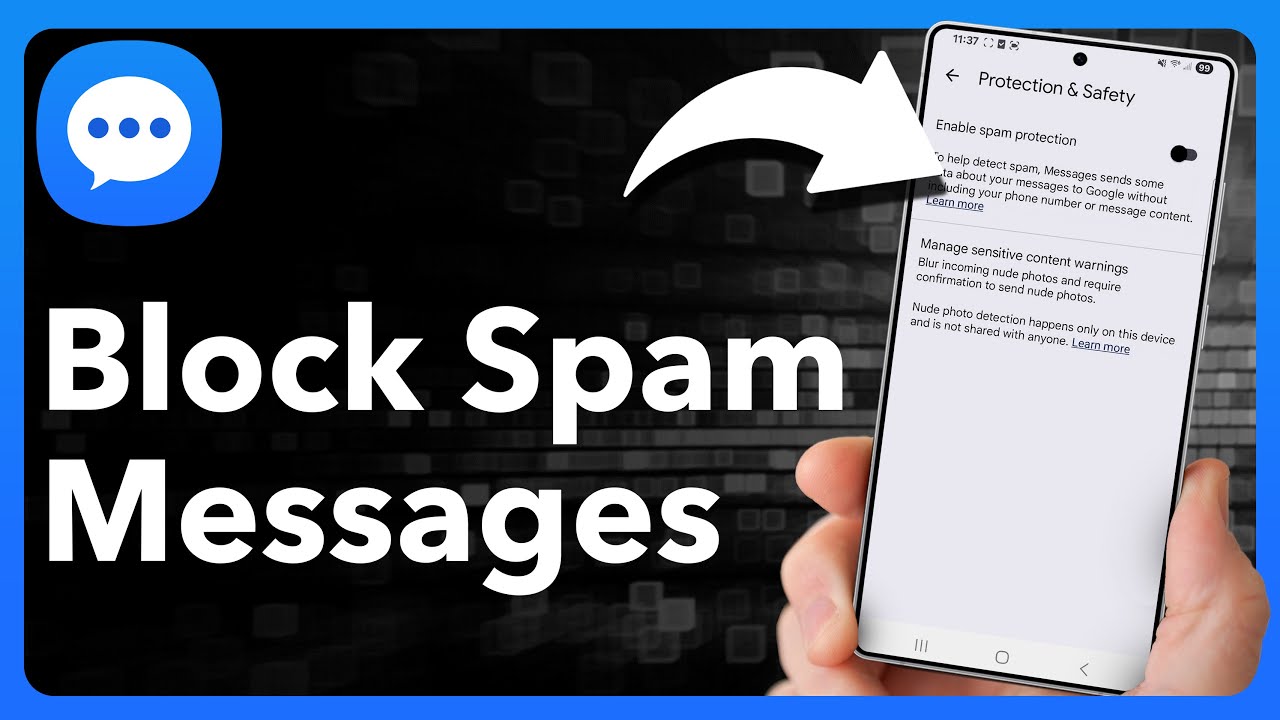
Blocking spam texts on Android is the process of filtering and preventing unwanted SMS messages from unknown senders, scammers, and automated marketing systems using built-in Google Messages features, carrier-level filters, or third-party apps.
Users need this when robocalls escalate to text spam, phishing attempts flood their inbox, or promotional messages disrupt daily workflow.
This guide covers 7 steps requiring 5-10 minutes and Android 11 or later.
Prerequisites
You need Android 11 or later installed on your device.
Google Messages app (pre-installed on most devices) or your carrier’s default messaging app works for basic spam protection.
Time estimate: 5-10 minutes for complete setup across all blocking methods.
Active phone number and internet connection (for carrier filtering and third-party apps).
Step 1: How Do You Block a Sender Directly from Messages?
Open the spam text, tap the three-dot menu in the top right corner, select “Block & report spam” or “Block [number],” then confirm. The sender immediately appears in your blocked numbers list and future messages from that number route to spam folder or get rejected entirely.
Action
Messages app → Open conversation → Three-dot menu (⋮) → “Block & report spam”
Tap “OK” or “Block” in confirmation dialog.
Blocked number moves to Settings → Blocked numbers automatically.
Purpose
Direct blocking stops specific spam sources immediately. Reporting helps Google improve automated spam detection patterns across all Android users.
Step 2: Where Do You Enable Spam Protection in Messages Settings?
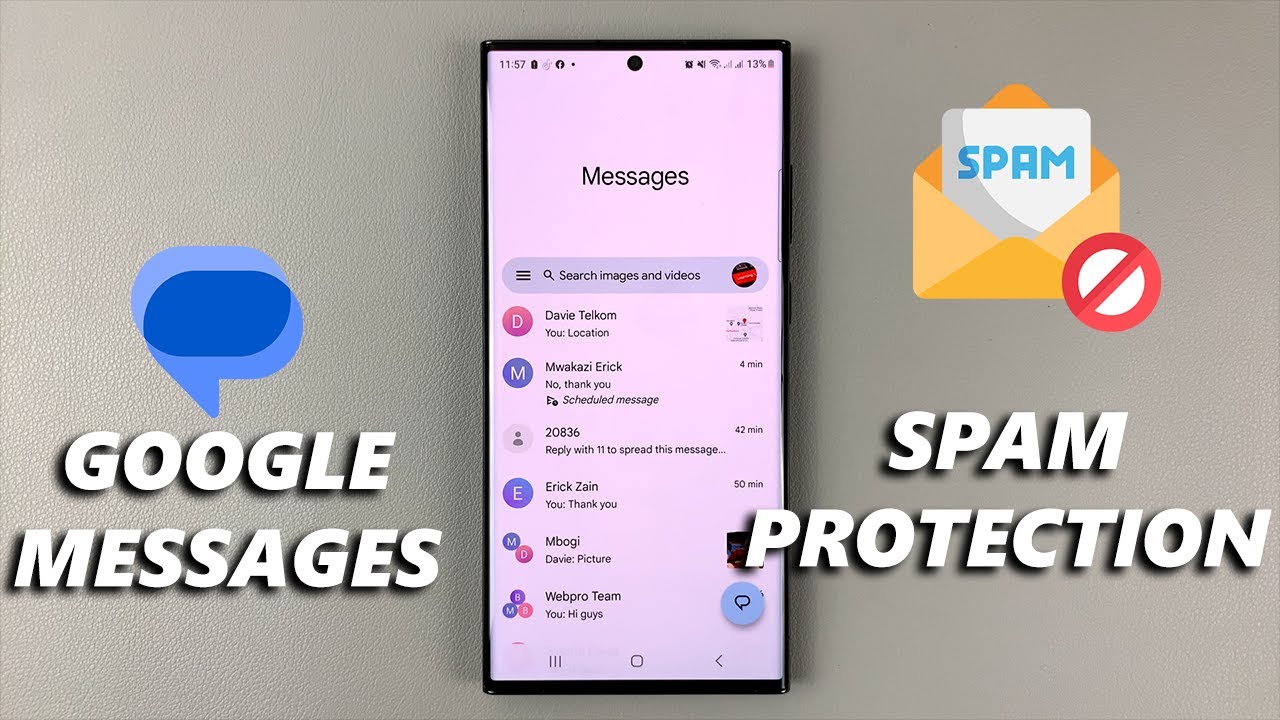
Navigate to Messages app → Three-dot menu → Settings → Spam protection, then toggle “Enable spam protection” to ON. Google’s machine learning filters suspected spam texts into a separate folder before they trigger notifications, using pattern recognition from reported spam across millions of devices.
Action
Open Google Messages → Tap three-dot menu (⋮) → Settings
Scroll to “Spam protection” → Toggle switch to blue/ON position
Suspected spam automatically routes to “Spam & blocked” folder in Messages.
Purpose
Automated filtering catches most scam prevention scenarios without manual intervention. Google’s system learns from reported texts and blocks similar message patterns from unknown senders.
Step 3: How Do You Report and Block Unknown Senders?
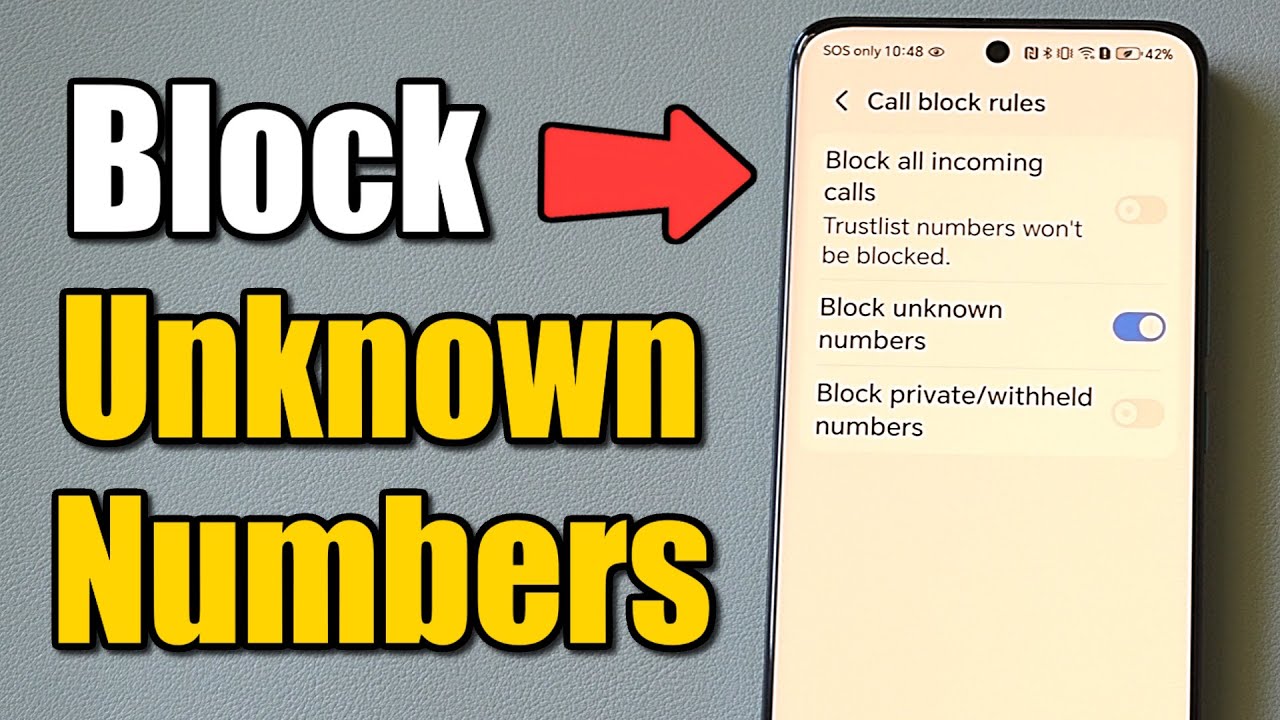
Long-press any message conversation, tap “Block & report spam” from the popup menu, then confirm both actions. Reporting feeds data to Google’s spam database while blocking prevents future contact, creating a two-layer defense against text message filtering bypass attempts by the same sender.
Action
Messages list → Long-press conversation → “Block & report spam” option appears
Confirm “Report spam” checkbox is selected → Tap “OK”
Number blocks instantly and report submits to Google within seconds.
Purpose
Reporting unknown senders strengthens Google’s SMS blocking algorithms for everyone. Each report adds data points about fraudulent messages, telemarketing texts, and phishing attempts.
Step 4: Where Do You Access Blocked Numbers List?
Open Settings → Blocked numbers or Messages app → Three-dot menu → Settings → Blocked numbers to view your complete list. This screen displays every blocked contact with options to unblock individual numbers, add new blocks manually, or verify which senders you’ve previously reported for spam text identification.
Action
Settings → Search “Blocked numbers” → Tap result
Alternative: Messages → Three-dot menu (⋮) → Settings → “Spam & blocked” → “Blocked numbers”
Each entry shows number, block date, and “Unblock” button.
Purpose
Verifying your blocked numbers list prevents accidentally blocking legitimate contacts. You can remove entries if someone gets blocked by mistake during aggressive spam filtering.
Step 5: How Do You Enable Carrier-Level Spam Filtering?
Contact your carrier through their app or dial specific service codes: Verizon users install Call Filter app, T-Mobile subscribers enable Scam Shield in account settings, AT&T customers activate ActiveArmor through myAT&T app. Network-level blocking stops robocall and SMS spam before messages reach your device, operating independently from Android native blocking.
Action
Verizon: Play Store → Install “Call Filter” → Enable spam text blocking
T-Mobile: Dial #662# or T-Mobile app → “Scam Shield” → Toggle spam protection ON
AT&T: myAT&T app → “ActiveArmor” → Enable “Spam & Fraud Call Blocking”
Purpose
Carrier filtering catches spam at the network layer before delivery. This creates redundancy with device-level protection and blocks spam from reaching your phone entirely.
Step 6: How Do You Use Third-Party Spam Blocking Apps?
Install apps like Truecaller, RoboKiller, or Hiya from Play Store, grant SMS and contact permissions during setup, then configure automatic spam detection in app settings. Third-party solutions use crowd-sourced spam databases and AI-powered pattern recognition to identify junk messages that bypass Google’s filters, offering keyword filtering and advanced blocking rules.
Action
Google Play Store → Search “Truecaller” or “RoboKiller” → Install
Open app → Grant SMS permissions → Set as default messaging app (optional)
Enable “Block spam texts” and configure sensitivity level (Low/Medium/High).
Purpose
Third-party apps provide enhanced filtering options beyond native Android capabilities. They catch sophisticated phishing attempts and use real-time spam databases updated by millions of users, though they require careful mobile app security practices when granting permissions.
Step 7: How Do You Filter Messages by Keywords?
Open supported messaging apps (certain third-party apps like SMS Organizer), navigate to Settings → Filters → Create new filter, then add keywords like “prize,” “winner,” “claim now,” or “verify account” to automatically sort matching messages into spam folders. Keyword-based filtering targets common telemarketing texts and scam prevention scenarios using phrase pattern matching.
Action
Third-party app (SMS Organizer) → Settings → “Personal rules” → “Add filter”
Enter keywords: “free,” “urgent,” “congratulations,” “click here” → Set action: Move to spam
Save filter → Messages containing keywords route automatically.
Purpose
Keyword filtering blocks entire categories of unwanted messages at scale. One filter catches hundreds of variations of fraudulent messages without blocking each sender individually.
Verification
Send yourself a test message from another number to confirm legitimate texts still arrive.
Check Settings → Blocked numbers to verify spam senders appear in list.
Review Messages → “Spam & blocked” folder to confirm suspected spam routes correctly without triggering message notifications.
Verify carrier-level filtering by checking your carrier app dashboard for blocked message count (usually updates within 24 hours).
Troubleshooting
Issue: Legitimate Messages Going to Spam Folder
Solution: Messages → Spam folder → Long-press conversation → “Not spam” → Move to inbox
Add contact to phone’s address book to whitelist permanently.
If you’re on the sending side and your business messages keep getting filtered, this guide to why texts aren’t being delivered covers the carrier filtering and content triggers behind it.
Issue: Spam Still Getting Through
Solution: Enable multiple layers: Google Messages spam protection + carrier filtering + third-party app.
Report every spam text immediately to improve automated spam detection algorithms.
Check Settings → Apps → Messages → Permissions to verify SMS permissions are granted.
Issue: Can’t Find Spam Protection Toggle
Solution: Update Google Messages to latest version from Play Store.
If running Android 10 or older, upgrade to Android 11+ or use third-party blocking apps as alternative.
Some carrier-branded phones hide this feature; install Google Messages from Play Store and set as default SMS app.
Alternative Method: Using Do Not Disturb for Unknown Numbers
Method A (Permanent blocking via Steps 1-7):
- Time: 5-10 minutes one-time setup
- Complexity: Low to Medium
- Best for: Complete spam elimination with ongoing protection
Method B (Do Not Disturb silencing):
- Time: 2 minutes setup
- Complexity: Low
- Best for: Temporarily silencing unknown numbers without permanent blocks
Choose Method A when you want automated blocking and reporting spam to improve network-wide spam databases. Choose Method B when you need quick silence without managing blocked sender lists or expect occasional legitimate unknown senders.
Next Steps
Review your blocked numbers list monthly to remove accidental blocks and verify carrier spam statistics.
Report persistent spam to Federal Trade Commission at reportfraud.ftc.gov for legal action against scammers.
After Android updates, recheck spam protection settings as system updates occasionally reset message filtering rules.
Consider exploring related ad blocking techniques to prevent spam from other sources beyond SMS.
FAQ on How To Stop Spam Texts On Android
Can I block all spam texts on Android automatically?
Yes, enable Google Messages spam protection in Settings → Spam protection → Toggle ON.
This activates machine learning filters that route suspected spam to a separate folder automatically. Combine with carrier-level filtering and third-party apps for near-complete automated blocking of unwanted messages.
Does blocking spam texts cost money?
No, native Android spam blocking through Google Messages is completely free.
Carrier services like Verizon Call Filter, T-Mobile Scam Shield, and AT&T ActiveArmor offer basic free tiers with premium paid options. Third-party apps like Truecaller and RoboKiller charge subscription fees for advanced features.
Will blocked senders know they’re blocked?
No, senders receive no notification when you block their number.
Their messages simply don’t deliver to your inbox and route to spam folder or get rejected by carrier filtering. The sender sees messages as “sent” on their end with no delivery failure indication.
Can I recover deleted spam messages?
Maybe, if you deleted them recently from the spam folder.
Messages → Spam & blocked → Check for deleted conversations within 30 days. After this period, SMS messages are permanently removed from device storage and cannot be recovered through native Android features.
Do I need a third-party app to block spam?
Not necessarily-Google Messages spam protection handles most spam text blocking effectively.
Third-party apps add value for advanced keyword filtering, larger spam databases, and detailed reporting statistics. Install one only if native blocking misses frequent phishing attempts or you need granular control over message filtering rules.
How do I stop spam texts from email addresses?
Block the email-to-SMS sender like any other number in Messages.
Long-press conversation → Block & report spam → Confirm. Email addresses sending texts through carrier gateways get blocked identically to phone numbers, preventing future unwanted SMS from that source entirely.
Can spam texts contain viruses?
Text messages themselves can’t carry viruses, but embedded links lead to malicious sites or apps.
Never click links in spam texts from unknown senders. These URLs often trigger drive-by downloads, phishing sites collecting credentials, or prompt installation of fake security apps containing actual malware.
What happens when I report spam to Google?
Your report feeds Google’s spam detection algorithms and improves filtering for all Android users.
Google analyzes the message content, sender patterns, and timing to identify similar spam campaigns. Reported numbers may face delivery restrictions, and message patterns get added to automated spam detection databases.
How do I unblock a number I blocked by mistake?
Settings → Blocked numbers → Find the contact → Tap “Unblock” or X icon.
Alternative: Messages → Three-dot menu → Settings → Spam & blocked → Blocked numbers → Select number → Unblock. Changes apply immediately and the sender can contact you normally again.
Why am I getting more spam texts lately?
Your number likely appeared in data breaches or got sold to spam databases.
Robocalls evolved into SMS campaigns as call blocking improved. Enable all protection layers immediately: Google spam protection, carrier filtering, and report every spam text to slow the volume through network-wide blocking.
Conclusion
Knowing how to stop spam texts on Android gives you control over your inbox and protects against phishing attempts that disguise themselves as legitimate messages.
Start with native Google Messages spam protection for automatic filtering, then layer carrier services like Scam Shield or Call Filter for network-level defense.
Add Truecaller or similar apps when keyword-based filtering becomes necessary.
Block and report every telemarketing text immediately. Each report strengthens spam detection across millions of Android devices.
Legitimate businesses can also reduce SMS abuse by using a compliant messaging provider and following proper opt-in standards.
Review your blocked contacts monthly to catch accidental blocks and verify your filter rules still match current scam prevention needs.
SMS blocking isn’t one-time setup-it’s ongoing maintenance. Scammers adapt, so your defenses should too.
Check message permissions after system updates to ensure automated blocking stays active.

- Notepad++ Android Options: Apps That Come Close - October 21, 2026
- Data Management Services: A Practical Guide for Growing Companies - October 21, 2026
- MongoDB Cheat Sheet - October 20, 2026


