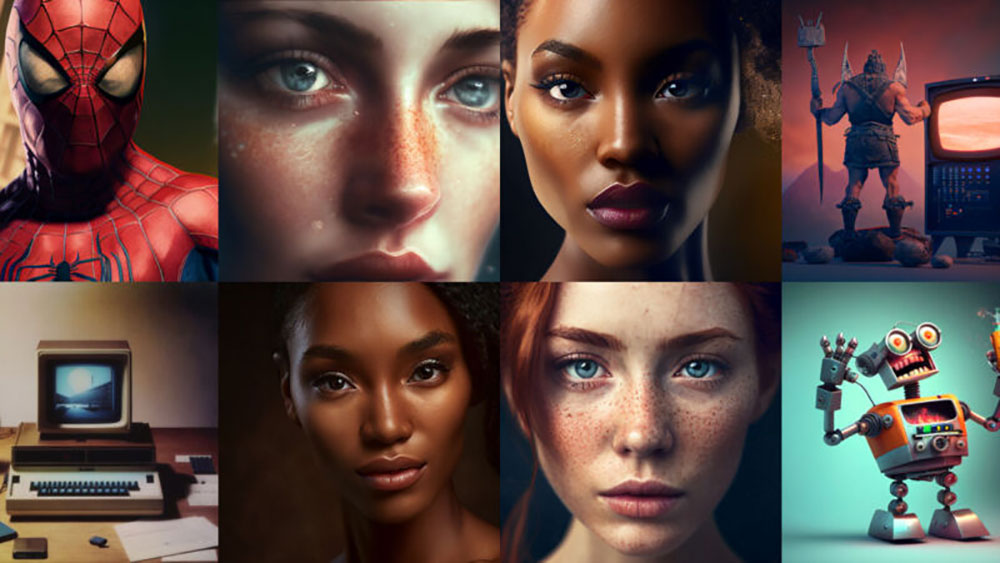
Midjourney produces stunning AI-generated art, but it has no free tier, runs through Discord, and costs at least $10 a month before you generate a single image.
There are plenty of apps like Midjourney that match it on output quality, beat it on price, or do specific things better, whether that is text-in-image accuracy, game asset consistency, or direct integration with design tools.
This guide covers 10 AI image generators worth knowing in 2025. Each entry breaks down what the tool does, how it compares to Midjourney, and which creative use case it actually fits.
From free text-to-image tools like Bing Image Creator and Playground AI to professional-grade platforms like Adobe Firefly and Leonardo AI, there is a Midjourney alternative for every workflow and budget.
Apps Like Midjourney
DALL-E 3
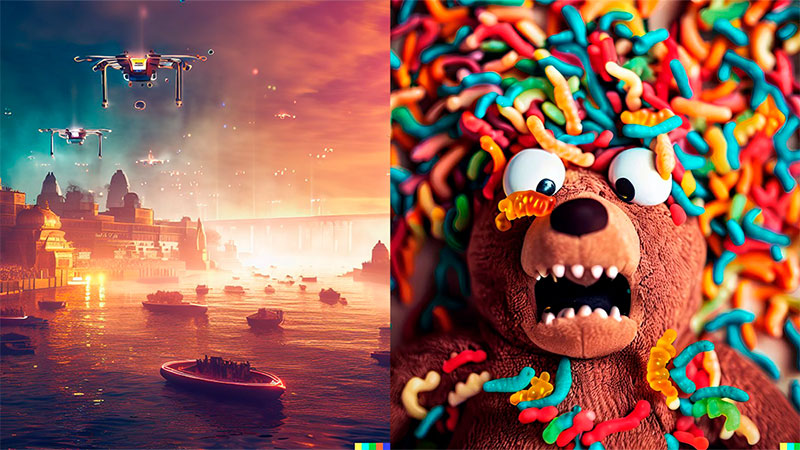
DALL-E 3 is a text-to-image generation tool built by OpenAI that turns written prompts into high-quality visuals for general creatives, marketers, and beginners. It runs inside ChatGPT, so prompt refinement happens through natural conversation rather than slash commands, and it supports web and mobile.
What Does DALL-E 3 Do?
DALL-E 3 lets users generate images from text prompts directly through the ChatGPT interface, using OpenAI’s multimodal GPT-4o model to interpret and produce visuals in seconds.
How Is DALL-E 3 Similar to Midjourney?
Both use prompt-based image creation, produce high-quality AI-generated art, and serve designers, marketers, and content creators. Neither requires technical setup or coding knowledge.
How Is DALL-E 3 Different from Midjourney?
- DALL-E 3 uses a conversational interface inside ChatGPT; Midjourney still relies on Discord-style commands
- DALL-E 3 scores higher on text-in-image accuracy (roughly 8.0/10 vs. Midjourney’s 6.5/10, per AIMagicx 2026 testing)
- Midjourney consistently outperforms on artistic stylization, scoring 9.8/10 vs. DALL-E 3’s 7.0/10
Who Is DALL-E 3 Best For?
DALL-E 3 suits beginners and general creatives who want high-quality AI image generation without learning prompt syntax, especially those already using ChatGPT Plus.
Key Features of DALL-E 3
- Conversational generation: Describe images in plain language; ChatGPT refines the prompt for you
- Text-in-image accuracy: Among the strongest for readable text inside generated visuals
- Inpainting: Edit specific image areas by describing the change
- Cross-platform access: Works on web and mobile through ChatGPT
Pricing
- Free plan: Limited access via Microsoft Copilot and Bing Image Creator
- Paid plans: $20/month via ChatGPT Plus (includes GPT-4o and image generation)
- Free trial: No formal trial; free tier available through Bing
Adobe Firefly
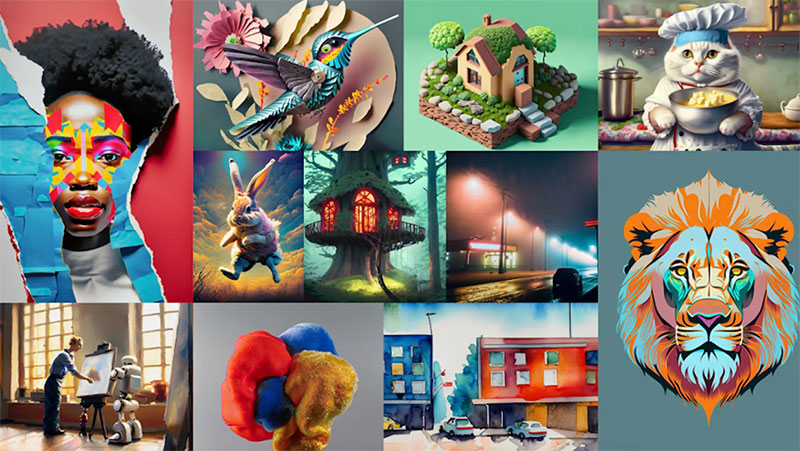
Adobe Firefly is a commercial-grade AI image generator built into Adobe Creative Cloud that produces copyright-safe visuals for professional designers and creative teams. It runs on Adobe’s own licensed training data, which matters a lot if you’re doing client work.
What Does Adobe Firefly Do?
Firefly generates images, text effects, and graphic elements from text prompts and integrates directly into Photoshop, Illustrator, and Adobe Express for in-workflow editing.
How Is Adobe Firefly Similar to Midjourney?
Both produce high-quality images from text prompts, support commercial use on paid plans, and target professional designers and content creators. Adobe Firefly 3 also introduced 4x faster generation speeds comparable to Midjourney’s output pace.
How Is Adobe Firefly Different from Midjourney?
| Feature | Adobe Firefly | Midjourney |
| Training data | Adobe Stock + public domain | Scraped internet data |
| Commercial safety | Enterprise indemnification | Paid subscribers only |
| Workflow integration | Native in Photoshop, Illustrator | Discord/web, standalone |
| Free tier | Yes, 25 credits/month | No |
Who Is Adobe Firefly Best For?
Firefly suits professional designers and creative teams already inside Adobe Creative Cloud who need commercially safe AI-generated assets with zero IP liability risk.
Key Features of Adobe Firefly
- Generative Fill: Add, remove, or replace objects in photos directly in Photoshop
- Commercial-safe training: Trained on Adobe Stock and public domain images only
- Enterprise indemnification: Adobe assumes legal responsibility for IP issues on enterprise plans
- Text effects: Generate styled typography as a standalone feature
Pricing
- Free plan: Yes, 25 credits/month
- Paid plans: Standard at $9.99/month (2,000 credits); Pro at $19.99/month (4,000 credits); included free with Adobe Creative Cloud subscriptions
- Free trial: No formal trial; free tier available
Leonardo AI
Leonardo AI is a web-based creative platform built for game developers, concept artists, and designers who need consistent, style-locked visual assets at scale. It was acquired by Canva in July 2024 and has grown to over 30 million users. Game studios love it because nothing else handles character consistency as cleanly.
What Does Leonardo AI Do?
Leonardo AI generates images, video clips, and 3D textures from text prompts using a library of fine-tuned models. Users can also train custom models on their own image sets for style-consistent outputs.
How Is Leonardo AI Similar to Midjourney?
Both offer high-quality AI art generation from text prompts, support commercial use on paid plans, and target professional creatives. Both allow batch image generation and produce output suitable for marketing, concept art, and design work.
How Is Leonardo AI Different from Midjourney?
- Leonardo offers custom model training; Midjourney does not
- Leonardo has a free plan with 150 daily tokens; Midjourney has no free tier at all
- Leonardo includes a full AI Canvas (inpainting, outpainting, 3D texture generation); Midjourney’s editing tools are more limited
Who Is Leonardo AI Best For?
Leonardo suits game developers, indie studios, and professional illustrators who need consistent character and environment assets across large visual projects.
Key Features of Leonardo AI
- Custom model training: Train on 10-20 images to replicate a specific style or character
- AI Canvas: Inpainting, outpainting, and image extension in one workspace
- 3D Texture Generation: Upload OBJ files and generate AI textures for 3D models
- Fine-tuned model library: Specialized models for anime, photorealism, cinematic, and architectural styles
Pricing
- Free plan: Yes, 150 tokens/day (public generations)
- Paid plans: From $12/month (Apprentice, 8,500 tokens); private generations require a paid plan
- Free trial: No, but the free plan is functional
NightCafe Studio
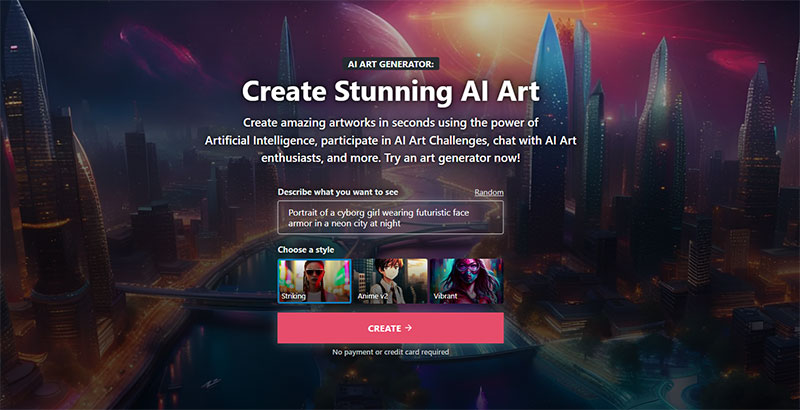
NightCafe Studio is a community-first AI art platform that gives you access to more generation models than any other tool on this list. It supports Stable Diffusion, DALL-E 3, Flux, Ideogram, Google Imagen, and over a dozen video models. If you care more about the creative process than production volume, it’s hard to beat.
What Does NightCafe Studio Do?
NightCafe converts text prompts into AI-generated images using multiple selectable AI models, and includes style transfer, community art challenges, and a social sharing feed.
How Is NightCafe Studio Similar to Midjourney?
Both produce high-quality generative AI images from text prompts, target artists and hobbyist creators, and offer community features. Both also support multiple output styles from photorealistic to painterly and illustrative.
How Is NightCafe Studio Different from Midjourney?
Key differences at a glance:
- NightCafe has a generous free tier with daily credits; Midjourney has none
- NightCafe offers 10+ model choices per session; Midjourney is locked to its own model
- Midjourney produces better raw output quality, especially for artistic work
- NightCafe trails on image resolution and advanced editing tools
Who Is NightCafe Studio Best For?
NightCafe suits hobbyist artists and casual creators who want a social, low-pressure environment to explore AI art generation without an upfront subscription commitment.
Key Features of NightCafe Studio
- Multi-model access: Flux, Stable Diffusion, DALL-E 3, Ideogram, Google Imagen, and more
- Style transfer: Apply the visual style of one image to another
- Daily challenges: Community art contests with voting and social sharing
- Mobile support: Installable as a PWA on iOS and Android
Pricing
- Free plan: Yes, up to 10 credits/day plus unlimited base Stable Diffusion
- Paid plans: From $5.99/month (100 credits, Flux model access)
- Free trial: No formal trial; free tier is permanent
Ideogram AI
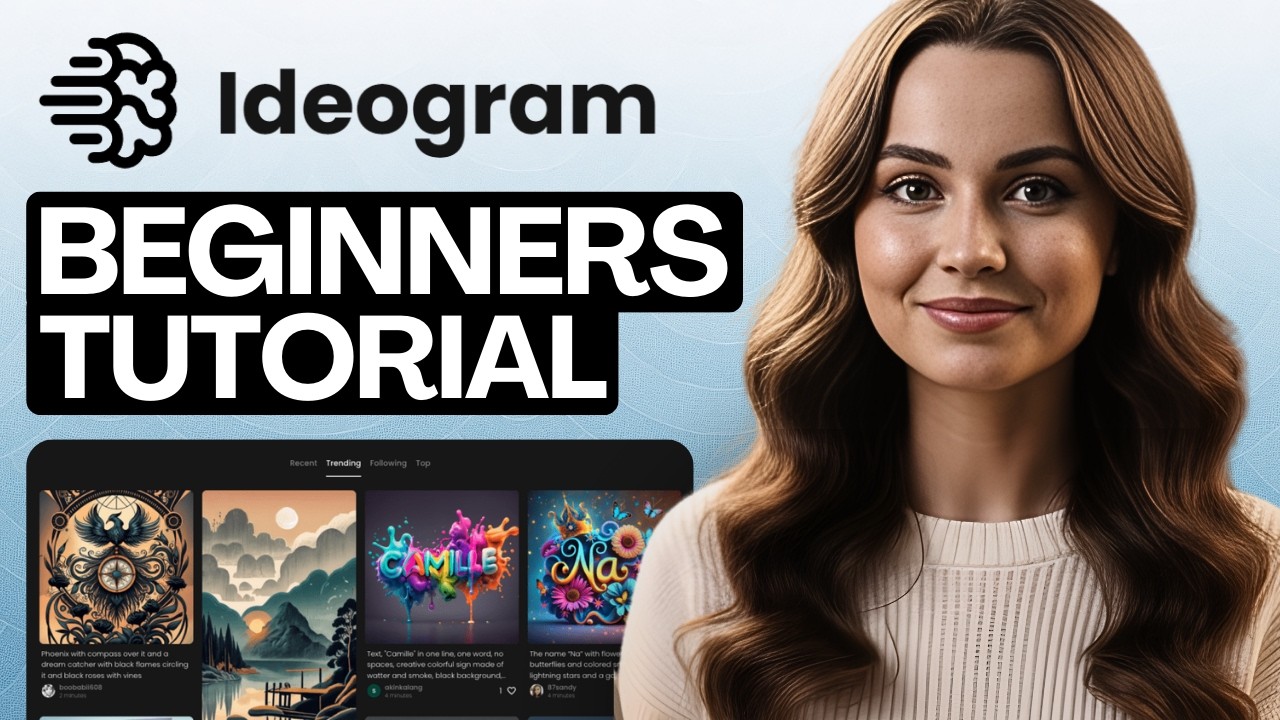
Ideogram AI was built from scratch by former Google Brain researchers specifically to solve one problem: readable text inside AI-generated images. It hits roughly 90-95% text accuracy in testing (MindStudio, 2026), compared to Midjourney’s 30-40%. That gap is huge if you’re making logos, posters, or branded graphics.
What Does Ideogram AI Do?
Ideogram generates images from text prompts using a diffusion model trained with typography as a core capability, making it the leading AI image generation tool for design work that requires legible text.
How Is Ideogram AI Similar to Midjourney?
Both are prompt-based AI art generators that produce high-quality visuals, support commercial use on paid tiers, and allow style controls and aspect ratio customization. Both serve designers and content creators needing fast visual output.
How Is Ideogram AI Different from Midjourney?
| Attribute | Ideogram AI | Midjourney |
| Text accuracy | ~90–95% (v3.0) | ~30–40% (v7) |
| Starting price | $8/month (Billed annually) | $8/month (Billed annually) |
| Free tier | Yes (10 slow credits/day) | No |
| Best use case | Logos, posters, branded graphics | Artistic/cinematic imagery |
Who Is Ideogram AI Best For?
Ideogram suits graphic designers, social media managers, and small business owners who regularly produce text-heavy visuals like posters, logos, and marketing banners.
Key Features of Ideogram AI
- Text rendering: 90-95% accuracy; handles multiple fonts, sizes, and languages
- Style presets: One-click style tags (3D, Design, Anime, Realistic, Typography)
- Character Consistency: Maintain the same character appearance across multiple images (paid plans)
- Batch Generation: Generate up to 500 prompts at once via CSV (Pro plan)
Pricing
- Free plan: Yes, slow credits that reset weekly
- Paid plans: Basic at $7/month; Plus at $15/month; Pro at $42/month
- Free trial: No; free tier available
Stable Diffusion
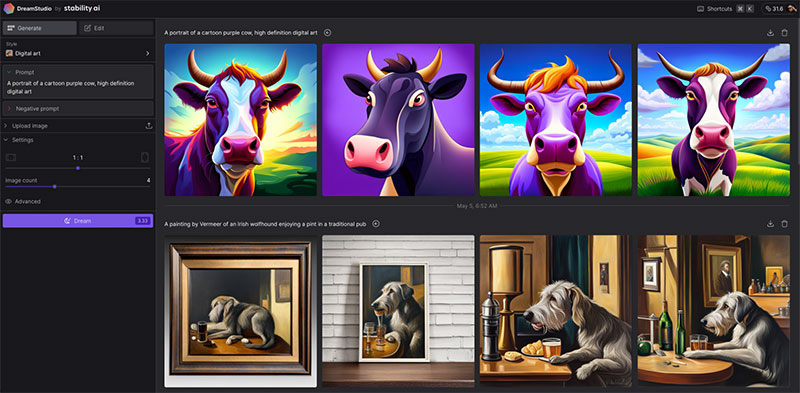
Stable Diffusion is the open-source backbone behind many of the other AI image generators on this list. DreamStudio, NightCafe, and Runway ML all run on it. If you’re technical and want to run generation locally for free with full model control, this is the obvious choice. The learning curve is real though.
The Stable Diffusion 3 release is bound to transform the world of AI art even more with it being the most advanced open-source text-to-image model available.
What Does Stable Diffusion Do?
Stable Diffusion uses an open-source latent diffusion model to generate images from text prompts, which can be run locally at no cost or accessed through cloud platforms with API-based pricing.
How Is Stable Diffusion Similar to Midjourney?
Both use diffusion-based AI image synthesis, support high-resolution output, and serve professional designers, concept artists, and developers. Both produce results in a wide range of styles, from photorealistic to abstract and painterly.
How Is Stable Diffusion Different from Midjourney?
- Stable Diffusion is open-source and can be self-hosted for free; Midjourney requires a paid subscription
- Stable Diffusion supports hundreds of community-trained model checkpoints; Midjourney uses a single proprietary model
- Midjourney produces more consistent artistic quality out of the box; Stable Diffusion quality varies heavily by the chosen model and settings
Who Is Stable Diffusion Best For?
Stable Diffusion suits developers, technical users, and businesses earning under $1M/year who want full model customization and free local image generation without usage limits.
Key Features of Stable Diffusion
- Open-source: Self-hostable under community license for users under $1M revenue threshold
- Customizable models: Hundreds of community checkpoints available (SDXL, SD 3.5, and more)
- ControlNet support: Fine-grained control over pose, structure, and composition
- Inpainting/outpainting: Advanced image editing within the same pipeline
Pricing
- Free plan: Yes, self-hosting is free under community license
- Paid plans: API via Stability AI from $0.01/credit; cloud platforms (DreamStudio) from ~$10/month
- Free trial: No formal trial; free self-hosted option available
Canva AI Image Generator

Canva’s AI image tool is not trying to compete with Midjourney on output quality. It’s trying to save you the step of switching apps. Generate an image and drop it straight into a social post, presentation, or ad template, all inside the same platform. For non-designers and social media teams, that workflow alone is worth it.
What Does Canva AI Image Generator Do?
Canva’s built-in image generator creates visuals from text prompts using DALL-E 3 in the background, then lets users directly edit, resize, and publish those visuals within Canva’s design workspace.
How Is Canva AI Image Generator Similar to Midjourney?
Both tools generate images from text prompts, support commercial use, and target creative professionals needing fast visual content. Both also offer web-based access without software installation.
How Is Canva AI Image Generator Different from Midjourney?
Canva’s AI output is powered by DALL-E 3, which trails Midjourney on artistic quality and style range. The key trade-off is clear: Canva wins on workflow integration; Midjourney wins on image quality.
Canva includes 50 free monthly credits, drag-and-drop template access, and one-click publishing. Midjourney has none of that but produces significantly stronger imagery.
Who Is Canva AI Image Generator Best For?
Canva suits social media managers, small business owners, and non-designers who need quick AI-generated visuals as part of a broader design workflow rather than standalone high-quality art.
Key Features of Canva AI Image Generator
- Integrated workflow: Generate and edit images within Canva’s template library in one step
- 50 free credits/month: Included with the free Canva account
- Background removal: One-click background remover on generated images
- Multi-format export: Direct export to social media, presentations, and print formats
Pricing
- Free plan: Yes, 50 AI image credits/month
- Paid plans: Canva Pro at $12.99/month (unlimited AI generation)
- Free trial: No; free tier covers basic use
Bing Image Creator

Bing Image Creator is the most accessible free AI image generator available right now. Completely free, no subscription, no setup, and it runs on DALL-E 3 and Microsoft’s own MAI-Image-1 model released in October 2025. Quality is decent for casual use, though it struggles with complex prompts and does not support aspect ratio customization on the free tier.
What Does Bing Image Creator Do?
Bing Image Creator generates images from text prompts directly through the Bing search engine and Microsoft Edge sidebar using DALL-E 3 and MAI-Image-1 models, requiring only a free Microsoft account.
How Is Bing Image Creator Similar to Midjourney?
Both use advanced AI image generation models to convert text prompts into visuals, produce 4 image variations per prompt, and support web-based access without software installation.
How Is Bing Image Creator Different from Midjourney?
- Cost: Bing is completely free; Midjourney requires a paid plan from ~$8/month
- Quality: Midjourney outperforms significantly on artistic output and prompt adherence for complex scenes
- Customization: Bing has no aspect ratio, style, or seed controls; Midjourney has all three
Who Is Bing Image Creator Best For?
Bing Image Creator suits casual creators, students, and educators who want free AI image generation for light-use projects without subscribing to a paid platform.
Key Features of Bing Image Creator
- Completely free: No subscription, no credit card required
- Multiple models: DALL-E 3, MAI-Image-1, and GPT-4o image editing mode
- Daily boost credits: ~15 fast generations per day; slower unlimited generation after
- Content credentials: Watermark and embedded metadata on all outputs
Pricing
- Free plan: Yes, fully free with unlimited generation (fast credits are limited)
- Paid plans: None; Microsoft Rewards points can purchase additional fast credits
- Free trial: Not applicable; the tool is entirely free
Playground AI
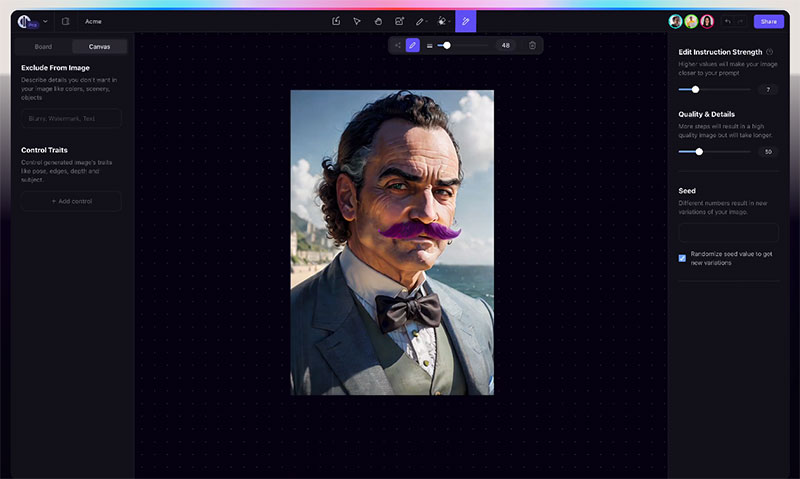
Playground AI sits in an interesting middle ground. It is genuinely one of the best free AI image generators by daily volume, with 500 images/day on the free plan. It also lets you mix real photos with AI-generated elements, which most tools on this list cannot do. Worth knowing about if you need high-volume free output.
What Does Playground AI Do?
Playground AI generates and edits images from text prompts using Stable Diffusion models (SDXL, Playground v3) and allows users to combine real photographs with AI-generated elements in a single composition.
How Is Playground AI Similar to Midjourney?
Both use AI diffusion models for text-to-image generation, support a range of artistic styles, and serve designers and content creators. Playground AI also allows commercial use on its free plan, similar to Midjourney’s paid commercial rights.
How Is Playground AI Different from Midjourney?
Playground AI offers 500 free images/day; Midjourney has no free tier. Playground lets you blend real images with AI elements; Midjourney does not. On raw output quality, Midjourney is noticeably stronger, especially for artistic and cinematic styles.
Who Is Playground AI Best For?
Playground AI suits social media creators and content teams who need high daily image volume at low cost and occasionally want to combine real photos with generated elements.
Key Features of Playground AI
- Real + AI image mixing: Blend uploaded photos with AI-generated elements
- 500 free images/day: Highest free daily volume on this list
- Prompt expansion: AI-powered prompt enhancement tool built in
- Multiple models: SDXL, Playground v3, Stable Diffusion 1.5
Pricing
- Free plan: Yes, 50 images/day with basic features; 500 images/day on extended free tier
- Paid plans: From $15/month for 1,000 images/day and advanced features
- Free trial: No formal trial; free tier is generous
Google Imagen 4
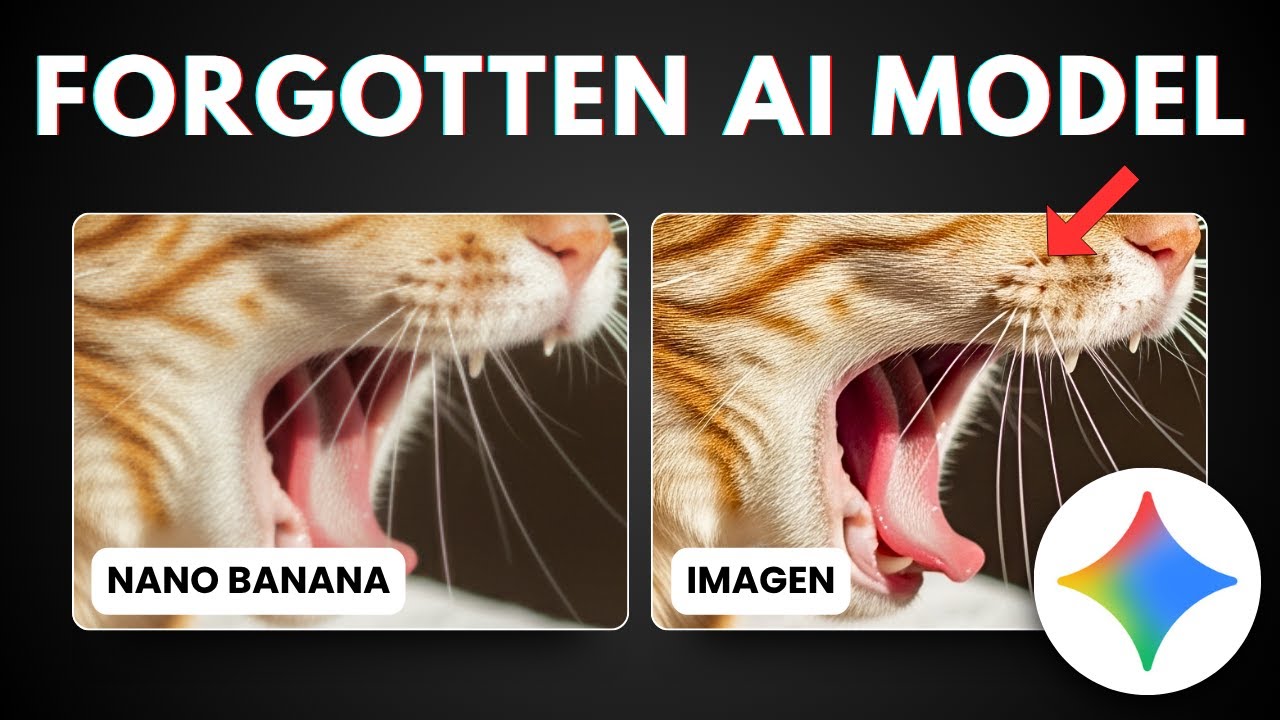
Google Imagen 4 is Google’s latest text-to-image model, available through the Gemini app and Google AI products. It generates high-fidelity images and, through Veo 3, can produce AI video with audio from text prompts. It has improved significantly since earlier versions and is worth checking out if you use Google’s ecosystem daily.
What Does Google Imagen 4 Do?
Google Imagen 4 generates photorealistic and artistic images from text prompts inside the Gemini interface, and connects to Veo 3 for text-to-video generation with audio, all within Google’s AI platform.
How Is Google Imagen 4 Similar to Midjourney?
Both produce high-quality AI-generated visuals from text prompts and target professional creatives and marketers. Both also offer strong photorealistic output and are regularly updated with new model improvements.
How Is Google Imagen 4 Different from Midjourney?
- Imagen 4 is built into Gemini and accessible for free; Midjourney requires a subscription
- Imagen 4 connects to Veo 3 for video generation; Midjourney now also offers video but it is newer
- Midjourney’s artistic stylization is still stronger; Imagen 4 leads on photorealism
Who Is Google Imagen 4 Best For?
Google Imagen 4 suits users already inside the Google ecosystem who want free high-quality image generation integrated with Google Workspace, Gemini, and Google’s broader AI tools.
Key Features of Google Imagen 4
- Gemini integration: Generate images directly inside the Gemini app on web and mobile
- Veo 3 connection: Generate 8-second AI videos with audio from text prompts
- Photorealistic output: Strong performance on product shots and architectural visualization
- Google Workspace tie-in: Access through Docs, Slides, and other Google apps on paid plans
Pricing
- Free plan: Yes, limited image generation via free Gemini
- Paid plans: From $20/month (Google AI Pro) for Imagen 4, Veo 3, and higher daily limits
- Free trial: No; free Gemini tier covers basic use
What Makes an App a Real Alternative to Midjourney?
Not every AI image generator qualifies as a true Midjourney alternative. The AI image generator market was valued at $9.1 billion in 2024 and is projected to reach $63.29 billion by 2030, per MarkNtel Advisors. That growth has flooded the market with tools that generate images but serve completely different needs.
Four attributes define whether a tool genuinely competes with Midjourney.
| Attribute | What to Check | Why It Matters |
| Output quality | Artistic stylization + photorealism scores | Midjourney leads on artistic style (9.8/10 per AIMagicx) |
| Commercial rights | Free vs. paid plan licensing | Free tiers often block commercial use entirely |
| Pricing model | Flat rate vs. credit-based | Credits deplete unpredictably at high volume |
| Platform access | Web app vs. Discord-only | Discord workflow filters out non-technical users |
Style range matters more than photorealism for most creative use cases. A tool that produces one consistent aesthetic (Midjourney’s painterly look) can be more useful than a tool that produces mediocre output across ten styles.
The subscription structure question is tricky. Flat-rate tools like Midjourney ($10-$120/month) let you generate until you hit GPU limits. Credit-based tools like NightCafe and Ideogram charge per image, which works for light use but gets expensive at volume.
Midjourney removed its free trial in 2023 after a surge in new users overwhelmed servers. Any tool calling itself a free Midjourney alternative has to offer meaningful generation quality on its free tier, not just access to a slow queue with watermarked outputs.
Adobe Firefly is one example where the “alternative” framing only partially applies. It matches Midjourney on commercial safety and workflow integration for Adobe users, but trails significantly on artistic output quality. The right framing is: Firefly replaces Midjourney for specific professional workflows, not across the board.
How Do Midjourney Alternatives Compare on Image Quality?
Quality is the reason most people pay for Midjourney when free tools exist. 62% of marketers now use generative AI to create image assets, according to Salesforce. The standard they’re working toward is consistently high enough to skip post-editing.
AIMagicx 2026 testing across production photography use cases puts these numbers in context.
| Model | Artistic Style | Photorealism | Text Accuracy | Consistency Rate |
| Midjourney v6.1 | 9.8/10 | 8.5/10 | ~35% | 78% |
| DALL-E 3 | 7.0/10 | 7.5/10 | ~80% | 70% |
| FLUX 1.1 Pro | 8.0/10 | 9.2/10 | Strong | 85% |
| Adobe Firefly 3 | 8.5/10 | 8.0/10 | Good | N/A |
Midjourney leads on artistic stylization. Nothing else on this list produces its dreamlike, painterly compositions as consistently.
FLUX 1.1 Pro beats Midjourney on photorealism and consistency rate. For product photography and architectural visualization, it is the stronger choice at $0.06/image vs. Midjourney’s ~$0.07/image.
Text-in-image accuracy is where Midjourney genuinely struggles. Ideogram AI reaches 90-95% accuracy on text rendering, compared to Midjourney’s 30-40%, according to MindStudio 2026 testing. For logos, posters, and branded graphics, that gap is disqualifying.
DALL-E 3 sits in a useful middle ground. Its conversational interface through ChatGPT makes it the easiest for beginners, and it handles text in images significantly better than Midjourney, though its artistic output trails on painterly and cinematic styles.
Adobe found that 83% of creative professionals now use generative AI in their work, with output quality consistently ranked as the top selection factor (Artificial Analysis, Q3 2025). The practical takeaway: Midjourney wins for artistic work; FLUX and Firefly win for commercial product visuals; Ideogram wins when text must be readable.
Which Midjourney Alternative Is Free to Use?
Midjourney has had no free tier since March 2023. The collective user base of AI image generation platforms now exceeds 50 million creators globally, with most having started on a free tool before paying for anything (AI Video Bootcamp, 2025).
What Is the Best Free Midjourney Alternative for Beginners?
Bing Image Creator is the most accessible free option. Completely free, no subscription, runs on DALL-E 3 and Microsoft’s MAI-Image-1 model.
- ~15 fast generation credits/day; unlimited slow generation after
- No aspect ratio or style controls on the free tier
- Requires only a free Microsoft account
Playground AI offers the highest free daily volume at 500 images/day. It uses Stable Diffusion models and allows mixing real photos with AI elements, which Bing and most other free tools cannot do.
NightCafe provides 10 free credits/day plus unlimited base Stable Diffusion generation with no credit cost. The community features (daily challenges, social feed) make it particularly suited to hobbyist creators who want feedback alongside generation.
Adobe Firefly gives 25 credits/month on its free plan. That is the lowest free volume on this list, but the commercial safety of every Firefly output (trained on Adobe Stock only) makes each credit more legally secure than a higher-volume free alternative.
What Is the Best Midjourney Alternative for Commercial Use?
Commercial rights vary significantly across free and paid tiers. Getting this wrong exposes businesses to IP risk.
- Adobe Firefly: Commercially safe on all plans; enterprise IP indemnification available
- Midjourney: Commercial rights on all paid plans; companies over $1M revenue must use Pro or Mega plan ($60-$120/month)
- DALL-E 3: Commercial rights on ChatGPT Plus ($20/month); free Bing tier restricts commercial use
- Leonardo AI: Free plan outputs are public and carry limited rights; paid plans from $12/month unlock full ownership
- Stable Diffusion: Self-hosted free under community license for businesses under $1M revenue; enterprise license required above that threshold
Salesforce found that 75% of marketers have either experimented with or fully integrated AI into their workflows in 2025. Most commercial projects need a tool that explicitly grants ownership of generated outputs, not just access to generation.
Which App Is Best for Specific Creative Use Cases?
Generative AI marketing adoption doubled from 33% in 2023 to 71% in 2024 (McKinsey). That growth spread across completely different creative needs, which is exactly why there is no single best alternative to Midjourney.
Matching the Tool to the Task
Logos, posters, and text-heavy graphics: Ideogram AI. Its text rendering engine hits 90-95% accuracy with multiple font styles, sizes, and languages. No other tool on this list comes close for design work where readable text is part of the image.
Game assets and consistent character art: Leonardo AI. It is the only tool here with custom model training, letting studios upload 10-20 reference images to lock a character’s appearance across hundreds of generations. 3D texture generation from OBJ files is a unique feature that directly addresses game development pipelines. Leonardo grew to over 30 million users by 2025 before its Canva acquisition.
Design work inside Adobe tools: Adobe Firefly. Generative Fill in Photoshop lets designers remove objects, extend images, and add elements without leaving their existing workspace. Toyota Research Institute has publicly stated it uses AI image tools to generate initial vehicle design prototypes, reducing concept iteration time significantly.
High-volume social content: Playground AI or Canva AI. Playground gives 500 free images/day. Canva lets users drop generated images directly into templates, social posts, and presentations without switching apps, which saves hours in production workflows.
Technical users who want full control: Stable Diffusion. Open-source, self-hostable, free for businesses under $1M revenue. Hundreds of community model checkpoints available. The trade-off is a steep learning curve and variable output quality depending on which model you choose.
Best for beginners with no budget: Bing Image Creator. Fully free, DALL-E 3 quality, no setup required. The ceiling is low, but for someone testing AI image generation for the first time, it removes every friction point.
How Much Do Apps Like Midjourney Cost?
The median mid-market marketing team spent $3,400/month on AI tools in Q1 2026, up from $1,200/month in Q1 2025, according to Gartner. Image generation is a meaningful part of that spend, and the pricing models across these tools differ enough to matter at scale.
| Tool | Free Plan | Lowest Paid Plan | Notes |
| Midjourney | None | $10/month (~200 images) | Commercial rights on all paid plans |
| DALL-E 3 | Via Bing (Limited) | $20/month (ChatGPT Plus) | API costs $0.04 – $0.12 per image |
| Adobe Firefly | 25 credits/month | $9.99/month (Unlimited*) | Subscribers (before March 16) get unlimited AI gen |
| Leonardo AI | 150 tokens/day | $12/month (8,500 tokens) | Includes private mode and Token Rollover |
| Ideogram AI | Slow queue only | $8/month (400 priority) | Best for precise text rendering in images |
| NightCafe | 5 credits/day | $5.99/month (100 credits) | DALL-E 3 support ending May 12, 2026 |
| Stable Diffusion | Free (Self-hosted) | ~$10/month (DreamStudio) | Open-source; pay for cloud GPU/DreamStudio |
| Canva AI | 50 credits/lifetime | $12.99/month (Unlimited) | Magic Media integrated into full design suite |
| Playground AI | 10 edits / 3 hours | $15/month (120 / 3 hours) | Multi-model access (SDXL, GPT-4o, Seedream) |
| Bing Image Creator | 15 boosts/day | None (Rewards only) | Powered by DALL-E 3; fully free to use |
Credit-based systems are tricky at scale. Leonardo AI’s token costs for video generation consume the same budget as 300+ standard image generations per clip. NightCafe’s free credits deplete quickly once you move beyond base Stable Diffusion into premium models like Flux.
Midjourney’s Standard plan at $30/month is widely considered the value benchmark, as unlimited Relax Mode effectively removes the image cap for users willing to accept slower queue times. Its annual revenue reached $500 million in 2025, a 66.7% increase from 2024, according to AutoFaceless research, with a team of approximately 40 people and no outside funding.
For businesses over $1M in annual revenue, Midjourney requires the Pro or Mega plan ($60-$120/month) for commercial use. Adobe Firefly avoids this entirely, with enterprise IP indemnification included regardless of company revenue.
FAQ on Apps Like Midjourney
What is the best free alternative to Midjourney?
Bing Image Creator is the most accessible free option, running on DALL-E 3 with no subscription required. Playground AI offers up to 500 free generations per day. Both produce solid results for casual use without any upfront cost.
Which app is most similar to Midjourney in image quality?
Leonardo AI and Adobe Firefly come closest on overall quality. For pure artistic stylization, nothing currently matches Midjourney’s painterly output. FLUX 1.1 Pro leads on photorealism, scoring higher than Midjourney in product photography consistency tests.
Is there a Midjourney alternative that works without Discord?
Yes. Most alternatives, including DALL-E 3, Adobe Firefly, Leonardo AI, Ideogram, and Canva AI, run entirely through a standard web browser. None require Discord. Midjourney itself now has a web app, though its Discord roots still shape the interface.
Which AI image generator is best for text inside images?
Ideogram AI is the clear winner. It reaches roughly 90-95% text rendering accuracy, compared to Midjourney’s 30-40%. It handles logos, posters, and banners with readable typography that other generative AI platforms still struggle to produce reliably.
Can I use Midjourney alternatives for commercial projects?
Most paid plans grant commercial rights. Adobe Firefly is the safest option, trained exclusively on licensed data with enterprise IP indemnification. Midjourney grants commercial use on all paid plans, but companies earning over $1 million annually must subscribe to the Pro or Mega tier.
What is the cheapest Midjourney alternative?
NightCafe starts at $5.99/month. Ideogram’s Basic plan is $7/month. Stable Diffusion is free to self-host for businesses under $1 million in revenue. For zero cost with decent quality, Bing Image Creator remains the most practical starting point.
Which app is best for game asset creation?
Leonardo AI is purpose-built for this. It supports custom model training on your own reference images, 3D texture generation from OBJ files, and specialized models for cinematic, anime, and fantasy styles. Game studios use it specifically for consistent character art across large projects.
How does Stable Diffusion compare to Midjourney?
Stable Diffusion is open-source and self-hostable at no cost, giving technical users unlimited customization through ControlNet, community model checkpoints, and local deployment. Midjourney produces more consistent artistic output out of the box. Stable Diffusion requires more setup but removes all subscription costs.
Are there Midjourney alternatives with a mobile app?
Yes. Leonardo AI, NightCafe, Canva, and Bing Image Creator all work on mobile browsers or offer dedicated apps. NightCafe can be installed as a PWA on iOS and Android. Google Imagen 4 is accessible through the Gemini mobile app with no additional setup.
Which Midjourney alternative is best for designers already using Adobe tools?
Adobe Firefly. It integrates natively into Photoshop, Illustrator, and Adobe Express, with Generative Fill allowing in-workflow object removal and image extension. It is included at no extra cost with any active Creative Cloud subscription, making it effectively free for existing Adobe users.
Conclusion
This conclusion is for an article presenting the strongest apps like Midjourney available in 2025, from generative AI platforms built for professional designers to free text-to-image tools anyone can use today.
The right choice depends entirely on your use case. Ideogram leads on typography. Leonardo AI handles game asset consistency better than anything else. Stable Diffusion gives technical users full control at no cost.
Midjourney still sets the benchmark for artistic image generation. But the gap between it and capable alternatives has closed significantly, especially on photorealism, pricing, and workflow integration.
Start with a free tier on two or three tools. Run the same prompt across each. The differences in output quality, speed, and usability will make the decision obvious faster than any comparison guide will.

- Build or Buy an AI Chatbot for E-commerce: The Costs Nobody Budgets For - October 24, 2026
- How to Run a React App in VS Code Step by Step - October 23, 2026
- Transactional or marketing email: which messages your app should send itself - October 23, 2026