
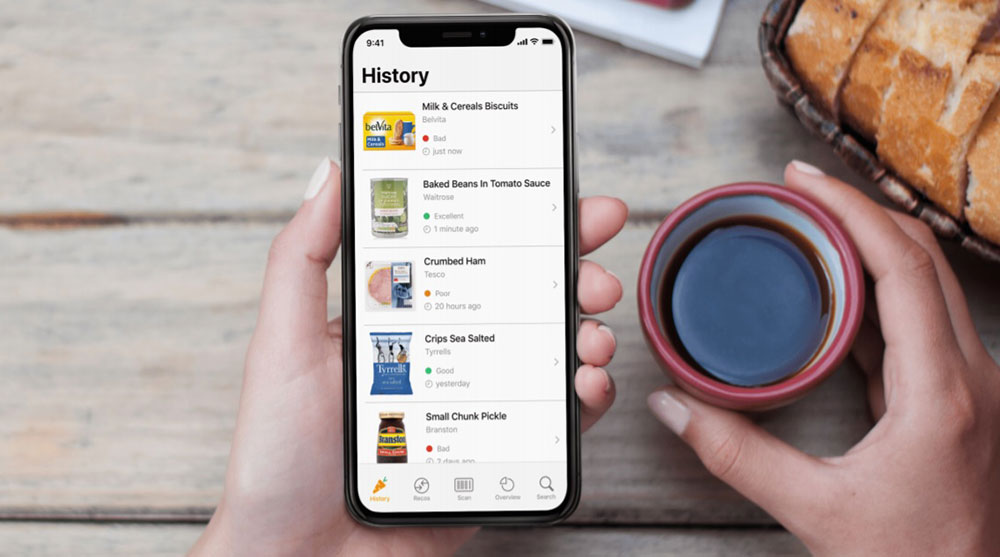
You scan a granola bar, and the app turns red. That’s the moment most people startlooking for apps like Yuka.
Yuka built its reputation on one simple idea: scan a barcode, get an honest health score. No ads, no brand influence. With 80 million users and 2.7 billion scans in 2024 alone, it clearly hit a nerve.
But Yuka has gaps. Limited database coverage outside Europe, no calorie tracking, and no deep cosmetic analysis for North American products leave a lot of users searching for alternatives.
This guide covers the best food scanner and barcode scanning apps that match or beat Yuka depending on what you actually need, whether that’s ingredient safety, nutrition tracking, clean beauty analysis, or ethical shopping.
Apps Like Yuka
Yuka has over 50 million users scanning food and cosmetic products for health scores. But it’s not the only option. Several strong alternatives cover everything from clean beauty scanning to full nutrition tracking, with different database sizes, pricing, and platform focus.
The food scanning app market is expected to grow from $1.64 billion in 2026 to $3.09 billion by 2035, according to Industry Research. That kind of growth means more competition, which is good for users.
Open Food Facts
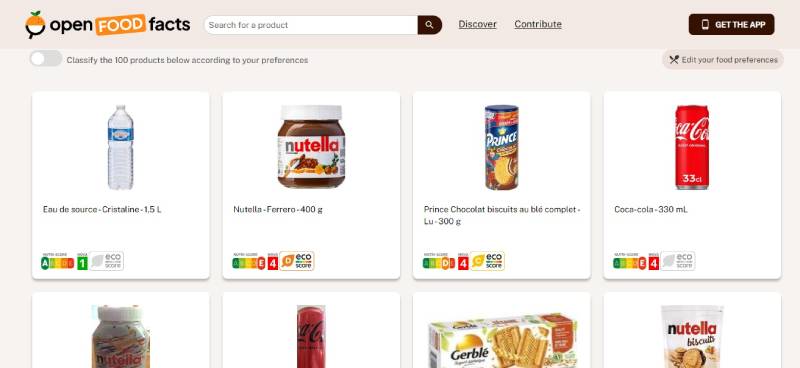
Open Food Facts is an open-source food scanner app that lets users scan packaged products for ingredient details, additive warnings, and nutritional data. It operates without ads or brand partnerships, making it the most independent option on this list, and is available on iOS and Android.
What Does Open Food Facts Do?
Open Food Facts lets users scan barcodes of packaged food products to access a full ingredient breakdown, Nutri-Score, NOVA food processing classification, and Eco-Score across iOS and Android using a community-maintained database.
How Is Open Food Facts Similar to Yuka?
- Both use barcode scanning to rate packaged food products
- Both flag harmful additives and E-numbers
- Both are free for core scanning features
How Is Open Food Facts Different from Yuka?
Open Food Facts has over 4 million products in its database (as of 2025), compared to Yuka’s 700,000. It also includes Eco-Score for environmental impact, which Yuka doesn’t offer. The app doesn’t scan cosmetics, and the interface is less polished.
Who Is Open Food Facts Best For?
Open Food Facts suits transparency-focused users who want the largest free food database without a paywall or subscription.
Key Features of Open Food Facts
- Database size: 4+ million products from 180+ countries
- Nutri-Score + NOVA: Nutritional quality and processing level ratings
- Eco-Score: Environmental impact per product
- Open source: Community-built, no industry funding
Pricing
- Free plan: Yes, fully free with no limits
- Paid plans: None
- Free trial: N/A
Think Dirty

Think Dirty is a cosmetic ingredient checker app focused on personal care product safety. It’s built specifically for users who want to avoid hormone disruptors, carcinogens, and allergens in skincare and beauty products. Available on iOS and Android.
What Does Think Dirty Do?
Think Dirty lets users scan cosmetic product barcodes to get a “Dirty Meter” score from 1 to 10, showing ingredient safety levels with detailed breakdowns of potentially harmful chemicals.
How Is Think Dirty Similar to Yuka?
Both apps scan product barcodes and assign a health score. Both flag harmful ingredients and suggest safer alternatives. Both target health-conscious shoppers concerned about product safety.
How Is Think Dirty Different from Yuka?
| Feature | Think Dirty | Yuka |
| Category Focus | Cosmetics & Personal Care | Food & Cosmetics |
| Database Size | 350,000+ products | 500,000+ cosmetics |
| Score Range | 1–10 (Lower = Cleaner) | 0–100 (Higher = Better) |
| Free Access | Basic free tier | Basic free tier |
Who Is Think Dirty Best For?
Think Dirty is best for clean beauty users, especially those managing sensitive skin or recovering from health conditions who need precise cosmetic ingredient analysis.
Key Features of Think Dirty
- Dirty Meter: 1-10 ingredient safety score per product
- Ingredient flags: Carcinogens, hormone disruptors, allergens
- 7 million users with 350,000+ products in database
- Alternative finder: Suggests cleaner product swaps
Pricing
- Free plan: Yes, basic scanning available
- Paid plans: $4.99/month or annual subscription
- Free trial: Yes, limited
EWG Healthy Living
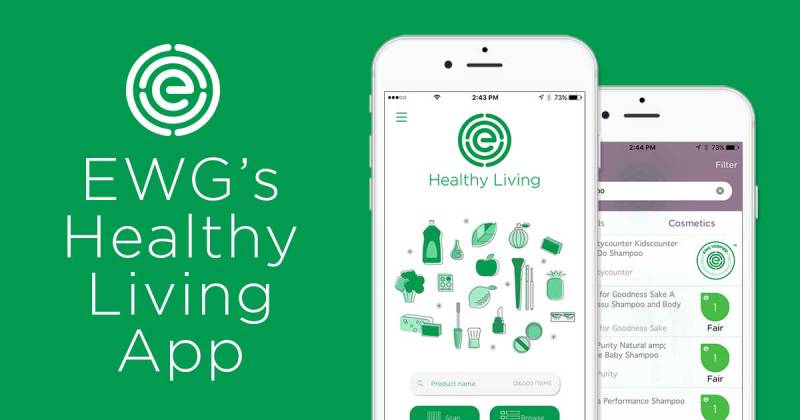
EWG Healthy Living is a product safety app backed by the Environmental Working Group, a US-based nonprofit. It rates over 120,000 food and personal care products on a 1-10 scale using scientific and regulatory databases. Available on iOS and Android.
What Does EWG Healthy Living Do?
EWG Healthy Living lets users scan barcodes of food and personal care products to get safety ratings based on nearly 60 toxicity and regulatory databases, including FDA, European Commission, and peer-reviewed research.
How Is EWG Healthy Living Similar to Yuka?
- Both scan food and cosmetic products in one app
- Both use color-coded ratings (green/yellow/red)
- Both flag hormone disruptors and harmful additives
How Is EWG Healthy Living Different from Yuka?
EWG’s ratings are grounded in scientific research from nearly 60 regulatory and toxicity sources. It also links to EWG’s Shopper’s Guide to Pesticides in Produce, which Yuka doesn’t offer. The database is smaller at 120,000 products versus Yuka’s 1.2 million combined.
Who Is EWG Healthy Living Best For?
EWG Healthy Living suits US-based shoppers who want science-backed product ratings and trust nonprofit, research-driven sources over algorithm-based health scores.
Key Features of EWG Healthy Living
- Database scope: 80,000+ foods, 40,000+ personal care products
- Source depth: Nearly 60 toxicity and regulatory databases
- EWG VERIFIED badge: Products meeting strictest safety standards
- Pesticide guide: Integrated Shopper’s Guide to Produce
Pricing
- Free plan: Yes, full access at no cost
- Paid plans: None
- Free trial: N/A
Fooducate
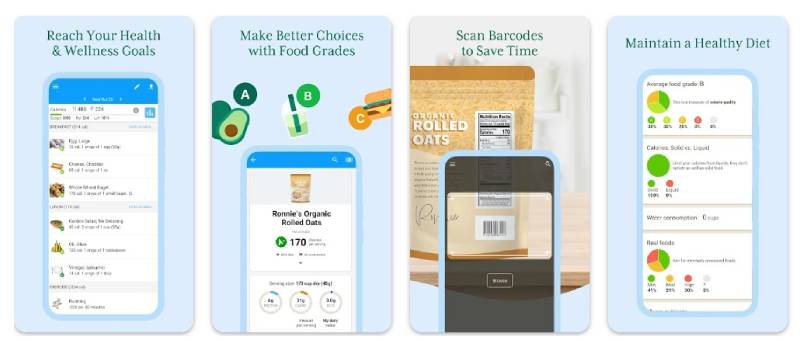
Fooducate is a food scanner and nutrition education app that grades packaged foods from A to D based on ingredient quality and nutritional value. It was acquired by Maple Media in 2022, then by Skybound Entertainment in 2025. Available on iOS and Android.
What Does Fooducate Do?
Fooducate scans food barcodes and assigns a letter grade (A through D) based on a nutrition algorithm that checks trans fats, added sugars, artificial ingredients, and fiber content, while also tracking calories and macros.
How Is Fooducate Similar to Yuka?
Both apps scan food barcodes and give a quick health grade. Both flag poor-quality ingredients and suggest healthier alternatives. Both are available free with optional premium upgrades.
How Is Fooducate Different from Yuka?
Fooducate includes a calorie and macro tracker, which Yuka doesn’t offer. It also has a community forum for diet tips and recipes. Worth noting: app store reviews in 2025 flagged bugs and slow support following ownership changes, so your experience may vary.
Who Is Fooducate Best For?
Fooducate suits users who want a combined food grader and calorie tracker without switching between two apps.
Key Features of Fooducate
- A-D food grades: Fast quality assessment per product
- Calorie + macro tracking built into the same app
- Dietary filters: Keto, low-carb, gluten-free options
- Community forum: Recipes and diet tips from other users
Pricing
- Free plan: Yes, basic scanning and grading
- Paid plans: Premium required for detailed nutrient counts
- Free trial: Yes
CodeCheck

CodeCheck is a multi-category barcode scanner covering food, cosmetics, household products, and pet supplies. It’s popular in Germany and broader Europe, with a strong focus on eco-conscious consumers. Available on iOS and Android.
What Does CodeCheck Do?
CodeCheck scans product barcodes across multiple categories and returns ingredient safety ratings, allergen alerts, environmental impact scores, and healthier product alternatives from a user-contributed and editorially maintained database.
How Is CodeCheck Similar to Yuka?
- Both cover food and cosmetic products in one app
- Both flag harmful chemicals and suggest safer alternatives
- Both use a barcode scanner as the core feature
How Is CodeCheck Different from Yuka?
| Feature | CodeCheck | Yuka |
| Categories | Food, cosmetics, household, pets | Food + cosmetics |
| Climate Score | Yes | No |
| Free scans | 5 per week (free tier) | Unlimited (free tier) |
| Offline access | CodeCheck Plus only | No |
Who Is CodeCheck Best For?
CodeCheck suits European shoppers who want environmental impact data alongside ingredient safety, all in one multi-category scanner.
Key Features of CodeCheck
- Climate Score: Environmental rating per product
- 4 product categories: Food, cosmetics, household, pet supplies
- Offline mode: Available with CodeCheck Plus subscription
- Health profile: Personalized alerts based on user conditions
Pricing
- Free plan: Yes, 5 scans per week
- Paid plans: CodeCheck Plus subscription for unlimited scans
- Free trial: Yes
INCI Beauty

INCI Beauty is a French cosmetic ingredient scanner developed in partnership with the Clermont-Ferrand Sigma School of Chemistry. It rates cosmetic products on a scale of 0 to 20 and is available on iOS, Android, and Windows. Downloaded over 4.5 million times as of recent data.
What Does INCI Beauty Do?
INCI Beauty scans cosmetic product barcodes and analyzes each ingredient individually, assigning color-coded hazard ratings from green (safe) to red (high risk), with detailed ingredient sheets covering worldwide regulations.
How Is INCI Beauty Similar to Yuka?
Both are French-developed apps. Both scan cosmetic products and rate ingredients for safety. Both suggest cleaner alternatives when a product scores poorly.
How Is INCI Beauty Different from Yuka?
INCI Beauty focuses exclusively on cosmetics, with over 1 million products and access to international regulatory data across Europe, Canada, and the US. Yuka covers food too but has a smaller cosmetics database. INCI Beauty also includes skincare routine management, which Yuka doesn’t offer.
Who Is INCI Beauty Best For?
INCI Beauty suits European skincare users who want deep cosmetic ingredient analysis with regulatory context across multiple global markets.
Key Features of INCI Beauty
- Rating scale: 0-20 per product, ingredient by ingredient
- Regulatory coverage: Europe, Canada, USA regulations per ingredient
- 1 million+ cosmetics in database
- Skincare routine builder for tracking daily product use
Pricing
- Free plan: Yes, with ads
- Paid plans: Premium up to $2/month
- Free trial: Yes
Food Scan Genius

Food Scan Genius is an AI-powered food scanner built around personalized dietary needs, covering allergens, religious diets, and GMO preferences. It’s built for users whose requirements go beyond a basic health score. Available on iOS and Android.
What Does Food Scan Genius Do?
Food Scan Genius scans food barcodes and cross-checks ingredients against a personalized user profile covering allergies, intolerances, dietary restrictions (vegan, Jain, halal, keto), and GMO preferences to flag products that don’t fit.
How Is Food Scan Genius Similar to Yuka?
- Both scan food barcodes and return ingredient-level health data
- Both flag harmful additives and suggest alternatives
- Both work on iOS and Android
How Is Food Scan Genius Different from Yuka?
Food Scan Genius uses AI-powered ingredient analysis and lets users set highly specific dietary profiles, including religious dietary laws that Yuka doesn’t support. It’s less focused on a universal health score and more on individual fit.
Who Is Food Scan Genius Best For?
Food Scan Genius suits users with multiple dietary restrictions or religious food requirements who need personalized filtering rather than a general health score.
Key Features of Food Scan Genius
- AI ingredient engine: Personalized analysis based on user profile
- Dietary modes: Vegan, halal, keto, Jain, gluten-free, and more
- Allergen detection: Flags specific allergens per user profile
- Global database: Products from multiple regions
Pricing
- Free plan: Yes, basic scanning included
- Paid plans: Premium tier available for advanced filters
- Free trial: Yes
Buycott

Buycott is a values-based barcode scanner that helps users make purchasing decisions aligned with their ethical and political beliefs. It maps products back to parent companies and cross-checks against user-joined campaigns. Available free on iOS and Android.
What Does Buycott Do?
Buycott scans product barcodes and traces ownership through corporate family trees, then alerts users when a product’s parent company conflicts with causes they’ve joined, covering issues like GMO labeling, environmental standards, and labor practices.
How Is Buycott Similar to Yuka?
Both use barcode scanning to influence grocery purchase decisions. Both flag products that don’t meet user-defined standards. Both suggest alternative products.
How Is Buycott Different from Yuka?
Buycott doesn’t analyze ingredients or nutrition at all. Its focus is entirely on corporate ethics and consumer activism, not health scores. It suits users motivated by politics and values rather than dietary safety.
Who Is Buycott Best For?
Buycott suits ethically motivated shoppers who want to align purchases with causes like environmental responsibility, labor rights, or GMO transparency.
Key Features of Buycott
- Corporate mapping: Traces products to parent company ownership
- Campaign system: Join causes created by nonprofits and advocacy groups
- Database: 642 million+ barcodes
- Alternative finder: Suggests ethically aligned product swaps
Pricing
- Free plan: Yes, full access
- Paid plans: None
- Free trial: N/A
ShopWell

ShopWell is a personalized grocery scanner that tailors product ratings to individual health profiles, dietary goals, and food allergies. It doesn’t assign a universal health score but instead shows how well each product fits your specific needs. Available on iOS and Android.
What Does ShopWell Do?
ShopWell lets users build a health profile with dietary preferences, allergies, and nutrition goals, then scans grocery barcodes to show a personalized fit score with flagged ingredients highlighted directly in the product view.
How Is ShopWell Similar to Yuka?
- Both scan packaged food barcodes in grocery stores
- Both highlight unwanted or harmful ingredients
- Both target health-conscious grocery shoppers
How Is ShopWell Different from Yuka?
ShopWell’s scores are personalized rather than universal. A product that gets a poor Yuka score might score well on ShopWell depending on the user’s specific goals. It’s fully free with no premium tier, which is unusual in this category.
Who Is ShopWell Best For?
ShopWell suits shoppers managing specific allergies, food intolerances, or chronic conditions who need product ratings tailored to their personal health profile.
Key Features of ShopWell
- Personalized fit score: Ratings based on your health profile, not a universal algorithm
- Allergen highlighting: Unwanted ingredients flagged in product view
- Dietary filters: Lactose-free, low-sodium, diabetic-friendly options
- Completely free: No paid tier
Pricing
- Free plan: Yes, full access
- Paid plans: None
- Free trial: N/A
MyFitnessPal

MyFitnessPal is one of the most widely used nutrition tracking apps, with a barcode scanner that pulls from a database of 14 million+ food items. It’s primarily a calorie and macro tracker rather than an ingredient safety checker. Available on iOS and Android.
What Does MyFitnessPal Do?
MyFitnessPal lets users scan food barcodes to log nutritional data, track daily calories and macronutrients, set fitness goals, and connect with 50+ fitness device integrations including Fitbit, Garmin, and Apple Watch.
How Is MyFitnessPal Similar to Yuka?
Both use barcode scanning as the core feature for food products. Both cover a large database of packaged goods. Both are available free with optional premium upgrades.
How Is MyFitnessPal Different from Yuka?
MyFitnessPal focuses on calorie and macro tracking, not ingredient safety scoring. It doesn’t flag harmful additives or give a health grade. A 2024 study found that 37% of crowd-sourced calorie entries had energy value errors exceeding 20%, so barcode-scanned packaged foods are more reliable than manually entered items. The premium plan costs $19.99/month.
Who Is MyFitnessPal Best For?
MyFitnessPal suits users who want detailed calorie and macro tracking with fitness device integrations, not those looking for ingredient safety scores.
Key Features of MyFitnessPal
- Database: 14 million+ food items (largest in category)
- 50+ integrations: Fitbit, Garmin, Apple Watch, connected scales
- Macro tracking: Detailed carb, protein, fat breakdown per meal
- Exercise logging: Calories burned tracked alongside food intake
Pricing
- Free plan: Yes, basic logging and barcode scanning
- Paid plans: $19.99/month or annual subscription
- Free trial: Yes, 30 days
What Is Yuka and What Does It Do?
Yuka is a French-developed mobile app that scans food and cosmetic product barcodes and returns an instant health score from 0 to 100. It launched in January 2017 and now has over 80 million users across 14 countries, according to Food Navigator.
In 2024 alone, Yuka recorded 2.7 billion product scans, roughly 85 scans per second worldwide, according to Scandit case study data.
How food scores are calculated:
- 60% nutritional quality (based on the Nutri-Score algorithm)
- 30% presence of food additives (cross-referenced with EFSA and IARC research)
- 10% organic status (official national or international organic certification)
Cosmetic products are rated differently. Each INCI ingredient gets an individual risk level covering endocrine disruptors, carcinogens, allergens, and environmental pollutants.
Yuka earns revenue exclusively through premium subscriptions and food guides, with no advertising or brand partnerships. That independence matters. A 2024 impact study found 94% of US users stopped purchasing products flagged for dangerous additives after using the app.
The app covers roughly 700,000 food products and 500,000 cosmetics in its database. Available on iOS and Android.
| Score Range | Label | Color |
| 75 – 100 | Excellent | Dark Green |
| 50 – 74 | Good | Light Green |
| 25 – 49 | Poor | Orange |
| 0 – 24 | Bad | Red |
One real-world example of Yuka’s influence: French supermarket Intermarché reformulated over 1,100 products and removed 142 additives after user pressure from the app’s “Call Out the Brand” feature.
How Do Food Scanner Apps Work?
Every barcode scanner app follows the same basic loop: scan, lookup, score. The differences come from where the data lives, how it’s maintained, and what the scoring algorithm actually measures.
76% of grocery shoppers say ingredient transparency is important when making a purchase decision, according to FMI and NielsenIQ research. That’s the market these apps are built for.
The barcode scanning process
A smartphone camera reads the barcode’s GTIN (Global Trade Item Number). The app sends that identifier to its product database and retrieves ingredient, nutrition, and additive data.
Most apps return results in under two seconds. Offline scanning is rare. CodeCheck Plus and Yuka’s premium tier both offer it as a paid feature.
Database types and accuracy
Not all product databases are equal. The source and maintenance model directly affects how reliable the scan result is.
| Database Type | Example Apps | Accuracy Notes |
| Community-maintained | Open Food Facts, MyFitnessPal | Broad coverage, variable accuracy |
| Editorial + Scientific | EWG Healthy Living, Yuka | Higher accuracy, slower expansion |
| Hybrid | CodeCheck, Fooducate | Mix of both, depends on region |
A 2024 peer-reviewed study found that 37% of crowd-sourced calorie entries in major food tracking databases had energy value errors exceeding 20%. Barcode-scanned packaged goods are more reliable than manually entered items.
Scoring methodologies
Each app measures something different. That’s not a flaw. It reflects which health signal the app was designed to surface.
- Yuka: 0-100, composite of nutrition, additives, organic status
- Fooducate: A-D letter grade based on ingredient and nutrient quality
- Think Dirty: 1-10 Dirty Meter (lower = cleaner) for cosmetics
- INCI Beauty: 0-20 per product, ingredient by ingredient
- EWG Healthy Living: 1-10 (lower = better) using 60 regulatory databases
Clean label products with fewer additives are outperforming standard SKUs by 8% year-over-year, according to NielsenIQ 2024 data. That trend runs directly parallel to the growth of these apps.
Which Apps Like Yuka Scan Both Food and Cosmetic Products?
Most food scanner apps cover only one category. The dual-category apps are rarer and more useful if you want one tool for the grocery aisle and the beauty shelf.
The food scanning technology market was valued at $1.51 billion in 2024 and is projected to reach $2.46 billion by 2031 at a 7.3% CAGR, according to Valuates Reports.
| App | Categories | Database Size | Standout Feature |
| CodeCheck | Food, cosmetics, household, pets | Large, European focus | Climate Score |
| EWG Healthy Living | Food + personal care | 120,000+ products | 60+ regulatory databases |
| Food Scan Genius | Food (personalized) | Multi-region | AI dietary profiling |
CodeCheck
CodeCheck covers more product categories than Yuka. Food, cosmetics, household cleaning products, and pet supplies all scan within one app.
Key difference: CodeCheck includes a Climate Score for environmental impact per product, which Yuka doesn’t offer. The free tier limits users to 5 scans per week. Unlimited access requires CodeCheck Plus.
- Popular in Germany and wider Europe
- Offline mode available with paid subscription
- Personal health profile creates custom allergen alerts
Good option for eco-conscious shoppers who want environmental and health data in the same scan.
EWG Healthy Living
The Environmental Working Group rates products using data from nearly 60 toxicity and regulatory sources including the FDA, European Commission, and peer-reviewed science. That scientific depth is EWG’s main advantage over Yuka.
The app covers over 80,000 foods and 40,000 personal care items. Fully free, no premium tier.
Best for: US-based shoppers who want science-backed ratings rather than algorithm-based scores. The EWG VERIFIED badge also flags products meeting the strictest safety thresholds.
Food Scan Genius
Food Scan Genius uses AI to match products against a personalized health profile. That profile can include allergens, intolerances, and religious dietary requirements (halal, Jain, kosher) that Yuka doesn’t support.
Users with multiple overlapping dietary restrictions tend to find it more useful than a universal scoring system. At least in my experience, apps that let you define your own rules outperform fixed grading for edge cases.
Which Apps Like Yuka Focus Only on Cosmetic Ingredient Safety?
Cosmetic scanner apps go deeper on ingredient chemistry than Yuka does. If your main concern is what’s in your moisturizer or shampoo rather than your grocery cart, these are worth knowing.
The prevalence of food allergies has increased by nearly 50% over the past decade, according to Grow Market Reports. That same sensitivity to ingredient transparency is pushing clean beauty adoption.
Think Dirty
Think Dirty scores cosmetic products from 1 to 10 on its Dirty Meter, where 1 is the cleanest. It specifically flags hormone disruptors, carcinogens, and allergens, making it useful for users with health conditions affecting product choices.
The app has over 7 million users and a database of 350,000+ products, with particular strength in North American beauty brands.
Pricing: Basic scanning free. Premium access starts at $4.99/month.
One limitation worth knowing: brand visibility in Think Dirty’s database partly reflects which companies have paid to be featured prominently. Independent and small-batch brands often have less coverage.
INCI Beauty
INCI Beauty is a French-developed cosmetic scanner built in partnership with the Clermont-Ferrand Sigma School of Chemistry since 2017. It rates each product 0-20 and breaks down every ingredient with color-coded hazard levels.
The app has been downloaded over 4.5 million times and covers more than 1 million cosmetic products.
- Regulatory coverage across Europe, US, and Canada per ingredient
- Skincare routine builder for daily product tracking
- Scores sourced from independently verified chemistry research
INCI Beauty’s main edge over Think Dirty is its international regulatory depth. If you’re comparing EU-banned ingredients against US-permitted ones, it surfaces that gap clearly. Premium tier costs up to $2/month.
Which Apps Like Yuka Are Best for Food Nutrition Tracking?
Yuka doesn’t track calories or macros. If you want ingredient safety AND nutrition logging in one place, these four apps cover the gap.
The global diet and nutrition apps market was valued at $2.14 billion in 2024 and is growing at a 13.4% CAGR through 2030, according to Grand View Research. MyFitnessPal alone surpassed 200 million users globally as of 2024.
Open Food Facts
Open Food Facts is the most independent option on this list. Community-built, open-source, no ads, no premium tier. As of 2025, the database holds over 4 million products from 180+ countries, the United Nations recognized it as a digital public good in December 2024.
- Nutri-Score, NOVA food processing classification, and Eco-Score all included
- Fully free, no account required for basic scanning
- Covers more products than any other app on this list
The interface is functional rather than polished. That’s the tradeoff for a completely free, non-commercial product.
Fooducate
Fooducate grades food A through D, then adds calorie and macro tracking in the same app. It’s the closest overlap to Yuka in terms of product scoring philosophy, with education content explaining why ingredients matter.
Worth flagging: Fooducate was acquired by Maple Media in 2022, then by Skybound Entertainment in 2025. App store reviews in late 2025 reported bugs and slow support following the ownership changes.
Still useful for users who want simplified letter grades with fitness tracking built in. Just go in with realistic expectations on support response time.
MyFitnessPal
MyFitnessPal’s barcode scanner pulls from a database of 14 million+ food items, the largest in the category. It integrates with 50+ fitness devices including Fitbit, Garmin, and Apple Watch.
Macro and calorie tracking is the core use case. MyFitnessPal doesn’t score ingredient safety or flag additives. If you want to know whether a food is healthy by Yuka’s standards, this isn’t your app. If you want to hit a protein target, it’s very good.
Premium costs $19.99/month. The free tier covers basic barcode logging with ads.
ShopWell
ShopWell skips the universal health score entirely. Instead, it builds a profile around your specific dietary goals, allergies, and intolerances, then shows a personalized fit score per product.
A product that gets a red rating on Yuka might score well on ShopWell for your profile, and vice versa. That’s a real difference in approach, not just a cosmetic one.
Completely free. No premium tier, no ads reported by users. Solid option for shoppers managing specific conditions like lactose intolerance, celiac disease, or diabetes.
How Do Yuka Alternatives Compare on Price, Platform, and Database Size?
Price and database coverage are usually the two deciding factors. Free options exist across every category. The paid apps tend to justify their cost through database depth or specialized features.
64% of shoppers say they would switch brands if provided better ingredient information beyond the nutrition label, according to FMI and NielsenIQ research. These apps exist precisely because that information gap is real and measurable.
| App | Free Tier | Paid Price | Database | Categories |
| Open Food Facts | Full access | Free forever | 4M+ products | Food only |
| EWG Healthy Living | Full access | Free forever | 120,000+ | Food + personal care |
| ShopWell | Full access | Free forever | Not disclosed | Food only |
| INCI Beauty | Yes, with ads | Up to $2/month | 1M+ cosmetics | Cosmetics only |
| Think Dirty | Basic scanning | $4.99/month | 350,000+ | Cosmetics only |
| Fooducate | Basic scanning | Varies | 400,000+ | Food only |
| CodeCheck | 5 scans/week | Subscription | Large EU focus | Multi-category |
| MyFitnessPal | Basic logging | $19.99/month | 14M+ items | Food only |
Recommendation by use case:
- Budget users who want food safety: Open Food Facts or EWG Healthy Living
- Clean beauty focus: INCI Beauty (Europe) or Think Dirty (North America)
- Calorie + macro tracking: MyFitnessPal or Fooducate
- Personalized dietary needs: ShopWell or Food Scan Genius
- Multi-category + eco data: CodeCheck
- Ethical shopping: Buycott (free, focuses on corporate values not ingredients)
None of these apps replace reading a label yourself. But they do make the reading dramatically faster, and for most people that’s the actual barrier to change.
FAQ on Apps Like Yuka
What is the best free alternative to Yuka?
Open Food Facts is the top free option. It covers 4 million+ products globally, includes Nutri-Score and Eco-Score, has no ads, and never locks features behind a paywall. Fully community-driven and open source.
Do any apps like Yuka also scan cosmetic products?
Yes. Yuka, CodeCheck, and EWG Healthy Living all scan both food and personal care products. For cosmetics only, Think Dirty and INCI Beauty are the most focused options, with dedicated ingredient safety databases.
Is there a Yuka alternative that tracks calories too?
Fooducate grades food quality like Yuka and adds calorie and macro tracking. MyFitnessPal is the stronger calorie tracker but doesn’t rate ingredient safety. Both are available on iOS and Android.
Which food scanner app has the largest product database?
MyFitnessPal holds the largest database at 14 million+ items. Open Food Facts follows with 4 million+ products. Yuka covers around 700,000 food items, which causes coverage gaps outside Western Europe.
Are apps like Yuka accurate?
Accuracy depends on the database source. Apps using editorial or regulatory data, like EWG Healthy Living, tend to be more reliable. A 2024 study found 37% of crowdsourced entries in major food databases had calorie errors exceeding 20%.
What app is better than Yuka for clean beauty?
INCI Beauty and Think Dirty both go deeper on cosmetic ingredient analysis than Yuka. INCI Beauty covers 1 million+ products and cross-references EU, US, and Canadian regulations per ingredient. Think Dirty is stronger for North American brands.
Do food scanner apps work without internet?
Most require an internet connection to query their product database in real time. Offline scanning is available with CodeCheck Plus and Yuka’s premium tier. Open Food Facts does not currently support full offline mode.
Which Yuka alternative is best for people with food allergies?
ShopWell and Food Scan Genius both build personalized profiles around specific allergens and intolerances. Food Scan Genius also covers religious dietary requirements like halal and kosher, which most food safety apps skip entirely.
Is there an app like Yuka that focuses on ethical shopping?
Buycott traces products back to parent companies and flags conflicts with user-selected causes, covering issues like GMO labeling, environmental standards, and labor rights. It doesn’t analyze ingredients or nutrition at all.
Does Yuka work in the United States?
Yes. Yuka expanded to the US in 2022 and gained roughly 25,000 new users per day at launch. US database coverage has grown, though European products still have more complete data. EWG Healthy Living is a stronger choice for US-specific product ratings.
Conclusion
This article on apps like Yuka covers the strongest alternatives across every use case, from food additive detection to cosmetic ingredient safety and full nutrition tracking.
No single app wins across every category. Open Food Facts leads on database size and transparency. Think Dirty and INCI Beauty go deeper on clean beauty scanning. ShopWell and Food Scan Genius handle personalized dietary needs better than any universal health score can.
The right barcode scanner app depends on what you’re actually trying to solve at the shelf.
Pick one or two, test them on your next grocery run, and see which product safety ratings change how you shop. That’s the only metric that matters.

- How to Share GitHub Repository Access With Collaborators - October 25, 2026
- Build or Buy an AI Chatbot for E-commerce: The Costs Nobody Budgets For - October 24, 2026
- How to Run a React App in VS Code Step by Step - October 23, 2026


