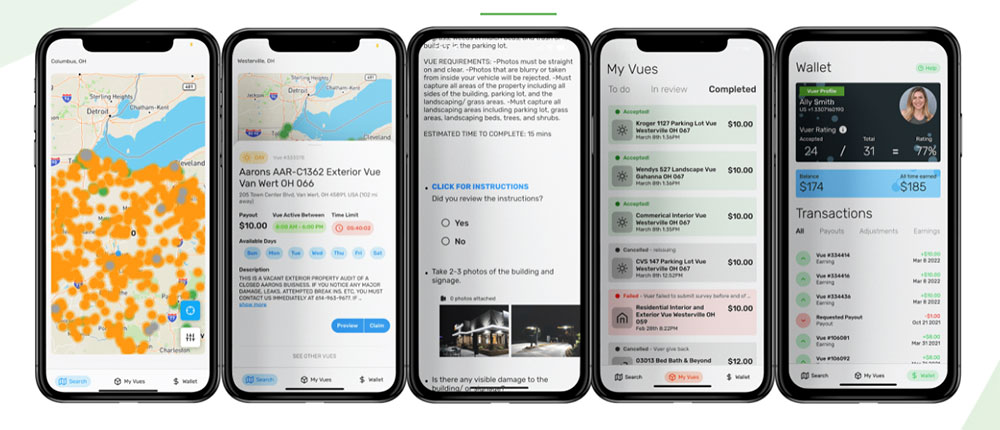
Wonolo works well, until it doesn’t have shifts near you.
The platform built its name on fast, flexible warehouse and logistics work. But its coverage is metro-limited, and the on-demand staffing market has grown well past what one app can cover.
Over 76 million Americans now do some form of gig work, and the platforms competing for that labor have gotten genuinely good. Some pay faster. Some offer W-2 benefits. Some own specific industries like hospitality or light industrial in ways Wonolo simply doesn’t.
This guide covers the best apps like Wonolo available right now, including Instawork, Veryable, Bluecrew, Upshift, Traba, and more. For each one, you’ll find what it does, how it compares, who it’s best for, and what it costs.
Pick the right platform for your situation. Or better yet, use a few of them at once.
Apps Like Wonolo
Wonolo launched in 2014 and built its name on one thing: filling warehouse and light industrial shifts fast. It works well in major metros. Outside those, availability thins out quickly.
The platforms below cover the same core need, on-demand hourly work, but each one handles it differently. Some focus tighter on specific industries. Others offer W-2 status instead of 1099. A few pay faster.
Over 76 million U.S. workers (roughly 36% of the workforce) were doing some form of gig or freelance work as of 2025, according to Statista. The labor marketplace has expanded enough that sticking to one platform no longer makes sense for most workers.
Instawork
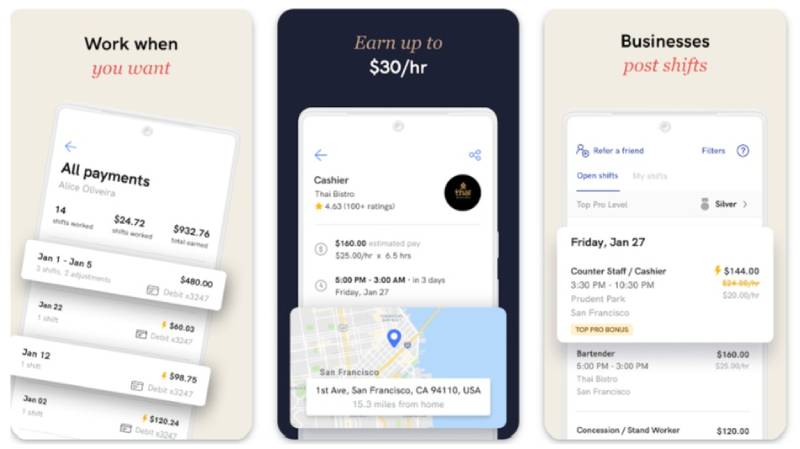
Instawork is an on-demand staffing app that connects businesses with vetted hourly workers in hospitality, warehousing, events, and food service. It covers 60+ U.S. cities and runs a worker quality rating system that keeps no-show rates below 2%.
What Does Instawork Do?
Instawork lets workers browse and claim open shifts across hospitality, warehouse, and event venues through a mobile app on iOS and Android.
How Is Instawork Similar to Wonolo?
Both apps target the same contingent workforce segment: hourly workers who want flexible shift work without long-term commitments. Pay frequency is similar (weekly or within 2 business days). Job categories overlap heavily in warehousing and events.
How Is Instawork Different from Wonolo?
Instawork has a stronger hospitality focus than Wonolo, which leans more industrial. Instawork operates in 60+ cities; Wonolo’s coverage is more limited. Workers on Instawork can earn up to $25/hour on bartending shifts, which tends to run higher than Wonolo’s typical warehouse rates.
Who Is Instawork Best For?
Workers with hospitality or food service experience who want same-day shift access in major metro areas.
Key Features of Instawork
- Worker vetting: Verified work history, background checks, profile ratings
- Fill rate: 90% worker quality rate, under 2% no-show rate
- Pay: Weekly or 2-day direct deposit; daily pay available after qualification
- Coverage: 60+ U.S. cities across hospitality, warehouse, and event sectors
Pricing
- Free plan: Free for workers to sign up and use
- Paid plans: Employers pay a markup per shift hour (rate not publicly listed)
- Free trial: No formal trial; open sign-up for workers
Upshift

Upshift is a flexible staffing platform that connects workers with single-day, multi-day, and temp-to-hire roles across hospitality, events, and warehouse operations. Pay averages $15 to $20 per hour.
What Does Upshift Do?
Upshift lets workers browse and book shifts at local businesses through a mobile app, with no minimum hours, no resume required, and no interviews involved.
How Is Upshift Similar to Wonolo?
Both are gig economy platforms built for hourly workers who want schedule flexibility. Both cover warehouse, hospitality, and event roles. Neither requires a detailed resume or formal interview process to start working.
How Is Upshift Different from Wonolo?
Upshift offers W-2 employment status, which Wonolo does not universally provide. Upshift also includes a temp-to-hire track, so workers can convert to full-time at a business they like. Coverage is currently limited to about 17 U.S. states.
Who Is Upshift Best For?
Workers who want gig flexibility but also want W-2 tax withholding and the possibility of converting to a permanent role.
Key Features of Upshift
- Employment status: W-2 (not 1099 contractor)
- Pay: Weekly; same-day pay available through Earnin after 2 direct deposits
- Job types: Single-day, multi-day, temp-to-hire
- No barriers: No minimum hours, no interviews, no resume needed
Pricing
- Free plan: Free for workers
- Paid plans: Employer pricing not publicly disclosed
- Free trial: No
Shiftsmart
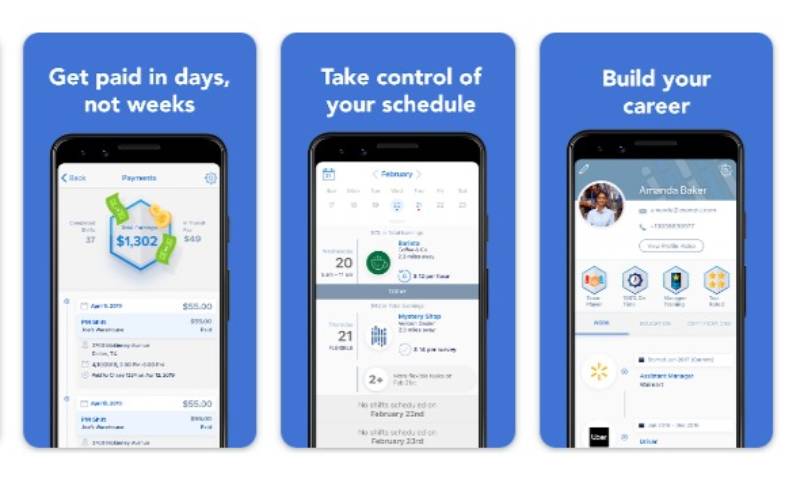
Shiftsmart is a workforce management platform for businesses and a flexible gig app for workers, covering retail, hospitality, customer service, and delivery roles. It handles large-scale enterprise contracts and supports nationwide staffing for major brands.
What Does Shiftsmart Do?
Shiftsmart connects workers with open shifts in their area, lets them build their own schedule, and handles payment processing after each completed gig.
How Is Shiftsmart Similar to Wonolo?
Job types are nearly identical: courier work, store associate roles, retail auditing, and event staffing all appear on both platforms. Both prioritize worker schedule control and fast pay. Both work well for people looking for short-term job apps rather than permanent employment.
How Is Shiftsmart Different from Wonolo?
Shiftsmart includes product testing gigs and survey caller roles that Wonolo does not carry. Shiftsmart also charges a $3 fee for instant cash-outs, while Wonolo does not charge workers platform fees. Shiftsmart’s enterprise focus makes it stronger for large-volume business clients.
Who Is Shiftsmart Best For?
Workers who want a wide variety of hourly job types, including some that are unique to this platform, like paid product testing.
Key Features of Shiftsmart
- Job variety: Retail, hospitality, courier, survey, product testing
- Scheduling: Worker-controlled shift selection
- Pay: Standard payout plus $3 instant cash-out fee option
- Enterprise tools: Workforce automation, scheduling, and real-time performance tracking
Pricing
- Free plan: Free for workers (instant cash-out costs $3)
- Paid plans: Enterprise pricing not public
- Free trial: No
Veryable

Veryable is an on-demand labor marketplace focused entirely on manufacturing, logistics, and warehousing. It lists jobs as “ops” (short for operations) and lets workers bid on their own hourly rate. Founded in Dallas in 2016.
What Does Veryable Do?
Veryable connects factories, distribution centers, and supply chain businesses with short-term industrial workers through a mobile app, using a merit-based rating system to match operators with open ops.
How Is Veryable Similar to Wonolo?
Both platforms target light industrial staffing, specifically warehousing, production, and logistics. Both use mobile apps for shift-based work and offer same-day or next-day pay. Worker profiles are rated, and businesses can select based on performance history.
How Is Veryable Different from Wonolo?
Veryable is the only platform on this list where workers can bid and negotiate their own hourly rate, giving experienced operators more earning control. Coverage focuses on industrial metro areas, not hospitality or retail. Workers also access exclusive partner discounts through Veryable’s affiliate network.
Who Is Veryable Best For?
Experienced warehouse, production, or logistics workers who want to set their own rates and stay within the industrial sector.
Key Features of Veryable
- Rate negotiation: Workers bid their own hourly rate per op
- Pay: Same-day pay available (via Vault Payment Solutions)
- Industry focus: Manufacturing, logistics, supply chain exclusively
- Rating system: Merit-based operator scores improve job access over time
Pricing
- Free plan: Free for workers
- Paid plans: Businesses pay per completed op; no monthly fees
- Free trial: No
Bluecrew
Bluecrew is a W-2 staffing platform that classifies all workers as employees rather than independent contractors, offering health insurance, tax withholding, and overtime pay alongside flexible shift work in warehousing, retail, and events.
What Does Bluecrew Do?
Bluecrew matches pre-screened W-2 employees with open shifts through its mobile app, using an algorithm to pair workers with roles that fit their skills and availability.
How Is Bluecrew Similar to Wonolo?
Both are shift-based staffing platforms covering warehouse, logistics, and light industrial work. Workers control their own schedules. Both use mobile apps to browse and claim shifts, and neither requires extensive interviewing to start.
How Is Bluecrew Different from Wonolo?
The W-2 classification is the biggest difference. Bluecrew workers get health coverage, PTO, and tax withholding. Wonolo treats most workers as 1099 contractors. On the downside, Bluecrew has fewer available shifts than Wonolo in some areas, and hourly rates can run slightly lower because of the employment overhead the company absorbs.
Who Is Bluecrew Best For?
Workers tired of 1099 status who want employee benefits without giving up schedule flexibility.
Key Features of Bluecrew
- Employment status: W-2 with health insurance, PTO, tax withholding
- Pay: Weekly; On-Demand Pay option available (daily, within 30 minutes of timesheet approval)
- Algorithm matching: Skills-based pairing with available shifts
- Industries: Warehouse, manufacturing, retail, events, some admin roles
Pricing
- Free plan: Free for workers (benefits included at no cost to worker)
- Paid plans: Employers pay a per-hour markup; no public rate
- Free trial: No
GigSmart
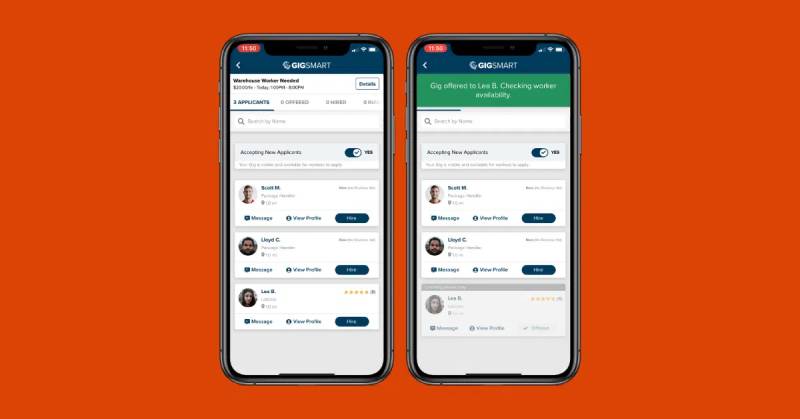
GigSmart is a temp staffing app that operates across all 50 U.S. states and covers a wider range of industries than most Wonolo competitors, including construction, landscaping, transportation, and retail alongside warehouse and logistics.
What Does GigSmart Do?
GigSmart lets businesses post shifts, set their own pay rates, and handpick workers from profiles, or let the platform auto-match based on skills. Workers browse open gigs and get paid, sometimes the same day.
How Is GigSmart Similar to Wonolo?
Both use a mobile app for on-demand shift work. Both support same-day or rapid hiring for businesses facing sudden labor needs. Average pay lands around $17/hour on both platforms for general warehouse roles.
How Is GigSmart Different from Wonolo?
GigSmart charges workers a $1 per work-hour commission fee, which no other platform on this list does. It also covers 3,000+ skill categories and all 50 states, giving it broader reach. The tradeoff: the interface feels cluttered, and shift availability in rural areas can be thin.
Who Is GigSmart Best For?
Workers in non-metro areas or industries like construction and landscaping where most gig staffing apps have no presence.
Key Features of GigSmart
- Coverage: All 50 U.S. states
- Skill categories: 3,000+ across construction, logistics, retail, and more
- Pay: Same-day available; GigSmart Wallet for uncollected funds
- Worker fee: $1/hour commission deducted from earnings
Pricing
- Free plan: Free to sign up; $1/hour fee applies during work
- Paid plans: Employers set their own rates; no contracts or minimums
- Free trial: No
Qwick
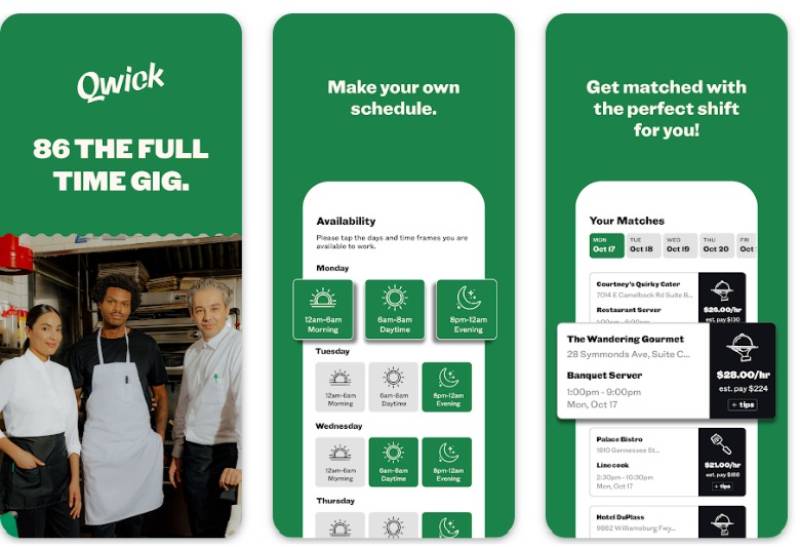
Qwick (formerly known as GigPro before a rebrand following an acquisition) is a hospitality staffing app built exclusively for restaurants, bars, hotels, catering companies, and event venues. It has filled over 890,000 shifts for 10,000+ businesses including Hilton and Eataly.
What Does Qwick Do?
Qwick matches experienced food and beverage professionals with open hospitality shifts and pays workers within 30 minutes of shift completion.
How Is Qwick Similar to Wonolo?
Both platforms allow workers to claim short-term, flexible shifts through a mobile app. Both use profile-based vetting to give businesses confidence in who shows up. Pay is fast on both, and no long-term contracts are required.
How Is Qwick Different from Wonolo?
Qwick requires at least one year of hospitality experience to get approved. Wonolo accepts entry-level workers with no prior experience. Qwick is also hospitality-only, operating in around 30 to 40 U.S. cities (primarily East Coast and Midwest), while Wonolo covers broader industries and geographies.
Who Is Qwick Best For?
Experienced hospitality workers (bartenders, servers, line cooks, banquet staff) who prioritize fast pay and work exclusively in food and beverage.
Key Features of Qwick
- Pay speed: Within 30 minutes of shift completion (fastest on this list)
- Worker pool: 250,000+ vetted hospitality professionals
- Entry requirement: 1+ year of hospitality experience required
- Industry focus: Restaurants, bars, hotels, catering, senior living
Pricing
- Free plan: Free for workers
- Paid plans: Businesses pay per shift; no publicly listed rates
- Free trial: No
Traba

Traba is a newer industrial staffing platform founded in Miami in 2021, focused on connecting warehouses, distribution centers, and event venues with pre-vetted workers. It raised $42M from Founders Fund and General Catalyst and has grown quickly in the light industrial segment.
What Does Traba Do?
Traba connects workers with open shifts at warehouses and distribution centers, using a two-way rating system and no-minimum, pay-per-filled-shift pricing for businesses.
How Is Traba Similar to Wonolo?
Both target the same light industrial and warehouse staffing market. Both use mobile apps, profile-based worker vetting, and shift-based flexible work. Neither requires monthly fees or commitments from employers.
How Is Traba Different from Wonolo?
Traba claims to source only the top 1% of workers, positioning itself as a quality-first platform rather than a volume platform. It also allows direct communication between businesses and their best-performing workers, which Wonolo does not emphasize. Traba’s geographic footprint is still smaller than Wonolo’s.
Who Is Traba Best For?
Businesses in warehousing or distribution that prioritize worker reliability over raw availability and don’t want to pay agency fees or monthly minimums.
Key Features of Traba
- Worker quality: Top 1% of vetted industrial workers
- Pricing: No minimums, no monthly fees; pay only for filled shifts
- Rating system: Two-way (businesses rate workers; workers rate businesses)
- Communication: Direct contact with preferred workers built into the app
Pricing
- Free plan: Free for workers
- Paid plans: Businesses pay per filled shift; no disclosed rate card
- Free trial: No
WorkWhile

WorkWhile is an AI-powered labor platform built for warehousing, production, food production, event services, and last-mile delivery. It emphasizes worker reliability through performance scoring and pays within 24 hours of shift completion.
What Does WorkWhile Do?
WorkWhile connects workers with flexible and full-time shifts through a mobile app, using advanced screening and a next-day pay model, while also accruing sick leave credits for active workers.
How Is WorkWhile Similar to Wonolo?
Both apps target light industrial and warehouse temp work. Both offer next-day pay access and use screening to improve worker reliability. Neither requires contracts or upfront costs for businesses.
How Is WorkWhile Different from Wonolo?
WorkWhile includes a sick leave credit system that Wonolo does not have, which is a real benefit for workers doing frequent shifts. It also uses AI-powered integrations for scheduling. The geographic coverage is smaller than Wonolo, limiting options in some markets.
Who Is WorkWhile Best For?
Workers who do high-volume shift work and want some basic labor protections (sick leave credits) without giving up flexibility.
Key Features of WorkWhile
- Pay: Next-day (within 24 hours of shift completion)
- Sick leave: Credits accrue after completing shifts
- Screening: Advanced vetting plus AI-powered schedule management
- Industries: Warehouse, production, event services, food production, delivery
Pricing
- Free plan: Free for workers
- Paid plans: Transparent per-shift pricing for businesses; no hidden fees
- Free trial: No
ShiftGig

ShiftGig is a workforce technology platform founded in Chicago in 2011 that connects workers with temporary jobs through staffing agency partners, covering retail, events, and hospitality roles.
What Does ShiftGig Do?
ShiftGig acts as a layer between workers and staffing agencies, letting job seekers browse and apply to on-demand shifts via a mobile app, with weekly pay deposited every Friday.
How Is ShiftGig Similar to Wonolo?
Both help workers find short-term, flexible shifts quickly through a mobile app. Pay is fast and consistent on both. Job categories overlap in retail, events, and light industrial work.
How Is ShiftGig Different from Wonolo?
ShiftGig works through staffing agency partners, not directly like Wonolo. This adds a middleman layer that can slow down the process and limit job types. The upside is that ShiftGig-affiliated agencies sometimes offer roles in office and administrative settings that pure gig platforms do not carry.
Who Is ShiftGig Best For?
Workers open to agency-mediated gig work who want access to both blue-collar and occasional white-collar temp roles.
Key Features of ShiftGig
- Model: Agency-partnered (not direct hire)
- Pay: Weekly, deposited every Friday
- Industries: Retail, events, hospitality, some office roles
- Platforms: iOS and Android
Pricing
- Free plan: Free for workers
- Paid plans: Agency-negotiated pricing for businesses
- Free trial: No
Jobble

Jobble is a gig economy job board and on-demand staffing app that connects workers with temporary and part-time roles in delivery, events, hospitality, and customer service, with pay typically ranging from $12 to $20 per hour.
What Does Jobble Do?
Jobble lets workers sign up, browse nearby job listings with clear pay and location details, apply directly through the app, and track work history and earnings over time.
How Is Jobble Similar to Wonolo?
Both are on-demand platforms targeting hourly workers who want quick job access without lengthy hiring processes. Both have overlapping industries and similar pay ranges ($12 to $20/hour). The sign-up and application process on Jobble is described as nearly identical in speed to Wonolo.
How Is Jobble Different from Wonolo?
Jobble also lists full-time positions, not just gig shifts, making it more of a hybrid job board. Wonolo focuses strictly on short-term, shift-based work. Jobble also covers a wider set of industries including customer service and delivery, where Wonolo’s core strength is warehouse and industrial.
Who Is Jobble Best For?
Workers who want both short-term gig options and the ability to find full-time work in one place, without committing to a single-category platform.
Key Features of Jobble
- Job types: Short-term gigs plus full-time positions
- Pay range: $12 to $20/hour for most gig roles
- Industries: Delivery, events, hospitality, customer service
- Platforms: iOS and Android
Pricing
- Free plan: Free for workers; no contracts or upfront fees for businesses
- Paid plans: Business pricing not publicly disclosed
- Free trial: No
Quick Comparison
| App | Best For | Industry Focus | Pay Speed | Worker Status |
| Instawork | Hospitality workers in cities | Hospitality, events, warehouse | Weekly / daily | 1099 |
| Upshift | W-2 seekers, temp-to-hire | Hospitality, events, warehouse | Weekly / same-day | W-2 |
| Shiftsmart | Wide variety of job types | Retail, hospitality, courier | Standard + $3 instant | 1099 |
| Veryable | Industrial workers who negotiate pay | Manufacturing, logistics | Same-day | 1099 |
| Bluecrew | Benefits-focused gig workers | Warehouse, retail, events | Weekly / daily | W-2 |
| GigSmart | Non-metro or construction workers | All 50 states, 3,000+ skills | Same-day | 1099 |
| Qwick | Experienced hospitality pros | Restaurants, hotels, events | 30 min post-shift | 1099 |
| Traba | Quality-first warehouse businesses | Warehouse, distribution, events | Not disclosed | 1099 |
| WorkWhile | High-volume shift workers | Warehouse, production, delivery | Next-day (24 hrs) | 1099 |
| ShiftGig | Agency-open workers, mixed roles | Retail, events, some office | Weekly (Fridays) | 1099 |
| Jobble | Workers wanting gigs + full-time | Delivery, events, hospitality | Not disclosed | 1099 |
What Is Wonolo and What Does It Do?
Wonolo stands for “Work Now Locally.” It launched in 2014 out of San Francisco, originally built to solve a staffing problem for Coca-Cola, and has since grown into one of the more recognized on-demand staffing platforms in the U.S.
The platform connects businesses with pre-vetted, background-checked workers for hourly and daily shifts across warehousing, delivery, merchandising, event staffing, and administrative roles.
Wonolo has raised $194 million in total funding (including a $140M Series D in 2021) and has onboarded over 1 million workers, known internally as “Wonoloers,” according to Crunchbase data.
Clients include Coca-Cola, Papa Johns, Aramark, Peloton, and Uniqlo. The platform targets the contingent workforce market, which is valued at over $140 billion, according to company filings.
Geographic coverage is strongest in major U.S. metro areas. Outside those markets, shift availability drops considerably, which is the main reason workers and employers start looking at Wonolo alternatives.
| App | Best For | Industry Focus | Pay Speed | Worker Status |
| Instawork | Hospitality workers in cities | Hospitality, events, warehouse | Weekly / daily | 1099 |
| Upshift | W-2 seekers, temp-to-hire | Hospitality, events, warehouse | Weekly / same-day | W-2 |
| Shiftsmart | Wide variety of job types | Retail, hospitality, courier | Standard + $3 instant | 1099 |
| Veryable | Industrial workers who negotiate pay | Manufacturing, logistics | Same-day | 1099 |
| Bluecrew | Benefits-focused gig workers | Warehouse, retail, events | Weekly / daily | W-2 |
| GigSmart | Non-metro or construction workers | All 50 states, 3,000+ skills | Same-day | 1099 |
| Qwick | Experienced hospitality pros | Restaurants, hotels, events | 30 min post-shift | 1099 |
| Traba | Quality-first warehouse businesses | Warehouse, distribution, events | Not disclosed | 1099 |
| WorkWhile | High-volume shift workers | Warehouse, production, delivery | Next-day (24 hrs) | 1099 |
| ShiftGig | Agency-open workers, mixed roles | Retail, events, some office | Weekly (Fridays) | 1099 |
| Jobble | Workers wanting gigs + full-time | Delivery, events, hospitality | Not disclosed | 1099 |
The platform uses AI-powered job matching, launched in December 2024, to help businesses write job descriptions and match workers based on skills and experience.
Pay timing is weekly for most roles, with some positions allowing faster access through on-demand pay tools. Workers rate businesses and businesses rate workers, which is a shared performance model similar to how Instawork and Traba operate.
How Do On-Demand Staffing Apps Work?
The labor marketplace model behind Wonolo and every alternative on this list follows the same basic structure. Post a shift, match a worker, complete the job, get paid. The differences show up in the details.
ADP Research found that in 2024, 1 in 4 workers had engaged in some form of gig or contingent work over the course of the year, even though only 1 in 10 were active in a typical month.
How Do These Apps Verify Workers Before Shifts?
Every platform runs background checks as part of onboarding. Beyond that, verification depth varies significantly.
- Wonolo, Instawork, Bluecrew: background check plus profile review before first shift
- Qwick: background check plus mandatory video orientation, minimum 1 year experience required
- Traba: screening focused on top 1% of industrial workers, two-way rating system
- Veryable: merit-based operator rating improves job access over time
Most platforms also use a performance rating system where workers build reputation scores after each shift. Low-rated workers get fewer shift offers. This self-regulating model keeps no-show rates low without continuous manual screening.
Instawork, for instance, reports a no-show rate below 2% and a 90% worker quality rate, both products of its vetting and rating system.
What Is the Difference Between W-2 and 1099 Status on Gig Staffing Apps?
Most on-demand staffing apps classify workers as 1099 independent contractors. Two platforms on this list, Bluecrew and Upshift, are exceptions.
| Classification | Tax handling | Benefits | Platforms |
| W-2 employee | Taxes withheld by employer | Health, PTO, overtime | Bluecrew, Upshift |
| 1099 contractor | Worker pays own taxes | No employer benefits | Wonolo, Instawork, GigSmart, most others |
According to ADP Research data, only 40% of gig workers have access to employer-sponsored health insurance, compared to the majority of traditional W-2 employees.
The 1099 model is faster to set up and cheaper to administer. W-2 platforms absorb payroll taxes and benefits costs, which is why Bluecrew’s hourly rates can sometimes run lower than comparable 1099 platforms, even while offering better worker protections.
Which App Like Wonolo Pays the Fastest?
Pay speed is one of the top reasons workers switch platforms. These six platforms handle payout timing differently, and the gaps matter if you need money today versus next week.
| Platform | Standard Pay | Fastest Option | Worker Fee? |
| Qwick | Weekly | Within 30 min of shift end | No |
| Veryable | Daily | Same-day via Vault account | No |
| WorkWhile | Next-day | Within 24 hours of shift | No |
| GigSmart | Weekly | Same-day (3% instant fee) | $1/hour worked (Insurance fee) |
| Instawork | Weekly | Instant Pay (within 30 min) | No (requires Pro status/matching card) |
| Shiftsmart | Within 2–4 days | Instant Pay (within 30 min) | $2.99 per instant payout |
Qwick is the clear winner on raw speed. 30 minutes post-shift is faster than any other platform on this list. The tradeoff: you need at least one year of hospitality experience to get approved.
GigSmart’s $1 per work-hour fee is worth noting. At 40 hours a week, that’s $40 out of your earnings before taxes. No other major platform charges workers like this, which is something to check before accepting gigs.
Bluecrew’s On-Demand Pay option lets workers access daily earnings within 30 minutes of timesheet approval, without any extra fees. That makes it competitive on speed while still offering W-2 status.
How Do These Staffing Apps Differ by Industry?
Industry focus is probably the most useful way to narrow down which platform to use. 65% of gig workers use multiple platforms to keep income steady, according to workforce research from MBO Partners, which means picking by industry specialty first is the right move.
Which Apps Are Best for Warehouse and Industrial Work?
This is Wonolo’s home turf. But several alternatives match it or beat it in this segment.
Veryable is the most industrial-specific option. Founded in Dallas in 2016, it was built exclusively for manufacturing, logistics, and supply chain roles, and it is the only platform where workers can bid their own hourly rate per job.
Traba focuses on warehouses and distribution centers and claims to connect businesses with the top 1% of vetted industrial workers. It raised $42M from Founders Fund and General Catalyst.
- Wonolo: warehousing, delivery, merchandising, some admin roles
- Veryable: manufacturing, logistics, supply chain (industrial only)
- Traba: warehouses, distribution centers, event venues
- WorkWhile: warehouse, food production, last-mile delivery
- Bluecrew: warehouse, manufacturing, retail, events
ADP Research data shows temp workers skew younger (over 43% under age 30 in 2024), which matches the demographic profile of workers on these short-term industrial platforms.
Which Apps Focus on Hospitality and Food Service?
Qwick dominates hospitality. 890,000+ shifts filled across 10,000+ businesses, including Hilton and Eataly, with 250,000 vetted professionals in the worker pool.
Instawork covers hospitality broadly, operating in 60+ U.S. cities across restaurants, hotels, catering, and event venues, with pay reaching $20 to $25/hour for bartending and serving roles.
The key distinction between the two:
- Qwick requires 1+ year hospitality experience; entry-level workers are not accepted
- Instawork accepts workers across skill levels with no minimum experience requirement
Shiftsmart also covers hospitality and customer service, with the added benefit of retail, courier, and product testing roles that neither Qwick nor Instawork carry.
What Should You Consider Before Choosing a Wonolo Alternative?
Most experienced gig workers run 2 to 3 platforms simultaneously. That is actually the right strategy. No single platform covers every industry, every city, and every pay preference. The goal is to stack them smartly.
According to MBO Partners research, 65% of gig workers who rely on multiple platforms view that diversity as an economic lifeline, not just a backup plan.
Before committing to any platform, check four things:
Geographic availability: GigSmart covers all 50 states. Instawork operates in 60+ cities. Qwick covers 30 to 40 U.S. cities (mostly East Coast and Midwest). Wonolo, Traba, and several others are metro-limited.
Worker status preference: Bluecrew and Upshift are the only W-2 options. Everyone else is 1099. If benefits and tax withholding matter, the choice is straightforward.
Entry requirements: Qwick requires 1+ year of hospitality experience. Wonolo and Upshift both accept entry-level workers. Traba positions itself as quality-first, which means more competitive screening.
Fee structure: Most platforms are free for workers. GigSmart charges $1 per hour worked. Shiftsmart charges $3 per instant cash-out. Instawork, Wonolo, Bluecrew, Qwick, and Veryable charge workers nothing.
| Priority | Best Pick | Why |
| Fastest pay | Qwick | Provides payment as fast as 30 minutes after a shift is completed (Instant Pay). |
| W-2 benefits | Bluecrew | Employs workers as W-2 employees, offering health insurance, PTO, and workers’ comp. |
| Industrial roles | Veryable | Focuses on manufacturing, logistics, and warehousing with a unique “bid” system for shifts. |
| Widest coverage | GigSmart | Operates across all 50 states with diverse roles from construction to customer service. |
| Temp-to-hire track | Upshift | Pre-vets all workers and focuses on long-term placements and permanent hire paths. |
Check app availability in your city before going through onboarding. Background checks and profile approvals can take 24 to 48 hours on most platforms, so sign up before you need the work, not after.
If you want to compare platforms focused on industrial and manufacturing temp work, Veryable and Traba are the two strongest options in that segment. For workers already using flexible W-2 staffing apps, Upshift and Bluecrew are the closest direct comparisons worth exploring.
FAQ on Apps Like Wonolo
What is the closest alternative to Wonolo?
Instawork is the most direct Wonolo competitor. Both connect hourly workers with short-term shifts across warehousing, events, and logistics. Instawork operates in 60+ U.S. cities and has a no-show rate below 2%, making it a reliable on-demand staffing substitute.
Are there any apps like Wonolo that offer W-2 employment?
Yes. Bluecrew and Upshift both classify workers as W-2 employees, not 1099 contractors. That means tax withholding, health insurance, and paid time off. Most other gig staffing platforms, including Wonolo itself, use the 1099 independent contractor model.
Which app pays the fastest after a shift?
Qwick pays within 30 minutes of shift completion. Veryable offers same-day pay through Vault Payment Solutions. WorkWhile deposits within 24 hours. Qwick is the fastest on this list, though it requires at least one year of hospitality experience to join.
Is Wonolo available in all U.S. states?
No. Wonolo’s coverage is strongest in major metro areas. If you’re outside those markets, GigSmart is the better option. It covers all 50 states with 3,000+ skill categories, though it charges workers a $1 per hour platform fee.
What industries do apps like Wonolo cover?
The most common categories are warehouse and light industrial, hospitality and food service, retail, events, and delivery. Veryable focuses exclusively on manufacturing and logistics. Qwick covers hospitality only. GigSmart and Instawork span the broadest range of industries.
Can I use multiple gig staffing apps at the same time?
Yes, and most experienced workers do. Research from MBO Partners shows 65% of gig workers use multiple platforms to keep income steady. Just avoid booking overlapping shifts, as it damages your ratings on both apps and limits future job access.
How long does it take to get approved on these apps?
Most platforms approve workers within 24 to 48 hours. Background checks are the main bottleneck. Upshift and Indeed Flex sometimes allow same-day starts. Qwick takes longer due to its video orientation requirement and experience verification process.
Do apps like Wonolo charge workers any fees?
Most are free for workers. GigSmart charges $1 per hour worked. Shiftsmart charges $3 for instant cash-outs. Instawork, Bluecrew, Veryable, Wonolo, Qwick, and Traba charge workers nothing to sign up or use the platform.
Which app is best for warehouse and industrial work?
Veryable is the top pick for light industrial staffing. It was built specifically for manufacturing, logistics, and supply chain roles. Workers can also bid their own hourly rate per job, which no other platform on this list offers.
What should I look for when choosing a Wonolo alternative?
Check four things: geographic coverage in your city, worker classification (W-2 vs. 1099), industry focus, and pay speed. The contingent workforce market has enough variety that the right platform depends almost entirely on your location and job type.
Conclusion
This conclusion is for an article presenting apps like Wonolo, and the takeaway is simple: the temporary staffing platform you use should match where you work, not the other way around.
Bluecrew and Upshift are the right call if W-2 status matters. Veryable wins for manufacturing and logistics. Qwick is unmatched on pay speed for hospitality professionals.
The labor marketplace has enough quality options now that settling for limited shift availability in your area makes no sense.
Sign up for two or three platforms. Build your ratings early. Let the shift-based work come to you from multiple directions.
Whether you’re chasing same-day pay, W-2 benefits, or access to light industrial gigs, the right platform is already out there.

- How Software Teams Write SOPs for Releases and Deployments - October 22, 2026
- Notepad++ Android Options: Apps That Come Close - October 21, 2026
- Data Management Services: A Practical Guide for Growing Companies - October 21, 2026