

Shiftsmart is useful, but it does not work for everyone.
Coverage is limited, job availability varies by city, and the 1099 contractor model means no benefits and no tax withholding. If you have hit those walls, you are not alone.
The on-demand staffing space has expanded fast. There are now platforms built specifically for warehouse work, hospitality, light industrial roles, and same-day pay, each with a different approach to flexible shift work and worker classification.
This guide covers the best apps like Shiftsmart available right now. You will find out which platforms pay fastest, which ones offer W-2 employment, and which work best depending on your industry and location.
Apps Like Shiftsmart
The on-demand staffing space has grown fast. Shiftsmart is solid for flexible shift work, but it’s not available everywhere, and job availability can be thin in smaller markets.
These 10 platforms cover similar ground, some better in specific industries, others with faster pay or broader coverage.
| App | Best For | Worker Status | Pay Speed |
| Instawork | Hospitality, warehouse | 1099 | Daily (tiered) |
| Wonolo | Warehouse, logistics | 1099 / some W-2 | Weekly |
| Upshift | Hospitality, events | W-2 | Weekly |
| Indeed Flex | Multi-industry | W-2 | Weekly |
| Bluecrew | Industrial, warehouse | W-2 | Weekly / on-demand |
| GigSmart | All industries (50 states) | 1099 | Same day |
| Veryable | Manufacturing, logistics | 1099 | Daily |
| Qwick | Food and beverage only | 1099 | 30 min post-shift |
| Traba | Light industrial, warehouse | 1099 | Instant (eligible) |
| WorkWhile | Warehouse, delivery, events | W-2 | Next-day |
Instawork
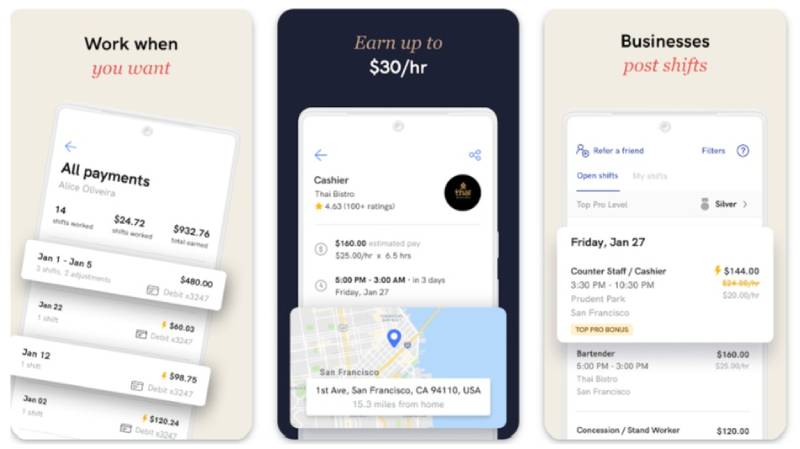
Instawork is a flexible staffing platform that connects hourly workers with local businesses for short-term shifts. It covers hospitality, warehouse, food service, and retail, and operates in 60+ U.S. cities. Available on iOS and Android.
What Does Instawork Do?
Instawork lets workers browse and accept open shifts posted by nearby businesses, with payments processed after each shift is completed.
How Is Instawork Similar to Shiftsmart?
Both are on-demand staffing apps for hourly workers. Same shift-based model, same core industries (hospitality, retail, warehouse), both free to sign up, and both use in-app performance ratings.
How Is Instawork Different from Shiftsmart?
- Instawork verifies workers across 30+ data points before approval
- Larger worker pool (5 million+ professionals vs. Shiftsmart’s smaller network)
- Instawork rewards consistency with tiered access to better shifts
Who Is Instawork Best For?
Workers in hospitality or warehouse sectors in major metros who want consistent shift volume and are willing to go through a stricter vetting process.
Key Features of Instawork
- Pre-vetting: 30+ data points checked before a worker is approved
- Coverage: 60+ cities across the U.S.
- No-show rate: Under 2%, one of the lowest in the gig economy staffing space
- Pay: Daily pay available once performance thresholds are hit
Pricing
- Free plan: Yes, free for workers
- Paid plans: No fees for workers
- Free trial: N/A
Wonolo
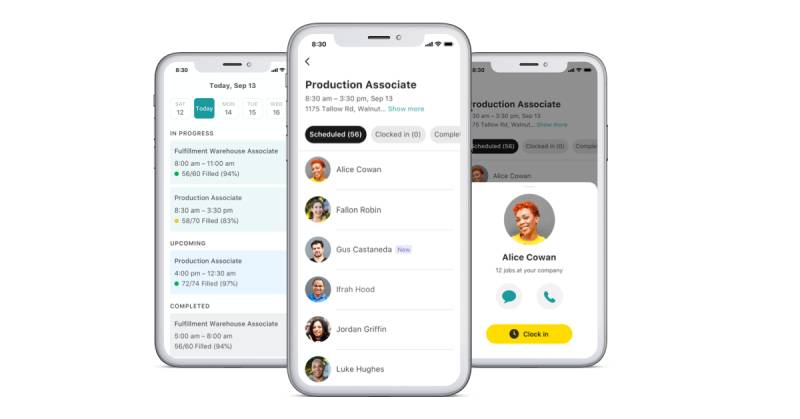
Wonolo (short for “Work Now Locally”) is a gig economy staffing app launched in 2014. It focuses on warehouse, logistics, and light industrial roles. It has filled over 3 million jobs through its platform and operates in select U.S. cities.
What Does Wonolo Do?
Wonolo matches frontline workers with temporary and temp-to-hire positions. Workers set preferences for location, shift length, and employer rating, then receive a daily list of matched gigs.
How Is Wonolo Similar to Shiftsmart?
Same on-demand shift pickup model. Both target blue-collar gig work, both are free for workers, and both use employer ratings to build worker reputation over time.
How Is Wonolo Different from Shiftsmart?
- Wonolo skews heavier toward warehouse and logistics vs. Shiftsmart’s broader mix
- Wonolo has a pre-screened pool of 300,000+ workers available for businesses
- Some Wonolo roles come with W-2 status, which Shiftsmart doesn’t offer consistently
Who Is Wonolo Best For?
Entry-level workers who want warehouse or distribution shifts without needing prior experience, in markets where Wonolo has coverage.
Key Features of Wonolo
- Job types: Warehouse, logistics, merchandising, events, admin
- Shift fill time: Businesses can fill shifts within 12 hours of posting
- Worker pool: 300,000+ pre-screened workers
- Pay: Weekly, with some W-2 positions available
Pricing
- Free plan: Yes, free for workers
- Paid plans: No worker fees
- Free trial: N/A
Upshift

Upshift is a W-2 staffing platform for hospitality, food service, events, and warehouse work. It’s one of the few gig-style apps that classifies workers as employees from day one, handling taxes and withholding automatically. Available on iOS and Android.
What Does Upshift Do?
Upshift lets workers browse and accept hourly shifts in select U.S. cities while receiving full W-2 employee status, including tax withholding and legal protections.
How Is Upshift Similar to Shiftsmart?
Both apps offer flexible shift scheduling, real-time shift pickup, and performance-based ratings. Industry focus is similar: hospitality, events, and warehouse roles.
How Is Upshift Different from Shiftsmart?
W-2 vs. 1099 is the main split. Upshift classifies workers as employees; Shiftsmart uses independent contractor arrangements. Upshift also allows same-day starts in some markets.
Who Is Upshift Best For?
Gig workers who want flexible scheduling without giving up employee benefits and tax withholding, specifically in hospitality and warehouse sectors.
Key Features of Upshift
- Worker status: W-2 employee, not 1099 contractor
- Industries: Hospitality, events, warehouse, food service
- Rehire system: Businesses can save and re-request preferred workers
- Pay: Weekly; some markets allow same-day starts
Pricing
- Free plan: Yes, free for workers
- Paid plans: No worker fees
- Free trial: N/A
Indeed Flex
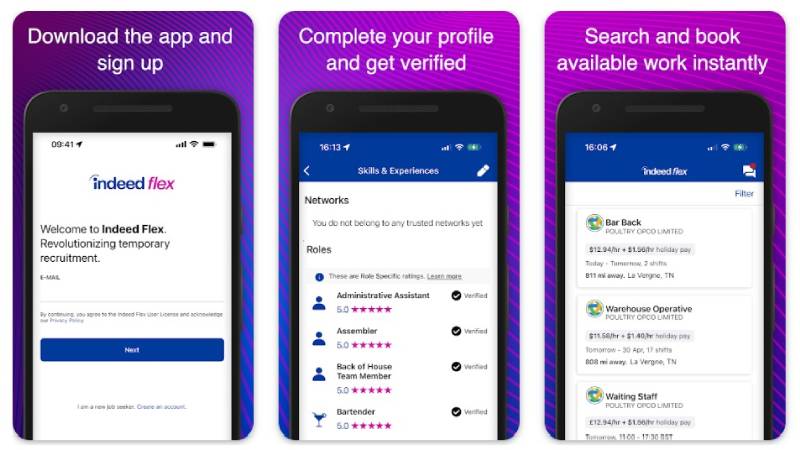
Indeed Flex is an AI-powered contingent workforce platform backed by Indeed, one of the largest job search engines globally. It covers warehousing, logistics, manufacturing, and hospitality, and classifies workers as W-2 employees. Available on iOS and Android.
What Does Indeed Flex Do?
Indeed Flex lets workers find, schedule, and manage temporary shifts through a single app, with time tracking, attendance monitoring, and compliance tools built in.
How Is Indeed Flex Similar to Shiftsmart?
Both target the same temporary, shift-based workforce. Same free-to-use model for workers, same flexible scheduling approach, and same broad industry coverage.
How Is Indeed Flex Different from Shiftsmart?
- W-2 employment status with tax withholding built in
- Backed by Indeed’s global infrastructure and employer network
- AI-powered matching for shift assignments vs. manual browsing
Who Is Indeed Flex Best For?
Workers who want temp shift work with employee-level protections and access to Indeed’s large employer network across multiple industries.
Key Features of Indeed Flex
- Worker status: W-2 employee
- Platform: AI-powered shift matching
- Industries: Warehouse, logistics, manufacturing, hospitality
- Pay: Weekly via direct deposit
Pricing
- Free plan: Yes, free for workers
- Paid plans: No worker fees
- Free trial: N/A
Bluecrew
Bluecrew positions itself as a “workforce-as-a-service” platform. Every worker is a W-2 employee, which means health insurance, overtime protections, and paid sick time come with the territory. The average hourly rate reported by Bluecrew workers is $17.81. Available in 100 U.S. markets.
What Does Bluecrew Do?
Bluecrew matches W-2 workers with light industrial, warehouse, administrative, and general labor shifts. Workers get matched via an algorithm based on skills and availability.
How Is Bluecrew Similar to Shiftsmart?
Both connect workers with local, flexible shifts in warehouse and industrial settings. Same mobile-first experience, same performance rating system, both free to use for workers.
How Is Bluecrew Different from Shiftsmart?
Bluecrew’s W-2 model is the clear difference. You get health insurance, tax withholding, and retirement savings options. Shiftsmart workers are independent contractors and handle their own taxes. Bluecrew also includes an on-demand pay feature, so you can access earnings before payday.
Who Is Bluecrew Best For?
Workers who are tired of the 1099 model and want flexible scheduling without giving up employee benefits, specifically in industrial and warehouse roles.
Key Features of Bluecrew
- Worker status: W-2 with health insurance and paid sick time
- On-demand pay: Access weekly earnings early
- Coverage: 100 U.S. markets
- Average pay: $17.81/hour reported
Pricing
- Free plan: Yes, free for workers
- Paid plans: No worker fees
- Free trial: N/A
GigSmart
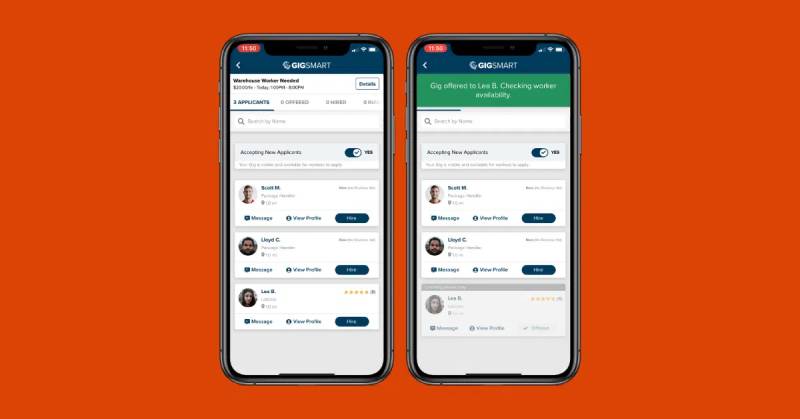
GigSmart launched in 2018 and now operates across all 50 U.S. states, making it one of the widest-coverage platforms in the on-demand staffing space. It spans construction, retail, childcare, driving, manufacturing, and more.
What Does GigSmart Do?
GigSmart connects workers with short-term and long-term gigs across a wide range of industries. Workers create a profile with 3,000+ available skill tags, then get matched with relevant local gigs.
How Is GigSmart Similar to Shiftsmart?
- Same on-demand shift work model, same mobile-first approach
- Both cover similar industries: retail, warehouse, hospitality, logistics
- Both support same-day gig start for eligible workers
How Is GigSmart Different from Shiftsmart?
GigSmart charges workers a $1 per work hour commission, which adds up fast. Most competing platforms are completely free for workers. The upside is nationwide coverage and broader industry options.
Who Is GigSmart Best For?
Workers in smaller markets or rural areas where platforms like Instawork or Wonolo have no presence, or those who need variety across multiple industries.
Key Features of GigSmart
- Coverage: All 50 U.S. states
- Skills database: 3,000+ skill categories for matching
- Pay: Same-day payment available
- Fee: $1/hour deducted from worker earnings
Pricing
- Free plan: No (charges $1/hour commission)
- Paid plans: $1 per hour worked
- Free trial: N/A
Veryable
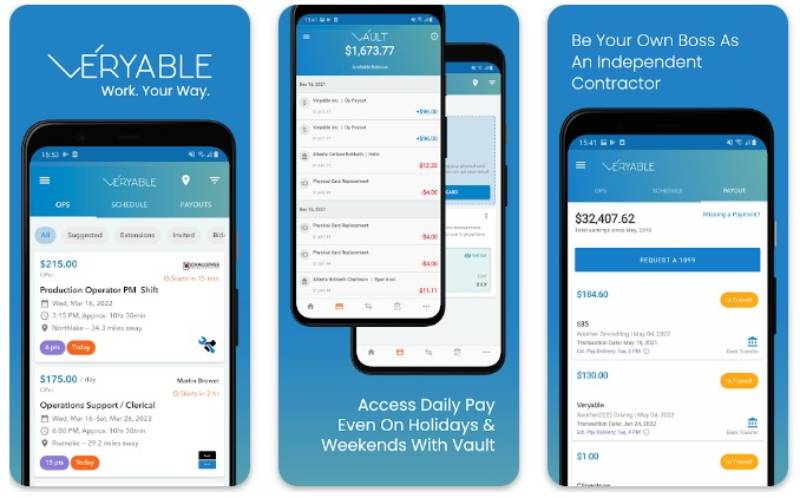
Veryable is an on-demand labor marketplace built strictly for manufacturing, warehouse, and logistics work. It calls its job listings “ops” (short for operations). Workers bid on available ops through the app and get paid within 24 hours of completion.
What Does Veryable Do?
Veryable lets manufacturing and warehouse businesses post ops (shifts), and workers bid on them directly, setting their own availability. Daily pay after shift completion is standard.
How Is Veryable Similar to Shiftsmart?
Same flexible, app-based shift pickup model. Both are free to sign up, both use performance ratings, and both connect workers with local businesses for short-term labor needs.
How Is Veryable Different from Shiftsmart?
- Veryable is industrial-only. No hospitality, no retail, no customer service
- Workers bid on ops rather than simply accepting posted shifts
- Skilled roles can pay up to $40/hour, higher than most Shiftsmart gigs
Who Is Veryable Best For?
Workers with manufacturing, logistics, or warehouse experience who want daily pay and are in a market where Veryable operates.
Key Features of Veryable
- Industry focus: Manufacturing, warehousing, logistics only
- Bidding model: Workers bid on ops, not just accept shifts
- Pay: Daily, within 24 hours of completing a shift
- Earning potential: Up to $40+/hour for skilled roles
Pricing
- Free plan: Yes, free for workers
- Paid plans: No worker fees
- Free trial: N/A
Qwick

Qwick is a hospitality-only staffing platform. It requires at least one year of food and beverage experience to get approved. Over 250,000 vetted professionals use it, and it has filled more than 890,000 shifts for clients including Hilton and Eataly. Founded in 2017.
What Does Qwick Do?
Qwick matches experienced food and beverage workers (servers, bartenders, line cooks, dishwashers) with shift-based work at restaurants, hotels, event venues, and catering companies.
How Is Qwick Similar to Shiftsmart?
Both offer a shift-based gig work model with in-app booking, ratings, and flexible scheduling. Both are free for workers and support mobile-first job management.
How Is Qwick Different from Shiftsmart?
Hospitality only, experience required. Qwick is not for beginners. You need a year of relevant experience just to create a profile. In return, pay is faster: workers get paid within 30 minutes of completing a shift, which is faster than almost any other platform on this list.
Who Is Qwick Best For?
Experienced hospitality professionals who want fast payment and steady shift volume in the food and beverage industry.
Key Features of Qwick
- Industry: Food and beverage only
- Minimum experience: 1 year required for approval
- Pay speed: Within 30 minutes of shift completion
- Scale: 250,000+ vetted professionals, 10,000+ business clients
Pricing
- Free plan: Yes, free for workers
- Paid plans: No worker fees
- Free trial: N/A
Traba

Traba focuses on light industrial staffing: warehousing, manufacturing, food production, and event operations. It vets workers across 150+ attributes before approval and offers instant payment for eligible shifts. No monthly fees for businesses.
What Does Traba Do?
Traba connects workers with open shifts at warehouses, distribution centers, and event venues. Workers browse shifts by location, role type, and hours, then manage their entire history (ratings, timesheets, certifications) in-app.
How Is Traba Similar to Shiftsmart?
Same flexible shift pickup model, same performance-based rating system, and both cover industrial and warehouse roles. Both are mobile-first platforms with no upfront signup cost.
How Is Traba Different from Shiftsmart?
- Traba vets workers across 150+ attributes vs. Shiftsmart’s lighter screening
- Instant pay available for highly-rated workers (Shiftsmart charges $3 for instant cash-out)
- 85%+ worker consistency rate, which businesses use as a reliability signal
Who Is Traba Best For?
Workers with industrial or warehouse experience who want instant pay eligibility and are in a Traba-supported metro area.
Key Features of Traba
- Vetting: 150+ attributes checked per worker profile
- Pay: Instant payment for eligible (high-rated) workers
- Job types: Warehouse, food production, event ops, manufacturing
- Consistency rate: 85%+ worker return rate reported
Pricing
- Free plan: Yes, free for workers
- Paid plans: No worker fees
- Free trial: N/A
WorkWhile

WorkWhile is a W-2 gig platform covering warehouse, light industrial, last-mile delivery, food production, event services, and hospitality. Workers get next-day pay and can earn sick leave credits over time. Available on iOS and Android.
What Does WorkWhile Do?
WorkWhile connects businesses with pre-vetted W-2 workers for flexible shifts. Workers post their availability, and the platform matches them with nearby openings based on skills and location.
How Is WorkWhile Similar to Shiftsmart?
Both are contingent workforce platforms targeting the same industries: warehouse, logistics, and hospitality. Same shift-based model, same mobile-first design, both free for workers to join.
How Is WorkWhile Different from Shiftsmart?
W-2 status is the main difference. WorkWhile handles taxes, offers sick leave credits, and provides worker-first support resources. Shiftsmart operates on a 1099 contractor model with no built-in benefits.
Who Is WorkWhile Best For?
Workers who want W-2 employment protections across multiple industries, with next-day pay and the option to build toward full-time roles over time.
Key Features of WorkWhile
- Worker status: W-2 employee with sick leave credits
- Industries: Warehouse, delivery, food production, events, hospitality
- Pay: Next-day via direct deposit
- Path to full-time: Workers can convert to permanent roles
Pricing
- Free plan: Yes, free for workers
- Paid plans: No worker fees; no upfront business costs
- Free trial: N/A
What Is Shiftsmart?
Shiftsmart is a workforce management platform founded in 2015 that connects businesses with flexible, shift-based workers across retail, logistics, hospitality, customer service, and contact center roles.
It operates across 50+ countries and has built a community of over 3 million workers, according to Business Wire. Clients include Circle K, Airbnb, Humana, FEMA, and the Small Business Administration.
Workers sign up, complete profile verification, and browse available shifts through the mobile app. Pay is processed within 24 hours of shift completion via direct deposit, with an instant cash-out option available for a $3 fee.
Shiftsmart workers are classified as independent contractors (1099), not W-2 employees. That means no tax withholding, no employer-paid benefits, and full self-employment tax responsibility.
| Feature | Details |
| Founded | 2015, Dallas, TX |
| Worker pool | 3 million+ |
| Coverage | 50+ countries, select U.S. cities |
| Worker status | 1099 independent contractor |
| Pay speed | Within 24 hours; $3 fee for instant |
| Industries | Retail, logistics, hospitality, contact centers |
One real-world example: when the SBA needed emergency staffing during the Paycheck Protection Program rollout, Shiftsmart stood up a fully operational contact center in under 36 hours, onboarding 2,000 agents in the first 48 hours of launch.
That kind of rapid deployment is what sets Shiftsmart apart from generic job boards. It’s closer to an enterprise staffing platform than a consumer gig app.
How Do Apps Like Shiftsmart Work?
On-demand staffing platforms connect workers with local businesses through a mobile app. The model is the same across most platforms: create a profile, get vetted, browse shifts, accept what fits, get paid.
The gig economy generated $556.7 billion in market size in 2024, according to the World Economic Forum, and is projected to more than triple to $1.85 trillion by 2032. That scale explains why so many competing platforms now exist.
How the sign-up process works
Most platforms follow the same basic onboarding flow, though depth of vetting varies significantly.
- Download the app and create a worker profile
- Submit identity verification documents
- Pass a background check (typically 24-48 hours)
- Complete any required skills assessments or orientations
- Browse and accept available shifts in your area
Instawork verifies workers across 30+ data points before approval. Qwick requires a video orientation with an onboarding specialist. Traba screens across 150+ attributes. GigSmart lets you start browsing almost immediately after sign-up.
How payment models differ across platforms
Pay speed is one of the sharpest differences between on-demand staffing apps. Workers in the gig economy increasingly expect faster access to earnings, and platforms are responding.
Same-day or instant: Qwick (within 30 minutes), Veryable (within 24 hours), GigSmart (same day), Traba (instant for high-rated workers).
Weekly direct deposit: Wonolo, Upshift, Indeed Flex, WorkWhile (next-day).
On-demand pay features: Bluecrew and Instawork allow early access to earnings once performance thresholds are met.
ADP Research found that independent contractor employment grew 50% between 2019 and 2024, with more than 43% of temp workers now under age 30. Faster pay is one of the primary reasons younger workers choose these platforms over traditional part-time jobs.
How worker classification affects you
This is the one workers overlook most often, and it matters more than most other platform differences.
1099 contractor: You pay the full 15.3% self-employment tax covering Social Security and Medicare. No withholding. No employer-provided benefits. Set aside 25-30% of gross income for taxes, per IRS guidance.
W-2 employee: Employer withholds taxes automatically. You may access health insurance, paid sick leave, overtime protections, and workers’ compensation.
Bureau of Labor Statistics data shows benefits cost employers an average of $14.68 per hour per W-2 employee in 2024, nearly a third of total compensation costs. That’s why most gig platforms use 1099 classification. Bluecrew, Upshift, Indeed Flex, and WorkWhile are the exceptions.
What Makes a Good Alternative to Shiftsmart?
Not all alternatives are built the same. Choosing the wrong platform means thin shift availability, slower pay, or a tax situation you weren’t expecting.
Over 70 million Americans now participate in freelance or gig work, representing roughly 36% of the total U.S. workforce, according to industry research compiled by The Interview Guys. The platform you pick shapes your earnings ceiling more than the hours you put in.
Industry focus
Some platforms go deep in one vertical. Others cover everything. Neither is better, but the wrong choice means scrolling through shifts you can’t take.
- Hospitality only: Qwick (1+ year experience required)
- Industrial only: Veryable, Traba
- Multi-industry: Instawork, GigSmart, Wonolo, Bluecrew
- Broad + national: GigSmart (all 50 states, 3,000+ skill categories)
Shiftsmart itself covers retail, logistics, hospitality, and contact center work. If your skills don’t fit those categories, you’ll find better shift volume elsewhere.
Geographic coverage vs. shift volume
Coverage and availability are not the same thing. A platform can technically operate in your city but have sparse shift postings.
| Platform | Coverage | Strength |
| GigSmart | All 50 states | Widest national reach |
| Instawork | 60+ U.S. cities | High shift volume in metros |
| Bluecrew | 100 U.S. markets | W-2 with wide coverage |
| Wonolo | Select U.S. cities | Strong warehouse focus |
| Qwick | Select metro areas | Food and beverage depth |
Workers in rural markets or smaller cities should look at GigSmart first. It’s the only platform in this group with confirmed coverage across every U.S. state. The trade-off is the $1 per hour platform fee deducted from earnings.
Platform fees workers often miss
Most on-demand staffing apps are free for workers. A few are not.
GigSmart charges $1 per work hour. At 40 hours a week, that’s $160/month out of pocket. Shiftsmart charges $3 for instant cash-outs. Every other platform on this list, including Instawork, Wonolo, Bluecrew, Veryable, Traba, and WorkWhile, has no worker fees at all.
Which Apps Like Shiftsmart Pay the Fastest?
Pay speed has become a real competitive differentiator. Gig workers increasingly expect same-day or instant access to their earnings, and platforms that can’t deliver are losing workers to those that can.
Staffing Industry Analysts estimates the gig economy generated $3.8 trillion in global revenue in 2022. The platforms capturing worker loyalty are doing it with faster payouts, not just shift variety.
| Platform | Pay Speed | Notes |
| Qwick | 30 minutes post-shift | Generally the fastest; requires a “payable” status after shift verification. |
| GigSmart | Same day | Rapid Direct Pay available for a small fee (typically around $1/hour). |
| Veryable | Next day | Pay is processed within 24 hours into a “Vault” account (Industrial/Logistics focus). |
| Traba | Instant (eligible workers) | “Quick Pay” available within 30 minutes for workers who maintain a high rating. |
| WorkWhile | Next day | Reliable next-day pay; unique for offering W-2 protections on most shifts. |
| Instawork | Daily (tiered access) | “Instapay” available for Top Pro tier; others receive weekly pay. |
| Shiftsmart | Within 24 hours | Standard pay is 2–3 days, but “Instant Pay” (under 30 min) is available for a $1.99 fee. |
Qwick’s 30-minute post-shift payment is the fastest available. The catch: you need at least one year of food and beverage experience to get approved.
Traba offers instant pay for workers who maintain high ratings and consistent attendance. New workers start on standard payment schedules until they build a track record on the platform.
Instawork’s daily pay requires hitting a performance threshold first. Workers who show up consistently and receive good ratings unlock faster payment tiers over time. It’s a system that rewards reliability rather than just availability.
Which Apps Like Shiftsmart Offer W-2 Employment?
Four platforms in this group classify workers as W-2 employees: Bluecrew, Indeed Flex, Upshift, and WorkWhile.
That’s a short list. Most on-demand staffing apps default to 1099 contractor status because it reduces platform liability and lowers per-worker cost. But for workers who want benefits and simplified taxes, these four matter.
What W-2 status actually includes
The practical difference goes beyond tax forms.
- Bluecrew: Health insurance, overtime protections, paid sick time, on-demand pay, average $17.81/hour
- Upshift: Tax withholding, legal employee protections, same-day starts in select markets
- Indeed Flex: Tax withholding, AI-powered shift matching, backed by Indeed’s employer network
- WorkWhile: Sick leave credits, next-day pay, option to convert to full-time roles over time
For 1099 workers by contrast, self-employment tax covers both employer and employee portions of Social Security and Medicare at a combined 15.3%, per IRS guidelines. That’s a real cost difference most gig workers underestimate until their first tax filing.
When W-2 status is worth it on gig platforms
W-2 gig platforms are not for everyone. The hourly rates sometimes run slightly lower because the platform absorbs employment overhead.
Bluecrew’s average rate of $17.81/hour is competitive, and health insurance access at that income level has real financial value. Workers doing 30+ hours weekly on a 1099 platform often end up paying more out of pocket once taxes and uninsured medical costs are factored in.
The SBA estimates hiring a W-2 employee costs approximately 1.4x their base salary once you include taxes, benefits, and overhead. On W-2 gig platforms, that cost is absorbed by the platform, not the worker. That’s the underlying trade-off: slightly lower visible wage, significantly lower total financial exposure.
When Is Shiftsmart Still the Right Choice?
Shiftsmart makes sense in specific situations. It’s not the fastest payer or the widest in coverage, but it does things that most competitors don’t.
The platform operates across 50+ countries, which is unusually broad for an on-demand staffing app. For workers or businesses with cross-border needs, most alternatives simply don’t reach that far.
Where Shiftsmart performs well
Shiftsmart’s enterprise-grade infrastructure separates it from consumer gig apps.
Contact centers: Shiftsmart built a fully functioning SBA call center in under 36 hours during the PPP rollout, handling 10,000+ hours of agent time. No other platform on this list has a comparable contact center product.
Multi-industry variety: Workers can shift between retail, logistics, and customer service without switching platforms. Specialists (Qwick, Veryable, Traba) require you to stay in one lane.
Structured feel: The platform uses GPS-verified attendance, performance dashboards, and automated SMS dispatch. It behaves more like workforce management software than a casual gig app.
Where Shiftsmart falls short
Coverage is the consistent pain point.
- Not available in all U.S. cities
- 1099 contractor model, no employee benefits
- $3 fee for instant cash-out (most competitors charge nothing)
- Job availability can be inconsistent outside major markets
Workers in hospitality who need same-day pay are better served by Qwick. Those doing warehouse and logistics work who want W-2 status should look at Bluecrew or WorkWhile. And anyone outside a major metro who needs nationwide coverage should start with GigSmart or check out alternatives to Wonolo for broader options in the warehouse and logistics space.
Shiftsmart works best as a primary platform for workers in supported cities doing varied work, and as an enterprise staffing solution for businesses that need rapid, scalable deployment across multiple industries.
FAQ on Apps Like Shiftsmart
What is the best alternative to Shiftsmart?
Instawork is the closest match for most workers. It covers hospitality, warehouse, and retail across 60+ U.S. cities, uses a similar shift pickup model, and has no worker fees. Pay is faster once you hit performance tiers.
Are apps like Shiftsmart free to use?
Most are free for workers. GigSmart is the exception, charging $1 per hour worked. Shiftsmart itself charges a $3 fee for instant cash-outs. Platforms like Instawork, Wonolo, Bluecrew, and Veryable have no worker fees.
Which on-demand staffing apps offer W-2 employment?
Bluecrew, Upshift, Indeed Flex, and WorkWhile all classify workers as W-2 employees. That means automatic tax withholding, overtime protections, and in some cases health insurance. Most other gig shift platforms use 1099 contractor arrangements.
Which app pays the fastest after a shift?
Qwick pays within 30 minutes of shift completion, the fastest in the on-demand staffing space. Veryable and GigSmart pay within 24 hours. Traba offers instant pay for highly rated workers. Wonolo and Upshift pay weekly.
Do these apps work outside major cities?
GigSmart operates across all 50 U.S. states, making it the best option for workers outside major metros. Instawork covers 60+ cities. Platforms like Qwick, Veryable, and Wonolo are limited to select urban markets.
What industries do Shiftsmart alternatives cover?
Coverage varies by platform. Instawork and Wonolo cover hospitality, warehouse, and retail. Veryable and Traba focus on manufacturing and logistics only. Qwick covers food and beverage exclusively. GigSmart spans the widest range, including construction and childcare.
How long does it take to start working on these apps?
Most platforms approve workers within 24 to 48 hours after sign-up, with background checks as the usual delay. Indeed Flex and Upshift sometimes allow same-day starts. Qwick takes longer due to its video orientation and hospitality experience requirements.
Can I use multiple gig staffing apps at the same time?
Yes. Most experienced gig workers run two or three platforms simultaneously to keep their schedule full. There are no exclusivity requirements. Managing overlapping shifts is your responsibility, so check availability carefully before accepting on multiple apps.
Which app is best for warehouse and logistics work?
Veryable is the strongest option for manufacturing and warehouse roles, with daily pay and skilled positions paying up to $40/hour. Wonolo and Traba are solid alternatives. Bluecrew adds W-2 status if employment benefits matter to you.
Is Shiftsmart available nationwide?
No. Shiftsmart operates in select U.S. cities, not nationwide. It does cover 50+ countries globally, which is broader than most competitors internationally. For full U.S. coverage, GigSmart is the better option for workers outside supported Shiftsmart markets.
Conclusion
This article presenting apps like Shiftsmart covered the platforms most worth your time across pay speed, worker classification, industry focus, and geographic coverage.
No single platform wins on every front. Qwick leads on payment speed. Bluecrew and WorkWhile stand out for W-2 employment with real benefits. GigSmart covers the most ground nationally.
For warehouse and logistics work, Veryable and Traba are the strongest picks. For hospitality and event staffing, Instawork and Upshift cover the most shifts in major metros.
Most experienced gig workers run two or three on-demand staffing apps at once. Test a few, see which ones have real shift availability in your area, and build from there.

- Build or Buy an AI Chatbot for E-commerce: The Costs Nobody Budgets For - October 24, 2026
- How to Run a React App in VS Code Step by Step - October 23, 2026
- Transactional or marketing email: which messages your app should send itself - October 23, 2026


