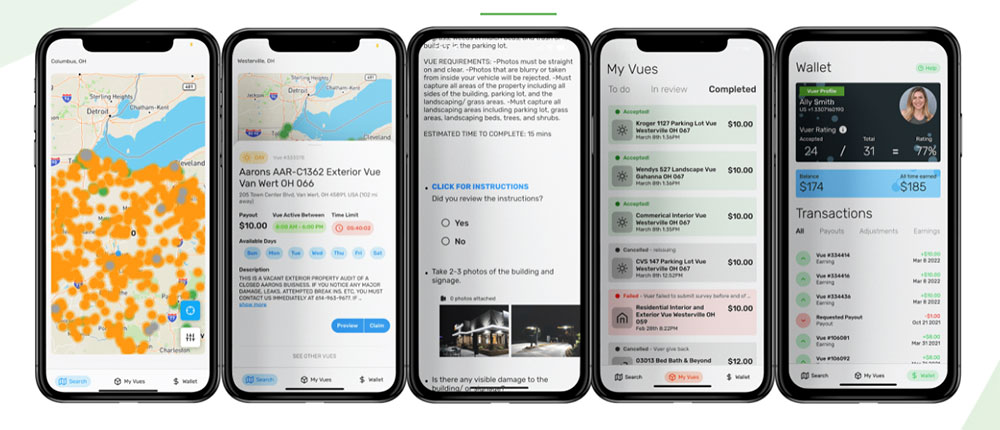
Upshift only operates in select states, and if you live outside those markets, the shift board goes quiet fast.
The on-demand staffing space has grown well past any single platform. Over 70 million Americans now do some form of gig or flexible work, and the tools available to them have multiplied. Some apps pay faster. Some cover more cities. Some offer W-2 status with real employee protections, while others run a 1099 model that trades benefits for higher hourly rates.
This guide covers the best apps like Upshift across hospitality, warehouse, manufacturing, and event staffing. You will find out how each platform handles pay speed, worker classification, geographic coverage, and industry focus, so you can pick the right one for your situation or stack a few together.
Apps Like Upshift
Upshift works well for W-2 shift work in hospitality, warehouse, and events. But it only runs in select states, and shifts can dry up fast depending on your city.
These 10 alternatives cover more ground, pay faster, or serve industries Upshift doesn’t fully reach. Each one is compared on job types, pay structure, and what makes it a real option for on-demand staffing.
Instawork
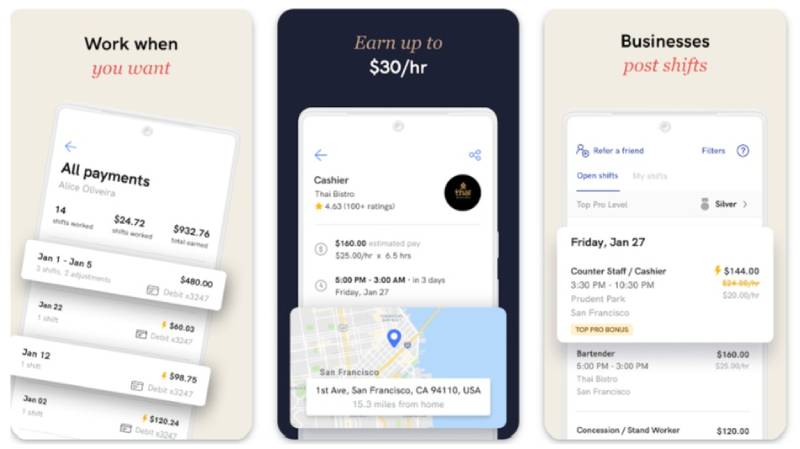
Instawork is a flexible staffing platform that connects businesses with pre-vetted hourly workers for hospitality, warehouse, and event roles. It covers 60+ cities and draws from a pool of over 5 million professionals, making it one of the largest gig economy staffing apps in the U.S.
What Does Instawork Do?
Instawork lets businesses post shifts and get matched with background-checked workers, usually within hours. Workers pick shifts on their own schedule via iOS or Android.
How Is Instawork Similar to Upshift?
- Both use a two-way rating system to reward reliable workers
- Both cover hospitality, warehouse, and event staffing
- Both let workers set their own schedule and pick up shifts on-demand
How Is Instawork Different from Upshift?
Instawork mixes W-2 and 1099 roles. Upshift stays W-2 only. Instawork also operates in far more cities and allows temp-to-hire conversions. Bartending shifts on Instawork average $20 to $25/hour, slightly above Upshift’s typical range.
Who Is Instawork Best For?
Workers in hospitality and warehouse sectors who want access to shifts across multiple cities and don’t mind checking their W-2 vs. 1099 status per gig.
Key Features of Instawork
- Worker pool: 5 million+ pre-vetted professionals
- Coverage: 60+ U.S. and Canadian cities
- Verification: 30+ data points checked per worker
- No-show rate: 2% (company-reported)
Pricing
- Free plan: No (business side has service fees)
- Paid plans: Service fee per shift (percentage-based, quote on request)
- Free trial: No
Wonolo
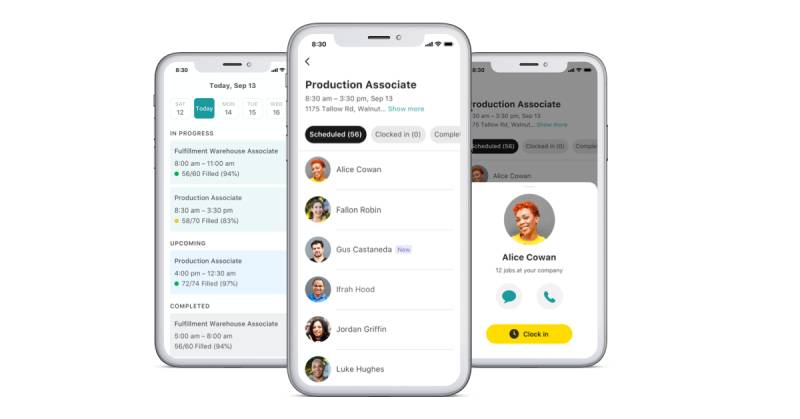
Wonolo (short for “Work Now Locally”) is an on-demand staffing app that connects businesses with temporary workers across warehousing, delivery, merchandising, and event staffing. It operates in 500+ markets with a talent pool of 3 million workers.
What Does Wonolo Do?
Wonolo lets workers browse and accept same-day or advance shifts through a mobile app. Businesses post jobs directly, and the platform handles matching, payments, and compliance.
How Is Wonolo Similar to Upshift?
| Feature | Happy | Upshift |
| Worker model | W-2 (most roles) | W-2 |
| Shift selection | Worker chooses | Worker chooses |
| Industries | Warehouse, events, retail | Hospitality, warehouse, events |
How Is Wonolo Different from Upshift?
Wonolo runs in 500+ markets, which is far broader than Upshift’s coverage. It also supports temp-to-perm pathways, which Upshift does not emphasize. Pay on Wonolo averages $12 to $20/hour depending on role and location.
Who Is Wonolo Best For?
Workers who need variety across industries and want access to shifts in smaller or mid-size markets that Upshift hasn’t reached yet. Check out similar platforms to Wonolo if you want more options in this category.
Key Features of Wonolo
- Market coverage: 500+ U.S. markets
- Worker pool: 3 million registered workers
- Temp-to-perm: Yes, supported
- No worker fees: Free to use for gig workers
Pricing
- Free plan: No
- Paid plans: Percentage-based service fee per placement
- Free trial: No
Bluecrew
Bluecrew is a workforce-as-a-service platform that classifies all workers as W-2 employees with benefits including health insurance, tax withholding, and paid time off. It operates across 100 U.S. markets and covers warehouse, manufacturing, office, and light industrial roles.
What Does Bluecrew Do?
Bluecrew connects businesses with fully employed hourly workers for temporary and ongoing shifts. Workers get employee status from day one, which is rare in the contingent workforce space.
How Is Bluecrew Similar to Upshift?
Both platforms classify workers as W-2 employees, not 1099 contractors. Both cover warehouse and event staffing with flexible scheduling. Neither requires a long-term contract from businesses.
How Is Bluecrew Different from Upshift?
Bluecrew includes office and administrative roles, which Upshift doesn’t offer. It also provides retirement savings contributions. The tradeoff: hourly rates can run slightly lower because Bluecrew absorbs employment overhead costs.
Who Is Bluecrew Best For?
Workers who want full employee benefits and tax withholding with gig-style flexibility, especially those doing physical or industrial work.
Key Features of Bluecrew
- Employment status: W-2 for all workers
- Benefits: Health insurance, PTO, retirement contributions
- On-demand pay: Access earnings within 30 minutes of timesheet approval
- Coverage: 100 U.S. markets
Pricing
- Free plan: No
- Paid plans: Service fee per worker (quote-based)
- Free trial: No
Veryable
Veryable is a labor marketplace for manufacturing, warehousing, and logistics. Instead of standard shift postings, businesses create “ops” (operations) and workers bid on them. It’s a different model that gives workers more control over what they accept.
What Does Veryable Do?
Veryable lets industrial businesses post ops and lets workers browse, bid, and accept them through the mobile app. Workers on Veryable can earn up to $40/hour for skilled manufacturing and logistics roles.
How Is Veryable Similar to Upshift?
- Both use a mobile app for shift pickup
- Both focus on short-term, on-demand work
- Both use worker ratings to build trust between parties
How Is Veryable Different from Upshift?
Veryable focuses exclusively on industrial roles, where Upshift covers hospitality and events. The bidding model is also unique. Workers don’t just accept or decline fixed shifts. They submit bids, which can mean better pay for skilled workers but more competition.
Who Is Veryable Best For?
Workers with manufacturing, logistics, or warehousing experience who want higher pay and prefer bidding for ops over browsing a shift board. Those who also do local delivery work may want to look at other apps similar to Veryable as well.
Key Features of Veryable
- Bidding model: Workers submit bids, businesses select
- Pay ceiling: Up to $40/hour for skilled roles
- Payment speed: Same-day pay available
- Industries: Manufacturing, logistics, warehousing only
Pricing
- Free plan: Yes (free for workers)
- Paid plans: Business service fee per op (percentage-based)
- Free trial: No
Shiftsmart

Shiftsmart is a flexible shift work app that covers customer service, hospitality, retail, and courier work. It uses AI-powered matching to connect workers with gigs that fit their skills and location. Looking into alternatives to Shiftsmart is worth it if you want to compare this segment closely.
What Does Shiftsmart Do?
Shiftsmart matches workers with available shifts across multiple industries using automated job-fit scoring. Workers apply, get approved, and receive instant notifications for relevant gigs.
How Is Shiftsmart Similar to Upshift?
Both are shift-based gig platforms targeting hourly workers who want flexible schedules. Both use performance ratings to improve gig access over time.
How Is Shiftsmart Different from Upshift?
Shiftsmart covers a wider category range, including product testing and courier work that Upshift doesn’t offer. It charges a $3 fee for instant cash-outs, while Upshift has no worker fees. Upshift stays W-2 only; Shiftsmart mixes contractor and employee arrangements.
Who Is Shiftsmart Best For?
Workers who want variety across industries and prefer AI-assisted job matching rather than manually scanning a shift board.
Key Features of Shiftsmart
- Job matching: AI-powered gig-to-worker fit scoring
- Job types: Retail, hospitality, courier, product testing
- Instant cashout fee: $3 per instant payout
- Platforms: iOS and Android
Pricing
- Free plan: Yes (free to join for workers)
- Paid plans: No subscription; $3 instant cashout fee applies
- Free trial: N/A
Indeed Flex

Indeed Flex is the temporary staffing arm of Indeed, one of the largest job boards in the world. It focuses on pre-qualified temporary work and classifies workers as W-2 employees, similar to Upshift.
What Does Indeed Flex Do?
Indeed Flex gives businesses access to around 165,000 pre-qualified job seekers in the U.S. for temporary shifts. Workers get approved once and can pick up work across participating businesses without re-applying.
How Is Indeed Flex Similar to Upshift?
| Feature | Indeed Flex | Upshift |
| Worker classification | W-2 | W-2 |
| Pre-vetting | Yes | Yes (15% acceptance rate) |
| Same-day starts | Sometimes | Sometimes |
How Is Indeed Flex Different from Upshift?
Indeed Flex draws on Indeed’s massive brand recognition and job seeker base. However, its U.S. talent pool (165,000) is smaller than platforms like Instawork or Wonolo. It also lacks Upshift’s hospitality-specific depth.
Who Is Indeed Flex Best For?
Businesses that already use Indeed for permanent hiring and want to extend into temporary staffing without switching platforms entirely.
Key Features of Indeed Flex
- Worker pool: ~165,000 pre-qualified U.S. job seekers
- Employment type: W-2 for all workers
- Integration: Ties into broader Indeed ecosystem
- Temp-to-perm: Supported
Pricing
- Free plan: No
- Paid plans: Service fee per placement (quote-based)
- Free trial: No
Qwick
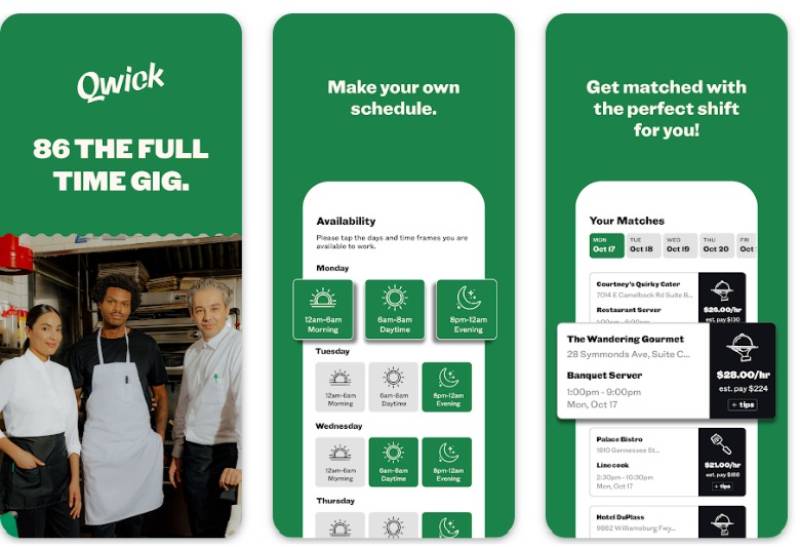
Qwick is a hospitality-only staffing app that matches experienced food and beverage professionals with shifts at restaurants, hotels, stadiums, and catering events. Every worker must have at least one year of hospitality experience to join.
What Does Qwick Do?
Qwick connects freelance hospitality workers with shifts and pays within 30 minutes of shift completion. Faster than almost any other platform in this category.
How Is Qwick Similar to Upshift?
Both focus on hospitality and event staffing. Both use performance-based scoring (Qwick calls theirs “QwickScore”) to give high-rated workers better access to shifts.
How Is Qwick Different from Upshift?
Qwick is hospitality-only. Upshift also covers warehouse and light industrial. Qwick pays within 30 minutes post-shift. Qwick also requires prior hospitality experience, while Upshift accepts entry-level workers in some roles.
Who Is Qwick Best For?
Experienced servers, bartenders, line cooks, and event staff who want fast payment and a platform built specifically for their industry.
Key Features of Qwick
- Payment speed: Within 30 minutes of shift completion
- Requirement: 1+ year of hospitality experience
- Rating system: QwickScore tracks performance
- Job types: Front-of-house, back-of-house, catering, events
Pricing
- Free plan: Yes (free for workers)
- Paid plans: Business service fee per shift (percentage-based)
- Free trial: No
Bacon (BaconWork)

Bacon is a general temp labor app that connects businesses with local gig workers for warehouse shifts, catering, event setup, and retail. It’s built around transparency: every shift posting shows pay rate, hours, and skill requirements upfront.
What Does Bacon Do?
Bacon lets businesses post shifts and select workers based on a “Bacon Score,” a reliability rating built from past performance. Workers get paid within 72 hours of completing a shift.
How Is Bacon Similar to Upshift?
- Both serve warehouse, catering, and event industries
- Both use worker scoring to help businesses choose reliable staff
- Both allow workers to see pay before accepting a shift
How Is Bacon Different from Upshift?
Bacon does not classify workers as W-2 employees by default, where Upshift does. Bacon also assigns each business a dedicated Client Success Manager for hands-on support, which Upshift doesn’t offer. There are no hiring fees if a business wants to bring a Bacon worker on full-time.
Who Is Bacon Best For?
Businesses that want the control of a staffing app plus the support of an account manager. Good for event, catering, and warehouse operators who need reliable workers fast without a staffing agency contract.
Key Features of Bacon
- Bacon Score: Reliability rating built over time per worker
- Payment speed: Within 72 hours post-shift
- Fill rate: 89% (company-reported)
- No full-time hiring fees: Businesses can hire workers permanently at no extra cost
Pricing
- Free plan: Yes (free for workers)
- Paid plans: Businesses pay per shift posted (hourly rate plus service markup)
- Free trial: No
GigSmart

GigSmart is a nationwide on-demand staffing platform covering all 50 states. Businesses can post shift gigs for free, and the platform matches them with workers from a pool of 3,000+ tracked skills. It also offers an auto-hire feature for businesses that want hands-off filling.
What Does GigSmart Do?
GigSmart connects businesses with hourly workers for short-term and longer-term gigs. It lets businesses auto-hire workers 24 hours before a shift starts if enough applicants are available.
How Is GigSmart Similar to Upshift?
Both use a skills-matching system to connect businesses with qualified workers. Both serve warehouse, events, and general labor sectors. Both offer mobile-first shift management.
How Is GigSmart Different from Upshift?
GigSmart covers all 50 states, which puts it well ahead of Upshift’s geographic reach. Workers pay a $1/hour platform fee deducted from earnings, which Upshift doesn’t charge. The 1099 model is standard here, not W-2.
Who Is GigSmart Best For?
Workers and businesses in markets where other on-demand staffing apps don’t operate. Useful as a backup when larger platforms like Instawork or Wonolo have limited local inventory.
Key Features of GigSmart
- Coverage: All 50 U.S. states
- Skills database: 3,000+ tracked worker skills
- Auto-hire: Platform can auto-fill shifts 24 hours before start
- Worker fee: $1/hour deducted from earnings
Pricing
- Free plan: Yes (free shift posting for businesses)
- Paid plans: 35% service fee on worker compensation for 1099 roles; minimums apply
- Free trial: No
Jobble

Jobble is a gig economy staffing platform focused on event staffing, warehousing, logistics, and healthcare support. Founded in 2014 and based in Boston, it gives workers access to perks like health and wellness discounts, plus a weekly newsletter with job tips.
What Does Jobble Do?
Jobble connects businesses with on-demand workers for temporary and seasonal roles. Workers build a profile, browse available gigs nearby, and get paid after completing work.
How Is Jobble Similar to Upshift?
- Both target hourly and temporary workforce needs
- Both cover warehouse, events, and general labor
- Both use mobile apps on iOS and Android
How Is Jobble Different from Upshift?
Jobble includes healthcare support roles that Upshift does not cover. It also offers Jobble Perks, including household discounts and career development resources. Workers here skew more independent contractor than Upshift’s W-2 focus.
Who Is Jobble Best For?
Workers who want access to a broader gig category mix, including healthcare support and events, without committing to a single-industry platform.
Key Features of Jobble
- Industries: Events, warehousing, logistics, healthcare support
- Jobble Perks: Discounts on household items and entertainment
- Screening: Cognitive testing and 1-on-1 interviews for some roles
- Platforms: iOS and Android
Pricing
- Free plan: Yes (free for workers)
- Paid plans: Business service fee per placement
- Free trial: No
Which App Should You Use?
The right pick depends on what you actually need. Here’s a fast comparison:
| App | Best For | Pay Speed | Worker Type |
| Instawork | Hospitality, warehouse, multi-city | Daily (Instapay) or Weekly | W-2 + 1099 |
| Wonolo | General labor, retail, warehouse | 1–5 business days | 1099 |
| Bluecrew | Benefits + W-2 status | Weekly | W-2 only |
| Veryable | Manufacturing + logistics | Next day (via Vault) | 1099 |
| Shiftsmart | Retail, mystery shopping, call center | Instant ($3 fee) or Weekly | 1099 |
| Indeed Flex | Temp-to-perm pipeline | Weekly | W-2 |
| Qwick | Experienced hospitality workers | 30 minutes post-shift | 1099 |
| Bacon | Events, catering, warehouse | 72 hours | 1099 |
| GigSmart | Rural and underserved markets | Same day | 1099 |
| Jobble | Events + healthcare support | 4–10 business days | 1099 |
Most experienced gig workers run two or three of these at once. There’s no exclusivity requirement on any of them. Keeping a few apps active means you’re never waiting on one platform to have shifts available in your area.
If W-2 status and benefits matter, stick with Bluecrew or Indeed Flex. If payment speed is the priority, Qwick or Veryable. And if you just want the most shift options across the most cities, Instawork or Wonolo.
What Is Upshift and How Does It Work?
Upshift is a W-2 staffing platform that connects businesses with pre-vetted hourly workers for hospitality, warehouse, manufacturing, event, and light industrial roles.
Unlike most on-demand staffing apps that classify workers as 1099 contractors, every Upshifter is a W-2 employee. Upshift pays FICA taxes and handles HR compliance, which removes liability from the businesses using it.
Upshift’s success rate sits at over 95%, more than double the temp staffing industry average of 40%, according to G2 data.
Workers apply through a mobile app, complete an in-person onboarding, and pass an employment assessment. Only then do they get access to the shift board. Upshift’s internal vetting accepts roughly the top 15% of applicants.
Pay ranges from $15 to $25/hour depending on industry and role. After two direct deposits, workers become eligible for same-day pay. There are no minimum hours required.
| Industry | Example Roles | Typical Pay Range |
| Hospitality | Servers, bartenders, kitchen staff | $15–$25/hr (often plus tips) |
| Warehouse | Pickers, packers, equipment operators | $17–$24/hr |
| Events | Banquet servers, setup crew, coordinators | $18–$22/hr |
| Manufacturing | Production associates, light industrial | $16–$22/hr |
Businesses post shifts directly in the app, browse worker profiles, check ratings from previous jobs, and choose who they want. Think of it as a short-term hiring tool with employee-grade accountability baked in.
Hyatt Regency Cincinnati and Cameron Mitchell Premier Events both use Upshift as their primary staffing partner for culinary and event roles. Upshift reports a 91% worker return rate with attrition below 10%.
Key limitation: Upshift operates in select U.S. states only. Shift availability can dry up fast depending on the city, which is the main reason workers look for alternatives.
How Do Apps Like Upshift Compare on Pay, Worker Status, and Coverage?
Before signing up for any platform, three things determine which one actually works for you: how you get paid, whether you’re an employee or contractor, and whether the app operates where you live.
The gig economy now includes 70+ million Americans, representing about 36% of the U.S. workforce, according to MBO Partners 2024 research. Most of them use multiple apps. Platform choice isn’t either/or.
| Platform | Worker Status | Pay Speed | Coverage |
| Upshift | W-2 only | Weekly (standard) or Same-day¹ | 30+ U.S. markets |
| Instawork | Mixed (W-2/1099)² | Weekly or Instant Pay (30 mins) | 40+ U.S. & Canada metros |
| Wonolo | 1099 only | 1–5 business days post-approval | 30+ U.S. metros |
| Bluecrew | W-2 only | Weekly or On-Demand (up to 75%) | 100+ U.S. markets |
| Qwick | 1099 only | Instant (30 mins post-shift) | Select U.S. metros |
| Veryable | 1099 only | Next Day (by 1 PM) | Nationwide (U.S.) |
| GigSmart | 1099 only | Within 24 hours | All 50 states |
| Shiftsmart | Mixed | Weekly or Instant ($1.99 fee) | Global (U.S., UK, Canada) |
| Indeed Flex | W-2 only | Weekly | Major U.S. & UK cities |
| Bacon | 1099 only | Within 72 hours | Select Western/Mountain U.S. |
W-2 platforms (Upshift, Bluecrew, Indeed Flex) handle tax withholding, workers’ comp, and unemployment insurance automatically.
1099 platforms (Qwick, Veryable, GigSmart, Bacon) hand that responsibility to you. You’ll pay both sides of FICA, roughly 15.3% on top of income tax, come April.
Around 60% of workers say benefits are a deciding factor in job acceptance, according to BEN research from 2024. For gig workers, W-2 status is the closest thing to benefits many of these platforms offer.
On worker fees: GigSmart deducts $1 per hour from earnings as a platform fee. Shiftsmart charges $3 for instant cashouts. Instawork, Wonolo, Bluecrew, and Upshift charge workers nothing.
Which Apps Like Upshift Are Best for Hospitality and Event Work?
Hospitality is Upshift’s home turf. But three platforms compete directly in this space, and each one wins on something different.
The gig economy’s leisure and hospitality segment accounts for 6% of U.S. freelance employment according to Fortunly data, with demand spiking around holidays and summer event seasons.
Instawork
Instawork operates across 60+ U.S. and Canadian cities with a pool of 5 million+ pre-vetted professionals. That makes it the largest single source of on-demand hospitality and warehouse talent in the country.
Bartending and line cook shifts on Instawork average $20 to $25/hour. The platform’s 2% no-show rate is company-reported and backed by a 30+ data point verification process per worker.
- Mixes W-2 and 1099 roles, check which type before accepting
- Allows temp-to-perm conversions
- Clients include The Ritz-Carlton and Google for event staffing
93% of businesses on Instawork report wanting to invite the same workers back, according to platform data. The two-way rating system functions similarly to Upshift’s.
If you already do local tasks and deliveries alongside hospitality work, platforms similar to TaskRabbit can fill gaps when hospitality shifts are slow.
Qwick
Fastest payout in the category. Qwick pays within 30 minutes of shift completion, faster than any other platform listed here.
Every worker must have at least one year of hospitality experience to join. That vetting creates a higher-quality pool but makes Qwick inaccessible to entry-level workers.
- Hospitality-only, front-of-house and back-of-house
- QwickScore tracks performance; higher scores unlock better gigs
- 1099 status, handle your own taxes
- Longer onboarding than Upshift due to video orientation requirement
Wonolo
Wonolo runs in 500+ U.S. markets, including smaller cities where Instawork and Upshift have no presence. Its talent pool hits 3 million workers.
Pay averages $12 to $20/hour depending on role and location. Lower than Instawork’s hospitality ceiling, but Wonolo’s breadth is unmatched in the on-demand staffing space.
Temp-to-perm transitions are supported, which Upshift also handles. If you’re looking at more options in this segment, there’s a detailed breakdown of other platforms like Wonolo worth reviewing.
Which Apps Like Upshift Are Best for Warehouse and Manufacturing Work?
Upshift covers warehouse and light industrial, but it’s not built specifically for them. These four platforms go deeper into the industrial and logistics side.
Manufacturing, warehouse, and logistics gigs are highly seasonal. Most industrial staffing apps see their highest demand in Q3 and Q4, when fulfillment centers ramp up for peak season.
Veryable
Veryable built its entire model around manufacturing, logistics, and warehousing. Nothing else.
Instead of a standard shift board, Veryable uses an “ops” system where businesses post work opportunities and workers submit bids. Skilled manufacturing workers can earn up to $40/hour, well above what Upshift offers in the same category.
- Same-day pay available
- 1099 status
- Bidding model gives experienced workers more negotiating room
Workers who also pick up delivery gigs alongside industrial ops may find value in looking at alternatives to Veryable that overlap with logistics work.
Bluecrew
Best for benefits. Bluecrew classifies every worker as a W-2 employee with health insurance, PTO, retirement contributions, and on-demand pay access within 30 minutes of timesheet approval.
That single fact separates Bluecrew from almost every other gig staffing app. Most contingent workforce platforms treat you as a contractor. Bluecrew doesn’t.
- 100 U.S. markets
- Includes office and administrative roles, unusual for a shift-based platform
- Average earnings near $15.89/hour (Bluecrew-reported)
- Slightly lower rates because the platform absorbs employment overhead
GigSmart
GigSmart covers all 50 U.S. states with a skills database of 3,000+ tracked worker competencies. It’s the right pick when other platforms simply don’t serve your city.
Auto-hire feature: if enough applicants are present 24 hours before a shift, the platform fills it automatically without business action required.
Worker fee of $1/hour is deducted from earnings. Businesses pay a 35% service fee on worker compensation for 1099 roles. No subscription cost.
Jobble
Jobble adds something the others don’t: healthcare support roles alongside warehouse, logistics, and events. Founded in 2014 in Boston, it also includes Jobble Perks, a discount program covering household items and entertainment for workers.
Screening is more rigorous for some roles, including cognitive science testing and 1-on-1 interviews. Workers who want a broader gig mix beyond pure industrial work will find more variety here than on Veryable or GigSmart.
What Should You Know Before Signing Up for a Gig Staffing App?
Most workers sign up for the first platform they find and discover its limitations two weeks later. Here’s what’s worth knowing upfront.
65% of gig workers already earn income through multiple platforms to maximize opportunities, according to market research from 2024. Running two or three shift apps at once is the norm, not the exception.
Background checks and onboarding timelines
Most on-demand staffing apps require background verification. This includes criminal history checks, identity verification, and sometimes drug screening. The background check process typically takes 2-5 business days and ensures workplace safety for businesses and workers. Qwick is the outlier. Its video orientation with an onboarding specialist adds days to the process, sometimes over a week.
Instawork verifies 30+ data points per worker before approval. Wonolo and Jobble are more lenient. If you need shifts fast, sign up for Bacon or Wonolo first while waiting on more selective platforms.
How the rating system affects your income
Every platform listed uses a two-way rating system. Your score determines which shifts you can access and how quickly businesses accept you.
Starting strong matters more than recovering later. A 4.2 rating after your first three shifts is hard to move. A 5.0 after fifteen shifts unlocks priority access on most platforms.
- Qwick calls its score the “QwickScore”
- Instawork tracks reliability metrics separately from skill ratings
- Bacon’s “Bacon Score” is the most explicit, combining reliability and work ethic into a single number
Running multiple apps at once
No platform requires exclusivity. You can run Instawork, Wonolo, and GigSmart simultaneously without any conflict.
The risk is double-booking shifts. Cancel a confirmed shift on any platform and your rating drops. Never accept two shifts with overlapping times, even on different apps.
Seasonal patterns by industry
Warehouse and manufacturing apps peak in Q4. Fulfillment centers ramp hard from October through December. That’s when Veryable, GigSmart, and Bacon see the most available ops.
Event and hospitality apps spike around summer festival season and major holidays. Qwick and Instawork get busy from May through September and again in November and December.
Signing up before demand peaks, not during it, means your profile is approved and your rating already established when shifts are plentiful. That timing alone can meaningfully affect how much you earn in your first month.
FAQ on Apps Like Upshift
What is the best alternative to Upshift?
Instawork is the closest match. It covers 60+ cities, serves hospitality and warehouse sectors, and uses a similar two-way rating system. For broader U.S. coverage, Wonolo operates in 500+ markets and handles a wider range of on-demand staffing needs.
Which apps like Upshift pay the fastest?
Qwick pays within 30 minutes of shift completion. Veryable offers same-day pay. GigSmart processes within 24 hours. Upshift itself unlocks same-day pay after two direct deposits. Instawork and Wonolo typically pay weekly.
Are there apps like Upshift that classify workers as W-2 employees?
Yes. Bluecrew and Indeed Flex both use a W-2 employment model, just like Upshift. Bluecrew also includes health insurance, PTO, and retirement contributions. Most other gig staffing platforms use 1099 contractor arrangements.
What apps like Upshift work nationwide?
GigSmart covers all 50 U.S. states. Wonolo operates in 500+ markets. Instawork serves 60+ cities. Upshift, Qwick, and Veryable are limited to select metros, which is why workers in smaller markets often rely on GigSmart as a backup.
Can I use multiple on-demand staffing apps at the same time?
Yes, and most experienced gig workers do. No platform requires exclusivity. Running Instawork alongside Wonolo or Bacon fills schedule gaps. The only risk is double-booking overlapping shifts, which damages ratings on both platforms.
Which apps like Upshift are best for hospitality work?
Qwick is hospitality-only and requires one year of experience. Instawork covers hospitality and warehouse with a larger worker pool. For event and catering roles specifically, both Bacon and platforms like Shiftsmart also list food service shifts.
Which apps like Upshift are best for warehouse and manufacturing jobs?
Veryable is built exclusively for manufacturing and logistics, with skilled workers earning up to $40/hour. GigSmart and Bluecrew also cover warehouse work. Jobble adds healthcare support roles alongside its warehouse and logistics gig listings.
Do apps like Upshift charge workers any fees?
Most don’t. Instawork, Wonolo, Bluecrew, and Upshift are free for workers. GigSmart deducts $1 per hour as a platform fee. Shiftsmart charges $3 for instant cashouts. Always check the fee structure before accepting your first shift.
How long does it take to get approved on apps like Upshift?
Most platforms approve workers within 24 to 48 hours. Qwick takes longer due to a required video orientation. Instawork verifies 30+ data points before activation. Wonolo and Bacon have lighter onboarding and are faster for entry-level applicants.
Are there apps like Upshift for iVueit-style field work?
Field Agent and iVueit focus on retail audits and mystery shopping rather than shift-based labor. They serve a different niche. For those interested in that category, there is a full comparison of apps similar to iVueit worth reviewing.
Conclusion
This article covered the best apps like Upshift across every major category of shift-based gig work.
No single platform wins on every front. Bluecrew leads on worker benefits. Qwick wins on payment speed. GigSmart reaches markets nobody else covers. Veryable is the go-to for skilled manufacturing and logistics roles.
Worker classification matters more than most people realize. The difference between W-2 employment and a 1099 arrangement affects your taxes, your protections, and your eligibility for benefits.
Pick two or three platforms based on your industry and location, get your profiles approved before you need the income, and build your ratings early. That is how experienced contingent workforce workers keep their schedules full and their hourly rates climbing.

- Build or Buy an AI Chatbot for E-commerce: The Costs Nobody Budgets For - October 24, 2026
- How to Run a React App in VS Code Step by Step - October 23, 2026
- Transactional or marketing email: which messages your app should send itself - October 23, 2026