You open an app, set an intention, and let quantum randomness drop a GPS coordinate somewhere nearby. That’s Randonautica, and millions of people got hooked on exactly that feeling.
But the app has limits. Token caps, a 6-mile radius ceiling, and a format that doesn’t suit everyone have pushed plenty of users to look for apps like Randonautica that deliver the same outdoor discovery rush with a different twist.
Some want structured treasure hunts. Others want AR game mechanics, trail navigation, or pure random coordinate generation with no restrictions.
This guide covers the best alternatives across all of those needs, from GPS-based adventure apps like Geocaching and Ingress Prime to random location generators like RandoExplor, so you can find the right fit for how you actually explore.
Apps Like Randonautica
Geocaching

Geocaching is a GPS-based outdoor adventure app that lets users find physical hidden containers using coordinates, targeting explorers of all ages. It replaces Randonautica’s quantum randomness with community-placed real-world caches and supports iOS and Android.
What Does Geocaching Do?
Geocaching lets users search for over 3.4 million hidden caches worldwide using GPS coordinates, with each find logged through the app.
How Is Geocaching Similar to Randonautica?
- Both use GPS to send users to real-world locations with an element of surprise
- Both work as outdoor discovery apps for solo or group adventure
- Free base access on iOS and Android, with optional paid upgrades
How Is Geocaching Different from Randonautica?
Randonautica generates coordinates via quantum entropy. Geocaching uses community-placed caches tied to specific physical objects. Geocaching has over 1.8 million active finders annually (Geocaching HQ, 2024). Randonautica has no physical objects to locate.
Who Is Geocaching Best For?
Geocaching suits outdoor explorers who want structured, community-driven scavenger hunts rather than abstract random-location generation.
Key Features of Geocaching
- Cache database: 3.4 million+ active caches in 191 countries
- Offline maps: Available for Premium members
- Adventure Lab: Story-based location challenges
- Community events: Local meetups and group hunts
Pricing
- Free plan: Yes – access to basic Traditional caches
- Paid plans: Starting at $2.99/month (Premium)
- Free trial: Yes – 30 days
Pokemon Go

Pokemon Go is an augmented reality location-based game by Niantic that sends players to real-world GPS points to catch virtual creatures, targeting casual and competitive mobile gamers. It offers structured AR objectives instead of random coordinate generation and supports iOS and Android.
What Does Pokemon Go Do?
Pokemon Go uses GPS and AR to place virtual Pokemon at real-world locations, with players walking to catch them, battle at Gyms, and complete research tasks.
How Is Pokemon Go Similar to Randonautica?
| Feature | Pokemon Go | Randonautica |
| GPS-driven exploration | Yes | Yes |
| Encourages outdoor activity | Yes | Yes |
| Free base access | Yes | Yes |
| Real-world location discovery | Yes | Yes |
How Is Pokemon Go Different from Randonautica?
Pokemon Go has structured gameplay with collectibles, battles, and events. Randonautica generates blind random points with no game layer. Pokemon Go had 110 million monthly active players as of late 2025 (Player Counter). Randonautica’s user base is significantly smaller.
Who Is Pokemon Go Best For?
Pokemon Go suits gamers who want geolocation-based outdoor activity with clear objectives, community events, and ongoing content updates.
Key Features of Pokemon Go
- AR catching: Real-world camera overlay for Pokemon encounters
- Raids and Gyms: Multiplayer battles at GPS landmarks
- In-person events: GO Fest draws millions globally each year
- 650M+ lifetime downloads across iOS and Android
Pricing
- Free plan: Yes – full core gameplay access
- Paid plans: In-app purchases from $0.99
- Free trial: N/A – free to play
Ingress Prime
Ingress Prime is a competitive AR exploration game by Niantic that guides players to real-world GPS portals to capture territory for one of two factions, targeting strategy-focused outdoor gamers. It adds team-based objectives on top of location-based navigation and supports iOS and Android.
What Does Ingress Prime Do?
Ingress Prime lets players walk to real-world portals (public landmarks, art, monuments) to hack, capture, and link them for their faction across a global map.
How Is Ingress Prime Similar to Randonautica?
- Both use GPS to push users toward specific real-world locations
- Both work on iOS and Android with free base access
- Both turn everyday spaces into destination points worth visiting
How Is Ingress Prime Different from Randonautica?
Randonautica sends you to random points with no social element. Ingress Prime is built around faction competition and team coordination. Ingress has been downloaded over 20 million times since launch (Wikipedia). It focuses on territory control, not serendipitous discovery.
Who Is Ingress Prime Best For?
Ingress Prime suits players who want competitive, team-based GPS exploration with strategic depth rather than solo random-point discovery.
Key Features of Ingress Prime
- Portal network: Millions of real-world locations across 200+ countries
- Faction play: Resistance vs. Enlightened (plus automated third faction)
- Real-world events: Anomaly events and mission days globally
- Intel Map: Web-based view of the global field map
Pricing
- Free plan: Yes – full gameplay access
- Paid plans: In-app purchases available
- Free trial: N/A – free to play
SpecTrek
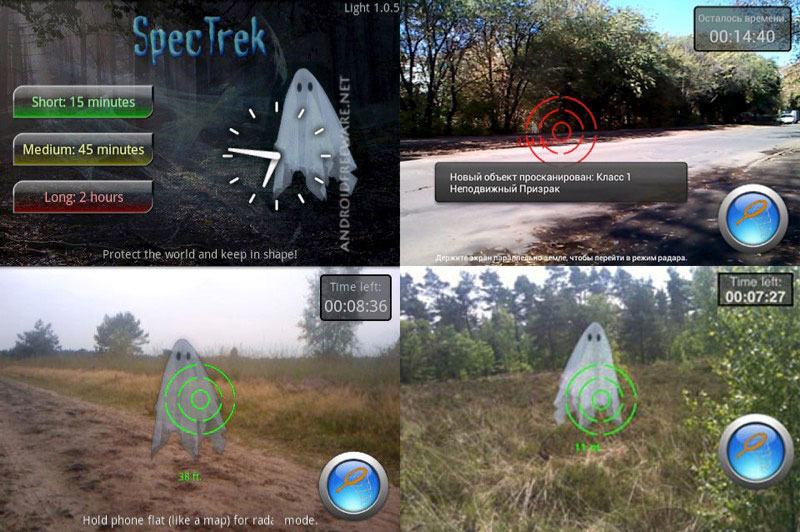
SpecTrek is a geolocation AR ghost-hunting game by Games4All that projects virtual ghosts onto a real-world GPS map for players to physically walk to and catch, targeting casual outdoor gamers who enjoy light paranormal themes. It won 2nd prize in the Android Developer Challenge II and is available on Android only.
What Does SpecTrek Do?
SpecTrek places virtual ghosts at nearby GPS coordinates on a Google Map and has players walk to catch them using their device camera in AR mode, with sessions of 15, 30, or 60 minutes.
How Is SpecTrek Similar to Randonautica?
Both apps send users to GPS-based real-world locations without a predetermined destination. Both lean into mystery and the unknown as core draws. Both encourage walking as part of the experience.
How Is SpecTrek Different from Randonautica?
- Platform: Android only vs. Randonautica on iOS and Android
- Cost: One-time $2.49 purchase vs. Randonautica’s free-with-tokens model
- Structure: Timed sessions with clear objectives vs. open-ended random exploration
Who Is SpecTrek Best For?
SpecTrek suits Android users who want a low-cost, paranormal-themed outdoor activity app with built-in fitness motivation and session timers.
Key Features of SpecTrek
- AR ghost hunting: Camera-based ghost detection at GPS locations
- Session lengths: 15, 30, and 60-minute game modes
- Stats and awards: Titles, travel records, and mission completions
- Rated 4.38/5 based on 490 ratings (AppBrain)
Pricing
- Free plan: No
- Paid plans: One-time $2.49 purchase
- Free trial: No
Munzee

Munzee is a GPS scavenger hunt app that lets players scan QR codes hidden at real-world locations to earn points and compete on global leaderboards, targeting gamers who enjoy physical and virtual map-based challenges. It supports iOS and Android.
What Does Munzee Do?
Munzee lets users locate and scan physical QR code stickers or interact with virtual GPS markers placed by other players worldwide, earning points toward a competitive global ranking.
How Is Munzee Similar to Randonautica?
| Feature | Munzee | Randonautica |
| GPS-driven outdoor exploration | Yes | Yes |
| Discover unknown nearby locations | Yes | Yes |
| Free base access | Yes | Yes |
| Mobile-only (iOS + Android) | Yes | Yes |
How Is Munzee Different from Randonautica?
Randonautica generates random coordinates via quantum entropy, with no goal beyond the trip itself. Munzee has structured point-scoring, clan wars, and QR-based objectives. Munzee has millions of active physical and virtual markers globally. Randonautica has no persistent map objects.
Who Is Munzee Best For?
Munzee suits competitive players who want a points-based outdoor scavenger hunt with community features and regular seasonal events.
Key Features of Munzee
- Hundreds of munzee types: Physical QR stickers and virtual GPS points
- Clan Wars: Monthly team-based competitive events
- Daily Stroll: Daily activity rewards with Cappy the Unicorn
- Fitbit integration: Step tracking linked to in-app activity
Pricing
- Free plan: Yes – core gameplay included
- Paid plans: Premium membership available (pricing varies)
- Free trial: No
AllTrails
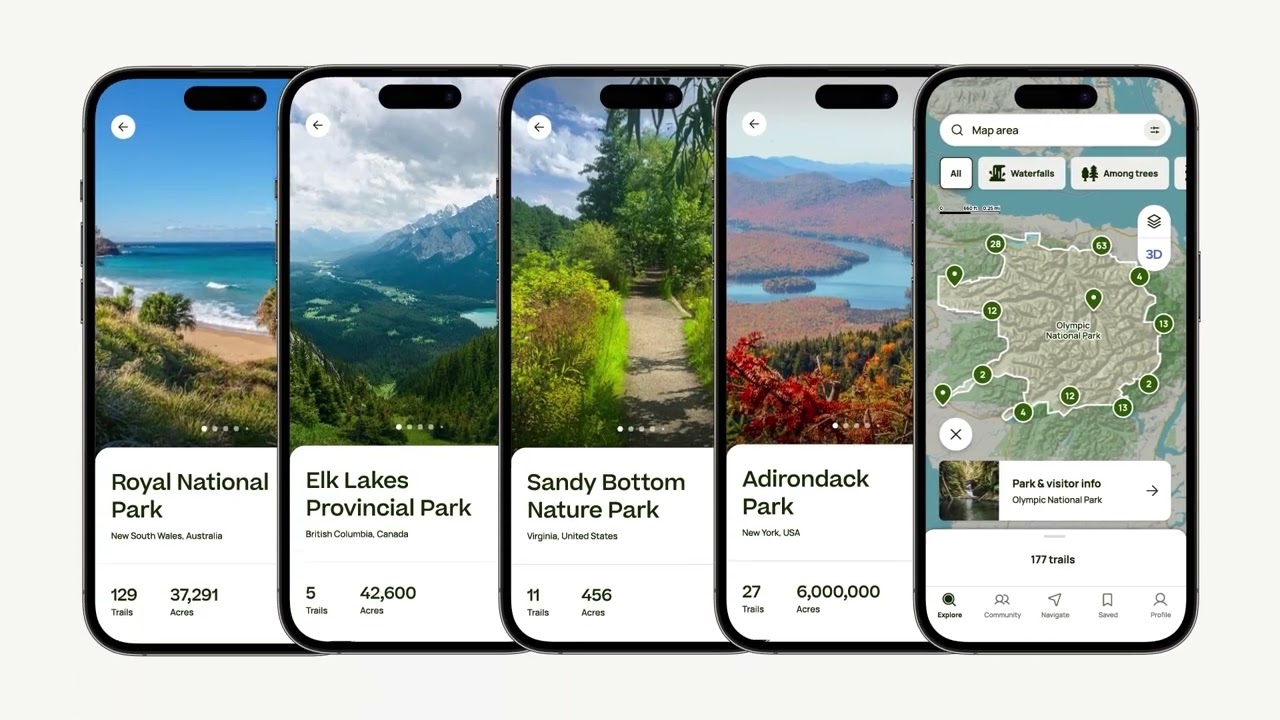
AllTrails is a trail discovery and navigation app with over 65 million users worldwide that maps hiking, running, and cycling routes across 450,000+ verified trails, targeting outdoor enthusiasts of all fitness levels. It supports iOS and Android.
What Does AllTrails Do?
AllTrails lets users search, preview, and navigate outdoor trails using curated maps, community reviews, elevation data, and offline GPS navigation.
How Is AllTrails Similar to Randonautica?
- Both encourage outdoor exploration by directing users to new real-world locations
- Both have free access tiers with optional paid upgrades
- Both support solo and group outdoor activity
How Is AllTrails Different from Randonautica?
Randonautica sends users to random blind spots with no route planning. AllTrails provides fully mapped, reviewed, and verified routes. AllTrails hit $9.1M in net revenue in 2024, its highest to date (Appfigures). It targets planned hiking, not spontaneous random-point exploration.
Who Is AllTrails Best For?
AllTrails suits hikers and trail runners who want structured, expert-verified route discovery with community reviews and offline navigation.
Key Features of AllTrails
- Trail database: 450,000+ routes globally, curated by experts
- Offline maps: Available for AllTrails+ and Peak subscribers
- 3D trail previews: Available on paid tiers
- Outdoor Lens: AI-powered plant identification (new feature)
Pricing
- Free plan: Yes – basic trail browsing and navigation
- Paid plans: AllTrails+ at $35.99/year; Peak at $79.99/year
- Free trial: Yes – available for Plus tier
Wikiloc

Wikiloc is a user-generated trail sharing platform with over 16 million users that lets outdoor explorers find and follow GPS routes recorded by other users worldwide, targeting hikers, cyclists, and multi-sport adventurers. It supports iOS and Android.
What Does Wikiloc Do?
Wikiloc lets users browse, download, and follow GPS tracks created by other users, covering 80+ sport types across trails in most countries, with turn-by-turn off-track alerts on the paid tier.
How Is Wikiloc Similar to Randonautica?
Both apps direct users to locations they have not previously visited. Both work as outdoor discovery tools with GPS at their core. Both have free tiers and are available on iOS and Android.
How Is Wikiloc Different from Randonautica?
- Routes vs. points: Wikiloc gives full paths; Randonautica gives a single blind coordinate
- Community content: Wikiloc’s trails are user-recorded and reviewed; Randonautica uses quantum entropy
- Pricing: Wikiloc premium at 19.99 EUR/year (updated in 2024); Randonautica runs on a token model
Who Is Wikiloc Best For?
Wikiloc suits hikers and multi-sport explorers who want community-sourced trail routes with turn-by-turn navigation and off-track alerts.
Key Features of Wikiloc
- 16M users: Large pool of real, user-recorded routes
- 80+ sport types: Hiking, cycling, canyoning, alpinism, and more
- Off-track alerts: Vibration and voice cues when you leave the route (paid)
- 1% for the Planet: A portion of premium revenue goes to environmental causes
Pricing
- Free plan: Yes – trail browsing and recording your own tracks
- Paid plans: 19.99 EUR/year (Premium)
- Free trial: No
RandoExplor
RandoExplor is a random location generator app that uses an algorithm biased toward abandoned and mysterious places to send users to unexpected GPS coordinates, targeting fans of urban exploration and abandoned-place discovery. It is free, anonymous, and available on iOS.
What Does RandoExplor Do?
RandoExplor generates random GPS coordinates with a built-in algorithm that favors abandoned locations, directing users there without registration or usage limits.
How Is RandoExplor Similar to Randonautica?
- Direct functional replacement – both generate random GPS coordinates for spontaneous exploration
- Both are free with no registration required
- Both target users interested in mystery and unknown location discovery
How Is RandoExplor Different from Randonautica?
Randonautica uses quantum entropy for coordinate generation. RandoExplor uses a custom algorithm biased toward abandoned places, making it more purposeful for urban exploration. RandoExplor is fully anonymous with no token system, unlike Randonautica’s daily usage limits.
Who Is RandoExplor Best For?
RandoExplor suits urban explorers and abandoned-place hunters who want unlimited, anonymous random location generation with no account setup.
Key Features of RandoExplor
- Abandoned-place bias: Algorithm favors derelict and mysterious coordinates
- Fully anonymous: No registration, no account needed
- Unlimited use: No token system or daily caps
- Free to download: No paid tiers
Pricing
- Free plan: Yes – fully free
- Paid plans: None
- Free trial: N/A
What3Words

What3Words is a precision location app that divides the entire world into 3-meter squares, each with a unique three-word address, targeting outdoor adventurers, emergency responders, and logistics users who need exact location sharing. It supports iOS and Android, with offline capability.
What Does What3Words Do?
What3Words assigns every 3m x 3m square on Earth a permanent three-word address, letting users share or navigate to precise spots without coordinates or street addresses.
How Is What3Words Similar to Randonautica?
Both apps are built around GPS-based location discovery. Both work in areas without street addresses, making them useful for remote or unusual exploration. Both are free at the consumer level on iOS and Android.
How Is What3Words Different from Randonautica?
- Purpose: What3Words is for precise location sharing; Randonautica is for random discovery
- Audience: What3Words targets logistics, emergency services, and outdoor navigation; Randonautica targets adventure seekers
- Offline use: What3Words works fully offline; Randonautica requires a connection
Who Is What3Words Best For?
What3Words suits hikers, campers, and anyone who needs to share or navigate to a pinpoint location in areas where standard addresses don’t work.
Key Features of What3Words
- 3m precision: More exact than a street address for any spot on Earth
- Offline mode: Full functionality without mobile data
- Emergency use: Integrated with emergency services in multiple countries
- Compatible: Android 7.1+ and iOS 14+
Pricing
- Free plan: Yes – consumer app is free
- Paid plans: Business API from free tier up to £235+/month
- Free trial: Yes – for business API tier
Ramblr
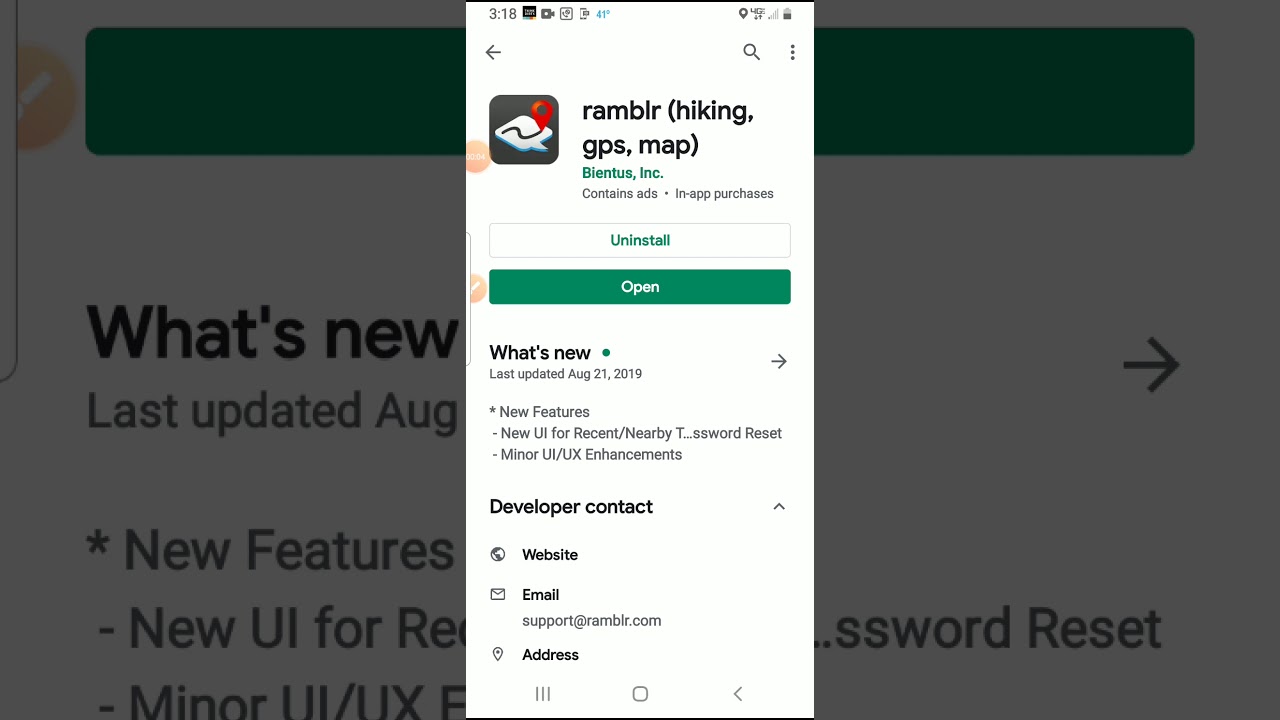
Ramblr is a GPS trip-tracking and adventure logging app that records outdoor journeys with route maps, photos, and stats, targeting hikers and explorers who want to document their trips. It supports iOS and Android and works even without cellular signal.
What Does Ramblr Do?
Ramblr tracks GPS routes in real time, lets users add photos and notes along the way, and stores full trip histories with speed, distance, and duration data – including offline recording when signal drops.
How Is Ramblr Similar to Randonautica?
- Both encourage users to get outside and explore unfamiliar local areas
- Both track and document the places users visit during their adventures
- Both are free to download on iOS and Android
How Is Ramblr Different from Randonautica?
Randonautica generates the destination via quantum entropy. Ramblr records wherever you choose to go – it’s a documentation tool, not a destination generator. Ramblr includes four-wheel drive road navigation, which Randonautica doesn’t support at all.
Who Is Ramblr Best For?
Ramblr suits outdoor adventurers who want a reliable GPS tracker and trip journal for hikes, off-road drives, and explorations, especially in areas with poor cell coverage.
Key Features of Ramblr
- Offline GPS tracking: Records routes without mobile data
- Trip stats: Speed, distance, duration, and elevation data
- Photo logging: Attach images to specific points on your route
- Public trip downloads: Browse and follow other users’ recorded routes
Pricing
- Free plan: Yes – core GPS tracking included
- Paid plans: Premium options available in-app
- Free trial: No
What Is Randonautica and How Does It Work?
Randonautica is a quantum random coordinate generator launched on February 22, 2020 by Joshua Lengfelder and Auburn Salcedo.
It reached 10.8 million users by July 2020, driven largely by TikTok virality and COVID lockdown boredom, with the hashtag #randonautica accumulating over 176.5 million views on the platform (Wikipedia).
The app has since crossed 40 million total downloads on Android alone (AppBrain), though active daily usage dropped sharply after pandemic-era restrictions lifted.
How Does Randonautica Generate Locations?
Randonautica uses quantum entropy to generate GPS coordinates – specifically, it pulls from a quantum random number generator (QRNG) rather than standard algorithmic pseudo-randomness.
The idea is that quantum entropy produces genuinely unpredictable output, which Randonautica’s creators claim allows user intentions to interact with the generation process.
Before generating a point, users set a mental intention – a word, theme, or concept. The app then generates one of three coordinate types:
- Attractor: a dense cluster of random points, statistically unlikely to form by chance
- Void: the opposite of an attractor – an unusually empty zone
- Anomaly: a general catch-all for any statistically unusual coordinate
Each generated point includes a Z-score and a power rating, letting users see how statistically significant their destination is.
What Are the App’s Current Limitations?
The token system is the biggest friction point. Free users get a limited daily allowance of coordinate generations, and the maximum exploration radius is currently capped at 6.21 miles, which shifted the app from road-trip territory to walkable adventures only.
The app is rated 4.63 out of 5 stars based on 88,000 ratings (AppBrain), but long-term users frequently note that the business model changed significantly after the app’s viral moment.
Randonautica is available on both iOS and Android, with free base access and in-app token purchases for extended use.
What Makes a Good Alternative to Randonautica?
Not every GPS adventure app scratches the same itch. Randonautica sits at a specific intersection: spontaneous, random, solo-friendly exploration with no predetermined destination or goal.
The adventure games market was valued at USD 16.2 billion in 2023 and is projected to reach USD 30 billion by 2031 at a 9% CAGR (Verified Market Research), which signals how much demand exists for GPS and exploration-based experiences.
| What Randonautica Offers | What Alternatives Might Offer Instead |
| Blind random coordinates | Community-placed caches or curated routes |
| Intention-setting mechanic | AR game objectives or competitive points |
| Solo, open-ended exploration | Team play, leaderboards, social features |
| Token-limited free access | Fully free or subscription-based models |
Core Attributes to Evaluate in Any Alternative
Randomness vs. structure: Does the app send you somewhere genuinely unknown, or to a community-verified location? Apps like RandoExplor and Geocaching sit at opposite ends of this axis.
Platform availability: SpecTrek is Android-only. Randonautica, Geocaching, AllTrails, and most others cover both iOS and Android.
Offline capability: Randonautica needs a connection to generate coordinates. Apps like What3Words and Ramblr work partially or fully offline, which matters for remote exploration.
Safety design: Blind-coordinate apps drop you in unknown territory. Community-vetted apps like AllTrails and Geocaching route you only to publicly accessible, reviewed locations.
Cost model: SpecTrek is a $2.49 one-time purchase. Geocaching Premium runs $2.99/month. RandoExplor and Ingress Prime are free with no limits. Randonautica uses daily tokens with in-app purchases on top.
How Do GPS Adventure Apps Compare to Randonautica?
The location-based entertainment market in North America alone was estimated at USD 1.43 billion in 2023, growing at a projected CAGR of 26.5% through 2030 (Grand View Research).
That growth spans everything from AR games to trail apps – and where an app sits on the spectrum from “pure randomness” to “structured gameplay” determines how closely it replaces Randonautica’s specific feel.
Which Apps Generate Random Locations Like Randonautica?
RandoExplor is the closest direct replacement. It generates GPS coordinates using an algorithm biased toward abandoned and mysterious locations, with no registration, no token limits, and full anonymity.
The key difference is intentionality in the algorithm: Randonautica leans into quantum entropy and user-set intentions; RandoExplor leans into urbex-style location targeting.
What3Words sits in a different lane – it doesn’t generate random locations, but its 3-meter square precision addressing makes it a useful companion for any random exploration app when you need to share your exact position in an emergency.
| App | Randomness Method | User Goal | Platform |
| Randonautica | Quantum entropy (QRNG) | Intention-based discovery | iOS + Android |
| RandoExplor | Algorithm biased to abandoned places | Urban exploration, mystery | iOS |
| Geocaching | None – community-placed caches | Treasure hunting, outdoors | iOS + Android |
| Ramblr | None – user-driven route recording | Trip documentation | iOS + Android |
Which Apps Add AR or Game Mechanics to Outdoor Exploration?
Pokemon Go, Ingress Prime, and SpecTrek all layer game mechanics on top of GPS movement – the key distinction from Randonautica, which has no win states, no objectives, and no in-game rewards.
Pokemon Go had 110 million average monthly active players as of late 2025 (Player Counter) and remains the dominant location-based AR title by user count. Its exploration happens through structured catch-and-collect gameplay rather than blind destination generation.
Ingress Prime is the more committed option for users who want GPS-driven exploration with territorial strategy. It has been downloaded over 20 million times globally (Wikipedia) and runs on a faction-vs-faction control model that Randonautica doesn’t attempt at all.
SpecTrek splits the difference. It uses GPS to place virtual ghosts on a map, sending players to nearby locations to catch them in AR – a paranormal-themed version of Randonautica’s destination surprise, but with a clear goal and a timed session structure.
Which App Is Best for Different Types of Explorers?
The outdoor recreation market was valued at USD 482.1 billion in 2023, with participation in outdoor activity reaching a record 175.8 million people in the US alone – 57.3% of the population (Outdoor Industry Association, cited by Research and Markets).
Within that broad pool, GPS adventure apps serve very different explorer profiles. Getting the app match right matters more than picking the most popular option.
Urban Explorers and Abandoned-Place Hunters
Best pick: RandoExplor. It’s the only app in this list with an algorithm specifically tuned to push users toward derelict and mysterious coordinates.
It’s fully free, anonymous, unlimited, and iOS-only. No tokens, no account, no social feed. Just a random coordinate with a bias toward places most map apps would never send you.
Randonautica works for this too, but the token limits and 6.21-mile radius cap make it less practical for regular urban exploration sessions.
Competitive Gamers Who Want GPS-Driven Objectives
Ingress Prime and Munzee both satisfy the need for points, ranks, and rival players in real-world GPS exploration.
- Ingress Prime: faction-based territory control, portal hacking, long-form strategy over weeks
- Munzee: QR code scanning with points, leaderboards, Clan Wars, and seasonal badge events
Both are free at the base level and run large global communities. Munzee has millions of active markers worldwide; Ingress Prime has portals in 200+ countries.
Families and Casual Outdoor Users
Geocaching is the clearest recommendation here. Over 1.8 million geocachers found at least one cache in 2024 (Geocaching HQ), and the app’s family-friendly difficulty ratings make it accessible for kids and adults at the same time.
AllTrails works for the same audience but focuses on trails rather than hidden objects. With 65 million users worldwide and 450,000+ verified trails, it offers more structured discovery than random coordinate generation.
Fitness-Focused Explorers with a Paranormal Lean
SpecTrek was specifically designed to make you walk while hunting virtual ghosts. Its tagline is literally “protect the world, stay in shape.”
At $2.49 one-time on Android, it’s the cheapest paid option in this group. The 15, 30, and 60-minute session formats make it easy to fit into a daily routine – something Randonautica’s open-ended format doesn’t provide.
Hikers and Trail-Focused Adventurers
Wikiloc or Ramblr, depending on whether you want to follow someone else’s route or document your own.
Wikiloc has 16 million users and covers 80+ sport types, with off-track vibration alerts on its 19.99 EUR/year premium tier. Ramblr records your route in real time, stores trip stats, and works offline – useful in areas with poor signal where Randonautica’s coordinate generation would fail entirely.
Are There Any Safety Risks with Random Location Apps?
Blind-coordinate apps carry real-world risks that structured alternatives don’t. Randonautica sends users to statistically unusual points – which by definition includes private property, isolated areas, and locations with no public access.
Research published in Springer (2021) on safety in location-based AR games confirmed that trespassing, distracted movement, and playing in unsafe areas are documented hazards across this app category, with cases resulting in public outrage and legal consequences.
Randonautica’s Documented Incidents
The most widely reported incident occurred in 2020, when two teenagers using Randonautica discovered a suitcase containing two bodies near a beach in West Seattle.
Michael Dudley was later convicted of second-degree murder in 2022 and sentenced to 46 years in prison. Randonautica co-founder Joshua Lengfelder called the discovery “a shocking coincidence” and stated the app’s terms of service explicitly prohibit trespassing on private property.
Beyond that incident, the broader pattern of blind-coordinate exploration includes users being led to:
- Fenced or locked private property
- Isolated locations with no mobile signal
- Areas difficult to navigate after dark
How Structured Apps Reduce This Risk
Community-vetted apps eliminate most of it. Geocaching verifies that cache locations are on publicly accessible land before listing them. AllTrails curates trails to exclude routes that cross private property. Neither app sends you somewhere unknown.
The Springer research on location-based game safety specifically highlighted that apps should prevent in-game content from spawning in private, unethical, or unsafe areas – something Randonautica’s quantum entropy model structurally cannot guarantee.
Practical Safety Measures for Random Coordinate Apps
If you use Randonautica or RandoExplor, these are worth treating as non-negotiable:
- Go with someone: Solo exploration in unknown coordinates compounds every other risk factor
- Share your location: What3Words lets you send a precise 3-word address to someone before you go; it works offline
- Check the satellite view first: Google Maps satellite view shows terrain, fencing, and access points before you leave
- Set a check-in time: Agree on a time to contact someone; if you miss it, they know where you headed
Randonautica’s own terms state that coordinates on private property must not be accessed. The app generates the point – what you do with it is your call.
FAQ on Apps Like Randonautica
What is the closest app to Randonautica?
RandoExplor is the closest alternative. It generates random GPS coordinates using an algorithm biased toward abandoned and mysterious locations. It’s free, anonymous, and has no token limits or daily caps, making it a direct functional replacement.
Is Randonautica still active in 2024?
Yes. Randonautica is still available on iOS and Android, with its latest update released in April 2026. It has over 40 million total downloads, though daily active usage dropped significantly after its 2020 viral peak.
What apps use quantum randomness for exploration?
Randonautica is the only mainstream app using a quantum random number generator (QRNG) to produce GPS coordinates. RandoExplor uses a custom algorithm instead. No other major adventure app claims quantum entropy as its location generation method.
Are there free apps like Randonautica?
Several. RandoExplor, Ingress Prime, and Pokemon Go are fully free at the base level. Geocaching offers free access to basic caches. Munzee also has a free tier. SpecTrek is the only paid option, at a one-time $2.49 purchase.
What app is best for outdoor exploration without a set destination?
Randonautica and RandoExplor both drop you at unknown coordinates with no predetermined goal. For something slightly more structured, Geocaching sends you to hidden containers in surprising locations. All three work well for spontaneous, unplanned outdoor adventure.
Can kids use apps like Randonautica safely?
Blind-coordinate apps like Randonautica are better suited to adults. Geocaching and AllTrails are the safer family options, as every location is community-verified and publicly accessible. Both apps offer difficulty ratings to match routes to kids’ abilities.
What is the best location-based AR game for Android?
Pokemon Go remains the dominant location-based AR game on Android, with over 110 million monthly active players globally. Ingress Prime is the better pick for users who want territory strategy. SpecTrek suits those after a paranormal-themed GPS challenge.
What apps are similar to Geocaching?
Munzee is the most direct alternative. It replaces physical log books with QR code scanning at GPS points. Both apps involve finding objects at real-world coordinates, but Munzee adds virtual markers, leaderboards, and seasonal clan war events.
Which exploration app works best offline?
What3Words and Ramblr both function without mobile data. What3Words assigns every 3-meter square a unique three-word address, useful for sharing your location in emergencies. Ramblr records GPS routes offline, which matters in remote areas with no signal.
Are random location apps dangerous?
They carry real risks. Blind-coordinate apps can send users to private property, isolated terrain, or areas with no mobile coverage. Research published in Springer (2021) confirmed trespassing and inattention as documented hazards in location-based games. Going with a companion and checking satellite maps first reduces the risk significantly.
Conclusion
This conclusion is for an article presenting apps like Randonautica, each solving a different version of the same problem: getting outside and discovering something unexpected.
If pure random location generation is what you need, RandoExplor delivers it without restrictions.
For competitive GPS exploration, Ingress Prime and Munzee add structure and community. For family-friendly outdoor adventure, Geocaching remains the gold standard with 3.4 million active caches worldwide.
Trail navigation, paranormal AR hunting, offline route recording – there’s a geolocation adventure app built for each of those use cases.
The right choice depends on whether you want a blind anomaly point, a verified trail, or a QR code hidden on a lamp post three blocks away.
Pick one. Go outside.

- How to Run a React App in VS Code Step by Step - October 23, 2026
- Transactional or marketing email: which messages your app should send itself - October 23, 2026
- How Software Teams Write SOPs for Releases and Deployments - October 22, 2026