Mercari is solid. But it is not always the best platform for every seller, every item, or every fee tolerance.
The peer-to-peer selling space has grown fast. More platforms now compete directly on fees, buyer pool size, and category depth, giving resellers real options beyond a single app.
This guide covers the best apps like Mercari available right now. You will find out which platforms charge the lowest seller fees, which ones work best for fashion versus electronics, how payout speeds and buyer protections compare, and how to match the right app to what you actually sell.
Whether you are decluttering or building a resale business, the right secondhand marketplace makes a measurable difference to your bottom line.
Apps Like Mercari
The secondhand marketplace has gotten competitive. More than half (52%) of U.S. consumers shopped secondhand in 2024, according to ThredUp’s Resale Report. That number is still climbing.
Each platform below targets a different seller type, fee tolerance, and buyer base. Here’s what actually separates them.
| App | Best For | Seller Fee (2026) | Audience |
| eBay | Global reach, all categories | 13.2% – 15% + $0.40 per order | 135M+ active buyers |
| Poshmark | Fashion & social selling | 20% ($2.95 flat for sales under $15) | 80M+ registered users |
| Facebook Marketplace | Local pickup / Bulky items | 0% (Local) / 10% (Shipped) | 1.2B+ monthly users |
| Depop | Vintage, Y2K, Streetwear | 0% (UK/US) / 3.3% + $0.45 processing | 35M+ users (Gen Z focus) |
| Mercari | Easy “sell-it-all” experience | 0% selling fee; buyers pay service fees | 20M+ monthly users |
| Vinted | High-volume, low-cost fashion | 0% seller fees (Buyers pay protection fee) | 75M+ users (Global) |
| thredUP | Hands-off consignment | Commission-based (3% – 80% payout) | 1.5M+ active buyers |
| Etsy | Handmade & vintage | 6.5% + $0.20 listing + payment fees | 90M+ active buyers |
| Grailed | Men’s designer & streetwear | 9% + payment processing fees | 10M+ curated users |
| Whatnot | Live auctions & collectibles | 8% commission + 2.9% + $0.30 processing | Rapidly growing (Live-first) |
eBay
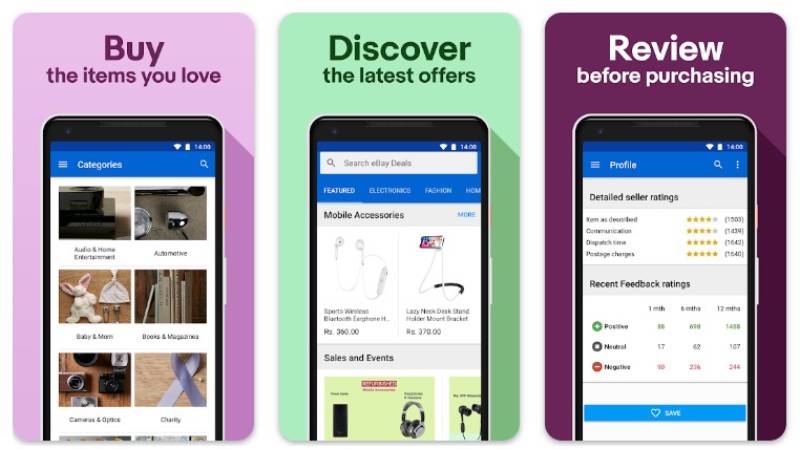
eBay is a general-purpose peer-to-peer selling platform that supports auctions and fixed-price listings for virtually any product category, aimed at both casual and high-volume sellers.
It has the largest buyer pool of any resale platform, with 135 million active buyers globally as of 2025 (eBay 10-K). Mercari can’t touch that reach.
What Does eBay Do?
eBay lets sellers list items via auction or fixed price across 190+ markets, with built-in shipping integrations through USPS, FedEx, and UPS.
How Is eBay Similar to Mercari?
- Both are C2C marketplace apps with mobile-first selling
- Both support prepaid shipping label generation and in-app messaging
- Same wide product range: electronics, clothing, collectibles, home goods
How Is eBay Different from Mercari?
eBay supports auction-style pricing, which Mercari does not. Seller fees run 13-20% depending on category and store subscription, versus Mercari’s flat structure. eBay also enables international shipping to 190+ countries.
Who Is eBay Best For?
Sellers moving niche collectibles, vintage electronics, or high-value items who need a global buyer pool and don’t mind a steeper learning curve.
Key Features of eBay
- Auction format: 3, 5, 7, or 10-day listings with reserve pricing
- Store subscriptions: Basic at $27.95/month for 250+ free listings
- Global shipping: Available to 190+ countries
- Seller Hub: Analytics, bulk listing tools, CSV uploads
Pricing
- Free plan: Yes, up to 250 listings/month
- Paid plans: From $27.95/month (Basic Store)
- Free trial: No
Poshmark
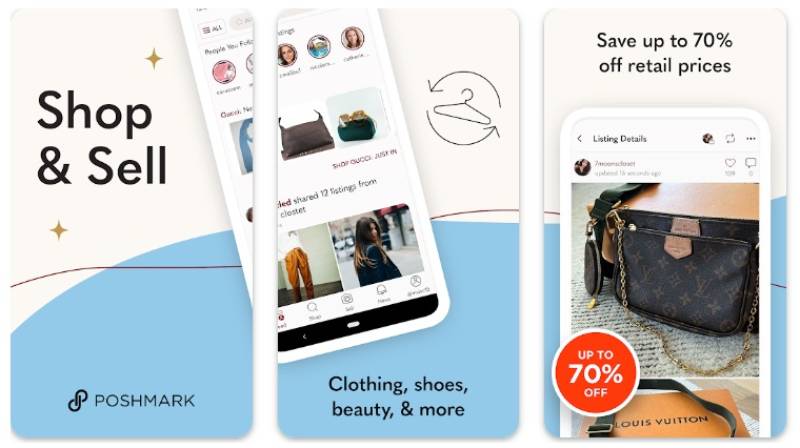
Poshmark is a social commerce resale app focused on fashion, accessories, and home goods, targeting buyers and sellers who want a community-driven online selling platform.
It has 165 million registered users (Fast Company, 2026) and is the dominant platform for mainstream women’s fashion in the U.S.
What Does Poshmark Do?
Poshmark lets sellers list clothing and accessories, share listings in “Posh Parties,” and send offers to users who like items, all within a social feed-style interface. Check out more platforms similar to Poshmark if you want to compare the full secondhand fashion landscape.
How Is Poshmark Similar to Mercari?
- Both are mobile-first resale platforms with prepaid shipping
- Both offer buyer protection policy and seller rating systems
- Flat fee under $15 (Poshmark: $2.95; Mercari: similar small-item structure)
How Is Poshmark Different from Mercari?
Poshmark charges a flat 20% on sales over $15, which is double Mercari’s base rate. Poshmark also requires active social engagement (daily sharing) to maintain listing visibility, while Mercari’s algorithm doesn’t demand it. Mercari covers more product categories.
Who Is Poshmark Best For?
Fashion sellers focused on brand-name clothing and accessories who want a built-in buyer community and don’t mind the higher commission.
Key Features of Poshmark
- Offers to Likers: Send discounts directly to users who liked your item
- Posh Parties: Themed virtual selling events that boost listing visibility
- Authentication: Luxury handbags over $500 are verified before delivery
- Bundle discounts: Encourages multi-item orders from the same seller
Pricing
- Free plan: Yes
- Seller fee: $2.95 flat (under $15), 20% on sales $15+
- Free trial: N/A
Facebook Marketplace
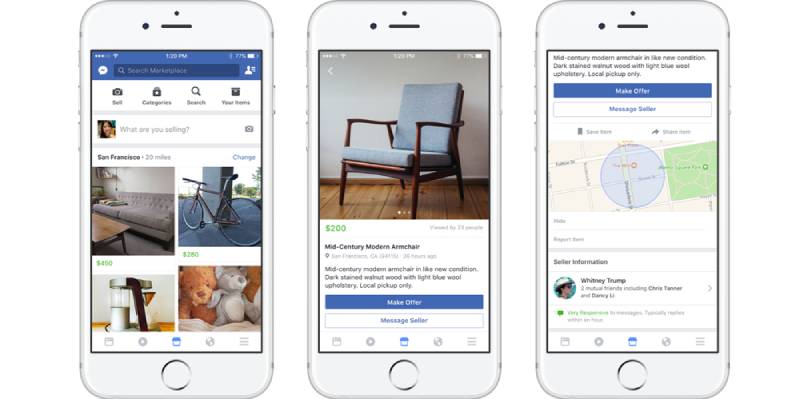
Facebook Marketplace is a local pickup and nationwide selling feature built into the Facebook app, suited for casual sellers who want zero fees on local transactions.
What Does Facebook Marketplace Do?
Facebook Marketplace lets users list items for local pickup at no cost, or offer shipping on eligible categories with payment handled through checkout. Communication runs through Facebook Messenger.
How Is Facebook Marketplace Similar to Mercari?
Shared traits:
- Free listing, no monthly subscription
- Wide product range: furniture, electronics, clothing, vehicles
- Mobile app-based with direct buyer-seller messaging
How Is Facebook Marketplace Different from Mercari?
Local pickup sales are completely free. Mercari charges even on local sales. Facebook Marketplace also lacks Mercari’s dispute resolution system, and as of early 2025, sellers must arrange their own shipping labels through services like Pirate Ship or USPS directly.
Who Is Facebook Marketplace Best For?
Sellers with bulky or heavy items (furniture, appliances) where shipping costs make other platforms unworkable, and who prefer cash-in-hand local deals.
Key Features of Facebook Marketplace
- Local pickup: 0% seller fee, no listing cost
- Shipped sales: 5% fee (min $0.40 for orders under $8)
- Social profiles: Buyers and sellers visible via Facebook identity
Pricing
- Free plan: Yes, local sales are fully free
- Shipped fee: 5% per transaction
- Free trial: N/A
OfferUp
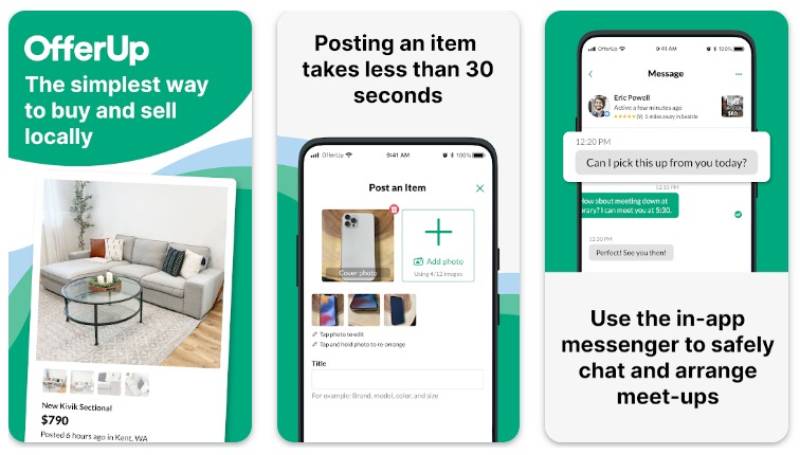
OfferUp is a mobile-first local selling app that prioritizes face-to-face transactions with built-in safety features, designed for sellers who want fast, no-fee deals near them.
Zero seller commission is OfferUp’s biggest draw. Most other platforms take at least 10%.
What Does OfferUp Do?
OfferUp lets users snap a photo, set a price, and list within under a minute. Buyers and sellers communicate in-app, then arrange local meetups using built-in safe exchange location suggestions.
How Is OfferUp Similar to Mercari?
- Both are peer marketplace apps with seller rating systems
- Both support a wide range of used item listings
- Both offer shipping options alongside local pickup
How Is OfferUp Different from Mercari?
OfferUp charges no seller commission. Mercari charges 10% plus a $2 cashout fee. OfferUp’s reach is mostly local, while Mercari functions as a nationwide selling app with stronger buyer protections on shipped orders.
Who Is OfferUp Best For?
Local sellers flipping furniture, appliances, or oversized items where shipping isn’t practical and speed matters more than reach.
Key Features of OfferUp
- TruYou verification: ID-based profile verification for safer meetups
- 0% commission: No seller fees on local sales
- In-app safe meetup locator
- Optional buyer protection: $2.99 per sale
Pricing
- Free plan: Yes
- Seller fee: $0 on local sales
- Free trial: N/A
Depop

Depop is a fashion resale app built around vintage, streetwear, and curated secondhand style, targeting Gen Z buyers and sellers who treat listings like social media posts.
Depop’s gross merchandise volume grew 36.3% in 2025 (Etsy annual report), making it one of the fastest-growing platforms in the recommerce space.
What Does Depop Do?
Depop lets sellers create styled, Instagram-like listings for clothing and accessories, with buyers discovering items through a scrollable feed rather than keyword search alone.
How Is Depop Similar to Mercari?
| Feature | Depop (US) | Mercari (US) |
| Selling Fee | 0% | 10% (on Price + Shipping) |
| Processing Fee | 3.3% + $0.45 | 0% (Eliminated in 2025) |
| Withdrawal Fee | Free (Standard) | Free (Standard) / $3 (Instant) |
| Buyer Fees | Marketplace Fee (~5%) | 3.6% Service Fee + Payment Fee |
| Primary Audience | Gen-Z, Vintage, Streetwear | Broad, general goods, electronics |
| Price Negotiation | Yes (Non-binding offers) | Yes (Binding offers) |
| Shipping | Depop Labels or Own Shipping | Mercari Labels or Own Shipping |
How Is Depop Different from Mercari?
Depop is fashion-only. Mercari accepts electronics, toys, home goods, and more. Depop’s buyer demographic skews 18-26 and cares more about aesthetic than brand names. Depop also operates in 150 countries, while Mercari is U.S.-focused.
Who Is Depop Best For?
Sellers with vintage clothing, Y2K pieces, or streetwear who want an audience that actively searches for one-of-a-kind items and will pay above-thrift prices for the right look. Sellers comparing options in this space should also look at other apps similar to Depop to find the best fit.
Key Features of Depop
- Zero seller commission (U.S. and UK, as of July 2024)
- Feed-based discovery, not just keyword search
- International reach across 150 countries
- Active sellers: 3 million as of Q3 2025 (Etsy SEC filing)
Pricing
- Free plan: Yes
- Transaction fee: 3.3% + $0.45 per sale (U.S.)
- Free trial: N/A
Vinted
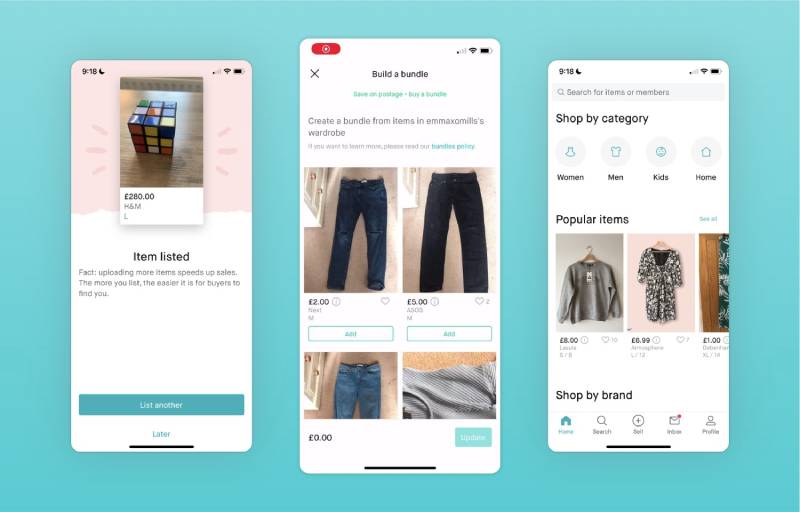
Vinted is a zero-fee resale platform for secondhand clothing and accessories, operating in 22 countries with a model where buyers pay a small protection fee instead of sellers paying commission.
What Does Vinted Do?
Vinted lets sellers list preloved fashion at no cost, keeping 100% of the sale price. Buyers cover a protection fee of roughly 3.6% to fund secure payments and shipping coverage.
How Is Vinted Similar to Mercari?
- Both are mobile selling apps with direct deposit payout
- Both include in-app messaging and offer/counteroffer features
- Both target casual sellers looking to declutter clothing
How Is Vinted Different from Mercari?
Vinted’s seller fee is literally zero. Mercari charges a $2 cashout fee plus payment processing. Vinted also has a much stronger European presence through its Vinted Go logistics network, while Mercari is U.S.-centric. Vinted’s category range is narrower, focused mainly on fashion.
Who Is Vinted Best For?
Volume sellers clearing fast-fashion brands like Zara or H&M who want to keep every dollar from each sale without worrying about commission eating into thin margins.
Key Features of Vinted
- 0% seller fees in all supported markets
- Vinted Go logistics: discounted shipping across Europe
- Available in 22 countries
- Pro seller accounts for limited new-item listings
Pricing
- Free plan: Yes, sellers pay nothing
- Buyer protection fee: ~3.6% (paid by buyer)
- Free trial: N/A
thredUP

thredUP is an online consignment service for secondhand apparel, operating on a clean-out-bag model where sellers ship items in bulk and the platform handles listing, photography, and fulfillment.
It reached 1.57 million active buyers in Q3 2025, up 26% year-over-year (thredUP SEC filing). That growth reflects rising demand for passive reselling.
What Does thredUP Do?
thredUP sends sellers a Clean Out Kit. You fill it, ship it back, and thredUP lists accepted items on your behalf. Payouts depend on item value and condition.
How Is thredUP Similar to Mercari?
Shared attributes:
- Both are used clothing app platforms accepting secondhand items
- Both handle payment processing and buyer protection
- Both target sellers looking to make money from unwanted clothes
How Is thredUP Different from Mercari?
Mercari puts the seller in control of listings, pricing, and shipping. thredUP does all of it for you but takes a much larger commission cut, and low-value items may return $0.50 or less. No price negotiation, no direct buyer contact.
Who Is thredUP Best For?
Busy sellers with large volumes of mid-range clothing who would rather get small payouts automatically than spend time photographing and listing individual items.
Key Features of thredUP
- Clean Out Kit: Free bag sent to your door for bulk submissions
- Hands-off listing: thredUP photographs and prices items
- Resale-as-a-Service (RaaS) for retail brand integrations
- Payout varies: higher-value or brand-name items earn more
Pricing
- Free plan: Yes (to join)
- Seller payout: Commission-based, varies by item value
- Free trial: N/A
Etsy
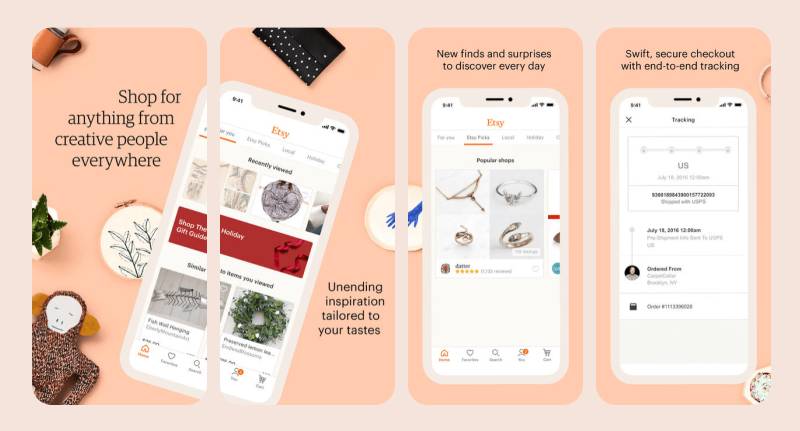
Etsy is a category-specific marketplace for handmade goods, craft supplies, and vintage items (20+ years old), serving independent creators and small shop owners worldwide.
What Does Etsy Do?
Etsy lets sellers build a branded storefront to sell unique, handmade, or vintage products to a buyer base of 86.5 million globally (Etsy 10-K, 2025).
How Is Etsy Similar to Mercari?
- Both allow individual sellers to list and sell without a retail setup
- Both support direct deposit payout and seller rating systems
- Both platforms include vintage and collectible categories
How Is Etsy Different from Mercari?
Etsy is built for handmade and vintage goods. Listing a used phone or random household item won’t work here. Fees sit around 6.5% + $0.20 per listing, with additional payment processing costs, totaling roughly 12%. Etsy also rewards sellers who invest in its advertising tools.
Who Is Etsy Best For?
Makers, crafters, and vintage collectors who want a storefront-style experience and access to buyers specifically searching for unique, non-mass-produced items.
Key Features of Etsy
- Storefront creation: Branded shop with custom banner and policies
- Star Seller badge for high-performing shops
- Etsy Ads: paid promotion within search results
- Pattern by Etsy: standalone website builder for sellers
Pricing
- Free plan: Yes (listing fee: $0.20 per item)
- Transaction fee: 6.5% per sale
- Free trial: No
Grailed
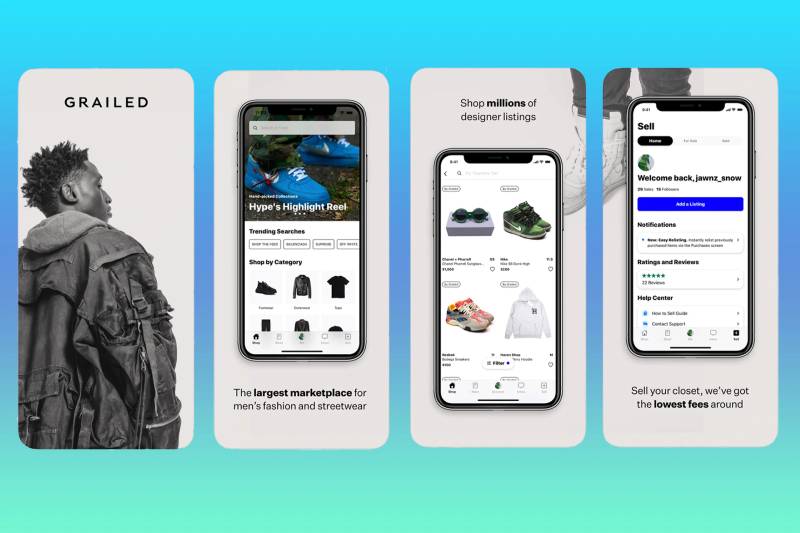
Grailed is a men’s fashion marketplace focused on streetwear, designer pieces, and sneakers, where knowledgeable buyers pay fair prices for authenticated, well-described listings.
What Does Grailed Do?
Grailed lets sellers list men’s clothing and accessories to a buyer community that self-polices authenticity, with fakes flagged publicly and bad sellers effectively blacklisted by the community.
How Is Grailed Similar to Mercari?
Both platforms support price negotiation features, buyer messaging, and seller ratings. Both take a commission on each sale and support PayPal as a payment option.
How Is Grailed Different from Mercari?
Grailed is menswear-only. No home goods, electronics, or womenswear. The buyer base negotiates aggressively, often offering 60-70% of asking price. But when items sell, they often command higher prices than on Mercari because buyers are niche-literate and willing to pay for the right piece.
Who Is Grailed Best For?
Men’s resellers with designer, vintage, or limited-edition streetwear who understand their items’ value and can handle aggressive offer culture in exchange for better final sale prices.
Key Features of Grailed
- 9% commission + 3.49% + $0.49 payment processing (U.S.)
- Community-driven authenticity policing
- Curated categories: Supreme, Off-White, Raf Simons, Jordans
- International sales supported (higher processing fee applies)
Pricing
- Free plan: Yes
- Seller fee: 9% commission + payment processing
- Free trial: N/A
Whatnot

Whatnot is a live auction selling app where sellers go on camera to sell items in real-time to bidding viewers, designed for collectibles, fashion, and niche inventory that benefits from live demonstration.
One seller on the platform reported clearing $280 in a single one-hour show for collectibles. High energy, but high variance.
What Does Whatnot Do?
Whatnot lets sellers schedule live “shows,” stream video, and auction items in rapid 30-second rounds. Buyers bid and pay instantly. Sellers ship after the stream ends.
How Is Whatnot Similar to Mercari?
- Both support peer-to-peer selling with instant payment processing
- Both cover fashion, collectibles, and electronics categories
- Both charge around 11% total in combined fees
How Is Whatnot Different from Mercari?
Mercari is passive. You list, wait, and sell. Whatnot requires showing up on camera and engaging live viewers three or more times per week to build a consistent audience. It’s closer to a broadcast format than a traditional online marketplace.
Who Is Whatnot Best For?
High-energy sellers with bulk inventory (Funko Pops, sneakers, trading cards, fashion lots) who want to move 50+ items in a single session instead of managing individual static listings.
Key Features of Whatnot
- Live auction format: 30-second bidding rounds
- 8% selling fee + 2.9% + $0.30 payment processing (~11% total)
- Instant buyer payment at time of sale
- Growing fast in fashion, Funko Pops, and sports cards
Pricing
- Free plan: Yes
- Seller fee: ~11% total per transaction
- Free trial: N/A
What Makes a Resale App a Real Alternative to Mercari?
Not every peer-to-peer selling app is a genuine substitute for Mercari. A real alternative has to match at least the core mechanics: easy mobile listing, nationwide reach, built-in shipping, and a buyer protection policy.
The U.S. secondhand apparel market grew 14% in 2024, outpacing the broader retail clothing market by 5x, according to ThredUp’s 2025 Resale Report. That growth is split across dozens of competing platforms, each targeting different sellers.
Four attributes decide whether a platform truly competes with Mercari or just complements it.
| Attribute | What It Measures | Why It Matters |
| Seller Fees | % taken per sale + payment processing fees | Directly affects your profit margins and final take-home pay per item. |
| Buyer Pool Size | Number of active monthly users/shoppers | Drives the “Sell-Through Rate” (STR) and determines how fast your items flip. |
| Category Range | Allowed inventory (Fashion, Tech, Home, etc.) | Limits or expands your sourcing strategy based on platform restrictions. |
| Payout Speed | Days from item delivery to funds being “Available” | Crucial for inventory reinvestment and maintaining healthy business cash flow. |
A platform that covers all four at a competitive level is a substitute. One that excels in only one or two is better used alongside Mercari than instead of it.
Online resale grew 23% in 2024, its strongest rate since 2021, per ThredUp’s 2025 Resale Report. That kind of growth has pulled serious resellers toward cross-listing rather than picking a single platform.
Which Apps Like Mercari Charge the Lowest Seller Fees?
Fee structure is the first thing experienced resellers check. A 10% difference in commission on 100 sales per month is real money.
Mercari currently charges 0% seller commission plus a $2 cashout fee and 2.9% + $0.30 payment processing. That shift from its old 10% fee put it closer to zero-fee platforms, but not quite there.
Platforms with Zero Seller Commission
Zero-fee leaders:
- Vinted: 0% seller fee in all supported markets. Buyers pay a ~3.6% protection fee instead.
- Facebook Marketplace: 0% on local pickup sales. 5% fee (min $0.40) on shipped orders only.
- OfferUp: No commission on local sales. Optional $2.99 buyer protection per transaction.
- Depop: 0% seller commission (U.S. and UK, effective July 2024) + 3.3% + $0.45 processing.
Selling a $30 item on Vinted nets you $30. The same item on Poshmark nets roughly $24. On Grailed, around $25.80 after its 9% commission plus processing fees.
Facebook Marketplace and Vinted charge no seller fees for local and standard transactions, making them the lowest-cost options for volume sellers, per Flippd’s 2025 fee comparison.
Platforms Where Higher Fees Are Worth Paying
Poshmark’s 20% commission and eBay’s 13-20% range look steep on paper. They are, until you account for buyer pool size.
eBay has 135 million active buyers across 190+ markets (eBay 2025 10-K). A $200 vintage camera on eBay will often sell faster and for more than the same listing on a low-fee platform with 10% of the audience.
Key tradeoff: Lower fee platforms work best when your items appeal to a broad local audience. Higher-fee platforms pay off on niche, high-value, or collectible inventory where buyer depth matters more than margin.
| Platform | Seller Fee | Take-home on $30 sale |
| Vinted | 0% | ~$30.00 |
| Depop (US) | 3.3% + $0.45 | ~$28.56 |
| Mercari | 10% + 2.9% + $0.30 | ~$26.13 |
| Grailed | 9% + 3.49% + $0.49 | ~$25.27 |
| Poshmark | 20% | ~$24.00 |
Which Apps Like Mercari Work Best for Selling Clothes?
Fashion resale is the largest category on every major secondhand marketplace. 58% of U.S. consumers bought secondhand apparel in 2024, per ThredUp’s 2025 Resale Report. The platform you choose for clothes selling shapes both your speed of sale and the price you get.
Best Apps for Vintage and Streetwear Resale
Depop’s gross merchandise volume grew 36.3% in 2025 (Etsy 2025 annual report), making it the fastest-growing platform in this category.
- 56 million registered users across 150 countries
- Feed-based discovery rewards styled photos over keyword-heavy listings
- Buyer demographic skews 18-26, prioritizes aesthetic over brand recognition
Grailed covers the men’s side. Its 9% commission cuts deeper than Depop, but buyers here know exactly what year a Raf Simons jacket is from and will pay accordingly. Expect lowball offers at 60-70% of your asking price.
Both platforms reward niche knowledge. Generic clothing sits unsold. A well-described 1998 Supreme box logo hoodie moves in hours.
Best Apps for Everyday Fashion and Fast-Fashion Brands
Poshmark has 165 million registered users (Fast Company, 2026) and is the dominant C2C marketplace for mainstream women’s fashion in the U.S.
Its social layer (daily sharing, Posh Parties, Offers to Likers) drives consistent visibility. That engagement cost is real though. Sellers who don’t share listings daily see sharp drops in listing visibility.
Vinted is the better option for volume. Zero seller fees mean you keep everything on a $15 Zara blouse instead of losing 20% to Poshmark’s commission. For sellers moving fast-fashion brands in bulk, the math is straightforward.
ThredUP handles the work for you. Ship a bag, they list it. Payouts are lower (sometimes $0.50 per item on low-value pieces), but it suits sellers who want to clear inventory without photographing 80 individual items. ThredUP reached 1.57 million active buyers in Q3 2025, up 26% year-over-year (ThredUP SEC filing).
Which Apps Like Mercari Are Best for Selling Electronics, Collectibles, and General Items?
Mercari’s real strength is general merchandise. Electronics, toys, games, home goods, kitchen items. Fashion platforms won’t take a used Nintendo Switch. These platforms will.
Best Apps for Local Pickup and Bulky Items
Facebook Marketplace and OfferUp dominate this segment. No shipping means no labels, no boxes, no carrier trips.
Facebook Marketplace reaches over 1 billion monthly active users through Facebook’s main app. Zero fees on local sales. The only catch: as of early 2025, sellers arranging shipped orders need to source their own labels through Pirate Ship or USPS directly. Facebook no longer provides prepaid labels in most categories.
OfferUp’s TruYou ID verification is worth mentioning. It adds a trust layer to local meetups that Craigslist never had. Local pickup, in-app messaging, zero seller commission, safe exchange spot locators. Good for furniture, appliances, and oversized items.
Best Apps for Collectibles and Niche Categories
eBay is the serious reseller’s platform. Auction-style listings, 135 million buyers, 190+ countries, Seller Hub analytics. Collectible sellers running 100+ listings per month are better served by eBay’s Basic Store subscription at $27.95/month than by Mercari’s flat structure.
Whatnot is different. It runs live auctions. You go on camera, auction items in 30-second rounds, buyers pay instantly. One active Funko Pop seller reported clearing $280 in a single one-hour show. Fees sit at roughly 11% total (8% selling + 2.9% + $0.30 processing). Not cheap, but items move fast.
| Platform | Best Category | Unique Strength |
| eBay | Collectibles, electronics, vehicles | 135M+ buyers, auction + fixed price format |
| Facebook Marketplace | Furniture, appliances, general | 0% fees for local sales, massive active reach |
| OfferUp | Local bulky items | TruYou ID verification, 0% local commission |
| Whatnot | Collectibles, trading cards, luxury | Live-streamed auctions, high engagement |
How Do Resale App Seller Protections and Payout Speeds Compare?
Fees are visible. Protections and payout timelines are what catch resellers off guard on their first dispute.
Payout timelines vary significantly across platforms:
- Poshmark releases funds 3 days after delivery confirmation
- Mercari auto-releases funds 3 days after delivery if the buyer hasn’t rated
- Depop sends payment 2 business days after delivery confirmation (or 10 business days from sale date)
- OfferUp pays instantly for local cash sales, no hold
- eBay holds funds until delivery confirmed, timeline varies by account standing
Buyer protections also differ in coverage amount. Depop Protection covers up to $300 when sellers use Depop’s shipping labels. Mercari’s Shipping Protection covers up to $200. Poshmark’s Posh Protect system covers the full transaction amount held in escrow, according to CNBC Select’s 2025 review.
Dispute resolution is the real test. Mercari and Poshmark both use in-house resolution teams. eBay’s Money Back Guarantee is one of the strongest in the market. It covers item-not-received and significantly-not-as-described claims, and eBay typically resolves cases within 3-5 business days.
Cross-listing risk is real. In August 2024, Mercari changed its API, causing cross-listing tools to fail to auto-delist sold items. Some sellers ended up with double sales and had to manually refund one buyer. This is a platform-level risk no buyer protection policy covers.
For passive sellers doing occasional secondhand transactions, any major platform’s protections are sufficient. For volume resellers managing 50+ active listings, eBay’s Seller Hub and established dispute infrastructure offer the most predictable outcomes.
How Do You Choose the Right Selling App Based on What You Sell?
Platform choice follows inventory type. The mistake most new resellers make is picking one platform and sticking with it regardless of what they’re selling.
48% of younger shoppers (ages 18-44) now look to secondhand first when buying apparel, up 7 percentage points from 2022, per ThredUp’s 2025 Resale Report. That audience is split across multiple platforms, not concentrated in one.
Match your inventory to the right platform:
- Fashion lots (mainstream brands): Poshmark or Vinted
- Vintage and streetwear: Depop or Grailed
- Electronics and collectibles: eBay or Swappa
- Furniture and appliances: Facebook Marketplace or OfferUp
- Bulk passive clothing: thredUP
- Live-sell inventory (cards, Funko, sneakers): Whatnot
Cross-listing makes sense once you have 30+ active listings and a system for managing inventory. Tools like Closo, Vendoo, and List Perfectly let you push one listing to multiple platforms automatically and delist the item everywhere the moment it sells on any platform.
The double-sell problem is the biggest risk in cross-listing. Without automation that talks directly to each platform’s API, you will eventually sell the same item twice. One refund and an angry buyer is a recoverable mistake. Doing it repeatedly damages your seller rating.
Start simple. Pick one platform, test sell-through rate for 30 days, then expand. A seller who knows Poshmark deeply will outperform one who’s half-committed to five platforms simultaneously.
The global secondhand apparel market is expected to reach $367 billion by 2029 at a 10% CAGR, according to ThredUp’s 2025 Resale Report. That growth means more competition between platforms for sellers, which should keep fees competitive and protections improving over time. Sellers who build multi-platform workflows now are better positioned to benefit from that.
FAQ on Apps Like Mercari
What is the best app like Mercari for selling clothes?
Poshmark and Depop are the strongest options for fashion resale. Poshmark suits mainstream brands with its large buyer community. Depop works better for vintage, streetwear, and Gen Z-targeted items. Your best choice depends on what you sell and which audience you need.
Which resale apps charge the lowest seller fees?
Vinted and Facebook Marketplace charge zero seller fees on standard transactions. Depop dropped its 10% commission in July 2024, leaving only a 3.3% + $0.45 processing fee. OfferUp also charges nothing on local pickup sales.
Is eBay better than Mercari for selling used items?
eBay has a significantly larger buyer pool at 135 million active buyers. It supports auctions, international shipping, and niche collectibles better than Mercari. For casual, low-volume selling, Mercari’s simpler interface often wins. For scale, eBay outperforms it.
What app is best for selling electronics like Mercari?
eBay is the go-to for used electronics due to its global reach and auction format. Swappa specializes in phones, laptops, and tablets with a flat-fee model. Both outperform Mercari on dedicated electronics buyer traffic and category depth.
Can I sell locally on apps similar to Mercari?
Yes. OfferUp and Facebook Marketplace are built around local pickup with zero seller fees. Both include in-app messaging and buyer profiles. OfferUp adds TruYou ID verification for safer meetups. Neither requires shipping, making them ideal for bulky or low-margin items.
Which selling app has the fastest payout?
OfferUp pays instantly on local cash sales. Poshmark releases funds 3 days after delivery confirmation. Depop transfers within 2 business days post-delivery. Mercari auto-releases funds 3 days after delivery if the buyer has not rated the transaction.
What is the best Mercari alternative for vintage and secondhand fashion?
Depop leads for vintage clothing and curated secondhand style. It operates in 150 countries with 56 million users and a feed-based discovery model. Grailed covers the men’s designer and streetwear segment. Both reward well-photographed, niche-specific listings over generic product shots.
Are there any free selling apps like Mercari?
Several free listing apps exist with no upfront costs. Vinted, OfferUp, and Facebook Marketplace all allow free listings with no monthly subscription. Fees only apply on shipped transactions or optional paid features. None charge sellers just for creating an account or posting items.
Which app is better for selling collectibles, Mercari or eBay?
eBay is the stronger platform for collectibles. Its auction format drives competitive pricing on rare items, and its buyer base is deeper in niche categories. Whatnot is also worth considering for live auction selling of trading cards, Funko Pops, and sneakers.
Can I use multiple resale apps at the same time?
Yes, and most serious resellers do. Cross-listing tools like Vendoo and Closo sync inventory across Mercari, Poshmark, eBay, and Depop simultaneously. When an item sells on one platform, it auto-delists everywhere else, preventing double sales and reducing manual listing work significantly.
Conclusion
This conclusion is for an article presenting the strongest apps like Mercari across every major selling category.
No single platform wins everywhere. eBay leads on buyer volume and collectibles. Vinted and Depop offer the lowest seller fees. Poshmark dominates mainstream fashion resale. OfferUp and Facebook Marketplace handle local pickup better than any shipped-only alternative.
The secondhand marketplace is only getting more competitive. Online resale is projected to reach $40 billion in the U.S. by 2029, per ThredUp’s 2025 Resale Report.
Pick the platform that fits your inventory first. Add cross-listing tools once your volume justifies it. That combination, not platform loyalty, is what separates casual sellers from consistent ones.

- How Software Teams Write SOPs for Releases and Deployments - October 22, 2026
- Notepad++ Android Options: Apps That Come Close - October 21, 2026
- Data Management Services: A Practical Guide for Growing Companies - October 21, 2026