Custom Web Application Development for Startups and Scale-ups
TMS Outsource plans, builds, and launches custom web applications for companies that need production-grade software, not templates. From early-stage SaaS MVPs to complex multi-tenant enterprise platforms, our engineering teams handle the full stack: product discovery, UI/UX design, backend architecture, frontend development, QA, infrastructure, and post-launch support.
Every client arrives in a different situation. TMS structures the engagement around where you are, not where we wish you were.
01
Building Something New
You have a product idea, a business case, or an early design. TMS takes it from requirements through architecture, development, QA, and launch. We validate scope before coding starts so you do not over-invest in a direction that needs to change. The same team that scopes the product builds it, so no context is lost between planning and execution. You get a working MVP in 8 to 14 weeks, then iterate based on real user feedback.
02
Extending an Existing Team
Your in-house engineers have a roadmap but not enough capacity. TMS embeds additional developers, architects, or QA engineers into your team, working in your process, your codebase, and your sprints. There is no separate TMS silo. Our engineers attend your standups, use your tools, and report to your PM. You scale capacity up or down as your sprint cadence demands, without the recruitment timeline.
03
Rescuing a Troubled Project
You have inherited a codebase that is slow, brittle, or unfinished. TMS conducts a technical audit first, then rebuilds or refactors what needs to change while keeping the rest running. We have done this for projects originally built by other agencies and by in-house teams that outgrew their original architecture. You get a clear diagnosis, a prioritized remediation plan, and a team that can execute it without starting from scratch.
02
What We Build
Nine categories of web applications TMS has delivered in production. Each one is a different engineering problem, and we have shipped real products in all of them.
SaaS Platforms
Multi-tenant architecture, subscription billing, role-based access, and API-first design. We handle the full SaaS lifecycle: onboarding flows, plan management, usage metering, and tenant isolation. Amelia, an enterprise booking SaaS built by TMS, has 90,000+ active installs on WordPress.org.
Custom CRM
Workflow automation, pipeline management, customer data modeling, and third-party integrations. We build CRMs that match your sales process instead of forcing your team into a generic tool. Custom fields, automated triggers, reporting dashboards, and integrations with email, calendar, and billing systems.
Booking & Scheduling
Real-time availability, payment processing, calendar sync, and multi-location support. We handle timezone complexity, double-booking prevention, recurring schedules, and group bookings. Amelia is the proof point: an enterprise appointment booking platform with 90,000+ active installs on WordPress.org.
Data & BI Tools
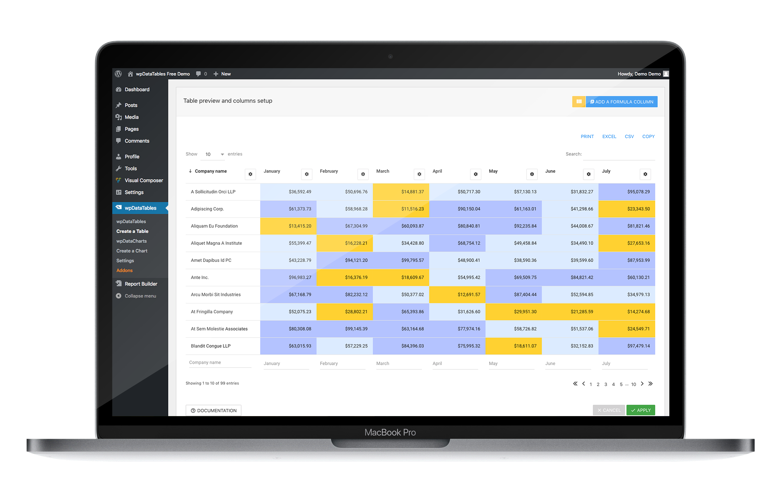
Dashboard design, data ingestion pipelines, chart libraries, and export functionality. We build tools that make complex data understandable for non-technical users. WPDataTables, a data visualization platform built by TMS, has 60,000+ active installs on WordPress.org and handles complex data ingestion and chart rendering at scale.
eCommerce Platforms
Product catalog, cart and checkout, payment gateway integration, and inventory management. We optimize for conversion: fast page loads, smooth checkout flows, and mobile-first design. Integrations with Stripe, PayPal, and shipping providers are standard, not add-ons.
eLearning Platforms
Course management, progress tracking, video hosting integration, and certification workflows. We build learning platforms that handle content drips, quizzes, student progress, and instructor dashboards. SCORM and LTI integrations available for institutional requirements.
Business Automation
Rule-based workflows, document processing, notification systems, and ERP integrations. We build tools that remove manual work from your team's day. If a process happens the same way more than three times, it should be automated, and we build the systems that do it.
Professional Networks
User profiles, connection graphs, activity feeds, messaging, and moderation tools. We build platforms that connect professionals around shared interests or industries, with the social features users expect and the moderation tools administrators need.
Multimedia Platforms
Media storage and transcoding, streaming, CDN integration, and access control. We handle the infrastructure challenges of video and audio platforms: encoding pipelines, adaptive bitrate streaming, and storage cost optimization without sacrificing playback performance.
03
Our Delivery Process
What actually happens after you contact us. Six phases, each with a concrete deliverable. You see progress every few days, not just at the end.
01 · Week 1 to 2
Discovery
Requirements, scope, and architecture decisions.
We map business goals, user needs, and technical constraints into a validated product scope. You leave this phase with a clear understanding of what is being built, why, and what it will cost. No coding happens until scope is confirmed.
02 · Week 2 to 3
Architecture
Tech stack, data model, API design, infrastructure.
Our senior engineers design the system architecture: database schema, API contracts, service boundaries, and deployment topology. Decisions are documented so the whole team builds against the same blueprint.
03 · Week 3+
Iterative Development
Two-week sprints with working software each cycle.
We build in two-week sprints. Every sprint delivers working software you can test, not a status report. UI/UX design runs alongside development, not before it, so interfaces are validated against real data.
04 · Ongoing
QA
Embedded testing throughout, not a phase at the end.
QA is built into every project, not added at the end. QA engineers define acceptance criteria during planning and validate each feature before it leaves the sprint. Automated tests run on every commit.
05 · Launch
Deployment
CI/CD pipeline, staging environment, production launch.
We deploy through automated CI/CD pipelines with staging environments for final validation. Production launch is staged and monitored. Rollback plans are in place before any deployment, so a failed release never means downtime.
06 · Post-Launch
Support
Monitoring, feature development, and platform upgrades.
After launch, we offer ongoing support, feature development, and platform upgrades. The same team that built your application can maintain it, with zero knowledge transfer delay.
04
Technology Stack
The technologies we work with in production, organized by layer. If your stack is not here, ask. We evaluate new frameworks when client requirements demand it.
01
Frontend
React, Vue.js, Angular, Next.js, and Nuxt. We build component-based, type-safe frontends with TypeScript as the default. State management, server-side rendering, and progressive web app support are all in-house capabilities, not experimental add-ons.
02
Backend
Node.js, PHP, Symfony, Laravel, and Python/Django. We choose the backend framework that fits your team's skills and your product's long-term needs, not the one we happen to prefer. API-first design is standard across all backends we build.
03
Databases
PostgreSQL, MySQL, MongoDB, and Redis. We model data for query patterns the application will actually run, not for theoretical elegance. Caching strategies, indexing, and query optimization are part of the architecture, not performance afterthoughts.
04
Infrastructure & Cloud
AWS, Google Cloud Platform, Docker, and Kubernetes. We deploy with infrastructure-as-code, so environments are reproducible and deployments are automated. Auto-scaling, load balancing, and monitoring are configured from day one.
05
APIs & Integration
REST, GraphQL, and WebSockets. We design APIs as contracts, not afterthoughts. Third-party integrations include Stripe, PayPal, Twilio, SendGrid, AWS services, and custom partner APIs. Every integration includes retry logic, error handling, and monitoring.
06
CMS & Content
WordPress and ProcessWire for content-driven applications. We have built and maintain plugins downloaded more than 4.4 million times, so CMS integration is not a side capability. It is a core competency with a proven track record at scale.
05
Why TMS, Why Eastern Europe
The question every prospective client is implicitly asking. Here is the direct answer.
40 to 60% Lower Cost
Engineering rates 40 to 60% below Western EU and US agencies, with no compromise on code quality, delivery process, or communication. You get senior engineers and structured sprints at a rate that does not consume your entire budget before the product ships.
Timezone Overlap
Belgrade and Bucharest are in CET+1, which overlaps cleanly with Western Europe and US East Coast morning hours. You get real-time collaboration during your working day, not async updates waiting from a team 12 hours away.
7+ Years Average Experience
40+ engineers with 7+ years average industry experience. You are not assigned to junior developers learning on your budget. Senior engineers handle architecture decisions and complex implementations by default.
Direct Communication
English-fluent team, direct communication with engineers, no account management middlemen. You talk to the people building your product, not a project manager who relays messages. Decisions are made in real time, not over a 48-hour email cycle.
06
Products We've Built
Three products with significant scale. Full case studies on the portfolio page.
Amelia
Booking SaaS · 90,000+ active installs
Enterprise appointment booking SaaS built by TMS. 90,000+ active installs on WordPress.org, handling real-time availability, payments, and multi-location scheduling.
Data visualization platform for WordPress with 60,000+ active installs on WordPress.org. Complex data ingestion, chart rendering, and export functionality maintained at scale by the TMS team.
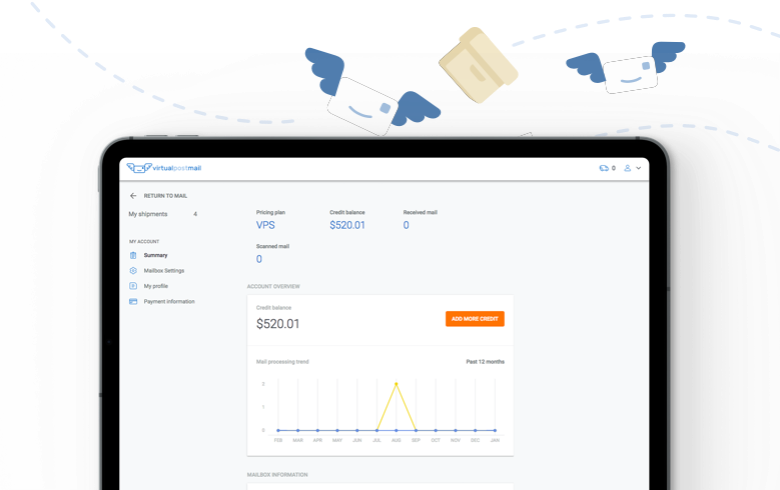
Full-stack rebuild of a SaaS virtual mailbox platform for distributed businesses. TMS handled the complete lifecycle: discovery, architecture, development, QA, and deployment.
4.4M+combined WordPress.org downloads of TMS-built plugins
07
Frequently Asked Questions
A website is primarily informational. It presents content to visitors. A web application is interactive software that runs in a browser: users log in, manage data, run workflows, and take actions that change state. TMS builds web applications, not marketing websites.
A focused MVP with a defined scope typically takes 8 to 14 weeks from kickoff to production launch. Complex multi-tenant SaaS platforms or enterprise applications with deep integrations take 4 to 9 months. TMS delivers in iterative sprints so you can validate and adjust before the full build is complete.
Yes. TMS regularly inherits applications from other agencies or in-house teams. We start with a technical audit covering architecture, code quality, security, and test coverage, then produce a remediation plan before any development begins.
Yes, SaaS is a core delivery type for TMS. We handle multi-tenant architecture, subscription and billing integration, role-based access control, and API-first design. Amelia, an enterprise appointment booking SaaS built by TMS, has 90,000+ active installs and 1.6M+ downloads on WordPress.org.
Stack selection depends on the project's requirements, performance targets, and your team's existing capabilities. TMS works with React and Vue.js on the frontend, Node.js and PHP/Symfony on the backend, PostgreSQL and MongoDB for data, and AWS for infrastructure. We recommend what fits the problem, not what we default to.
Project costs vary based on scope, complexity, and integration requirements. TMS rates are competitive with Eastern European market pricing, typically 40 to 60% below Western EU or US agencies. Contact us for a scoped estimate based on your specific requirements.
Yes. After launch, TMS offers ongoing support, feature development, and platform upgrades. The same team that built your application can maintain it, with zero knowledge transfer delay.
All source code, design assets, and documentation belong to you from day one. No vendor lock-in, no hostage codebases. If you ever decide to move to an in-house team, the handover is clean and complete.
Related Services
Web application projects often combine multiple disciplines. These services complement web development engagements at TMS.