TMS Outsource has provided software testing and quality assurance services since 2014, working with startups, SaaS platforms, and enterprise software teams across Europe and North America. Our QA engineers work embedded within product teams - not as a separate sign-off step - catching issues earlier in the cycle when they are cheapest to fix.
A product that works in development and fails in production costs more to fix than to catch early. TMS QA engineers are embedded in your development process from sprint one - not brought in at the end to rubber-stamp a release.
01
The Break-It Mindset
Developers build to make things work. QA engineers build to make things break - on purpose, under controlled conditions, before users ever see the failure. This is a fundamentally different discipline, and it requires a different team. TMS QA engineers think in edge cases, race conditions, and failure modes, not happy paths. They find the bugs your developers would never think to look for, because they are not the ones who wrote the code.
02
Catch It Early, Fix It Cheap
The cost of fixing a bug grows by orders of magnitude the later it is found. A defect caught in sprint costs minutes. The same defect caught in production costs hours, plus user trust, plus potential revenue. TMS embeds QA into every sprint so issues surface when they are cheapest to resolve - before they reach a release candidate, let alone a live user.
02
What We Test
Nine types of testing covering the full quality lifecycle. Most vendors cover three or four. TMS covers all nine, from manual exploration to security penetration.
Manual Testing
Exploratory, scenario-based, and edge-case testing by experienced QA engineers who think like real users. Automated tests catch what you predicted; manual testing catches what you didn't. Our QA team follows structured test cases for regression coverage and conducts freeform exploratory sessions to surface issues no script would find.
Automated Testing
Selenium, Cypress, Playwright, and Appium test suites for regression coverage at scale. Automated tests run on every commit via CI/CD, giving developers feedback in minutes, not days. We build suites that are maintainable - not brittle scripts that break on every UI change. Test coverage reports give you visibility into what is tested and what is not.
Performance & Load Testing
JMeter and k6 load tests to verify behavior under real-world traffic spikes. We simulate concurrent users, database load, and API throughput to find breaking points before your users do. Performance budgets are defined during planning and enforced during testing, so you know the system handles your projected growth, not just today's traffic.
API Testing
Postman and REST-assured validation of endpoints, contracts, and error handling. We test authentication flows, rate limiting, pagination, error responses, and data integrity across the full API surface. Contract tests ensure frontend and backend teams stay aligned, and schema validation catches breaking changes before they reach production.
Mobile Testing
iOS and Android device matrix testing for both native and cross-platform apps. We test across screen sizes, OS versions, and hardware capabilities using BrowserStack and Sauce Labs for cloud coverage, plus physical devices for scenarios that require them. Every mobile app we ship goes through this matrix before release.
Security / Penetration Testing
OWASP-aligned vulnerability assessment before release. We test authentication, authorization, input validation, data exposure, and session management. Reports include severity classification (Critical / High / Medium / Low) and remediation guidance. Security testing is not a checkbox - it is a structured attempt to break into your application before someone else does.
Regression Testing
Full coverage runs after every release cycle to prevent feature rollback. When new code ships, old code can break in ways no one anticipated. Our regression suites - automated where possible, manual where needed - verify that existing functionality still works after every change. This is what stops the "we fixed one bug and created three" cycle.
Acceptance Testing
Business requirement validation before sign-off. We verify that each feature meets the acceptance criteria defined during planning - not just that it works technically, but that it solves the business problem it was built for. This is the final gate before a release is approved, and it is where product owners and QA align on "done means done."
Usability Testing
Real-user observation sessions to surface UX friction that no automated test can detect. We watch users complete core tasks, note where they hesitate, backtrack, or abandon, and feed those findings back to the design and development teams. Usability testing answers the question no script can: does this product make sense to the person using it?
03
Tools We Work With
The testing tools we use in production. If your stack requires something not listed here, ask - we evaluate new tools when client requirements demand it.
01
Test Automation
Selenium, Cypress, Playwright, Appium
Web and mobile test automation frameworks. Cypress and Playwright for modern web apps, Selenium for legacy browser coverage, and Appium for native and cross-platform mobile testing.
02
Performance
JMeter, k6, Gatling
Load testing and performance profiling tools. JMeter for protocol-level load tests, k6 for developer-friendly performance scripting, and Gatling for high-concurrency simulation.
03
API Testing
Postman, REST-assured, SoapUI
Endpoint validation and contract testing. Postman for interactive API exploration, REST-assured for Java-based automated API tests, and SoapUI for SOAP and REST service testing.
04
Mobile Testing
BrowserStack, Sauce Labs, Xcode Instruments
Cloud-based device testing across hundreds of real devices. BrowserStack and Sauce Labs for cross-platform coverage, Xcode Instruments for iOS performance profiling and memory leak detection.
05
Bug Tracking
Jira, Linear, TestRail
Issue tracking and test case management. Jira and Linear for bug reporting and sprint integration, TestRail for structured test case organization and execution tracking.
06
CI/CD Integration
GitHub Actions, GitLab CI, Jenkins
Automated test execution on every commit and pull request. Tests run in CI pipelines, with results reported directly to the development team. Failed tests block merges, not just generate reports.
04
How QA Fits Into Development
QA is not a phase at the end. It is a discipline that runs through every sprint. Here is how TMS integrates testing into the development lifecycle.
01
Sprint Planning - QA Defines Acceptance Criteria
Before a single line of code is written, TMS QA engineers sit in sprint planning and help define acceptance criteria for every feature. This means the definition of "done" includes testable conditions from the start, not a vague "it works" that gets argued about later. Developers know exactly what they are building toward, and QA knows exactly what to test against.
02
In-Sprint Testing - QA Validates Each Feature
As developers complete features within the sprint, QA validates them immediately - not in a separate phase weeks later. Bugs are found while the context is fresh, the developer is still available, and the code is still in the developer's head. This is the single biggest difference between embedded QA and end-of-cycle testing: issues are found and fixed in hours, not weeks.
03
Regression Before Release - Full Suite Runs
Before any release candidate is approved, the full regression suite runs against it. Automated tests execute in CI/CD, manual tests cover the critical paths, and performance tests verify the system handles expected load. Only when the release candidate passes every gate does it move to deployment. This is what prevents the "it worked on my machine" problem from reaching your users.
After go-live, our support team monitors performance metrics, error rates, and user-reported issues. If something slips through, it is caught and triaged quickly. Post-release monitoring closes the loop: the QA process does not end at deployment, it ends when the system is proven stable in production.
05
How You Can Work With Us
Three engagement models. Whether you need a full QA team or a one-time assessment, we structure the engagement around your situation.
Embedded QA Team
TMS QA engineers join your existing development team, attending your standups, working in your sprints, and reporting to your PM. They become part of your team's rhythm, not an external vendor sending reports.
Project-Based Testing
Full QA cycle for a defined product or release. We scope the testing effort, execute it, and deliver a comprehensive report. Best when you have a specific release coming up and need dedicated QA focus for a bounded period.
QA Audit
One-time review of an existing codebase or testing setup. We assess test coverage, identify gaps, evaluate tooling, and deliver a prioritized roadmap for improving your QA process. Typically 1–2 weeks, with a concrete action plan as the deliverable.
06
Industries We Serve
Domain experience that shortens the learning curve. We know the regulatory and technical constraints before you explain them.
01
Fintech
Payment flow compliance, transaction integrity testing, and regulatory audit trails. We test the flows where a bug does not just annoy a user - it costs money or triggers a compliance failure.
02
Healthcare & MedTech
Regulatory validation for HIPAA and medical device software. We test data handling, access controls, and audit logging with the rigor that healthcare compliance demands, not a generic checklist.
03
SaaS
Multi-tenant regression testing, subscription flow validation, and API contract testing. We verify that changes for one tenant do not break the experience for another - the core risk in multi-tenant architecture.
04
E-commerce
Checkout flow testing, payment gateway integration validation, and performance testing for traffic spikes. We test the path from cart to confirmation under load, because that is where revenue lives or dies.
05
Mobile Apps
OS and device matrix testing across iOS and Android. We test the fragmentation problem - different screen sizes, OS versions, and hardware capabilities - that makes mobile QA fundamentally different from web QA.
07
QA Work We've Done
Products where TMS QA was involved at scale. Full case studies on the portfolio page.
Amelia
Booking Plugin · 90,000+ active installs
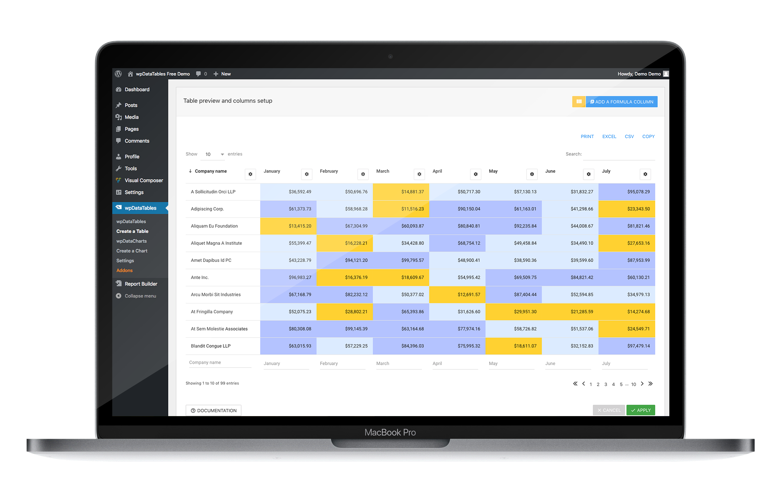
Regression and compatibility testing across 50+ countries. Every update goes through the full QA cycle before reaching 90,000+ active sites.
Automated test suite maintained across WordPress version updates. Regression coverage ensures every release is stable across the plugin's massive install base.
Zerocritical post-release bugs in audited projects
08
Frequently Asked Questions
Software testing is the act of finding bugs. Quality assurance is the broader process of preventing them - defining standards, acceptance criteria, and test coverage strategies before code is written. TMS does both: QA engineers embed into your process to prevent issues, then test rigorously to catch anything that slips through.
Both. TMS provides QA as a standalone engagement - embedded into your existing team or as a project-based testing cycle - as well as integrated QA within full-stack development projects. Many clients come to us specifically to test products built elsewhere.
Yes. TMS QA engineers assess the existing codebase and testing coverage, then build out automated test suites using tools appropriate to your stack - Cypress or Playwright for web, Appium for mobile, and Postman or REST-assured for APIs.
TMS follows the OWASP Testing Guide for web and API security assessments. Penetration tests cover authentication, authorization, input validation, data exposure, and session management vulnerabilities. Reports include severity classification and remediation guidance.
It depends on scope. A focused QA audit of an existing product typically takes 1–2 weeks. A full regression suite build-out for a mid-size application takes 3–6 weeks. Ongoing embedded QA runs continuously alongside your development sprints.
Yes. TMS tests native iOS, native Android, and cross-platform React Native apps across device matrices, OS versions, and screen sizes. We use BrowserStack and Sauce Labs for cloud-based device testing alongside physical device testing when needed.
Every bug is logged in your ticketing system (Jira, Linear, or GitHub Issues) with reproduction steps, environment details, expected vs. actual behavior, severity classification, and screenshots or video recordings. Critical bugs are flagged immediately with direct communication to the development team.
Related Services
QA works alongside every development phase. These are the services most commonly paired with a TMS testing engagement.
TMS QA teams have caught critical payment flow bugs, accessibility failures, and API race conditions before release - in projects where the client's own team missed them. Talk to us about your testing needs.