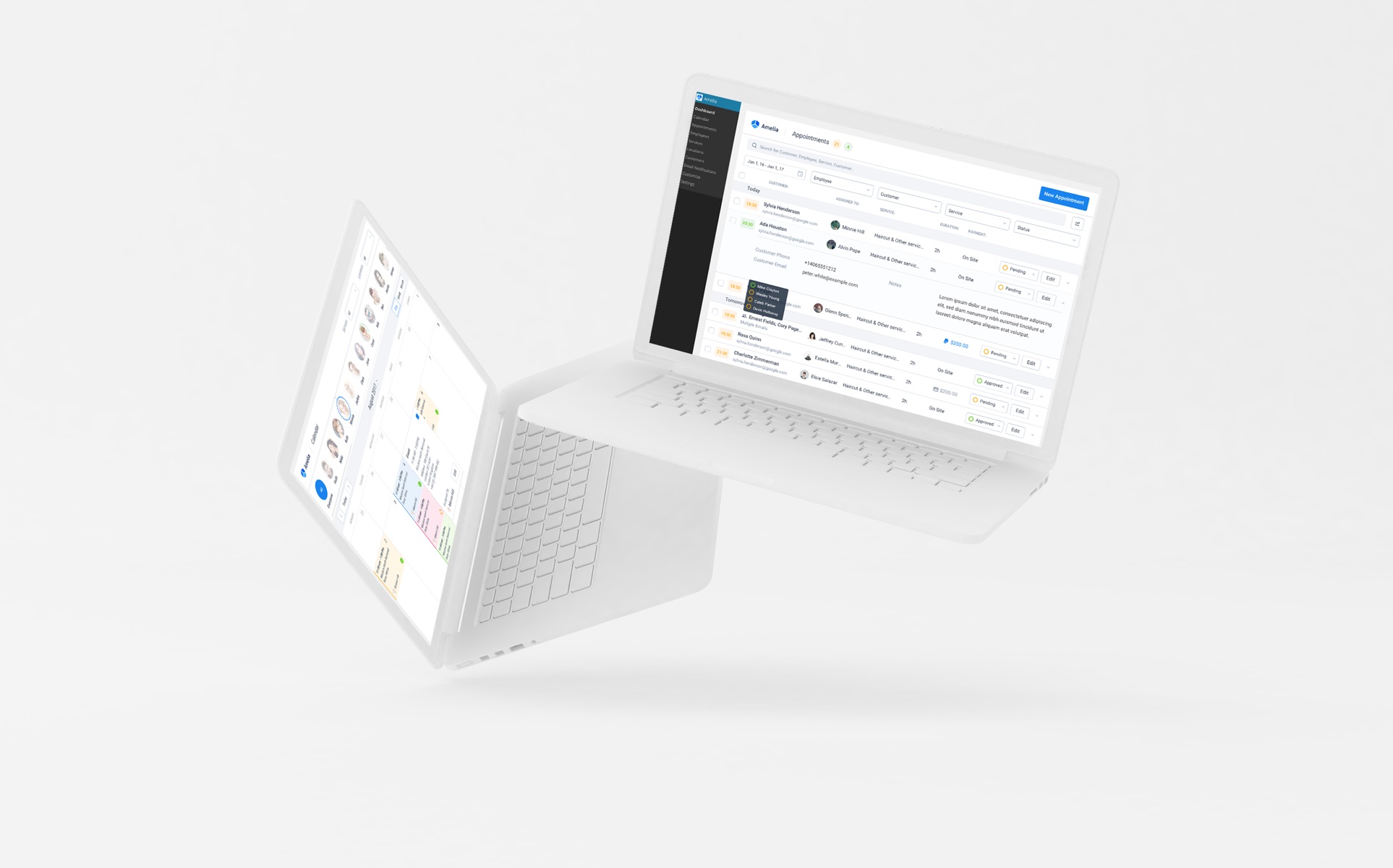
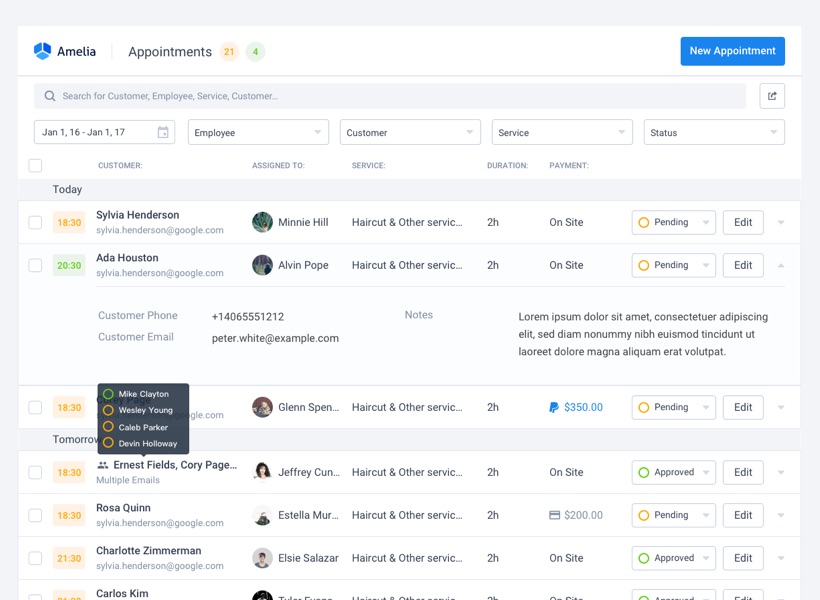
An enterprise-level WordPress appointment booking plugin, conceived, designed, and built entirely in-house by TMS Outsource.
PHP Slim, Vue.js, Redis, ElasticSearch, RabbitMQ, DoctrineORM, Domain-Driven Design
TMS Outsource (original product, built and maintained in-house)
Amelia is a TMS Outsource original product, conceived, designed, and built entirely in-house. Unlike client engagements where requirements come from external stakeholders, Amelia was an exercise in product ownership: TMS held all roles from inception through launch and ongoing maintenance.
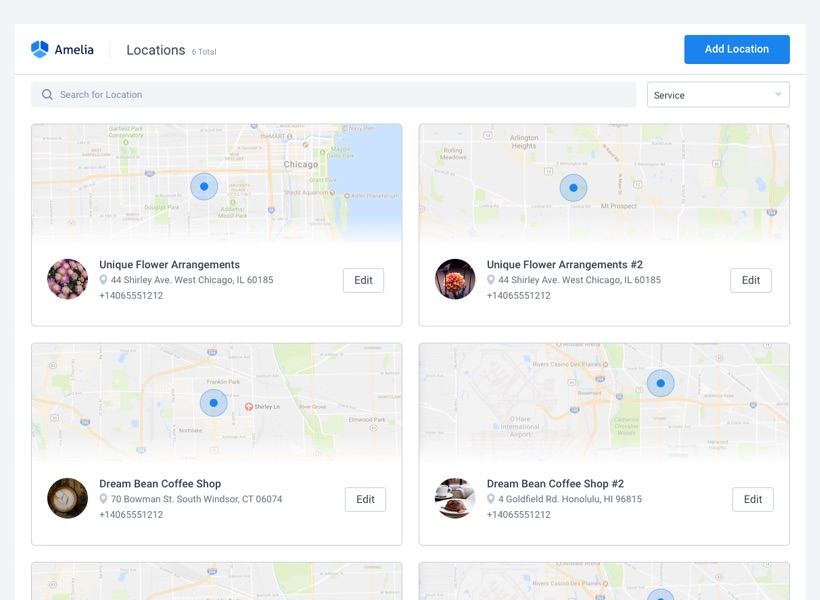
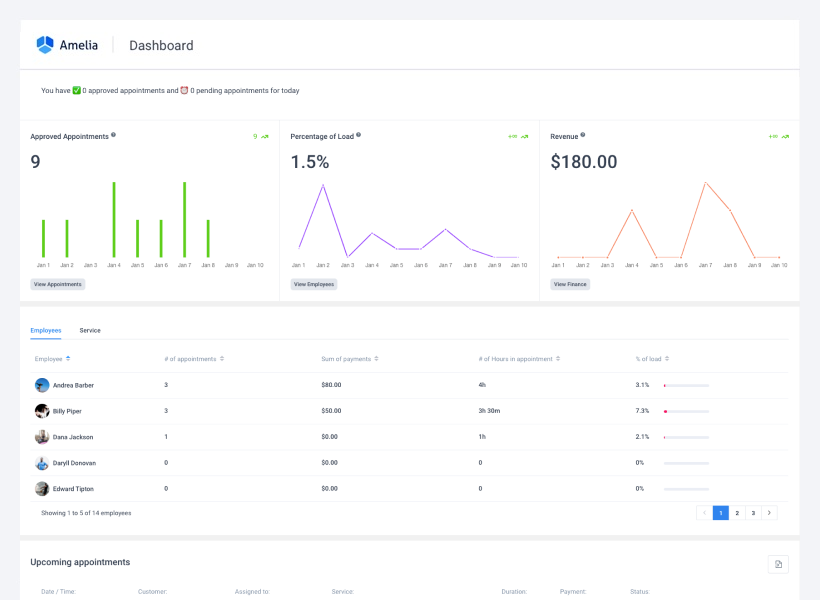
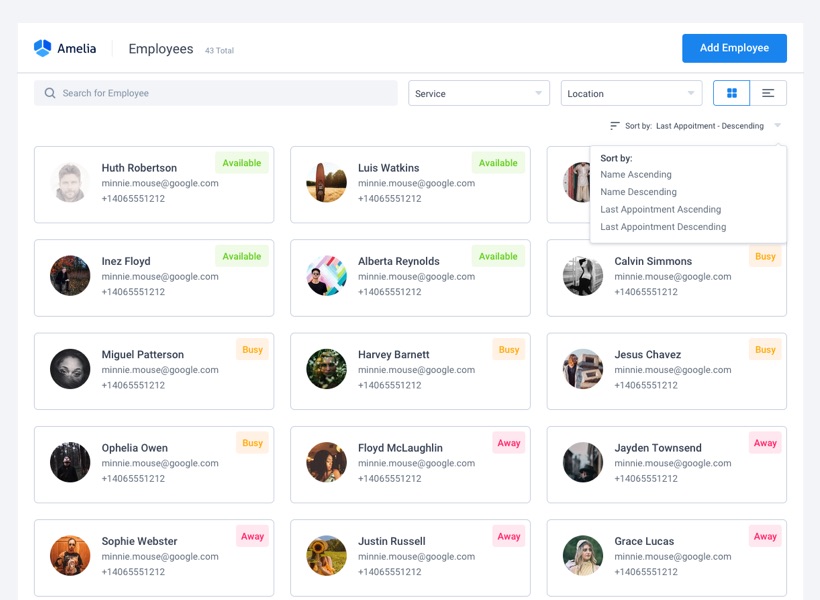
Amelia, available at wpamelia.com, is a tool for small business owners that run their own WordPress websites to automate accepting online appointment bookings and online payments. It supports multiple services and service categories, multiple employees, multiple business locations, and covers numerous functionalities necessary for the smooth workflow of a company that relies on appointments, such as a hairdresser salon or a barbershop, business coach agency, law consultants, and more.
The plugin was designed to handle the full booking lifecycle: service selection, employee assignment, time slot availability, customer notifications, payment processing, and calendar synchronization. Every piece runs inside WordPress but is architecturally isolated from it, so the booking engine does not touch WordPress runtime unless an Amelia-specific request arrives.
From idea in 2014 to launch at WordCamp EU in June 2018.
While the idea of the plugin and the first development attempts date back to 2014, we officially kicked off the project in Q2 of 2017. The initial ideation and discovery phase took about a couple of months, as we did not want to rush the project. We took time to collect all the information from existing solutions, as well as the typical pains users have. In June we started the mockup and design phase, and in August the actual development.
By the end of 2017, we had a working core of the booking engine, yet it took another 6 months to polish both the back-end and front-end, test and debug, and write user documentation. The project was officially released in June 2018.
Amelia has been in active development since its June 2018 launch, with regular feature releases continuing through 2026. The plugin has grown from its initial release into a full-featured enterprise scheduling platform serving tens of thousands of businesses worldwide.
Enterprise architecture inside a plugin ecosystem.
Amelia is one of the few plugins built with an enterprise approach to architecture. The back-end engine uses Domain-Driven Design and the Slim framework to implement an API that is encapsulated in WordPress. This separates the booking domain from the WordPress plumbing entirely.
Amelia is extremely cautious with the WordPress infrastructure. It only initializes its engine when an Amelia-related API request is received. In all other cases, it does not occupy any runtime server resources, so sites not actively booking suffer no performance penalty.
The front-end is built with Vue.js, so all the plugin's pages act as single-page apps. This delivers a smooth, responsive booking experience that feels like a standalone web application rather than a traditional WordPress plugin page.
Beyond the application layer, Amelia uses Redis for caching, ElasticSearch for search performance, RabbitMQ for message queuing, and DoctrineORM for database abstraction. This is enterprise infrastructure, not a typical plugin stack.
Launch metrics and recognition, all publicly verifiable.
Licenses sold within 1.5 months of release
CodeCanyon rating at launch
Honorable Mention for design quality
EU 2018 launch presentation in Belgrade
Tell us about your product idea or your team's capacity gap. We'll outline the right approach for your situation.
Request a Free ConsultationStandalone SaaS scheduling platform, the evolution of Amelia's booking concept.