

Saab Automobile went from building turbocharged icons to filing for bankruptcy in December 2011, and the collapse was anything but simple.
What happened to Saab is a story of a niche Swedish automaker caught between engineering pride and corporate mismanagement, stretched across two decades of GM ownership, failed acquisitions, and blocked Chinese investment deals.
This article covers the full timeline: how GM’s platform-sharing strategy damaged the brand, why rescue attempts by Koenigsegg and Spyker Cars fell apart, what NEVS did with the bankruptcy assets, and where the Saab brand stands today.
If you’ve ever wondered why a car this distinctive disappeared, the answer is more structural than most people realize.
What Was Saab Before Its Collapse?
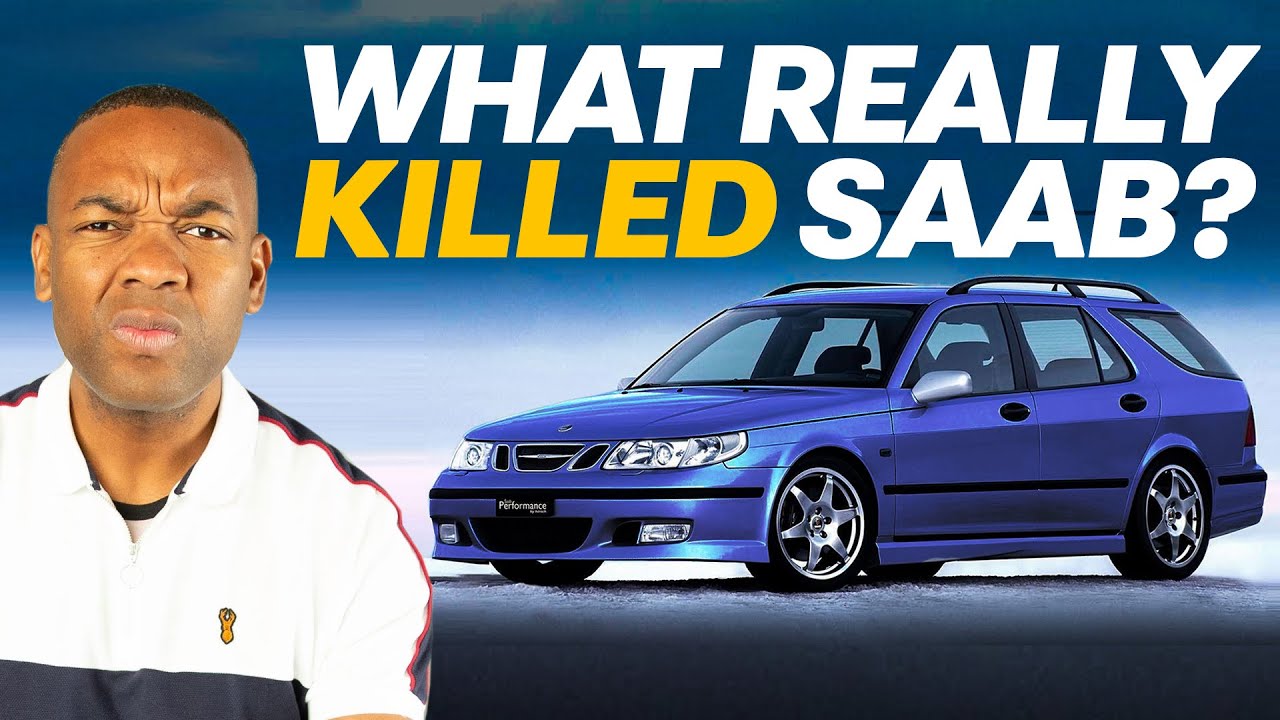
Saab Automobile was founded in 1945 in Trollhattan, Sweden, as a division of Svenska Aeroplan AB, the aerospace company behind the name. The car division grew out of an aircraft engineering culture, and that background showed in almost every design decision the company made.
Saab built its reputation on 3 core pillars: turbocharged engines, unconventional aerodynamic design, and safety engineering that rivaled Volvo for Scandinavian thoroughness. The 1977 Saab 99 Turbo was the first mainstream turbocharged production car from any manufacturer globally. That wasn’t a marketing claim. It was a genuine first.
By the late 1980s, peak production years for models like the Saab 900, 9-3, and 9-5 had built a devoted customer base concentrated in North America and Northern Europe. These weren’t mass-market buyers. They were engineers, academics, and professionals who appreciated cars that felt genuinely different.
General Motors acquired a 50% stake in Saab in 1989, then bought the remaining shares in 2000 for $125 million. That’s where the straightforward part of the Saab story ends.
Saab AB, the original defense and aerospace parent, was always a separate entity. The car company operated as Saab Automobile AB. That distinction matters later, because Saab AB survived and is still operating today as a major defense contractor with a market capitalization that has grown significantly since 2022.
How Did GM’s Ownership Damage Saab?
GM’s full ownership from 2000 onward didn’t destroy Saab overnight. It was slower than that, and arguably more damaging because of it.
The core problem was platform sharing. GM pushed Saab to share architecture with Opel and Chevrolet. The 9-5 was built on the GM2900 platform alongside the Opel Vectra. The 9-7X was a rebadged Chevrolet TrailBlazer. Buyers noticed.
| Saab Model | Shared Platform | GM Sibling |
|---|---|---|
| 9-5 (1998) | GM2900 (Epsilon) | Opel Vectra |
| 9-7X (2004) | GMT360 | Chevrolet TrailBlazer |
| 9-2X (2004) | Impreza platform | Subaru WRX |
| 9-3 (2003) | Epsilon | Opel Vectra (partial) |
The 9-3 actually resisted some of this. Saab engineers only shared 35% of parts with the Vectra, developing their own air conditioning system and rear suspension at considerable cost. GM was not pleased. That kind of independence got expensive, and it clashed directly with GM’s volume-focused manufacturing model.
By 2007, Saab’s R&D budget had shrunk by 34% versus 2000 levels (source: automotive analysis cited in Alibaba Product Insights, 2026). When Saab proposed a dedicated hybrid platform in 2003, GM redirected resources toward SUVs and trucks instead.
Saab sales fell 21.9% in 2008 alone, with December 2008 down 41.4% year-over-year (NBC News / GM Europe data). This wasn’t just a financial crisis effect. Sales had been declining for years before the 2008 crash accelerated the collapse.
A University of Cambridge study by Matthias Holweg and Professor Nick Oliver found that GM supported Saab despite losses in nearly every year of its two-decade ownership. The problem wasn’t just GM’s decisions. Saab occupied an awkward position between mainstream and genuine luxury, and it never resolved that tension.
What the Platform Strategy Did to Brand Identity
Brand dilution: Buyers paying Saab prices for a car built on Opel architecture had trouble justifying the premium over BMW and Audi, which had stronger dealer networks and clearer brand positioning.
Model delay damage: The original 9-5 ran from 1997 to 2009 with only minor updates. When the replacement finally launched in 2010, only 11,280 units were built before production stopped permanently (TMS Outsource, 2025).
GM repeatedly delayed new model development while competitors moved faster. Saab fell behind on both technology and product freshness, and no amount of turbo engineering heritage could compensate for a lineup that felt increasingly dated against newer Audi and BMW releases.
Why GM’s Ownership Model Created Structural Fragility
A niche brand inside a mass-market conglomerate faces a specific problem: the parent company’s cost-cutting logic rarely fits the product strategy that made the brand worth acquiring in the first place.
Saab needed protected R&D investment and model independence to compete at its price point. GM needed cost consolidation and platform efficiency across its entire portfolio. These two goals were not compatible, and Saab’s engineering identity paid the price for that conflict across a 20-year ownership period.
Why Did GM Decide to Shut Down Saab in 2009?

GM filed for Chapter 11 bankruptcy in June 2009. When a company that size goes into restructuring, everything on the balance sheet gets reviewed. Saab was not a core asset. It was a loss-making niche brand with declining sales in a market GM did not dominate.
GM placed Saab on its closure and sale list alongside Hummer, Pontiac, and Saturn. The initial plan was liquidation, not a sale. Swedish government officials and union leaders pushed back hard, but the Swedish state made its position clear early: it would not provide a state bailout. Enterprise minister Maud Olofsson stated directly that “the Swedish state is not prepared to own car factories.”
That position had real consequences. Without government support as a backstop, any buyer taking on Saab would be doing so without the safety net that saved GM itself in the United States.
What the 2009 GM Bankruptcy Meant for Saab Specifically
No new investment: GM stopped funding Saab development while the parent company focused entirely on its own survival.
Retained technology rights: As part of any eventual sale, GM kept veto power over transfers of technology and platform rights. This would become the defining obstacle in every rescue attempt that followed.
Brand value erosion: Every month of uncertainty damaged Saab’s dealer network, customer confidence, and residual values. Buyers don’t purchase cars from companies they’re not sure will exist in 12 months.
Saab had set its all-time global sales record of 133,167 vehicles in 2006, with European volumes of 88,859 units (European Business Magazine, 2026). By 2009, those numbers were a distant memory. The brand had already lost significant market ground before bankruptcy even entered the picture formally.
What Rescue Attempts Were Made Between 2009 and 2011?
The two years between GM’s bankruptcy announcement and Saab’s final collapse saw 3 serious rescue attempts. All of them failed, for related reasons.
| Buyer | Year | Deal Value | Why It Failed |
|---|---|---|---|
| Koenigsegg Group | 2009 | Undisclosed | Financing collapsed at final stage |
| Spyker Cars N.V. | 2010 | $74 million (EUR) | Underfunded; relied on Chinese investors blocked by General Motors |
| Youngman / Pang Da | 2011 | EUR 245 million | General Motors vetoed technology transfer to Chinese buyer |
The Koenigsegg Collapse
Koenigsegg, the Swedish supercar manufacturer, entered serious negotiations to acquire Saab in 2009. The deal attracted attention partly because it kept the brand Swedish and partly because Koenigsegg had genuine automotive credibility.
The deal collapsed in November 2009 when Koenigsegg’s financing partners withdrew at the final stage. There was no public explanation of the specific investors who pulled out, but the timing, deep in the global financial crisis, was predictable.
Automotive analysts have since suggested a Koenigsegg-led Saab might have preserved more of the brand’s engineering identity than what followed under Spyker. That’s speculation, but the reasoning is sound: Koenigsegg understood niche premium manufacturing in a way that Spyker, a tiny Dutch sports car company, did not.
Spyker’s Short Ownership
Victor Muller, CEO of Spyker Cars N.V., completed the purchase of Saab from GM on February 23, 2010, for approximately $74 million. GM retained over $300 million in preferred shares as part of the deal.
Spyker was too small to fund Saab’s operations independently. The plan from day one was to bring in Chinese investment. Negotiations with Hawtai Motor collapsed first. Then a EUR 245 million deal with Pang Da and Zhejiang Youngman looked viable, until GM exercised its veto.
GM’s stated reason: opposition to transferring technology and production rights to a Chinese company. The veto was legally available to GM under the sale agreement. Using it removed the last realistic funding path Saab had.
During Spyker’s ownership, Saab was losing approximately $1.3 million per day, with total losses for the period reaching over $467 million, equivalent to roughly $60,000 per hour (Saab Planet, sourced from bankruptcy estate analysis). Spyker never had the capital to absorb losses at that scale.
What Caused Saab’s Final Bankruptcy in 2011?
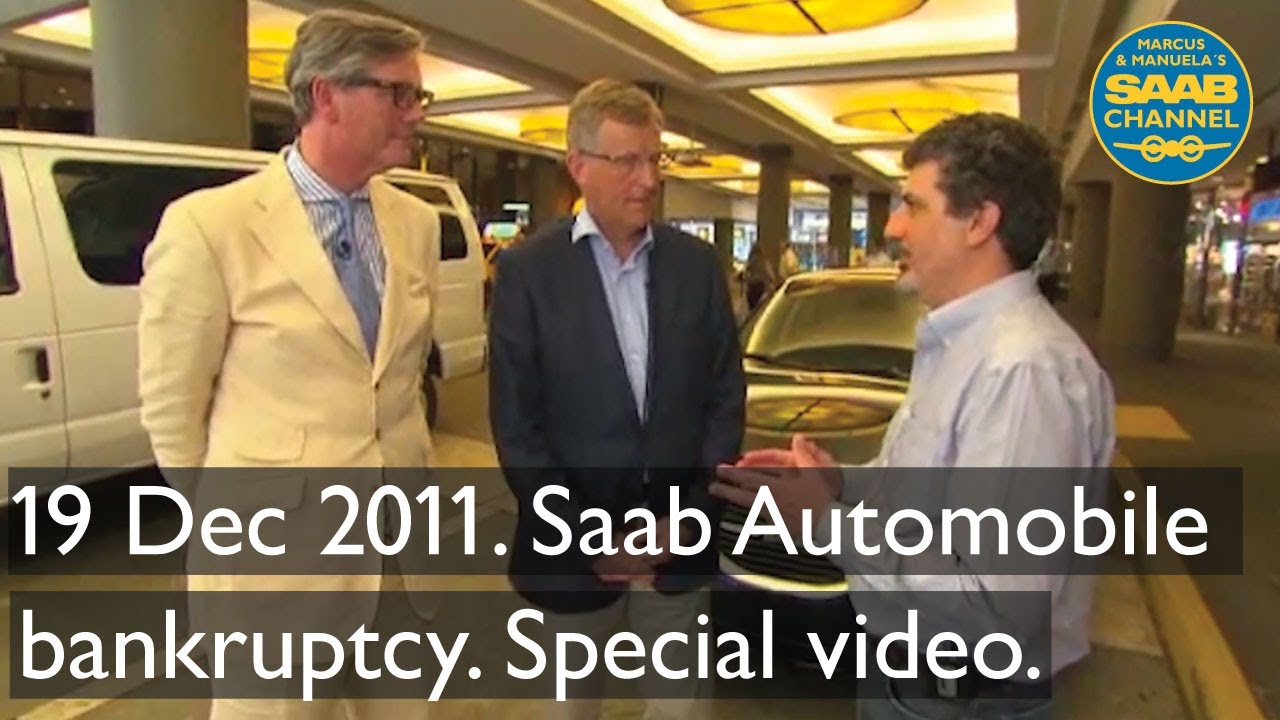
Saab Automobile AB filed for bankruptcy at the District Court of Vanersborg on 19 December 2011. The court declared bankruptcy the same day. Saab Automobile Powertrain AB and Saab Automobile Tools AB were also declared bankrupt in the same proceedings.
The immediate causes were straightforward: Saab owed suppliers debts it could not pay. Production halted repeatedly throughout 2011 because parts suppliers stopped delivering on unpaid invoices. Workers went without wages for months before the final filing.
What the Financial Numbers Actually Looked Like
At the April 2012 creditors meeting at the District Court of Vanersborg, official receivers valued Saab’s assets at $500 million against debts of $2 billion, leaving a net deficit of $1.5 billion (Wikipedia / bankruptcy court records).
Total accumulated debt reached SEK 13 billion. Total recovered for creditors: SEK 3.2 billion. Around 3,000 former employees were short on wages and severance payments (European Business Magazine, 2026).
The Swedish Debt Office, which had issued a government guarantee to the European Investment Bank for a project loan to Saab in 2010, paid off Saab’s EIB loan at the end of December 2011. This resulted in a claim of approximately SEK 2.1 billion on the bankruptcy estate, making the Debt Office the primary creditor (Riksgalden.se).
Why GM’s Veto Was the Final Blow
Without the Youngman and Pang Da deal, Saab had no viable funding source. The company had already burned through Spyker’s limited capital. No European or American investor stepped in to replace the Chinese consortium.
The board’s logic at filing: further funding was not secured, the company was insolvent, and bankruptcy was the best available option for creditors. That reasoning was correct. It was also, by that point, inevitable.
Spyker filed a lawsuit against GM in 2012 seeking $3 billion in damages, arguing GM had deliberately blocked the Chinese deals (Wikipedia). The claim was dismissed in June 2013.
What Happened to Saab’s Assets After Bankruptcy?
The bankruptcy estate took over 12 years to fully wind up. The procedure was formally closed in October 2023 (European Business Magazine, 2026). That timeline alone tells you how complicated the asset disposal process was.
The Swedish Debt Office, as the main creditor, chose not to immediately sell the pledged assets after taking control in December 2011. Instead, it gave official receivers time to find a single buyer for the entire Saab group. That approach eventually succeeded, but only for the core manufacturing assets.
What NEVS Acquired and What It Left Behind
Acquired by NEVS (finalized August 31, 2012):
- IP rights for the Saab 9-3
- IP rights for the Phoenix platform
- The Trollhattan manufacturing plant and test facilities
- Production tools and laboratory equipment
- Shares in the property company owning the Trollhattan site
Not acquired or retained separately:
- The Saab griffin logo (owned by Saab AB defense company and Scania)
- GM’s engine and specific platform technology rights
- Saab Automobile Parts AB (continued operating independently)
NEVS initially received permission to use the Saab name on its products. That permission was revoked in 2014 after NEVS failed to pay licensing fees. From that point, the Saab brand effectively ceased to exist in automotive production (Automobile Brands database).
The Spyker Legal Action Against GM
Victor Muller’s $3 billion lawsuit against GM argued that GM had deliberately torpedoed the Chinese investment deals to protect its own competitive position in the Chinese market. The argument had some logic: GM was expanding aggressively in China and had reason to prevent a Chinese-controlled Saab from entering that market.
A US federal court dismissed the claim in June 2013, finding insufficient grounds. The dismissal ended any practical financial recovery for Spyker’s shareholders.
Saab Automobile Parts AB continued selling genuine Saab parts to owners of existing vehicles. That operation still runs today and is the closest thing to an active Saab automotive business that exists anywhere. Parts for the 9-3 and 9-5 remain available through that channel, which matters to the roughly 500,000 Saab vehicles still registered across European and North American markets as of recent estimates.
Who Was NEVS and What Did They Do With Saab?

National Electric Vehicle Sweden AB was founded in May 2012 by Chinese-Swedish entrepreneur Kai Johan Jiang, through his Hong Kong-based holding company National Modern Energy Holdings Ltd. The consortium included Chinese, Japanese, and Swedish stakeholders.
The pitch was straightforward: take Saab’s manufacturing infrastructure in Trollhattan, strip out the internal combustion engine focus, and rebuild it as a premium electric vehicle operation targeting the Chinese market.
What NEVS Actually Produced
NEVS produced a limited run of 8 electric Saab 9-3 sedans in 2013 for demonstration and testing (Grokipedia, sourced from NEVS records). Full production of a gasoline 9-3 variant did start briefly at the Trollhattan plant, but output was minimal before the operation ran into financial trouble again.
NEVS entered bankruptcy protection in 2014 after losing the Saab brand license. The company managed to survive by restructuring with Chinese government-backed entities, and by 2015 had stabilized enough to continue EV development under its own name rather than the Saab badge.
The Evergrande Connection
In 2019, China Evergrande New Energy Vehicle Group acquired a 51% majority stake in NEVS. The investment was valued at $930 million, with a first installment of $430 million paid in January 2019 (Autoblog). Evergrande’s plan was to use NEVS as the production backbone for a range of electric vehicles under the Hengchi brand.
That plan collapsed along with Evergrande itself. The property giant’s financial crisis from 2021 onward pulled down its automotive subsidiary as well. NEVS continued operating as a subsidiary but lost the funding scale Evergrande had promised.
As of 2024, NEVS operates from Trollhattan and Tianjin under Evergrande’s EV group, developing vehicles without any Saab branding. The engineering facilities and some of the original Saab talent remain in place, but the Saab Automobile brand identity has not been part of NEVS’s products since 2014.
Does the Saab Car Brand Still Exist Today?
Saab Automobile AB no longer exists as a legal entity. The car company’s bankruptcy estate was formally closed in October 2023, more than 12 years after the 2011 filing (European Business Magazine, 2026).
The Saab name in automotive production belongs to history. No manufacturer is currently building cars under the Saab badge.
What Saab AB (the Defense Company) Is Doing Now
The defense business is a completely different story.
Saab AB, the original Swedish aerospace and defense group, never had anything to do with the car company’s collapse. It operates independently, sells products to over 100 countries, and runs operations in more than 30 nations (Saab AB, 2025).
Saab AB’s revenue reached 63.8 billion SEK in 2024, with 24% year-over-year growth (Alpha Spread). Its market capitalization hit $30.67 billion in September 2025, up 162% in a single year (Stock Analysis). The defense company has tripled in value since Russia invaded Ukraine in 2022.
Saab AB’s communications head Matthias Radstrom confirmed in 2024: “No, we have no plans to revive the Saab automotive brand.” That answer was not surprising and leaves no room for interpretation (Saab Planet, 2024).
How Many Saab Cars Are Still on the Road
As of 2024, 188,528 Saab vehicles remain registered in Sweden alone, down from approximately 230,000 two years prior (Car.info data via Saab Planet, 2025).
The Saab 9-3 is the most common survivor: 73,893 registered units in Sweden, accounting for 37.8% of the remaining fleet. Norway adds another 18,990 registered Saabs. Classic models like the Saab 900 (1979-1998) still have 21,262 units running in Sweden.
Saab Automobile Parts AB continues to operate, supplying genuine components to owners of existing vehicles. That business runs under the saabparts.com domain and remains the only active commercial entity directly connected to Saab’s automotive history.
What the Trollhattan Factory Looks Like Today
In December 2024, NEVS laid off its remaining employees, citing liquidity problems tied to Evergrande’s collapse (Saab Blog, 2024).
Factory status by late 2024:
- NEVS had already sold 65,000 square meters of office space to Trollhattan municipality for SEK 256 million
- Remaining equipment was listed for sale to international buyers
- Stenhaga Invest acquired some remaining facilities in early 2024
The 483,000 square meter factory site that once built Saab vehicles is now partially leased, partially sold off, and no longer producing cars of any kind. Trollhattan has repositioned itself as an automotive development cluster with smaller tech and engineering companies filling some of the space (Saab Blog, 2024).
How Did Saab’s Collapse Affect Trollhattan and Its Workers?
The month Saab closed, unemployment in Trollhattan hit 21%, the highest rate of any of Sweden’s 290 municipalities at the time (Intereconomics, 2018).
The numbers behind that stat: 3,239 workers, including subcontractors, lost their jobs on 19 December 2011. An additional 509 had already been laid off during restructuring before the bankruptcy. Roughly 2,000 of those workers lived in Trollhattan, making up 8.4% of the municipality’s entire employed population (Intereconomics journal / University of Edinburgh research).
How Sweden’s Labor System Responded
Sweden’s response to the Saab collapse was studied by researchers at Intereconomics as an example of the Nordic social model under stress. The system worked differently than the US approach to GM’s bankruptcy.
Key institutions involved:
- TRR and TSL: Swedish job transition councils that activated before Saab even closed
- Omstallning for Framtiden: An informal working group established in 2009 that included Saab representatives, local educators, and public employment services
- IF Metall: The metalworkers union that coordinated retraining with partner provider Startkraft
The Swedish government did not bail out Saab directly. It did offer 28 billion SEK worth of automotive industry aid in December 2008, including credit guarantees and green technology investment funds (Intereconomics). Most of that money went to the broader sector, not to Saab specifically.
What Happened to the Workforce Over Time
Combitech, a Swedish engineering consultancy, announced 200 new hires in Trollhattan within days of the bankruptcy, specifically targeting former Saab engineers (Eurofound, 2011).
By 2021, Trollhattan’s unemployment rate had fallen to roughly 10.4%, about half the peak of January 2012. That’s still above Sweden’s national average of approximately 8.8%, and the gap has persisted (Saab Blog, 2021).
Many former Saab engineers took positions at Volvo in Gothenburg, requiring daily commutes of roughly 80 km. Trollhattan has become, as one local analyst described it, a satellite city of Gothenburg rather than an independent industrial hub (Saab Blog, 2021).
The “Saabanda” (Saab spirit) that workers described was real enough that researchers documented it as a specific cultural phenomenon. It made the closure psychologically harder than a typical factory shutdown. It also made the organized response more effective, because the workforce trusted each other and had existing relationships with company management before the bankruptcy was announced.
What Can Automakers Learn From Saab’s Failure?
Cambridge Judge Business School published a report on Saab’s collapse the day after the bankruptcy filing. The conclusion from researchers Matthias Holweg and Nick Oliver was direct: Saab “collapsed under the weight of its own contradictions.”
Both GM and Saab shared responsibility. GM for mishandling the brand. Saab for resisting integration so aggressively that it repeatedly chose expensive independence over sustainable cost structures (Cambridge Judge Business School, 2012).
The Niche Brand Problem Inside a Mass Market Parent
Saab was stuck in what the Cambridge research described as a catch-22. It needed scale to compete on cost. But scale meant platform sharing and badge engineering, which destroyed the brand differentiation that made Saab worth buying at a premium price.
This is not unique to Saab.
| Brand | Parent Company | Outcome | Key Factor |
|---|---|---|---|
| Saab | General Motors | Bankrupt 2011 | Platform sharing erased identity |
| Pontiac | General Motors | Discontinued 2010 | Brand positioning overlap |
| Oldsmobile | General Motors | Discontinued 2004 | No clear differentiation from Buick |
| Volvo Cars | Ford (sold 2010) | Survived under Geely | Maintained engineering independence |
Volvo survived because Ford sold it to Geely before the damage became irreversible. Geely gave Volvo protected R&D investment and kept the Gothenburg engineering team intact. Saab never got that version of events.
What GM’s Veto Power Reveals About Acquisition Structures
The structural lesson: GM retained technology veto rights after selling Saab to Spyker. That meant the buyer owned the brand name and the factories but not control over the technology inside the cars.
Any acquirer of a technology-dependent brand should treat retained IP rights by the seller as a dealbreaker condition. In Saab’s case, those retained rights allowed GM to block the Chinese deals that were the only realistic path to survival.
Spyker paid $74 million for a brand it could not fully control. The $3 billion lawsuit that followed was dismissed, but the legal argument, that GM deliberately used its retained rights to protect its own Chinese market position, has never been fully resolved (Wikipedia / US federal court records, 2013).
Why Single-Investor Dependency Is a Fatal Structural Risk
Saab under Spyker had one funding path: Chinese investment via Youngman and Pang Da. When GM blocked that path, the company had no alternatives.
Look at similar cases and the pattern repeats. Companies in this space that have survived did so with either: diverse investor bases, strong internal cash generation, or a parent company with strategic reasons to keep them alive beyond pure financial return.
Saab had none of the three.
Spyker’s own financial base was a small Dutch sports car manufacturer with annual revenues far below what Saab needed to cover daily operating losses of $1.3 million. The due diligence on that acquisition, from any serious financial perspective, should have flagged the structural impossibility before the deal closed in February 2010.
The Brand Equity Lesson
Saab demonstrated that strong brand equity among a loyal niche is not the same as a viable business. The brand had devoted followers in the US, UK, and Sweden. Online communities, “Born from Jets” nostalgia, and genuine enthusiasm for the engineering heritage persisted well after the company closed.
But 188,528 registered vehicles in Sweden in 2024 (Car.info) represents loyal owners of old cars, not a market for new ones. The path from cult following to production-scale revenue was never convincingly mapped by any of Saab’s owners.
GM’s case with Cadillac, which it kept and invested in as a global luxury brand, shows what a committed parent can do with a premium brand when it treats the brand’s identity as a protected asset rather than a cost center. Saab never received that treatment. The results were predictable in hindsight, and probably should have been predictable at the time. Businesses studying failed startups and corporate collapses often cite exactly these structural conditions, where dependency, identity erosion, and underfunding combine, as the most reliable pattern for predicting a brand’s end.
FAQ on What Happened To Saab
Why did Saab go bankrupt?
Saab Automobile filed for bankruptcy in December 2011 after running out of funding. Unpaid supplier debts halted production throughout 2011. GM blocked the only viable Chinese investment deal, leaving Saab Automobile AB with no financial path forward.
When did Saab stop making cars?
The last Saab rolled off the Trollhattan production line in August 2011. The company formally filed for bankruptcy on 19 December 2011. NEVS briefly restarted limited 9-3 production in 2013, but the Saab brand was gone from those cars by 2014.
Who owned Saab before it collapsed?
General Motors acquired full ownership in 2000. GM sold Saab to Dutch sports car company Spyker Cars in February 2010 for approximately $74 million. Spyker owned Saab during its final 22 months before the December 2011 bankruptcy filing.
Did GM cause Saab’s failure?
GM shares responsibility but didn’t act alone. Platform sharing with Opel diluted the brand. Cambridge Judge Business School researchers concluded both GM and Saab carried blame, with Saab also resisting integration in ways that made financial sustainability nearly impossible.
What happened to the Saab factory in Trollhattan?
NEVS acquired the Trollhattan factory in 2012. Evergrande’s financial collapse pulled NEVS down by 2023. By December 2024, remaining staff were laid off and equipment was listed for international sale, effectively ending manufacturing activity on the historic site.
Does Saab still exist as a company?
Saab AB, the Swedish defense and aerospace group, still operates and is thriving. It posted 63.8 billion SEK in revenue in 2024. The car company, Saab Automobile AB, no longer exists. Its bankruptcy estate closed formally in October 2023.
What was NEVS and what did it do with Saab?
National Electric Vehicle Sweden acquired Saab’s bankruptcy assets in August 2012. The Chinese-Swedish consortium planned to build electric vehicles using Saab’s Trollhattan plant. NEVS lost the Saab brand license in 2014 after missing fee payments and never achieved meaningful production volume.
Why did GM block the Chinese investment in Saab?
GM held veto rights over technology transfers as part of the 2010 Spyker sale agreement. It blocked deals with Youngman and Pang Da citing concerns about transferring platform technology to a Chinese competitor. That veto removed Saab’s last funding option in 2011.
Is the Saab car brand coming back?
No. Saab AB communications head Matthias Radstrom confirmed in 2024 there are no plans to revive the automotive brand. Saab AB holds the name and griffin logo rights. No manufacturer has rights to build new cars under the Saab nameplate.
What happened to Saab workers after the bankruptcy?
Trollhattan’s unemployment hit 21% the month Saab closed, the highest of Sweden’s 290 municipalities. Sweden’s job transition system activated quickly. By 2021, the rate had fallen to roughly 10.4%, though many former Saab engineers relocated to jobs in Gothenburg.
Conclusion
This conclusion is for an article presenting the full arc of Saab Automobile’s decline, from GM’s damaging platform consolidation to the Saab brand liquidation in 2011 and the failed NEVS revival attempt that followed.
The Saab shutdown wasn’t a single decision. It was the result of two decades of misaligned ownership, blocked Chinese investment, supplier debt, and a niche automaker that could never reconcile scale with identity.
Trollhattan lost its largest employer overnight. Swedish automotive industry workers rebuilt slowly, and the factory that produced 4.5 million vehicles over 66 years now sits largely empty.
Saab AB thrives as a defense contractor. The car company does not. And according to Saab AB directly, it never will again.

- How to Share GitHub Repository Access With Collaborators - October 25, 2026
- Streamlining Client Projects: Modern Cloud ERP Solutions - October 25, 2026
- Build or Buy an AI Chatbot for E-commerce: The Costs Nobody Budgets For - October 24, 2026


