
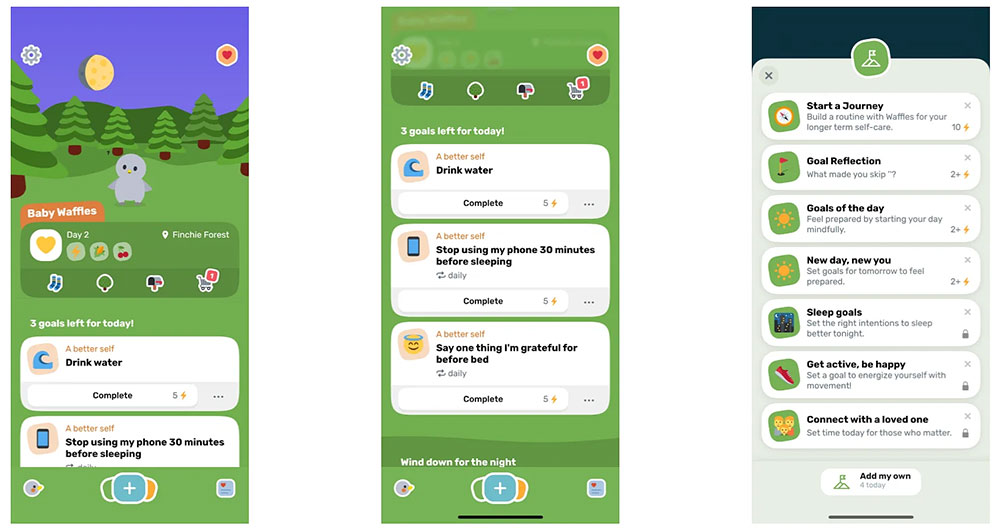
Finch made self-care feel less like homework and more like something you actually want to open.
But it is not the only mental wellness app worth your time. Whether you want deeper mood tracking, clinical CBT tools, or a full meditation library, there are solid alternatives depending on what your daily routine actually needs.
This guide covers the best apps like Finch across every category: gamified habit trackers, mood journals, AI-powered emotional support tools, and mindfulness platforms.
By the end, you will know exactly which app fits your situation, what each one costs, and where each one falls short.
Apps Like Finch
Finch turned daily self-care into something you actually want to open. A virtual pet that grows as you do breathing exercises, journal, or check in on your mood. It works for a lot of people. But it is not the only option.
Some alternatives go deeper into CBT-based therapy tools. Others focus on meditation, detailed mood tracking, or gamified habit building. The right pick depends on what kind of support you need.
| App | Best For | Free Plan | Platform |
| Habitica | Gamified habit building | Yes | iOS, Android |
| Bearable | Mood & symptom tracking | Yes | iOS, Android |
| Wysa | AI-guided CBT support | Yes (limited) | iOS, Android |
| Headspace | Structured meditation | No | iOS, Android, Web |
| Calm | Sleep & relaxation | No | iOS, Android, Web |
| Daylio | Quick mood journaling | Yes | iOS, Android |
| Reflectly | AI-guided journaling | Yes | iOS, Android |
| Youper | CBT chatbot therapy | No (7-day trial) | iOS, Android |
| Insight Timer | Free meditation library | Yes | iOS, Android, Web |
| Woebot | Clinical CBT chatbot | Enterprise only | iOS, Android |
Habitica
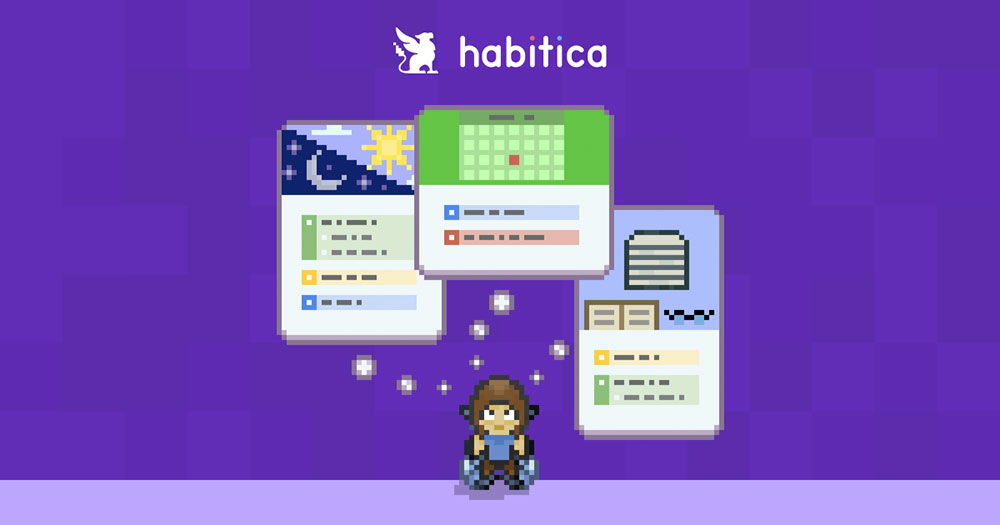
Habitica is a gamified habit tracking app that turns your daily tasks and goals into an RPG adventure for productivity-focused users who respond to game mechanics. It skips the emotional wellness angle Finch takes, and leans entirely into quests, leveling up, and party systems. Supports iOS and Android.
What Does Habitica Do?
Habitica lets users build habits, dailies, and to-do lists that function as in-game quests, rewarding completion with XP, gold, and character upgrades.
How Is Habitica Similar to Finch?
Both apps use gamification to motivate self-improvement. Both let you set daily goals and track completion. Both have a free tier with solid core features, and both work on iOS and Android.
How Is Habitica Different from Finch?
Habitica focuses on productivity, not emotional wellness. There are no mood check-ins, breathing exercises, or mental health check-in tools. The social RPG system rewards group play, which solo users may find less engaging.
Who Is Habitica Best For?
Habitica suits users who want a gamified productivity system and respond better to RPG mechanics than to a self-care pet routine.
Key Features of Habitica
- RPG task system: Habits, dailies, and to-dos earn XP and in-game rewards
- Party quests: Group challenges with friends or strangers
- Avatar customization: Gear, pets, and mounts unlocked through progress
- Open-source platform: Community-built with full transparency
Pricing
- Free plan: Yes, full core feature access
- Paid plans: $5/month or $48/year (group plan: $9/month + $3 per member)
- Free trial: No
Bearable

Over 75% of Bearable’s community say the app helps them feel more in control of their health, according to the company’s own data.
Bearable is a mood and symptom tracking app built by people with chronic health conditions, designed for users who want detailed data on what affects their mental and physical wellbeing. It takes a clinical, data-first approach and has no virtual pet or gamification. Supports iOS and Android.
What Does Bearable Do?
Bearable lets users log moods, symptoms, sleep, medication, energy levels, and nutrition daily, then surfaces correlation reports to show what factors are affecting their health.
How Is Bearable Similar to Finch?
Both apps support daily mood check-ins and habit tracking. Both have strong free tiers. Both are available on iOS and Android, and both are used as self-care companion apps for managing mental health day to day.
How Is Bearable Different from Finch?
Bearable is data-heavy and clinical. No gamification, no virtual pet. The app connects with Apple Health and Google Fit to pull in biometric data, and lets users export reports to share with therapists or doctors.
Who Is Bearable Best For?
Bearable suits users managing chronic illness, anxiety, or depression who want granular health data and correlation insights rather than a motivational wellness experience.
Key Features of Bearable
- Correlation reports: Identifies links between habits, sleep, and mood changes
- Custom tracking: Unlimited custom symptoms, moods, and health metrics (free)
- Health sync: Connects with Apple Health, Google Fit, and Fitbit
- Data export: CSV export to share with therapists or doctors
Pricing
- Free plan: Yes, unlimited mood/symptom tracking, 30-day trend reports
- Paid plans: $6.99/month or $34.99/year
- Free trial: Yes, 7 days
Wysa

Wysa is an AI-powered mental health chatbot that guides users through CBT, DBT, and mindfulness exercises via a conversational penguin interface, designed for people seeking evidence-based emotional support. It sits between a self-care game and actual therapy. Supports iOS and Android.
What Does Wysa Do?
Wysa runs structured CBT and mindfulness conversations, offering 150+ exercises for anxiety, depression, stress, and sleep, with an optional human coaching upgrade for asynchronous text support.
How Is Wysa Similar to Finch?
Both apps offer daily emotional check-ins, breathing exercises, and tools for managing anxiety and stress. Both have approachable, friendly interfaces and free tiers. Both target users who want mental health support outside of formal therapy.
How Is Wysa Different from Finch?
Wysa uses clinically validated therapy techniques. Finch is playful and habit-based. Wysa received FDA Breakthrough Device status in 2025 and is backed by multiple peer-reviewed studies. Among 527 healthcare workers given access, 94% completed at least one full session (hyperwriteai.com).
Who Is Wysa Best For?
Wysa suits users who want structured, evidence-based emotional support between therapy sessions, particularly those dealing with anxiety or depression who want more than a wellness habit tracker.
Key Features of Wysa
- CBT/DBT exercises: 150+ techniques for anxiety, depression, sleep, and stress
- Anonymous use: No login required; sessions stay private
- Human coaching upgrade: Optional licensed coach via text
- FDA Breakthrough Device: Designated status awarded in 2025
Pricing
- Free plan: Yes, core chatbot and basic exercises
- Paid plans: Premium unlocks full library; human coaching at additional cost
- Free trial: Yes
Headspace

2.8 million subscribers use Headspace globally, according to Talentdesk’s 2025 mental health platform report.
Headspace is a guided meditation and mindfulness app with 500+ sessions covering stress, focus, sleep, and anxiety, built for users who want a structured path into a consistent mindfulness routine. It goes much deeper on meditation than Finch, which only offers basic breathing exercises. Supports iOS, Android, and Web.
What Does Headspace Do?
Headspace delivers structured meditation courses, sleep aids, focus music, and SOS sessions for acute anxiety, organized into beginner-to-advanced learning paths.
How Is Headspace Similar to Finch?
Both apps support daily wellness check-ins and have tools for managing anxiety and stress. Both work on iOS and Android, and both target users building a consistent self-care routine as part of daily habit tracking.
How Is Headspace Different from Finch?
Headspace is a meditation platform, not a self-care game. No virtual pet, no gamification. It adds an AI companion called Ebb, therapy services, and workplace wellness programs. A 2024 Harvard Medical School meta-review linked Headspace use to a 22% reduction in cortisol levels after two weeks.
Who Is Headspace Best For?
Headspace suits beginners who want structured meditation courses and a clear, guided path into daily mindfulness practice without any gamification.
Key Features of Headspace
- 500+ guided sessions: Stress, focus, sleep, anxiety, and body scanning
- AI companion: Ebb, an AI-powered wellness guide
- Sleep library: Sleepcasts, stories, and sleep hygiene guidance
- Workplace plans: Custom employee wellbeing and EAP programs
Pricing
- Free plan: No
- Paid plans: $12.99/month or $69.99/year; family plan $99.99/year (up to 6 members)
- Free trial: Yes, 14 days
Calm
Calm is a sleep and relaxation app with 4.5 million subscribers as of 2023, offering celebrity-narrated Sleep Stories, guided meditations, and mood-based content recommendations for adults who struggle with stress, anxiety, or poor sleep. Supports iOS, Android, and Web.
What Does Calm Do?
Calm asks users to log their daily mood, then recommends tailored meditations, grounding techniques, or breathwork. Its sleep library includes stories, soundscapes, and sleep meditation exercises.
How Is Calm Similar to Finch?
Both apps include daily mood check-ins and tools for managing anxiety and stress. Both support emotional wellbeing as a daily routine app, and both have strong mobile experiences on iOS and Android.
How Is Calm Different from Finch?
- Calm focuses heavily on sleep content; Finch does not address sleep at all
- No gamification or virtual pet in Calm
- Calm requires a paid subscription after a 7-day trial; Finch has a generous free tier
Who Is Calm Best For?
Calm suits adults who prioritize sleep improvement and stress relief over habit tracking, particularly users who respond to ambient audio and guided relaxation content.
Key Features of Calm
- Sleep Stories: Celebrity-narrated audio stories for sleep
- Mood-based recommendations: Personalized sessions based on daily check-in
- Stressor tagging: Tag triggers like work or finances to track emotional patterns
- Masterclasses: Talks from therapists and wellness experts
Pricing
- Free plan: No
- Paid plans: ~$14.99/month or $69.99/year
- Free trial: Yes, 7 days
Daylio
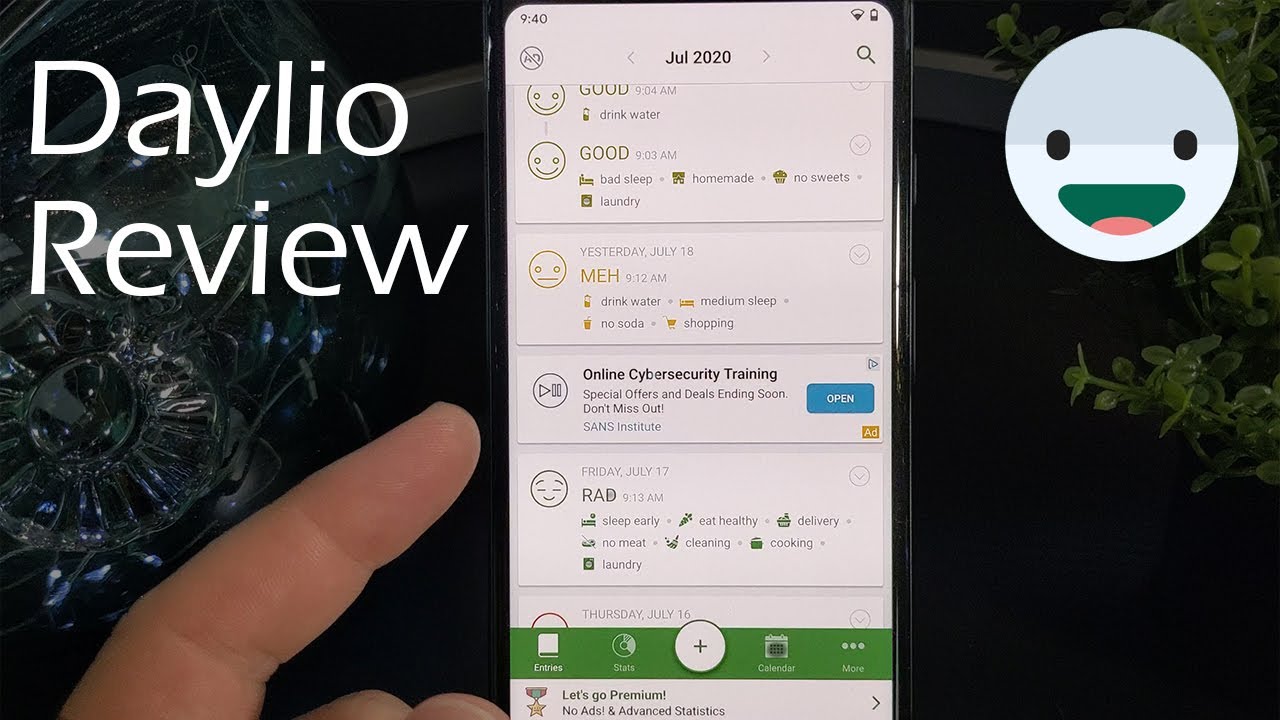
Daylio is a micro-journaling and mood tracking app rated 4.8 out of 5 stars on the App Store, built for people who want to track their emotional health daily without writing a single word. Users pick an emoji, select activities, and the app builds visual charts over time. Supports iOS and Android.
What Does Daylio Do?
Daylio lets users log mood and activities in seconds using icons and emojis, then generates mood graphs and pattern reports to surface emotional trends over days, weeks, and months.
How Is Daylio Similar to Finch?
Both apps support daily mood check-ins, habit tracking, and personal goal setting. Both have solid free tiers and are available on iOS and Android. Both work as low-friction daily wellness check-in tools.
How Is Daylio Different from Finch?
Daylio is purely data-focused. No gamification, no virtual pet, no breathing exercises or guided self-care content. It is faster to use than Finch but offers less in terms of emotional support tools or positive affirmations.
Who Is Daylio Best For?
Daylio suits busy users who abandoned traditional journaling because it felt like too much work, and want a quick, low-effort way to track their mood journal and emotional patterns daily.
Key Features of Daylio
- Emoji-based logging: Log mood in seconds without typing
- Activity correlation: Link moods to daily activities to spot patterns
- Visual mood charts: Graphs and statistics of emotional trends
- Goal tracking: Set and monitor personal wellness goals
Pricing
- Free plan: Yes, core mood tracking and basic reports
- Paid plans: $4.99/month or $35.99/year
- Free trial: Yes, 7 days
Reflectly

Reflectly is an AI-guided journaling app with a 4.6-star rating from over 81,000 reviews on the App Store, built for users who want daily guided prompts and mood tracking without committing to a blank page. The free version covers nearly all core features. Supports iOS and Android.
What Does Reflectly Do?
Reflectly delivers AI-generated journal prompts, daily mood check-ins, and optional challenges, building a visual mood graph from entries over time.
How Is Reflectly Similar to Finch?
Both apps support daily mental health check-ins, mood journaling, and positive habit building. Both have free tiers. Both are designed as personal growth tools for daily emotional wellbeing, available on iOS and Android.
How Is Reflectly Different from Finch?
- Reflectly focuses on journaling; Finch gamifies the whole self-care routine
- No virtual pet or gamification elements in Reflectly
- Premium tier on Reflectly has very few additions over the free version (choosingtherapy.com)
Who Is Reflectly Best For?
Reflectly suits users who want a guided journaling routine with mood tracking but do not need gamification or structured CBT exercises.
Key Features of Reflectly
- AI journal prompts: Daily personalized questions to guide reflection
- Mood tracking: Visual mood graph built from journal entries
- Daily challenges: Small self-care actions like affirmations or creative tasks
- Talk-to-text: Voice journaling input option
Pricing
- Free plan: Yes, nearly full feature access
- Paid plans: $19.99/year (Android) or $59.99/year (iOS)
- Free trial: Yes, 7 days
Youper

Stanford researchers tested Youper and confirmed it is clinically effective at reducing anxiety and depression. A JAMA-published analysis also ranked it the most engaging digital behavioral health app for these conditions.
Youper is an AI-powered CBT chatbot that guides users through structured cognitive behavioral therapy exercises via daily conversations, designed for people who want evidence-based mental health support without seeing a therapist. Supports iOS and Android.
What Does Youper Do?
Youper runs daily mood check-ins through a conversational AI, guides users through CBT and ACT exercises, tracks emotional patterns over time, and syncs with Apple Health and Fitbit for biometric context.
How Is Youper Similar to Finch?
Both apps run daily emotional check-ins and offer tools for managing anxiety and depression. Both help users build self-care routines and track their mood journal over time. Both are available on iOS and Android.
How Is Youper Different from Finch?
Youper is fully therapy-focused with no gamification. There is no free tier after the 7-day trial. Finch is playful and habit-based; Youper is structured and clinical. Youper also integrates with wearables to correlate physical data with emotional health.
Who Is Youper Best For?
Youper suits users who want a structured, measurement-driven approach to managing anxiety or depression and are ready to commit to a CBT-based daily program.
Key Features of Youper
- CBT/ACT/DBT exercises: Clinically backed techniques for anxiety and depression
- Mood pattern tracking: Visual insights into emotional trends over time
- Wearable integration: Syncs with Fitbit and Apple Health
- Mental health assessments: Screens for common conditions including anxiety and depression
Pricing
- Free plan: No
- Paid plans: $69.99/year (no monthly option)
- Free trial: Yes, 7 days
Insight Timer

Insight Timer is a free meditation app with a library of over 100,000 guided meditations, making it the largest free meditation library available on mobile, designed for users who want consistent mindfulness practice without paying a subscription. Supports iOS, Android, and Web.
What Does Insight Timer Do?
Insight Timer gives free access to 100,000+ meditations from independent teachers worldwide, plus live yoga classes, sleep music, workshops, and community groups.
How Is Insight Timer Similar to Finch?
Both apps support daily wellness routines, stress relief, and anxiety management. Both have strong free tiers. Both are used as daily self-care companion apps available on iOS and Android.
How Is Insight Timer Different from Finch?
- Insight Timer is focused on meditation, not habit gamification or self-care pet mechanics
- Massive free library (100,000+ tracks) vs. Finch’s modest free content set
- Strong community features: live events, group chats, and workshops with real teachers
Who Is Insight Timer Best For?
Insight Timer suits users who want deep access to guided meditation and mindfulness content for free, without needing gamification or habit tracking tools.
Key Features of Insight Timer
- 100,000+ free meditations: Largest free meditation library on mobile
- Live events: Real-time yoga classes and guided sessions
- Community groups: Join or create groups around shared interests
- Mood tracking: Basic daily mood logging available
Pricing
- Free plan: Yes, full meditation library access
- Paid plans: $9.99/month or $59.99/year (MemberPlus)
- Free trial: No
Woebot

Important note: Woebot shut down its direct-to-consumer app in June 2025. It now operates through an enterprise model only, available via healthcare providers, employers, or research programs. You need an access code to use it.
Woebot is a clinical CBT chatbot originally developed by psychologists at Stanford, backed by multiple randomized controlled trials, and granted FDA Breakthrough Device designation for postpartum depression treatment. Supports iOS and Android via enterprise access only.
What Does Woebot Do?
Woebot guides users through structured CBT conversations, helping identify unhelpful thought patterns and providing stress management tools through short, daily check-ins grounded in clinical psychology.
How Is Woebot Similar to Finch?
Both apps offer daily emotional check-ins and tools for managing anxiety and depression. Both are designed to support mental health outside of formal therapy and are available on iOS and Android.
How Is Woebot Different from Finch?
Woebot is fully clinical with no gamification. A 2023 RCT found Woebot’s teen program non-inferior to clinician-led therapy for reducing depressive symptoms. Access is now restricted to enterprise channels only, making it unavailable as a direct download.
Who Is Woebot Best For?
Woebot suits users who have access through an employer, healthcare provider, or research program and want structured CBT support as a complement to professional mental health care.
Key Features of Woebot
- Clinical CBT exercises: Short, daily sessions backed by 10+ peer-reviewed studies
- FDA Breakthrough Device: Designated for postpartum depression treatment
- Crisis protocols: Built-in escalation pathways for at-risk users
- Enterprise deployment: Available via employers, health systems, and research programs
Pricing
- Free plan: Access code required (no public download)
- Paid plans: Enterprise pricing via healthcare providers or employers
- Free trial: No
What Is the Finch App and What Does It Do?
Finch is a gamified self-care app built around a virtual pet bird that grows as you complete daily wellness tasks.
It was created by Finch Care Public Benefit Corporation and released in May 2021. The premise is simple: take care of yourself, and your bird thrives.
Finch has accumulated over 8.4 million downloads since launch and generates roughly $2 million in monthly revenue, according to Sensor Tower and Naavik data.
| Feature | What It Does | Daily Use |
| Mood check-in | Morning mood log with trend tracking | Under 2 minutes |
| Breathing exercises | Guided breathing for calm and focus | 1–5 minutes |
| Mood journal | Guided prompts, gratitude entries | Optional depth |
| Goal tracking | Custom daily self-care goals | User-defined |
| Mental health quizzes | Anxiety, depression, body image assessments | Periodic |
The core self-care routine is free forever. Finch Plus ($9.99/month) adds deeper customization and advanced tools, but the free tier covers everything most users actually need.
Platform availability: iOS and Android. The app holds a 4.9-star rating on Google Play and 5.0 on the App Store, which is genuinely rare for a mental health app.
The target audience skews toward teens and young adults. Users dealing with anxiety, depression, or inconsistent self-care routines are the primary group Finch was built for.
Day 1 retention for Finch sits at nearly 60%, according to Naavik’s 2024 analysis. That puts it well above the industry average of 26% for most app categories.
What Makes an App a Real Alternative to Finch?
Not every wellness app qualifies. Finch covers three specific areas: habit tracking, mood journaling, and emotional support tools. A real alternative needs to cover at least two of those three.
Platform parity matters too. Finch runs on iOS and Android, so an alternative that only exists on one platform falls short for most users.
The five criteria that define a valid Finch alternative:
- Daily check-in system (mood tracking or equivalent)
- Habit or goal tracking tied to personal wellness
- Some form of emotional support (exercises, journaling, or guided content)
- Available on iOS and/or Android
- Free tier or low-cost entry point
Finch is not a therapy app. It does not offer clinical CBT sessions, licensed therapist access, or crisis support. Alternatives that go further on the clinical side (Wysa, Youper) are still valid alternatives because they cover the same emotional wellbeing use case, just more rigorously.
The global mental health apps market hit $7.48 billion in 2024 and is projected to reach $17.52 billion by 2030, according to Grand View Research. There are a lot of options out there now.
What Finch does that most alternatives do not: it ties self-care completion to a visible, emotional outcome. The bird growing is the feedback loop. Apps without that mechanic rely on data or streaks instead. Both approaches work, just for different user types.
Key distinction: apps like Headspace and Calm are wellness platforms, not self-care companions. They belong on this list, but users switching from Finch for the pet mechanic specifically will not find a replacement there.
How Do Apps Like Finch Compare on Features and Approach?
The apps on this list split cleanly into four categories based on their core approach.
Each category serves a different type of user. The right pick depends on whether you want gamification, data, guided meditation, or clinical support.
| App | Core Approach | Gamification | Clinical Backing |
| Habitica | RPG habit tracker | Full RPG system | None |
| Daylio | Emoji mood journaling | Streaks, goals | None |
| Bearable | Symptom and mood data | None | Reviewed by Cedars-Sinai clinicians |
| Wysa | AI-guided CBT chatbot | None | FDA Breakthrough Device (2025) |
| Headspace | Guided meditation | Streaks, milestones | Harvard-linked study (2024) |
Apps That Use Gamification Like Finch
Habitica is the closest structural match. Both apps turn daily behavior into a game with rewards, progression, and a visual representation of your effort.
The key difference: Habitica gamifies productivity, Finch gamifies emotional wellness. Habitica has no mood check-ins, no breathing exercises, and no mental health quizzes. Users who want a game but primarily need productivity management will prefer Habitica. Users who want support for anxiety or depression will not get that from Habitica.
Apps that use gamification in wellness contexts see an average of 20-30% higher user engagement, according to a 2024 Statista report. The mechanic works. The question is what behavior it is reinforcing.
Daylio sits between data tracking and light gamification. Streak mechanics and goal completion give it a mild game feel, but it is primarily a mood data tool.
Apps Focused on Mood Tracking and Data
Bearable leads this category by a wide margin. Where Finch gives you a mood check-in, Bearable gives you correlation reports between mood, sleep, symptoms, diet, medication, and activity. They are not comparable in depth.
Bearable was founded by someone with chronic migraines and reviewed by clinicians at Cedar Sinai as one of the best mobile health apps for tracking patient outcomes. That pedigree shows in the feature set.
Daylio takes the opposite approach from Bearable: no writing, just emoji selection and activity tags. The mood graph builds automatically from those inputs.
- Bearable: best for users managing chronic illness, therapy clients who need data to share with providers
- Daylio: best for users who abandoned journaling because it felt like too much effort
- Reflectly: sits in between, using AI prompts to guide journal entries and build a mood graph
Apps Built Around Meditation and Mindfulness
Headspace and Calm serve users who want structured mindfulness routines, not self-care habit tracking. They do not replace Finch’s daily wellness check-in system.
Headspace added an AI companion called Ebb and partnered with therapy services in 2024. A Harvard Medical School meta-review linked Headspace use to a 22% reduction in cortisol levels after two weeks of consistent use.
Calm’s strength is its sleep library: narrated Sleep Stories, soundscapes, and sleep meditation content. Finch has no equivalent. If sleep is the core problem, Calm handles it far better than any other app on this list.
Insight Timer offers a free library of over 100,000 guided meditations, making it the largest free meditation resource on mobile. No other app on this list comes close on sheer content volume.
Which App Like Finch Is Best for Your Situation?
The answer depends on one question: what kind of support do you actually need day to day?
Over 70% of people globally who need mental health services lack access to adequate care, according to a 2025 systematic review published in PLOS ONE. These apps exist to fill that gap, at least partially.
Match your situation to the right app:
- You need structured CBT: Youper (Stanford-validated, $69.99/year) or Wysa (FDA Breakthrough Device, free tier available)
- You want free access with full core features: Habitica, Insight Timer, or Bearable’s free tier
- Sleep is your main problem: Calm ($14.99/month or $69.99/year)
- You hate writing but want mood data: Daylio (free, or $4.99/month for premium)
- You manage a chronic condition and need shareable health data: Bearable ($34.99/year)
- You want the most structured meditation library: Headspace ($12.99/month or $69.99/year)
Important Woebot note: Woebot shut down its direct consumer app in June 2025. It now operates exclusively through healthcare providers, employers, and research programs. You need an access code to use it.
For users coming off Finch who miss the gamified self-care routine specifically, Habitica is the closest structural match. It is just focused on productivity tasks, not emotional wellness exercises.
No other app on this list has Finch’s pet mechanic. That combination of virtual companion plus self-care feedback loop is genuinely unique. If that mechanic is what kept you engaged, the alternatives offer depth in other directions but not a direct replacement for it.
Are Apps Like Finch Effective for Mental Health?
The evidence is generally positive, but it comes with important caveats about what these apps can and cannot do.
A 2024 meta-analysis published in World Psychiatry, covering 176 randomized controlled trials, confirmed that mental health apps produce meaningful reductions in depression and anxiety symptoms. More than two-thirds of those trials were conducted between 2020 and 2023.
Not all apps perform equally, though.
Clinical validation by app:
- Youper: Stanford study confirmed reductions in anxiety and depression; JAMA analysis ranked it the most engaging digital behavioral health tool for these conditions
- Wysa: 94% of healthcare workers given access completed at least one full session; FDA Breakthrough Device status granted in 2025
- Headspace: 22% cortisol reduction after 2 weeks in a 2024 Harvard Medical School meta-review
- Finch: No RCT data; relies on behavioral design principles, not clinical validation
Finch uses positive reinforcement and variable rewards to motivate self-care. That approach is grounded in behavioral psychology, just not tested in clinical trials the way Youper or Wysa has been.
Only about 3-4% of mental health apps on app stores are evidence-based, according to a meta-review published in JMIR. Most apps, including Finch, are not clinically validated. That does not mean they are ineffective. It means the evidence base for them is thinner.
The honest summary: apps like Bearable, Wysa, and Youper have more rigorous backing for users dealing with clinical-level anxiety or depression. Finch and Daylio work well as daily wellness habit tools for users managing mild stress or building self-care routines from scratch.
None of these apps replace professional therapy or crisis services. For users in acute distress, they are a supplement, not a solution.
FAQ on Apps Like Finch
What is the best app like Finch for mental health support?
Wysa and Youper are the strongest options for clinical-level support. Both use CBT-based tools backed by research. For lighter daily wellness routines without therapy-grade features, Habitica and Daylio are solid free alternatives.
Are there free apps similar to Finch?
Yes. Habitica, Bearable, Daylio, and Insight Timer all offer strong free tiers. Finch itself is mostly free. Most self-care apps on this list follow a freemium model, so core features cost nothing.
What app is most similar to Finch’s virtual pet mechanic?
Nothing replicates it exactly. Habitica comes closest with its RPG avatar system, but it focuses on productivity tasks rather than emotional wellness and daily self-care check-ins.
Which app like Finch is best for anxiety?
Wysa received FDA Breakthrough Device status in 2025 and is built specifically around anxiety management. Youper is also Stanford-validated for reducing anxiety symptoms through daily CBT conversations and mood tracking.
Can these apps replace therapy?
No. Apps like Finch, Bearable, and Wysa are self-care tools, not clinical treatment. They work best as a supplement to professional care, not a replacement. Users in acute distress should contact a licensed therapist or crisis service.
Is Woebot still available to download?
No. Woebot shut down its direct consumer app in June 2025. It now operates only through healthcare providers, employers, and research programs. You need an access code to use it.
Which mood tracking app has the most detail?
Bearable leads on data depth. It tracks mood, symptoms, sleep, medication, nutrition, and energy, then generates correlation reports. You can export data to share with a therapist or doctor. Daylio is faster but far less detailed.
What is the best meditation app like Finch?
Headspace and Calm are the top picks. Insight Timer offers the largest free meditation library with over 100,000 guided sessions. Finch includes basic breathing exercises but is not a dedicated mindfulness platform.
Which app like Finch works best for building daily habits?
Habitica gamifies habit building with an RPG system. Daylio tracks habits alongside mood with minimal effort. Finch itself remains the strongest option if you want habit tracking tied directly to emotional wellbeing and self-care goals.
Do any apps like Finch work for teens?
Yes. Finch, Headspace, and Calm are all rated appropriate for younger users. Wysa supports anonymous use with no login required, which suits teens who want privacy. Always review individual privacy policies before use.
Conclusion
This conclusion is for an article presenting apps like Finch across every major category of digital self-care.
The right pick comes down to what you actually need. Gamified habit building, clinical CBT support, detailed mood tracking, or a solid meditation routine each points to a different app.
Bearable and Youper go deeper on data and emotional health tracking. Headspace and Insight Timer serve users focused on mindfulness and stress relief. Habitica fits anyone who responds to game mechanics over wellness check-ins.
No single app covers everything. But one of them fits your daily routine better than the others.
Start with the free tier. See what sticks. Your self-care routine is worth getting right.

- How to Run a React App in VS Code Step by Step - October 23, 2026
- Transactional or marketing email: which messages your app should send itself - October 23, 2026
- How Software Teams Write SOPs for Releases and Deployments - October 22, 2026


