Depop is good. But it’s not always the right fit for every seller or every item.
If you’ve been hunting for apps like Depop that match your inventory, your audience, or your fee tolerance, you’re not alone. The secondhand fashion market grew 14% in 2024, and dozens of peer-to-peer resale platforms are now competing for your listings.
Some focus on vintage streetwear. Others handle luxury consignment with full authentication. A few charge zero seller fees. The right choice depends entirely on what you sell and who you’re selling to.
This guide covers the 10 best Depop alternatives, with real fee breakdowns, audience comparisons, and a clear picture of which platform fits which type of seller.
Apps Like Depop
The global secondhand apparel market is projected to hit $367 billion by 2029, according to ThredUp’s 2025 Resale Report. That growth means more platforms worth knowing about.
Each one below covers a different slice of the fashion resale market — from peer-to-peer selling to full-service luxury consignment.
Poshmark
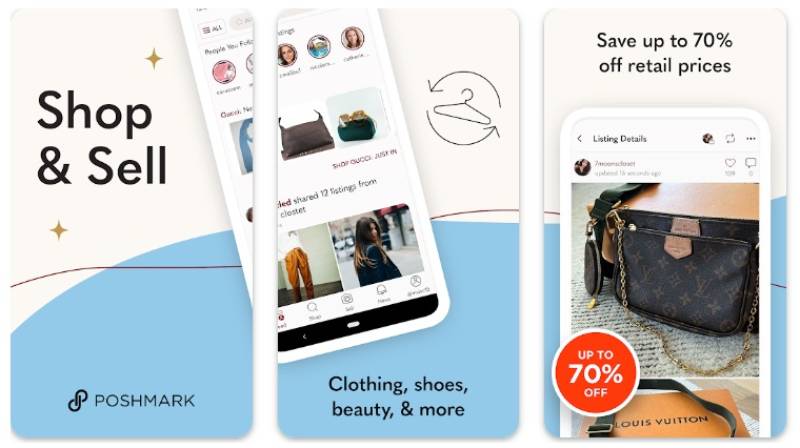
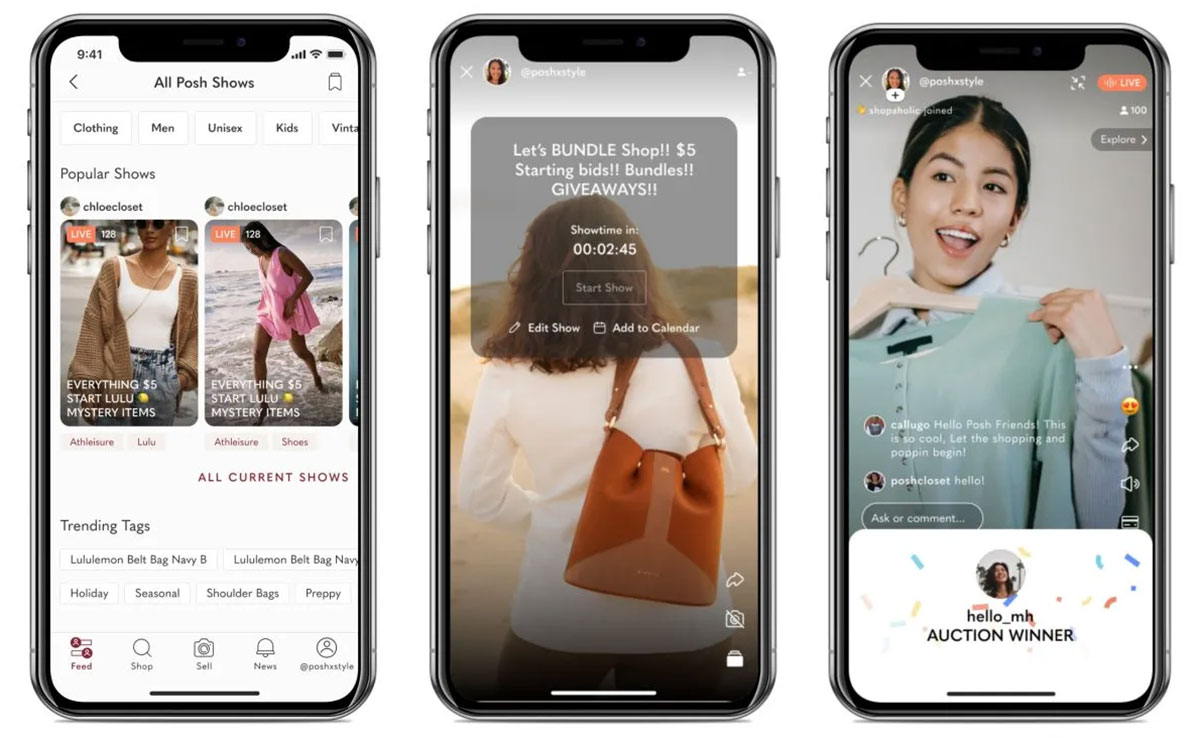
Poshmark is a social commerce fashion resale app that lets users buy and sell clothing, accessories, and home goods through a community-driven marketplace. It leans harder into social features than Depop and supports iOS and Android.
What Does Poshmark Do?
Poshmark lets sellers list items, share them in virtual “Posh Parties,” and negotiate prices directly with buyers through an offer system.
How Is Poshmark Similar to Depop?
Both are peer-to-peer fashion marketplaces built around a social feed. Both target millennial and Gen Z buyers interested in secondhand clothing, and both use a mobile-first design.
How Is Poshmark Different from Depop?
- Poshmark charges 20% commission on sales over $15 (flat $2.95 under $15). Depop charges no seller commission in the US or UK, only a ~3.3% payment processing fee.
- Poshmark has over 80 million registered users. Its audience skews toward women’s mall brands like Lululemon and Zara, while Depop leans toward vintage and Gen Z streetwear.
- Poshmark includes prepaid flat-rate shipping labels. Depop sellers handle their own shipping arrangements.
Who Is Poshmark Best For?
Sellers with a large inventory of women’s fashion from recognizable brands who want built-in social tools and don’t mind the 20% cut.
Key Features of Poshmark
- Posh Parties: Live virtual selling events organized by category or brand
- Bundle discounts: Buyers can bundle multiple items for a combined shipping deal
- Offer to Likers: Sends price-drop notifications to users who liked an item
- Prepaid labels: Flat-rate USPS Priority Mail labels, buyer-paid
Pricing
- Free plan: Yes, free to list
- Seller fee: $2.95 flat on sales under $15; 20% on sales $15+
- Free trial: N/A
Mercari
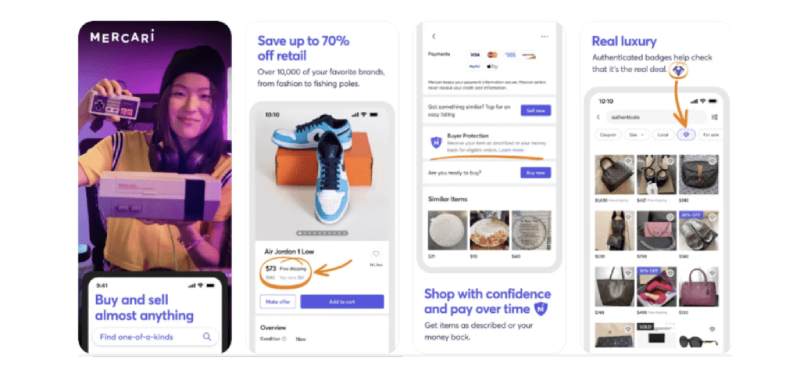
Mercari is a peer-to-peer marketplace app for buying and selling clothing, electronics, and collectibles. It launched in Japan in 2013 and has over 100 million downloads globally. Available on iOS and Android.
What Does Mercari Do?
Mercari lets users list items with photos, set a price, and sell directly to buyers with a built-in rating and dispute system for both sides.
How Is Mercari Similar to Depop?
| Feature | To be bought | Depop |
| Seller fee | 10% + processing | ~3.3% processing only |
| Listing fee | None | None |
| Platform | iOS, Android | iOS, Android |
| Target users | Gen Z, millennials | Gen Z, millennials |
How Is Mercari Different from Depop?
Mercari accepts almost every product category, not just fashion. It has less of a community or social feed aspect. Depop’s aesthetic-first browsing experience doesn’t really exist on Mercari.
Who Is Mercari Best For?
Sellers who want a straightforward listing process across multiple categories, not just clothing, without managing a social following.
Key Features of Mercari
- Promote: Boosts listing visibility in search results
- Offer to Likers: Targets buyers who saved your item
- Authenticity badge: Diamond verification for luxury goods
- Instant Pay: Available for $2 fee; free direct deposit otherwise
Pricing
- Free plan: Yes, free to list
- Seller fee: 10% + 2.9% + $0.30 payment processing (totals ~13%)
- Free trial: N/A
Vinted
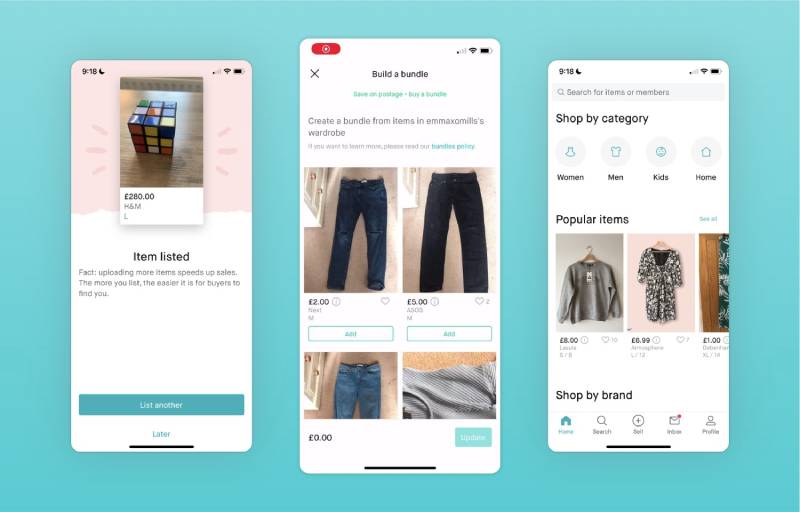
Vinted is a secondhand fashion marketplace with zero seller fees, built around affordable preloved clothing. It’s Europe’s largest resale platform, reporting €813 million in revenue in 2024. Available on iOS and Android.
What Does Vinted Do?
Vinted lets sellers list secondhand clothing for free. Buyers pay a small protection fee instead, which covers secure payments and buyer support.
How Is Vinted Similar to Depop?
Both focus on sustainable fashion shopping and preloved clothing for budget-conscious buyers. Both have mobile-first designs and no listing fees.
How Is Vinted Different from Depop?
- Vinted charges sellers nothing. Zero commission, no processing fee. Depop charges ~3.3% per transaction.
- Vinted is far more popular in Europe. Its US buyer pool is still growing.
- Depop’s aesthetic-driven feed appeals to vintage and streetwear culture. Vinted is more utility-focused and price-driven.
Who Is Vinted Best For?
Sellers in Europe who want to keep 100% of their sale price and buyers looking for affordable secondhand fashion without paying platform fees.
Key Features of Vinted
- Zero seller fees: Buyers cover all platform costs
- Filters: Size, brand, condition, category search
- Wardrobe spotlight: Paid feature to boost listing visibility
- Integrated shipping: Labels generated within the app
Pricing
- Free plan: Yes, free to list and sell
- Seller fee: None
- Buyer protection fee: ~3-5% paid by buyer per transaction
eBay
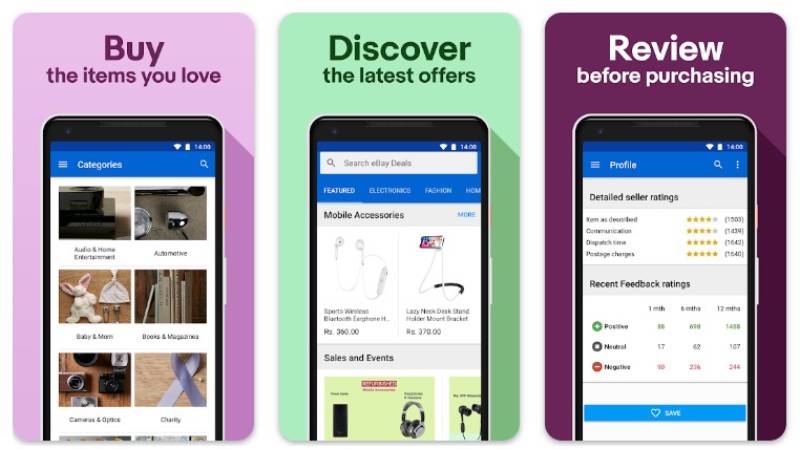
eBay is a global online marketplace for buying and selling new and used items across nearly every category. It has over 180 million active buyers worldwide. Available on iOS, Android, and web.
What Does eBay Do?
eBay hosts fixed-price listings and auctions, with built-in seller tools, analytics, and authentication services for high-value items.
How Is eBay Similar to Depop?
Both support peer-to-peer resale of clothing and fashion items. Both allow price negotiation through offer features, and both work on mobile and desktop.
How Is eBay Different from Depop?
eBay is not fashion-specific. It supports virtually every product category. Final value fees run 13-15% depending on category. Depop has a tighter focus on Gen Z streetwear and vintage fashion with a lower fee structure.
eBay also offers auction-style listings, which Depop doesn’t support. That makes eBay stronger for rare vintage finds or archival designer pieces where competitive bidding can push prices higher.
Who Is eBay Best For?
Resellers with diverse inventory who want massive global reach and advanced seller tools, and who aren’t focused purely on fashion.
Key Features of eBay
- Authenticity Guarantee: Expert verification for sneakers, watches, handbags
- eBay Live: Real-time video shopping for drops and auctions
- Promoted Listings: Paid boost for search visibility
- Seller Hub: Analytics, inventory tools, and market data
Pricing
- Free plan: Yes, up to 250 free listings/month
- Seller fee: 13-15% final value fee depending on category; $0.35 per listing after 250 free
- Free trial: N/A
Grailed

Grailed is a curated menswear resale platform focused on streetwear, vintage, and designer fashion. It has a dedicated community of collectors and style-conscious buyers. Available on iOS, Android, and web.
What Does Grailed Do?
Grailed lets sellers list men’s fashion with detailed condition notes, and connects them to buyers who specifically know brands like Supreme, Stone Island, and Rick Owens.
How Is Grailed Similar to Depop?
Both platforms target trend-driven buyers interested in vintage streetwear and curated fashion. Both have a community feel and support direct negotiation between buyers and sellers.
How Is Grailed Different from Depop?
| Factor | Grailed | Depop |
| Audience | Enthusiasts, archive collectors, and high-end fashionistas. | Gen Z, trend-focused, and vintage streetwear fans. |
| Seller Fee | 9% Commission + Payment Processing (typically 3.49% + $0.49). | 0% Commission (US/UK) + Payment Processing (3.3% + $0.45). |
| Category Focus | Unified: Menswear & Womenswear (Integrated Heroine into Grailed). | Inclusive: All genders, categories, and Y2K/niche aesthetics. |
| Price Ceiling | High: Dominates the “Grail” market (Raf Simons, Rick Owens, Chrome Hearts). | Mid: High volume of $20–$100 items; designer sells but at lower frequency. |
| Authentication | Digital & AI-assisted moderation for luxury/high-risk items. | Community-policed; manual reporting for counterfeits. |
Who Is Grailed Best For?
Male resellers with high-value streetwear or designer pieces who want buyers that understand brand context and will pay accordingly.
Key Features of Grailed
- Curated tiers: Grailed (general), Hype (verified streetwear), Basics (everyday fashion)
- Offer system: Buyers submit binding offers
- Editorial content: “Dry Clean Only” blog keeps community engaged
- No listing fees: Regardless of quantity listed
Pricing
- Free plan: Yes, free to list
- Seller fee: 9% commission + 2.9% + $0.30 payment processing (~12-13% total)
- Free trial: N/A
ThredUp
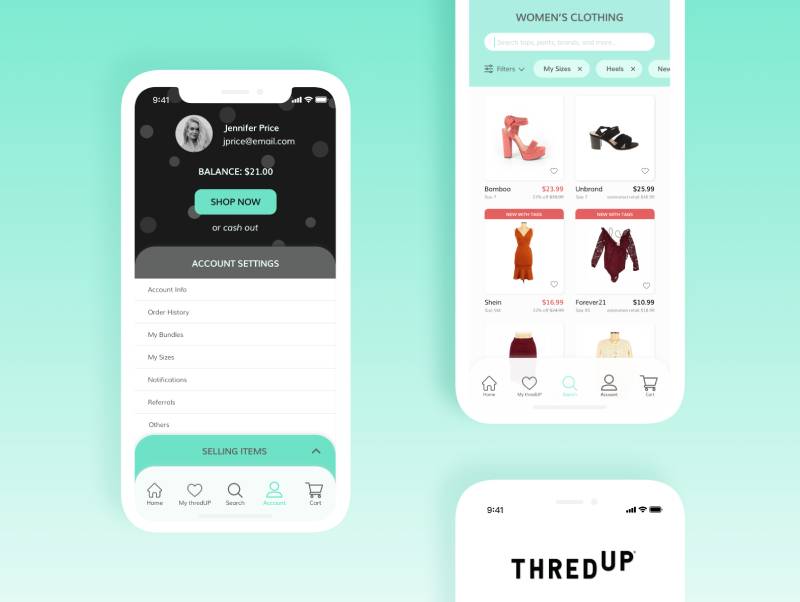
ThredUp is an online consignment store that handles the entire selling process for you. It positions itself as the Amazon of thrift and posted $71 million in revenue in Q1 2025. Available on iOS, Android, and web.
What Does ThredUp Do?
Sellers send in a “clean-out bag” of clothing. ThredUp photographs, prices, lists, and ships everything. You get a cut after the item sells.
How Is ThredUp Similar to Depop?
Both support preloved fashion and share a focus on sustainable clothing. Both accept a wide range of clothing brands and categories.
How Is ThredUp Different from Depop?
ThredUp is full-service consignment. You have no control over pricing or listing presentation. Commissions run from 20% to 85% depending on item value. Depop is fully seller-controlled with much lower fees.
ThredUp also targets casual sellers clearing out a wardrobe rather than resellers building a business. Most serious resellers find the payout structure too low for anything under $50.
Who Is ThredUp Best For?
Casual sellers who want zero involvement in the selling process and are fine accepting lower payouts in exchange for convenience.
Key Features of ThredUp
- Clean-out bag: Mail in clothes; ThredUp handles everything after
- Resale-as-a-Service (RaaS): Powers secondhand programs for brands like Walmart and Gap
- Payout options: PayPal or store credit
- Return option: Unaccepted items returned for $12.99
Pricing
- Free plan: Yes (clean-out bag costs $14.99)
- Commission: 20-85% taken by ThredUp depending on item sale price
- Free trial: N/A
The RealReal
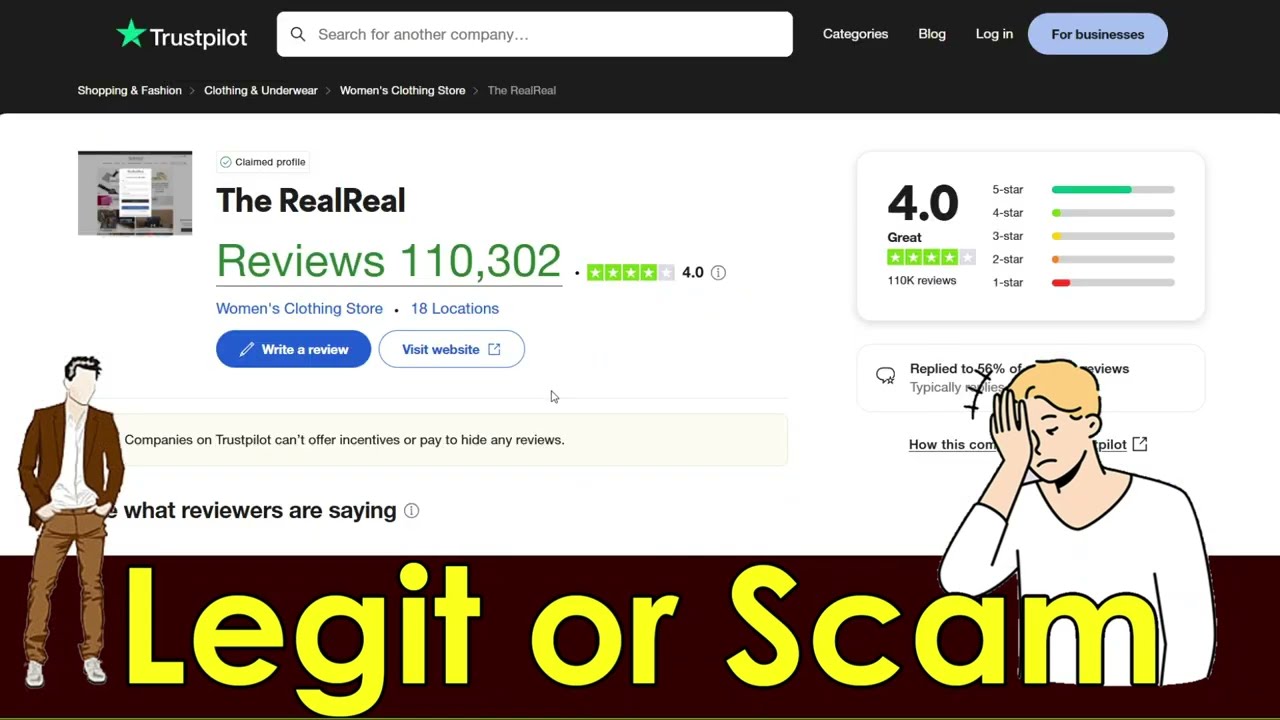
The RealReal is a luxury fashion resale platform with full authentication and consignment services. It reported $165 million in revenue in Q2 2025. Available on iOS, Android, and web.
What Does The RealReal Do?
Sellers send in luxury goods. The RealReal authenticates, photographs, prices, and lists each item. It targets buyers looking for verified designer pieces at a discount.
How Is The RealReal Similar to Depop?
Both are online resale platforms in the secondhand fashion space. Both have a mobile app and support selling across clothing, accessories, and footwear.
How Is The RealReal Different from Depop?
The RealReal focuses exclusively on authenticated luxury goods from brands like Gucci, Prada, and Louis Vuitton. Commissions run 20-80% depending on item value and seller tier. Depop has no minimum price point and no authentication requirement.
Who Is The RealReal Best For?
Sellers with high-end designer pieces who want expert authentication and a built-in audience of luxury buyers without managing their own listings.
Key Features of The RealReal
- Expert authentication: Physical inspection by trained specialists
- Free pickup: Available in select cities for consignments of 10+ items
- Flexible payment: Afterpay available for buyers
- 10,000+ new arrivals daily: High inventory turnover
Pricing
- Free plan: Yes, free to consign
- Commission: 20-80% taken depending on item category and sale price
- Free trial: N/A
Vestiaire Collective
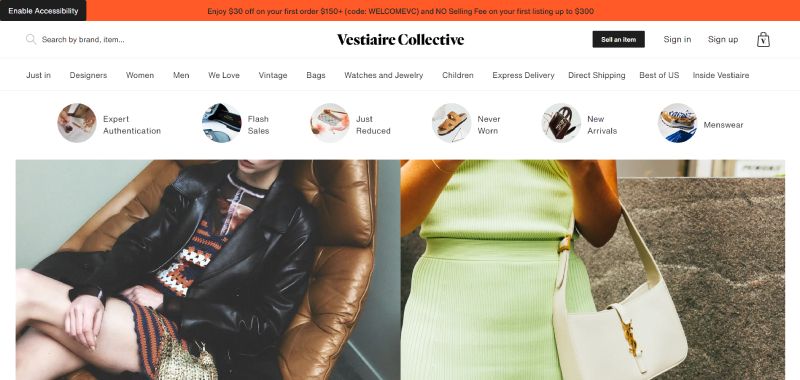
Vestiaire Collective is a global luxury resale marketplace now active in over 70 countries. It raised €178 million from Kering and Tiger Global in 2021. Available on iOS, Android, and web.
What Does Vestiaire Collective Do?
Vestiaire lets sellers list designer items directly after submitting photos for approval. The platform handles multi-step physical authentication before items ship to buyers.
How Is Vestiaire Collective Similar to Depop?
Both use a peer-to-peer selling model where sellers manage their own listings. Both have an app-first design and support direct communication between buyers and sellers.
How Is Vestiaire Collective Different from Depop?
Vestiaire is strictly for luxury and designer fashion. Seller fees run 12-15% plus a $12 flat fee and $3 processing on items under $80. Depop accepts any price point with no category restrictions.
Who Is Vestiaire Collective Best For?
Fashion-conscious sellers with verified designer pieces who want access to a global buyer base and don’t mind a more involved listing approval process.
Key Features of Vestiaire Collective
- Brand Approved listings: Items sold directly by brands themselves
- Multi-step authentication: Physical verification by experts before delivery
- Fast-fashion ban: Excludes ultra-fast-fashion brands by policy
- 70+ countries: True global reach for luxury buyers
Pricing
- Free plan: Yes, free to list
- Seller fee: 12-15% + $12 flat fee + $3 processing on items under $80
- Free trial: N/A
Facebook Marketplace
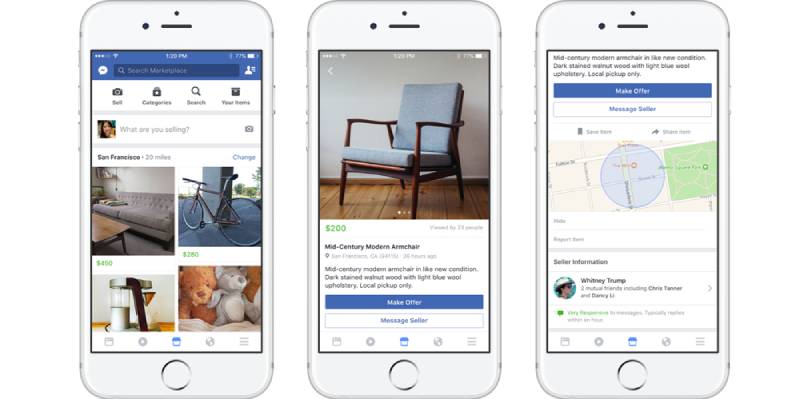
Facebook Marketplace is a local and national selling platform built into the Facebook app. It has roughly 250 million monthly buyers. Available on iOS, Android, and web.
What Does Facebook Marketplace Do?
Facebook Marketplace lets users list items to local buyers or ship nationally through its integrated shipping tools. Buyers and sellers communicate directly through Messenger.
How Is Facebook Marketplace Similar to Depop?
Both support secondhand clothing sales and allow direct buyer-seller communication. Both are free to list on with no upfront fees.
How Is Facebook Marketplace Different from Depop?
Facebook Marketplace charges 5% on shipped orders, but local in-person sales have zero fees. It lacks fashion-specific features, community discovery tools, and the curated visual aesthetic that Depop is known for.
Who Is Facebook Marketplace Best For?
Sellers who want to move items quickly to local buyers without shipping hassle, or anyone who already uses Facebook and wants a low-effort selling option.
Key Features of Facebook Marketplace
- Local listings: Buyers browse items near their location
- Messenger integration: Direct negotiation without leaving the app
- Zero fees for local sales: No platform cut on in-person transactions
- Wide category range: Clothing, furniture, electronics, and more
Pricing
- Free plan: Yes
- Seller fee: 5% on shipped items; $0.40 minimum on orders under $8; free for local pickup
- Free trial: N/A
Etsy
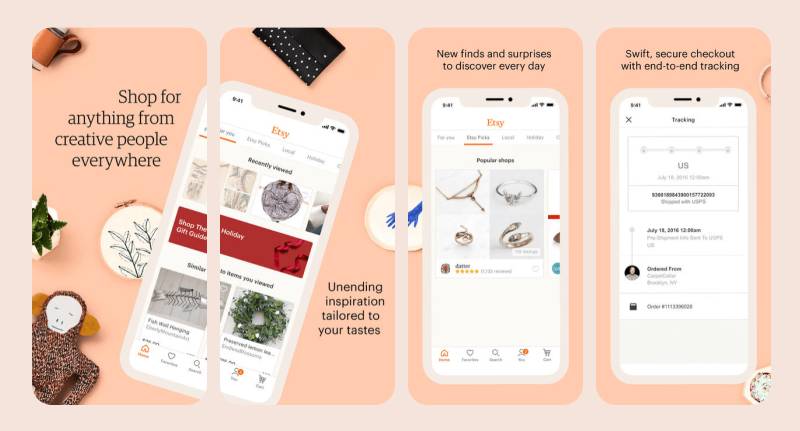
Etsy is a marketplace for handmade, vintage, and unique items with over 90 million active buyers. It acquired Depop in 2021 for $1.6 billion. Available on iOS, Android, and web.
What Does Etsy Do?
Etsy connects independent sellers with buyers looking for one-of-a-kind products, from handmade jewelry to vintage clothing and custom accessories.
How Is Etsy Similar to Depop?
Both platforms support vintage clothing resale and attract buyers who want unique, non-mass-market items. Both have strong seller customization tools and support independent sellers building their own brand.
How Is Etsy Different from Depop?
Etsy requires a $0.20 listing fee per item, and total fees (transaction + processing + optional off-site ads) run around 10% or more per sale. It also works well for handmade items, which Depop doesn’t really support. Depop skews younger and more trend-focused, while Etsy’s buyers tend to prioritize craftsmanship and originality.
Who Is Etsy Best For?
Sellers of true vintage pieces (20+ years old) or handmade items who want a built-in audience of buyers specifically looking for unique, creative products.
Key Features of Etsy
- Shop customization: Branded seller storefronts with reviews and policies
- SEO tools: Built-in keyword tools for search visibility
- Off-site ads: Optional 12-15% fee for promoted listings across Google and social
- Star Seller program: Badge for high-performing sellers
Pricing
- Free plan: Yes, free to open a shop
- Listing fee: $0.20 per item (renews every 4 months or on sale)
- Transaction fee: 6.5% + 3% + $0.25 payment processing (~10% total)
- Free trial: N/A
Quick Comparison: Fees Across All Platforms
| Platform | Seller Fee | Best For | Audience |
| Poshmark | 20% (or $2.95 flat < $15) | Women’s fashion | Millennials, Gen Z |
| Mercari | ~13% (10% + 2.9% + $0.30) | All categories | General US buyers |
| Vinted | 0% | Affordable preloved | Europe-heavy |
| eBay | 13%–15% | Diverse inventory | Global, 180M buyers |
| Grailed | ~12%–13% (9% + processing) | Men’s streetwear | Collectors, hypebeasts |
| ThredUp | 20%–85% (Commission-based) | Casual closet cleanout | Budget shoppers |
| The RealReal | 20%–80% | Luxury consignment | Affluent buyers |
| Vestiaire | 12%–25% | Designer fashion | Global luxury |
| FB Marketplace | 10% shipped / 0% local | Local quick sales | Facebook users |
| Etsy | ~10%–22% (inc. Offsite Ads) | Vintage + handmade | Creative shoppers |
If you also buy and sell through platforms like other Mercari alternatives or explore Poshmark alternatives, the fee comparison above becomes even more useful for deciding where to list first.
Resellers who list across multiple platforms consistently move inventory faster. Tools like Vendoo or Closo handle crosslisting automatically.
What Makes an App a Real Alternative to Depop?
Not every secondhand clothing app is a true Depop alternative. Some share the same peer-to-peer model but serve a completely different audience. Others have similar inventory types but charge fees that make the comparison pointless.
A real alternative has to clear at least three bars: comparable fee structure, a buyer audience that overlaps with what Depop sellers already have, and mobile-first selling tools.
Depop’s own position matters here. In July 2024, Depop eliminated its 10% seller commission for US sellers entirely, according to Depop’s official newsroom. The only remaining cost is a 3.3% + $0.45 payment processing fee per transaction. That makes it one of the cheapest major fashion resale platforms in the US.
Depop ranked 4th most popular online shopping site for US upper-income teens in Spring 2024, per Depop’s own data. Its 45 million registered users generated $788 million in gross merchandise sales in 2024.
Any platform worth comparing against Depop needs to be honest about one thing: Depop’s audience is specific. Gen Z buyers shop by aesthetic, not just category. A vintage Y2K jacket that sells overnight on Depop may sit for weeks on a general marketplace, even one with lower fees.
| Evaluation Criteria | What to Look For | Why It Matters |
| Seller fees | Total cost per sale, including processing | Directly affects profit per item |
| Audience match | Gen Z, millennials, vintage buyers | Wrong audience = slow sales |
| Platform focus | Fashion-only vs. general marketplace | Category depth drives buyer intent |
| Social features | Follows, feeds, community tools | Discovery and repeat buyers |
| Shipping tools | Integrated labels vs. seller-managed | Affects time cost per sale |
The circular fashion economy has made this comparison more relevant than ever. The global secondhand apparel market grew 14% in 2024, outpacing traditional retail clothing by 5x, according to ThredUp’s 2025 Resale Report.
That growth means more platforms competing for the same sellers. Knowing how to evaluate them saves time and protects margins.
How Do Depop Alternatives Differ in Fees and Seller Costs?
Fee structures across fashion resale platforms range from zero to 85%. That gap is wide enough to turn a profitable item into a loss depending on where you list it.
2024 was what Modern Retail called “the year of the resale fee wars.” eBay UK, Mercari US, and Depop US all dropped seller commissions to 0% within months of each other. Poshmark tried a similar move but reversed it after seller backlash.
Peer-to-Peer Platform Fees Compared
On a $50 sale, the fee difference between platforms is immediate and significant.
| Platform | Seller Fee | $50 Sale Net |
| Depop (US) | 0% selling fee + 3.3% + $0.45 processing | $47.90 |
| Vinted | 0% (buyer pays all fees) | $50.00 |
| Grailed | 9% commission + 3.49% + $0.49 processing | $44.26 |
| Mercari | 10% commission (no processing fee) | $45.00 |
| Poshmark | 20% flat commission | $40.00 |
Vinted keeps the full $50 for sellers because it shifts all platform costs to buyers through a buyer protection fee. That sounds ideal until you factor in conversion: buyers seeing higher total prices abandon carts more often, per Modern Retail’s 2024 analysis of Poshmark’s failed fee restructure.
Grailed’s fee disadvantage is real but often offset by price. A $200 streetwear hoodie sold on Grailed to a collector who understands the brand frequently nets more than the same item sold on Mercari at a discount to a less informed buyer.
Consignment Platform Fee Structure
ThredUp’s 2025 Resale Report shows online US resale growing at 23% in 2024 for the second consecutive year. Consignment platforms captured a chunk of that growth by removing all seller effort, but at a steep cost.
- ThredUp: Takes 20-85% commission depending on item sale price. Items under $20 can see the platform keep up to 95% of the sale.
- The RealReal: Commission runs 20-80% based on item category and seller tier.
- Vestiaire Collective: 12-15% seller fee plus a $12 flat fee and $3 processing on items under $80.
The trade-off is real. Consignment platforms handle photography, listing, authentication, and shipping. Sellers do nothing after dropping off or mailing items. That convenience costs roughly 3-5x more in fees than any peer-to-peer platform.
ThredUp processed $71 million in Q1 2025 revenue using this model, according to their earnings data. It works because casual sellers accept lower payouts for zero effort.
Which Depop Alternative Fits Each Type of Seller?
The best resale app depends entirely on what you’re selling and how much time you’re willing to invest per item. There is no single right answer across all seller types.
ThredUp’s 2025 Resale Report found that 58% of US consumers purchased secondhand apparel in 2024, up from previous years. That expanding buyer base doesn’t all live on one platform.
Casual and Occasional Sellers
Perfect for clearing out a wardrobe. Terrible for anyone trying to maximize profit per item.
- ThredUp handles everything after you mail the clean-out bag. You get paid when items sell, which can take weeks.
- Facebook Marketplace is zero fees for local sales and works for bulk moves. No aesthetic requirement, no follower base needed.
- Vinted has no seller fees and a simple listing process. The EU buyer pool is large; the US one is still growing.
The RealReal is an exception for casual sellers with luxury items. If you have a Gucci bag or Prada shoes collecting dust, their white-glove consignment model makes sense even at 40-60% commission.
Active Resellers and Side Hustlers
Volume resellers need platforms with fast-moving inventory, reliable buyer bases, and tools that scale. Single-platform selling at this level is almost always a mistake.
Mercari suits cross-category sellers who want simple, flat-fee transactions. Poshmark rewards social engagement through Posh Parties and Offer to Likers tools, making it strong for women’s mall brands like Lululemon and Zara where Depop’s Gen Z aesthetic isn’t a fit. Sellers who crosslist on Poshmark + Depop + Grailed using tools like Vendoo or Closo report faster inventory turnover without proportional extra effort.
Luxury and Designer Consignors
Vestiaire Collective now operates in over 70 countries with multi-step physical authentication on every item. The RealReal focuses on the US market with in-house authentication specialists and posted $165 million in Q2 2025 revenue, per their earnings report.
- Vestiaire: Better for global reach, especially European luxury brands
- The RealReal: Better for US-focused luxury with in-store presence in New York and LA
- Grailed: Better for streetwear-adjacent designer pieces where authentication isn’t required but collector knowledge matters
Brands like Gucci and Balenciaga have entered the resale space through direct partnerships with these platforms, per ResearchAndMarkets 2025 analysis. That brand participation adds legitimacy and buyer trust that no peer-to-peer platform can replicate.
What Are the Risks of Switching from Depop to Another Platform?
Switching platforms is not just a fee calculation. Audience mismatch, payout delays, and consignment traps can cost more than any commission savings.
Modern Retail’s 2024 analysis noted that when Poshmark changed its fee structure, power sellers reported double-digit sales drops almost immediately. Platform policy changes can disrupt an established seller operation with very little warning.
Audience mismatch is the biggest hidden cost. Depop’s Gen Z buyer base shops for aesthetic and vibe. That same vintage jacket listed on Mercari often sells at 20-30% lower because Mercari buyers are more price-driven and less willing to pay for presentation and aesthetic appeal, per Feescal’s 2026 platform comparison.
Consignment risks are underestimated. ThredUp donates unaccepted items unless sellers pay $12.99 for return. The RealReal holds items for up to one year before returning them, at the seller’s expense. Sellers who mail in their best pieces without reading the fine print lose both the item and the potential sale.
Payout timing varies significantly across platforms. Mercari’s Instant Pay costs $2 per withdrawal. Poshmark holds funds until the buyer accepts or after auto-acceptance. Depop releases funds after order completion. For resellers managing cash flow across multiple active listings, these delays compound.
Depop’s 2021 acquisition by Etsy for $1.625 billion introduced a layer of platform risk that sellers on the platform should acknowledge. Poshmark was acquired by South Korea’s Naver in January 2023. Platform ownership changes can mean fee structure changes, algorithm shifts, or reduced investment in seller tools.
How Do You Choose Between These Platforms Based on What You Sell?
Inventory type is the fastest filter. Most experienced resellers land on 2-3 platforms that match their stock, not one universal solution.
Online resale is projected to nearly double in the US by 2029, reaching $40 billion at a 13% CAGR, according to ThredUp’s 2025 Resale Report. More platforms will compete for that growth. Choosing right now matters more than it did two years ago.
By inventory type:
- Vintage and Y2K fashion: Depop first, Grailed for men’s streetwear
- Mall brands (Zara, Lululemon, Aritzia): Poshmark alternatives and Poshmark itself, where millennial buyers pay more for recognizable labels
- Luxury and designer: The RealReal or Vestiaire Collective for authentication and premium buyer base
- Handmade and true vintage (20+ years old): Etsy, with 90 million active buyers specifically seeking unique items
- Cross-category and non-fashion: eBay, with 180 million active buyers and the broadest category support
A $60 vintage band tee might fetch $45 on Mercari and $75 on Depop because Depop’s audience knows what it’s buying and values the aesthetic context. Lower fees matter less if the selling price is also lower.
For sellers exploring Mercari alternatives specifically, the decision usually comes down to whether broad category support or fashion-specific audience depth is more valuable for their current inventory.
| Inventory Type | Best Platform | Why |
| Vintage / Y2K / streetwear | Depop, Grailed | Buyers pay for aesthetic; lowest fees |
| Women’s mall brands | Poshmark | 80M+ users, strong women’s fashion demand |
| Luxury / designer | The RealReal, Vestiaire | Authentication builds buyer trust |
| General / mixed | For sale, eBay | Broad buyer base, simple fee structure |
| Handmade / true vintage | Etsy | 90M buyers seeking unique creative items |
Crosslisting is the practical answer for most active resellers. Tools like Vendoo, Closo, and List Perfectly handle price adjustments and auto-delisting across platforms automatically. The question stops being “which platform” and becomes “which platforms, in what order of priority.”
According to 39% of younger generation shoppers who made secondhand purchases through social commerce in 2024 (ThredUp 2025 Resale Report), the lines between social media and online thrift shopping are already blurring. Platforms that integrate social features, like Depop’s feed and Poshmark’s Posh Parties, will likely capture more of that behavior as the market grows.
FAQ on Apps Like Depop
What is the best app like Depop for selling secondhand clothes?
Poshmark is the closest match for social selling. Mercari works better for cross-category sellers. Vinted wins on fees. The best pick depends on your inventory type, target audience, and how much time you want to spend managing listings.
Which secondhand fashion app has the lowest seller fees?
Vinted charges zero seller fees. Depop US sellers pay only 3.3% + $0.45 processing per transaction. Both beat Poshmark’s 20% commission and Mercari’s 10% rate by a significant margin.
Is Poshmark better than Depop?
For women’s mall brands like Lululemon or Zara, Poshmark outperforms Depop. For vintage streetwear and Y2K fashion, Depop’s Gen Z buyer base pays more and buys faster. Different inventory, different winner.
What app is best for selling luxury and designer fashion?
The RealReal and Vestiaire Collective are the top options. Both offer multi-step authentication and access to buyers who expect verified luxury goods. Vestiaire operates in 70+ countries. The RealReal is stronger in the US market.
Can I sell on multiple resale apps at the same time?
Yes. Most active resellers crosslist on two to three platforms simultaneously using tools like Vendoo or Closo. These tools handle automatic delisting when an item sells, preventing duplicate sales across the peer-to-peer marketplace.
What is the best Depop alternative for men’s streetwear?
Grailed is the go-to platform for men’s designer and streetwear resale. Its buyer base knows brands like Supreme and Stone Island well. Items that sit unsold on Depop frequently sell faster on Grailed at higher prices.
Which resale app is best for casual sellers clearing out a wardrobe?
ThredUp handles everything after you mail in a clean-out bag. No listing, no photography, no shipping. The trade-off is high commission rates of up to 85%. Facebook Marketplace works for local sales with zero fees.
Is Vinted available in the US?
Vinted operates in the US but its buyer pool is still growing domestically. It’s far stronger in Europe, where it reported €813 million in revenue in 2024. US sellers may find slower sales compared to Poshmark or Mercari.
What makes Depop different from other secondhand fashion apps?
Depop combines a social feed with a peer-to-peer fashion marketplace, targeting Gen Z buyers who shop by aesthetic. It removed its 10% US seller commission in 2024. No other major resale platform matches its vintage and Y2K buyer concentration.
Which app is best for selling handmade or true vintage items?
Etsy is the strongest option, with 90 million active buyers specifically seeking unique, handmade, and vintage pieces. For preloved fashion with a curated angle, Depop also performs well, particularly for items with strong visual appeal.
Conclusion
This conclusion is for an article presenting the best apps like Depop across every seller type, fee structure, and inventory category.
No single platform wins across the board. Grailed dominates men’s vintage streetwear. The RealReal and Vestiaire Collective handle authenticated luxury. Poshmark moves mall brands fast. Etsy serves handmade and true vintage buyers.
The online resale market is growing too fast to bet on one app. Crosslisting across two or three platforms is how serious resellers protect margins and reach more buyers in the circular fashion economy.
Pick platforms that match your inventory. Watch your fees. And don’t assume the biggest peer-to-peer marketplace is always the right one for what you sell.

- How Software Teams Write SOPs for Releases and Deployments - October 22, 2026
- Notepad++ Android Options: Apps That Come Close - October 21, 2026
- Data Management Services: A Practical Guide for Growing Companies - October 21, 2026