
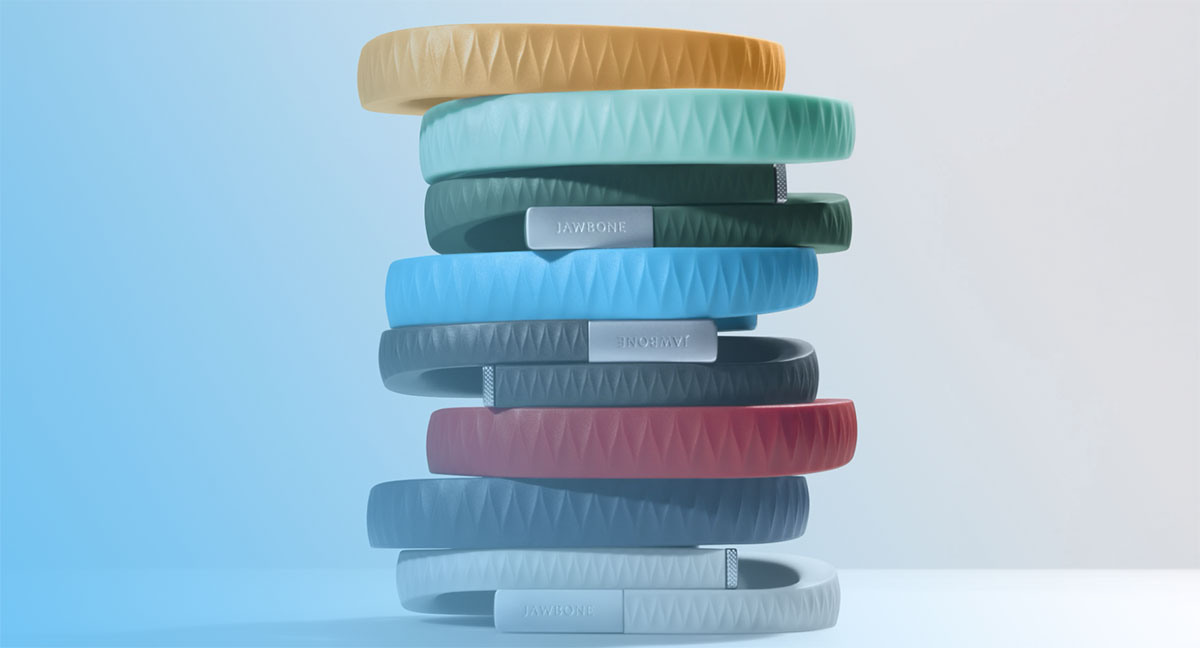
Jawbone raised nearly $1 billion in venture capital, hit a $3.2 billion valuation, and then disappeared completely by 2017.
So what happened to Jawbone? The short answer: product recalls, collapsing market share, a debt spiral, and a wearable technology market that moved faster than the company could.
This is a breakdown of how a Silicon Valley hardware startup went from pioneering Bluetooth headsets and the UP fitness tracker to full asset liquidation in under three years. You will find the real timeline, the financial data, and the competitive pressures that made recovery impossible.
No spin. Just the facts behind one of the most-studied cases of consumer hardware collapse in tech history.
What Was Jawbone?

Jawbone was a San Francisco-based consumer hardware company that built Bluetooth headsets, portable wireless speakers, and wrist-worn fitness trackers. Founded in 1999 by Hosain Rahman and Alexander Asseily under the original name AliphCom, the company started with military-grade noise-canceling technology developed with DARPA funding before pivoting fully to consumer electronics.
By 2014, Jawbone had reached a peak valuation of $3.2 billion and employed over 600 people across multiple offices. It competed directly against Fitbit in the fitness tracker market and against Bose and Sony in portable audio.
Three product lines defined Jawbone’s identity:
- Bluetooth headsets (ERA line): noise-cancellation tech originally developed for battlefield communication
- Jambox speakers: wireless portable speakers launched in 2010, generating over $100 million in first-year revenue
- UP fitness trackers: wrist-worn activity monitors tracking steps, sleep, and calorie intake via a companion app
The company raised a total of $929.9 million in venture capital over its 18-year history, from investors including Andreessen Horowitz, Khosla Ventures, Sequoia Capital, and BlackRock (SlashGear, 2023).
Jawbone is now considered one of the most significant failed startups in Silicon Valley history, holding the rare distinction of being a heavily funded hardware company that never achieved profitability.
How Did Jawbone Rise to Prominence?
awbone’s early growth came from a genuine product advantage. Its NoiseAssassin noise-cancellation algorithm, refined through DARPA contracts, delivered a 45% speech intelligibility improvement over competitors (History Tools). That technical edge drove strong headset sales before the consumer wearable market even existed.
The Jambox launch in 2010 changed the company’s trajectory entirely. It created the portable Bluetooth speaker category before most consumers knew they wanted one.
The Jambox Breakthrough
Jambox became a status item. Fast Company named Jawbone one of the most innovative companies of 2013, and the speaker was placed in San Francisco’s Museum of Modern Art.
Strong Jambox revenue funded aggressive R&D and headcount growth. By 2011, annual revenue had reached an estimated $500 million, driven by over 5 million headset sales per year (History Tools).
Revenue sources at peak:
- Bluetooth headsets accounting for the majority of early revenue
- Jambox speaker line expanding into a high-margin product category
- UP fitness tracker adding a third revenue stream from 2011 onward
Entry Into the Fitness Tracker Market
The Jawbone UP launched in November 2011 as one of the first wrist-worn fitness tracking devices, predating most mainstream wearable technology competition. It tracked steps, sleep cycles, and food intake through a smartphone app.
By 2014, Jawbone commanded roughly 15% of the fitness tracking market (tms-outsource.com, 2025). Fitbit held the dominant position at around 38%, but Jawbone was the clear second player.
Investor confidence peaked alongside the product momentum. Jawbone secured close to $1 billion in funding by 2014 at a $3.3 billion valuation, with some reports citing figures approaching $4 billion at the absolute high (Sequoia Capital, 2025).
What Were Jawbone’s First Major Product Failures?
The original UP wristband launched in November 2011 and was recalled within weeks. Battery drain, charging failures, and general hardware defects caused widespread complaints from early buyers. CEO Hosain Rahman issued a public statement in December 2011 offering full refunds of $109.43 per unit to every customer, with no requirement to return the device (Wareable, 2022).
This cost Jawbone tens of millions of dollars. It also pulled all pending orders and halted production entirely.
The UP Recall and Its Aftermath
The product went back to engineering and testing, logging 3 million hours of additional testing before relaunching in late 2012 (PhoneArena). That nearly year-long gap gave Fitbit room to consolidate its lead in the fitness tracking market without serious competition from Jawbone.
The recall damaged two things beyond finances: retailer trust and the product’s reputation before it had time to build loyalty. Best Buy and Apple Store shelf space shrank for the UP line following the recall.
A Pattern That Repeated Itself
The second-generation UP still drew reliability complaints. A Change.org petition called for another recall, with some customers reporting they had been sent 3 or 4 replacement units within a 6-month period.
The UP3, launched in 2015, faced significant shipping delays. The UP4 followed with similar issues. Sequoia Capital’s post-mortem identified this as a structural problem: Jawbone repeatedly shipped underdeveloped hardware because the company prioritized launch dates over product readiness (Sequoia Capital, 2025).
| Product | Launch Year | Key Problem | Outcome |
|---|---|---|---|
| Jawbone UP (Gen 1) | 2011 | Battery failure, hardware defects | Full recall, production halt |
| Jawbone UP (Gen 2) | 2012 | Continued reliability complaints | Replacement program strain |
| Jawbone UP3 | 2015 | Major shipping delays | Lost holiday season sales |
| Jawbone UP4 | 2015 | Production and distribution issues | Inventory sold off to reseller, 2016 |
How Did Competition Erode Jawbone’s Market Share?
Jawbone’s fitness tracker market share fell from roughly 15% in 2014 to just 8% by 2015, and then collapsed to 2% by 2016 (SlashGear, 2023). Two competitors drove that decline: Fitbit and Apple.
Fitbit’s Dominant Position
Fitbit controlled roughly 38% of the wearable device market in 2014 and shipped 21 million units in 2015 alone (IDC data via Scribd). That’s compared to Jawbone’s position, which had already fallen out of the top 5 wearable vendors by the time Fitbit went public.
Fitbit’s June 2015 IPO at $20 per share raised significant capital that Jawbone had no equivalent to. Fitbit used that capital to cut prices, expand distribution, and invest in software, all while Jawbone was managing product reliability problems.
Key structural advantage Fitbit held: a focused product line. Jawbone split engineering and marketing resources across headsets, speakers, and fitness trackers. Fitbit put everything into one category and dominated it.
Apple Watch Changes the Market
Apple announced the Apple Watch in September 2014 and shipped it in April 2015. This did more damage to Jawbone than Fitbit ever did.
Apple shipped an estimated 11.6 million wearable units in 2015, its first full year in the market (IDC, 2015). Consumers who wanted a premium wearable device now had a clear choice that integrated with iPhone, iOS Health, and the broader Apple ecosystem.
Jawbone had no software platform, no ecosystem lock-in, and no compelling answer. The UP app was functional but not a reason to stay. Apple Watch made standalone fitness trackers feel limited by comparison, which hurt Jawbone more than Fitbit because Jawbone had less brand loyalty to fall back on.
Chinese Hardware Competition on Speakers
Xiaomi shipped 12 million wearable units in 2015, up from just 1.1 million in 2014 (IDC, 2015). Chinese manufacturers also entered the portable speaker market with products priced 40-60% below the Jambox.
Jawbone’s speaker business, once a growth engine, turned into a drag. Fortune reported in 2016 that Jawbone was trying to sell off its entire wireless speaker division to focus on health and wearables. That sale never happened at a meaningful price.
What Financial Problems Led to Jawbone’s Collapse?
Jawbone burned through $929.9 million in venture capital without reaching profitability (SlashGear, 2023). The company’s cost structure was built for a high-growth company, but revenue never scaled to match it.
The BlackRock Debt Deal
In 2015, Jawbone secured a $300 million loan from BlackRock and Rizvi Traverse Management. This was not a sign of investor confidence. It was a debt deal taken on because traditional equity funding had dried up (Axios, 2017).
Taking on high-interest debt when your valuation is already declining is structurally dangerous. By December 2015, BlackRock had already marked down Jawbone’s shares by 69% (CNBC, 2017).
The loan dropped Jawbone’s implied valuation to under $2 billion, a significant drop from the $3.3 billion peak just a year earlier.
Valuation Collapse and the 2016 Down Round
In 2016, the Kuwait Investment Authority led a $165 million round that halved Jawbone’s valuation to $1.5 billion (CNBC, 2017). Down rounds of this size signal to the rest of the market that the company’s trajectory is negative.
A leaked internal memo revealed Jawbone was losing tens of millions per quarter between 2015 and 2017, with headcount falling from 500 to just 100 employees by 2017 (History Tools).
| Year | Valuation | Key Event |
|---|---|---|
| 2014 | $3.2-3.3 billion | Peak valuation, major funding rounds |
| 2015 | Under $2 billion | BlackRock debt deal, 69% share markdown |
| 2016 | $1.5 billion | KIA down round, UP line production stopped |
| 2017 | $0 (liquidation) | Asset wind-down, company dissolved |
Hardware Margins That Never Worked
Jawbone’s design-first approach kept manufacturing costs high. Premium materials, complex supply chains, and Yves Behar’s industrial design work made products that looked good and cost too much to build profitably at the price points consumers would accept.
Sequoia Capital’s post-mortem was direct: Jawbone was trapped on a “treadmill of hardware innovation” that required constant new products to drive revenue, with no recurring software or subscription income to stabilize cash flow (Sequoia Capital, 2025).
What Role Did Lawsuits Play in Jawbone’s Downfall?
Starting in May 2015, Jawbone filed suit in California state court against Fitbit, accusing the company of systematically poaching employees who then transferred confidential data. At least 5 former Jawbone employees allegedly downloaded proprietary files to USB drives or personal email accounts before officially informing Jawbone they were leaving (Lexology, 2015).
Fitbit had reportedly contacted 30% of Jawbone’s workforce during early 2015 (VatorNews, 2016). The confidential data allegedly included market research, supply chain details, and product designs.
The ITC Case and Its Outcome
In July 2015, Jawbone filed a second complaint with the U.S. International Trade Commission, accusing Fitbit of infringing 6 patents and requesting an import ban on Fitbit devices. The ITC proceedings ran for over a year.
The result: complete loss for Jawbone. ITC Administrative Law Judge Dee Lord ruled in August 2016 that “no party has been shown to have misappropriated any trade secret.” All 4 remaining Jawbone patents were also invalidated (AppleInsider, 2016).
Fitbit CEO James Park publicly called the allegations “utterly without merit and nothing more than a desperate attempt by Jawbone to disrupt Fitbit’s momentum.” Jawbone came away with nothing from the ITC proceedings.
Cost and Distraction
Running parallel litigation across California state court and the ITC is expensive. Legal teams, depositions, discovery processes, and years of attorney fees drained resources at the worst possible time.
What the legal battle cost Jawbone beyond money:
- Management attention redirected from product development to litigation
- Engineering talent recruitment made harder by the public legal conflict
- Negative press coverage focused on decline rather than product innovation
- A criminal grand jury investigation into Fitbit was reported in early 2016, creating uncertainty but no resolution
The California state court case was still pending when Jawbone began liquidation in 2017. Sherwood Partners, the firm hired to wind down Jawbone’s assets, assumed control of the ongoing litigation against Fitbit (Axios, 2017).
When Did Jawbone Shut Down and How Did It Happen?
In early 2016, Jawbone stopped production of its UP fitness tracker line entirely. The UP2, UP3, and UP4 inventory was sold off to a third-party reseller. By mid-2016, the company had also tried and failed to sell its speaker business (MedCityNews, 2016).
Customer service collapsed first. Starting in January 2017, Jawbone customers could no longer reach support. Emails went unanswered for months. Devices broke with no recourse (MacRumors, 2017).
The July 2017 Liquidation
In July 2017, The Information reported that Jawbone had hired Sherwood Partners to handle formal liquidation proceedings. Creditor notices went out. The consumer brand that had been valued at $3.2 billion three years earlier was gone.
Hosain Rahman simultaneously launched Jawbone Health Hub, a new B2B company focused on health monitoring hardware and software services. Many former Jawbone employees transitioned directly to the new venture. BlackRock, which held the 2015 debt position, took a stake in Jawbone Health Hub (Axios, 2017). No other original Jawbone investor received equity in the new entity.
The wind-down had 3 notable characteristics:
- No formal bankruptcy filing, just an assignment of assets to a liquidation firm
- No final product release or public statement from the company itself
- Consumer products shut down completely while Rahman pivoted immediately to B2B health tech
What Happened to Employees
Jawbone had already cut 15% of its staff (roughly 60 people) in November 2015, closing its New York marketing office and downsizing satellite operations in Sunnyvale and Pittsburgh (TechCrunch, 2015).
By 2017, headcount had fallen from a peak of around 500 employees to approximately 100 (History Tools). The remaining staff either moved to Jawbone Health Hub or scattered to other Silicon Valley companies, including teams working on Apple Watch and Wear OS.
Investors in Jawbone lost millions. Most original VC investors had no stake in the successor company. One investor told Axios the firm had been “kept in the dark” about Rahman’s plans for Jawbone Health Hub.
What Happened to Jawbone’s Assets and Intellectual Property?
Jawbone’s liquidation firm, Sherwood Partners, was assigned two tasks: wind down the consumer company and manage the ongoing California state court litigation against Fitbit (Axios, 2017).
The two legal battles eventually settled in December 2017. Both sides kept the settlement terms private (Verdict, 2018).
The IP Transfer to Jawbone Health Hub
Health monitoring data, biometric IP, and what remained of the BodyMedia patents transferred to Jawbone Health Hub, the successor company Hosain Rahman launched simultaneously with the liquidation.
BlackRock, which held the $300 million 2015 debt position, took a stake in Jawbone Health Hub. No other original Jawbone investor received equity in the new entity (Axios, 2017).
Jawbone Health Hub operated as a B2B health monitoring company, positioning itself around clinical-grade health data services rather than consumer hardware. The Jambox and UP brand names were not relaunched under any new ownership.
What the Consumer Brand Left Behind
No acquirer purchased the consumer Jawbone brand as a going concern. Hardware patents were either auctioned, allowed to lapse, or absorbed into Jawbone Health Hub’s IP portfolio.
Consumer device owners were left without support. Starting January 2017, customer service had already gone dark, and the UP app was shut down in 2017, making devices non-functional (Alibaba Wellness, 2026).
- No official UP app replacement was ever released
- Third-party tools could not restore sync functionality due to closed APIs
- Fitbit gained some shelf space and retail relationships Jawbone vacated
Why Did Jawbone Fail Where Fitbit Survived?
Fitbit and Jawbone competed in the same market, used similar hardware, and targeted the same buyers. One reached a $2.1 billion acquisition by Google (CNBC, 2019). The other burned through $929.9 million and liquidated with nothing to show investors.
The gap between them was not product quality. It was structure.
| Factor | Fitbit | Jawbone |
|---|---|---|
| Product focus | Single category: fitness trackers | 3 categories: headsets, speakers, trackers |
| Software platform | App, social features, corporate wellness | UP app, no ecosystem retention |
| Capital event | IPO June 2015, public market access | Debt deal 2015, valuation markdown |
| Exit | Acquired by Google for $2.1 billion (2021) | Asset liquidation, 2017 |
Focused Product Line vs. Divided Resources
Fitbit put its entire engineering, marketing, and supply chain operation behind one product category. Jawbone split those same resources three ways.
By Q3 2016, Fitbit held 23% of the global wearables market. Jawbone’s share was too small to be broken out separately by IDC (PhoneArena, 2016).
That is not a competitive loss. That is a structural one.
Software Ecosystem vs. Hardware-Only Play
Fitbit sold more than 100 million devices by 2019 and built a platform around those users: food logging, a social community, corporate wellness contracts, and app integrations (Fitbit SEC filing, 2019).
Jawbone’s UP app was functional but not sticky. There was no social layer, no recurring revenue, and no reason for a user to stay in the ecosystem after their device broke.
Sequoia Capital identified this directly: without a software or service component, Jawbone had no customer retention mechanism beyond the physical product (Sequoia Capital, 2025).
The IPO That Never Happened
Fitbit went public in June 2015 at $20 per share, giving it access to public capital markets. Jawbone was preparing for its own IPO around the same time.
It never happened. The combination of UP3 delays, product reliability problems, and the looming Apple Watch made investors unwilling to back a Jawbone public offering at the valuation Rahman wanted. Instead, Jawbone took on the BlackRock debt deal, which started the valuation spiral downward.
Key difference: Fitbit’s IPO funded growth. Jawbone’s debt deal signaled distress.
What Does Jawbone’s Failure Reveal About the Wearable Market?
Jawbone is studied now alongside failed apps and hardware shutdowns like Anki as a case study in what venture capital cannot fix. The company had funding, talent, real technology, and first-mover advantage in two product categories. None of it was enough.
CB Insights tracked consumer hardware companies and found 97% either died or became zombie companies (CB Insights, 2017). Jawbone is not an outlier. It is the rule.
Venture Capital Is Structurally Mismatched With Hardware
Hardware startups require up to 50% more capital than software counterparts and face development timelines spanning 8 or more years, far exceeding the 5-7 year average VC fund cycle (AInvest, 2025).
VC models are built around software-style growth curves: low marginal cost, fast iteration, scalable distribution. Consumer hardware has none of those properties.
- Physical prototyping and tooling costs are fixed
- Supply chain problems compound with scale
- Returns or defects destroy margins at volume
- Product cycles require constant new capital, not compounding revenue
Jawbone raised nearly $1 billion and still could not reach profitability. That is not a fundraising failure. That is a model mismatch.
Platform Lock-In Determined Long-Term Survival
By 2018, the wearable market had consolidated around 3 companies: Apple, Fitbit, and Garmin. Each had something Jawbone never built: a reason for users to stay.
Apple had iOS and HealthKit. Fitbit had its social and corporate wellness platform. Garmin had deep loyalty from serious athletes and GPS sports tracking.
Device quality alone does not create retention. Jawbone’s UP tracker had genuine design merit. Yves Behar’s industrial design was genuinely better-looking than anything Fitbit shipped. It did not matter.
Companies like Garmin understood this. They targeted a narrow, loyal audience of triathletes and cyclists who would pay premium prices and upgrade within the ecosystem. Jawbone targeted everyone and retained no one.
Overvaluation as a Structural Trap
Jawbone’s $3.2 billion peak valuation in 2014 was a trap, not an achievement. Sequoia Capital’s co-founder described it directly: overvaluation created pressure to raise more at higher prices, which made realistic exits impossible (Sequoia Capital, 2025).
A company valued at $3 billion cannot sell for $500 million without destroying its investors. So it keeps raising instead. Each new round at a declining valuation signals distress to the next investor. The spiral locks in.
This pattern appears repeatedly across high-profile tech collapses and in studies of what separates companies that survive: the ones that raise to match their actual revenue trajectory, not their most optimistic projection.
63% of tech startups fail within 5 years, and 97% never reach $1 billion in revenue as independent companies (DemandSage, 2025). Jawbone raised as though it was in the 3%. Its financials never came close.
FAQ on What Happened to Jawbone
Why did Jawbone shut down?
Jawbone shut down in 2017 after burning through $929.9 million in venture capital without reaching profitability. Product recalls, collapsing fitness tracker market share, a $300 million debt deal with BlackRock, and direct competition from Fitbit and Apple Watch made recovery impossible.
When did Jawbone go out of business?
Jawbone began formal liquidation proceedings in July 2017. The company hired Sherwood Partners to handle the wind-down process. Consumer product support had already collapsed months earlier, with customer service going dark in January 2017.
What happened to the Jawbone UP fitness tracker?
Jawbone stopped UP production in 2016 and sold off remaining UP2, UP3, and UP4 inventory to a reseller. The companion app shut down in 2017, making all devices non-functional. No official replacement app was ever released.
Who founded Jawbone?
Hosain Rahman and Alexander Asseily founded Jawbone in 1999 at Stanford University, originally under the name AliphCom. The company started with military-grade noise-cancellation technology developed through a DARPA contract before pivoting to consumer electronics.
Did Jawbone file for bankruptcy?
Jawbone did not file formal bankruptcy. Instead, the company assigned its assets to a liquidation firm. This distinction matters because it meant creditors and investors had limited recourse, and most original venture capital investors recovered little to nothing.
What happened between Jawbone and Fitbit?
Jawbone sued Fitbit in May 2015, accusing the company of poaching employees who took confidential data. The ITC ruled in Fitbit’s favor in 2016, finding no trade secret misappropriation. The two companies settled privately in December 2017.
What was Jawbone’s peak valuation?
Jawbone reached a peak valuation of $3.2 billion in 2014, with some estimates pushing close to $4 billion. By 2016, a down round led by the Kuwait Investment Authority cut that valuation in half to $1.5 billion. Liquidation followed a year later.
What happened to Jawbone’s assets after shutdown?
Health data IP and biometric technology transferred to Jawbone Health Hub, the successor company launched by Hosain Rahman. Consumer hardware patents were auctioned or lapsed. The Jambox and UP brand names were never relaunched under new ownership.
Is Jawbone Health Hub still operating?
Jawbone Health Hub was formed in 2017 as a B2B health monitoring company, with BlackRock holding a stake. It operates in the clinical health data space, focused on early detection of lifestyle diseases, and has not re-entered the consumer wearable device market.
What lessons does Jawbone’s failure teach hardware startups?
Hardware startups require up to 50% more capital than software companies and face longer development cycles. Jawbone’s collapse shows that without a software platform for user retention, even well-funded consumer hardware brands cannot survive against competitors with full ecosystem lock-in.
Conclusion
This conclusion is for an article presenting the full story of Jawbone’s rise and collapse, from a DARPA-funded noise-cancellation startup to one of Silicon Valley’s most studied cases of startup capital exhaustion.
The Jawbone brand wind-down was not caused by one mistake. It was a sequence: the UP wristband recall, years of negative hardware margins, a failed trade secret case against Fitbit, and a debt spiral that no funding round could reverse.
What the Jawbone story makes clear is that wearable device competition rewards ecosystems, not products alone.
Hosain Rahman’s pivot to Jawbone Health Hub shows the underlying health data platform had real value. The consumer hardware business built around it did not.
The asset liquidation in 2017 closed the chapter on one of the most overfunded, understructured companies in tech history.

- How to Share GitHub Repository Access With Collaborators - October 25, 2026
- Build or Buy an AI Chatbot for E-commerce: The Costs Nobody Budgets For - October 24, 2026
- How to Run a React App in VS Code Step by Step - October 23, 2026


